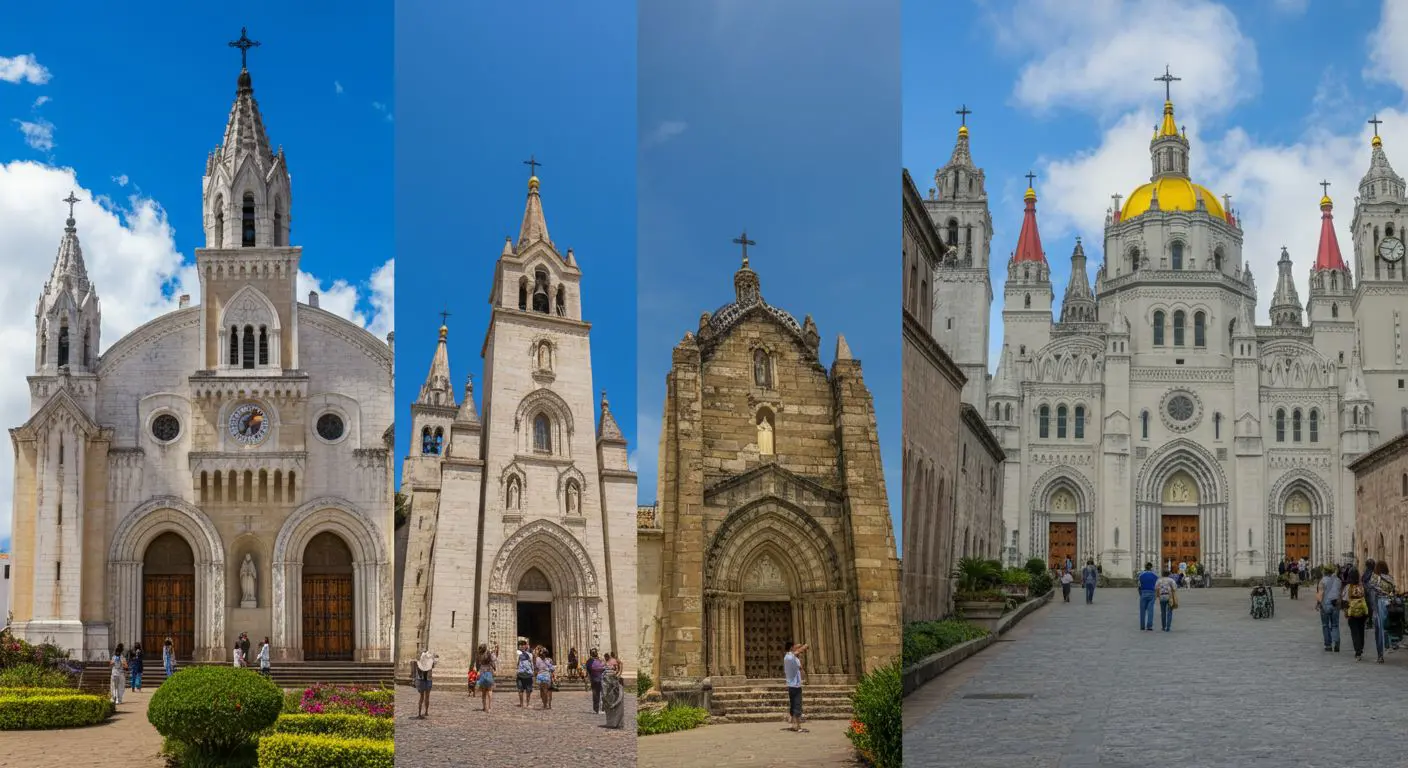
1. Monserrate Hill (Colombia)
Monserrate Hill (Cerro Monserrate in Spanish) sits at an altitude of over 3,000 meters. At its summit is the Basilica of Our Lady of Monserrate, accessible on foot, by funicular, or by cable car. The basilica was built in a Neo-Gothic architectural style, and locals say that the church was literally built by pilgrims. Each time they visited, they would bring at least one brick to contribute to its construction. Beyond its religious significance, this magical place possesses a natural charm. If you're a foodie, a visit is also well worth it. Tip : To discover Monserrate Hill and all the must-sees of the Colombian capital in a single day, take this comprehensive guided tour of Bogotá . [caption id="attachment_3661" align="aligncenter" width="1200"]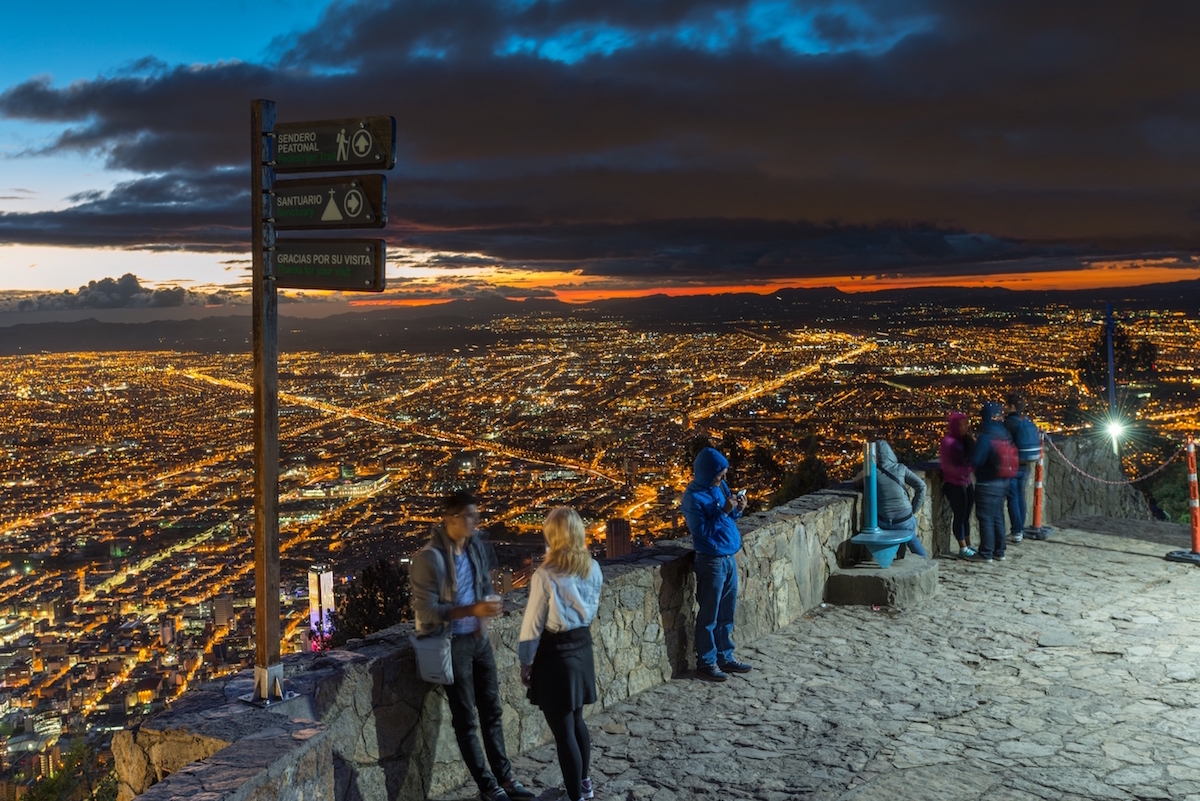 Panoramic view of Bogotá from Monserrate Hill. / Source [/caption]
2. Zipaquirá Salt Cathedral (Colombia)
Although it is indeed a cathedral, it's important to note that no masses are held there. The structure obviously contains religious elements, but its tourist appeal has overshadowed its religious significance. The Salt Cathedral is located in the city of Zipaquirá, just an hour's drive from Bogotá. It is one of Colombia's most iconic architectural works. Inside the cathedral, you'll find a large collection of salt and marble sculptures. These offer fascinating visual effects that any art lover will appreciate. Tip : Explore the Salt Cathedral with the Zipaquirá train tour . [caption id="attachment_3662" align="aligncenter" width="800"]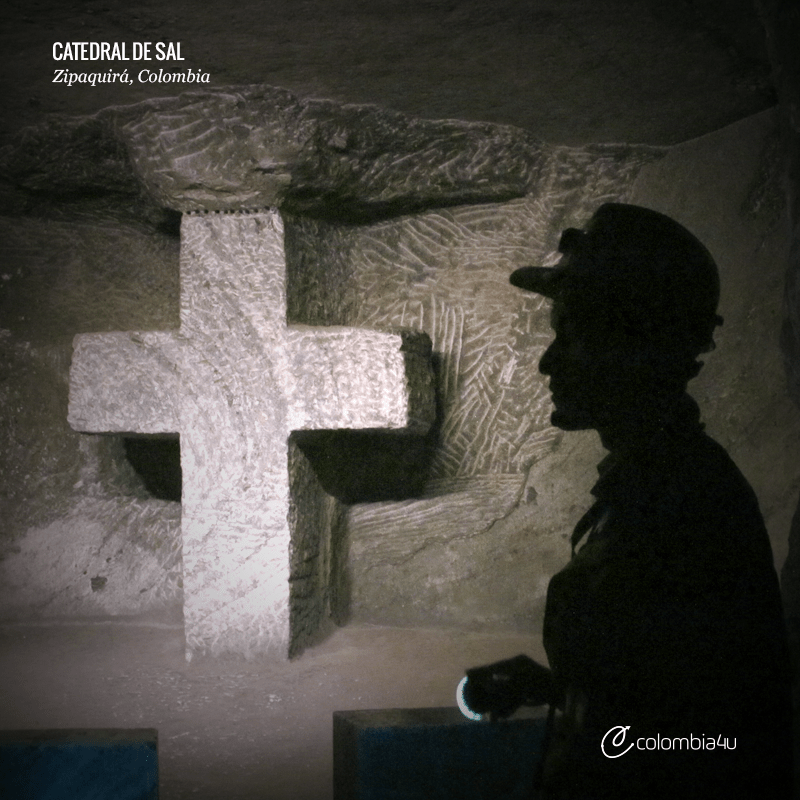 Far more than a religious icon, the salt cathedral is a work of art built by the miners.
3. Popa Hill (Colombia)
For Catholics, the hill of La Popa in Cartagena is very important because of the monastery dedicated to Our Lady of Candelaria, the city's patron saint, built by Alonso de la Cruz Paredes. However, before Brother Alonso's arrival, Indigenous people and African slaves worshipped the god Buziriaco on this hill. The Catholics won the conflict, but the slaves continued to worship their god during the colonial era, and the famous musical style "cumbia" is said to have originated during this time. [caption id="attachment_3663" align="aligncenter" width="1920"] The magnificent city of Cartagena seen from Popa Hill. / Source [/caption]
4. Christ the Redeemer of Corcovado (Brazil)
The reasons to visit Christ the Redeemer in Rio de Janeiro are endless: it's one of the Seven Wonders of the Modern World, one of Brazil's most important tourist attractions, and one of the surprising facts about this place is that no one died accidentally during its construction (which was unprecedented given the time and scale of the project). The statue, 30 meters tall excluding its 8-meter pedestal, stands atop Corcovado Mountain. [caption id="attachment_3664" align="aligncenter" width="960"]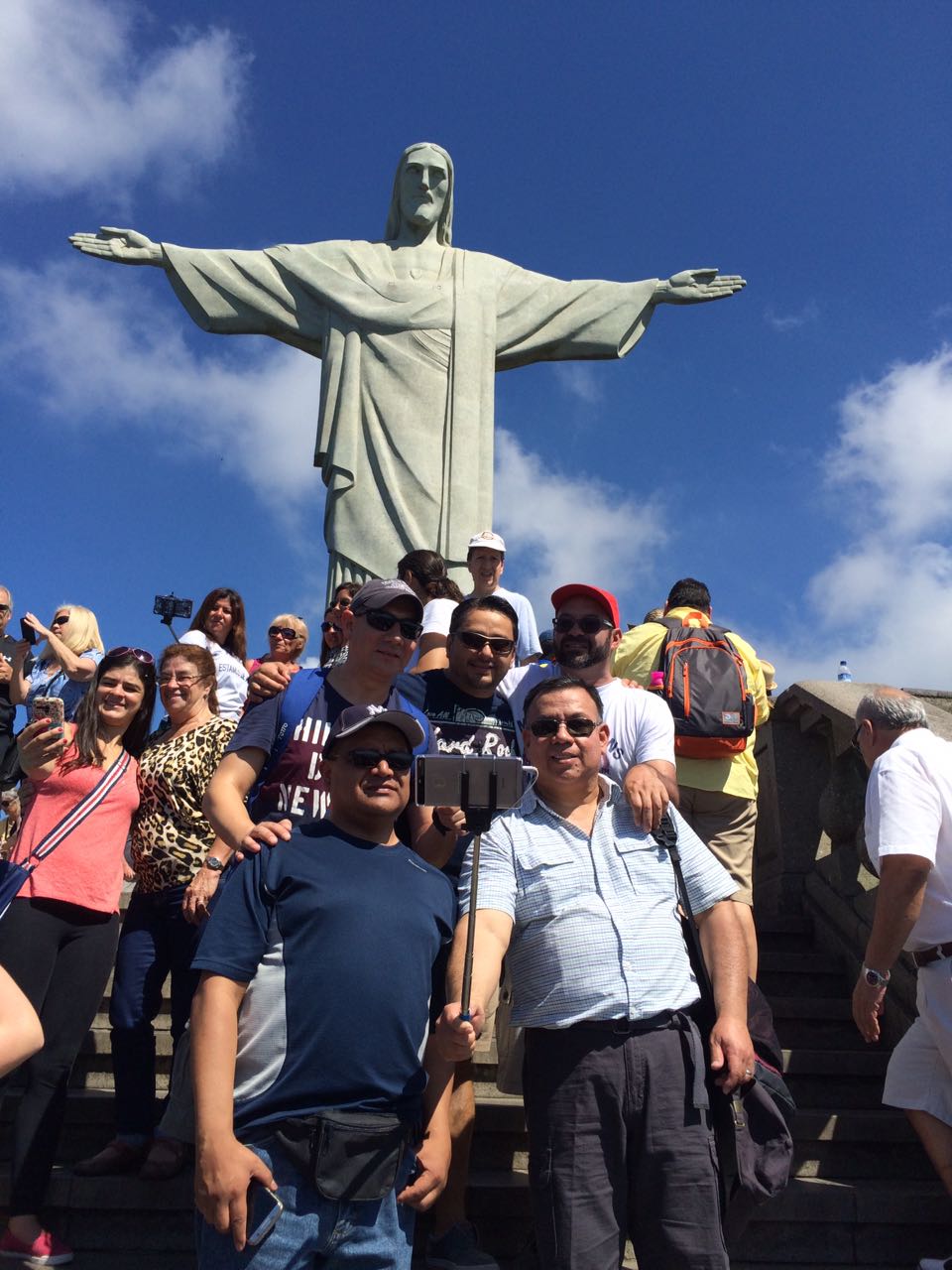 Thousands of tourists and curious onlookers take photos in front of Christ the Redeemer in Rio every day.
Ascend to the summit of Corcovado with the Cosme Velho Train and the Christ the Redeemer Tour.
5. Rio de Janeiro Cathedral (Brazil)
Rio de Janeiro Cathedral, also known as the Metropolitan Cathedral or the Cathedral of Saint Sebastian, is an imposing structure that you can't miss if you visit the city. Its unique pyramidal and conical shape makes it one of the most beautiful buildings in Rio. Upon arrival, you'll see a huge cross with four stained-glass windows that create a spectacular light effect. In addition to the cathedral, the Museum of Sacred Art, located in the basement, is also worth a visit. [caption id="attachment_3665" align="aligncenter" width="800"]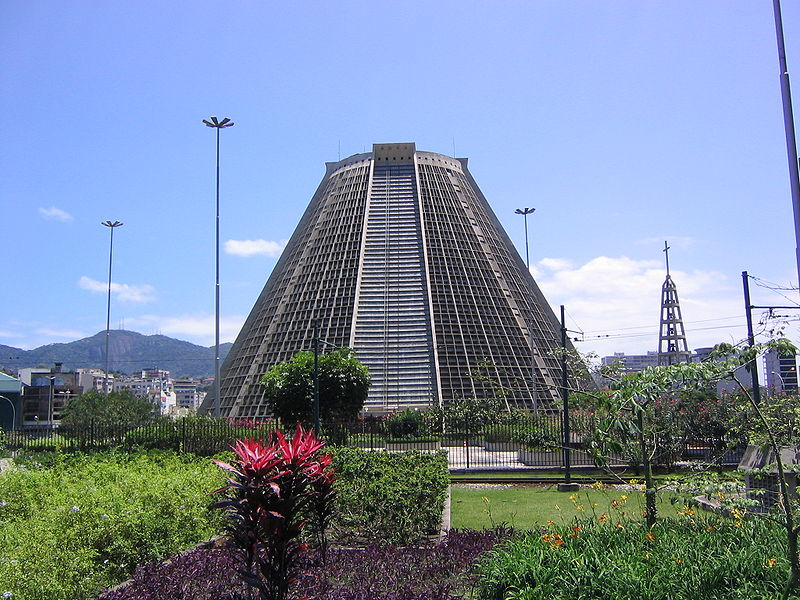 The Cathedral of Saint Sebastian and its original form. / Source [/caption]
6. Aparecida do Norte (Brazil)
The Basilica of Our Lady of Aparecida is located in a city in the interior of São Paulo. It is the second largest basilica in the world, after St. Peter's Basilica in the Vatican. Within this sanctuary lies the image of the Virgin Mary, found by three fishermen in the 18th century, and every year, 7 million people visit the city. This basilica is one of the most important religious attractions in South America, located in São Paulo. Nearby, you can also visit the Museum of Sacred Art, an amusement park, and an aquarium. Tip : Dedicate a day in your travel itinerary to visiting São Paulo, discovering Aparecida do Norte, and experiencing a part of Brazil's religious culture. Take a day trip to Aparecida do Norte and don't worry about the logistics. [caption id="attachment_3666" align="aligncenter" width="1024"] The Basilica of Our Lady of Aparecida, the second largest in the world. / Source [/caption]
7. Basilica of Luján (Argentina)
Our Lady of Luján is the patron saint of Argentina, and her neo-Gothic basilica holds great significance for the faithful in the south. Located 70 kilometers from Buenos Aires, it was built between 1887 and 1935. In addition to visiting this impressive sanctuary, a visit to the city offers the perfect opportunity to stroll along the river of the same name and take a break from the frenetic pace of the Argentine capital. [caption id="attachment_3667" align="aligncenter" width="1024"] Interior staircase of the Basilica of Luján. / Source [/caption]
8. Christ the Redeemer of the Andes (Argentina)
Christ the Redeemer of the Andes is located in Mendoza, on the Cumbre Pass, on the border between Argentina and Chile. This monument is a memorial to peace between the two nations, which nearly went to war between 1898 and 1904. The Christ figure is almost seven meters tall and weighs four tons. In addition to being a Christian symbol, it is primarily a historical landmark. Tip : The best way to experience Christ the Redeemer of the Andes is with a high-altitude hiking tour in Mendoza , a tour that includes the most important sites in the Argentine Andes. [caption id="attachment_3670" align="aligncenter" width="1664"] Christ the Redeemer of the Andes, watching over the border between Chile and Argentina. / Source [/caption]
9. Saint Lucia Hill (Chile)
Located in the heart of Santiago, Chile, this hill was named by Pedro de Valdivia, who founded the city on December 13, 1540, the feast day of Saint Lucy of Syracuse. The name and a neo-Gothic chapel are the only religious references you'll find in this place, which has become a tourist, historical, and cultural landmark. Visitors will discover the Neptune Terrace (dedicated to the Roman god of the sea) and the Caupolicán Terrace. There is also an old cannon, the Hidalgo Fort, and a beautiful circular garden. If you're going to Santiago, don't miss one of the most beautiful religious attractions in South America! Tip : Don't miss any of the attractions in the Chilean capital. Explore the city's most iconic spots with this guided tour of Santiago . [caption id="attachment_3668" align="aligncenter" width="1521"] Fountain in one of the gardens on Sainte-Lucie Hill. / Source [/caption]
…
While Catholicism and many other religions have numerous followers in most South American countries, there is one interesting exception: Uruguay , a secular state that is home to the majority of the continent's atheists . If you travel to Montevideo, you will undoubtedly find the Matriz Cathedral, a Buddhist temple, and a synagogue, but religion is not a transcendental element of the culture as it is in most countries in the region. Make the most of every day of your vacation in South America during Tourism Week. Daytours4u offers useful and up-to-date information on each destination you wish to visit, so you can plan a travel itinerary that includes must-see religious attractions in South America, classic tours, and unconventional excursions that will make your trip a fantastic experience on a magical and mysterious continent.By: Keilma Rojas , Venezuelan journalist specializing in culture and current events. Spanish editor for Daytours4u / Translation: Grégory Noël
Published by Has Chacon on 04/06/2026


