Animals of Patagonia: Andes and Steppes
[caption id="attachment_6578" align="aligncenter" width="640"]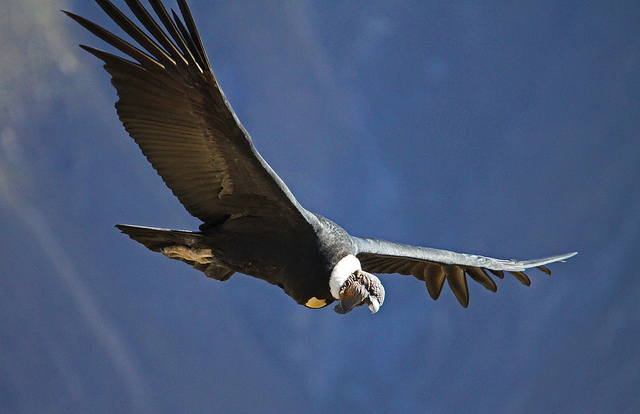 The Andean Condor dominates the Patagonian skyline / source[/caption]
Andean Condor (Vultur gryphus)
Considered the largest bird in the Americas, the Andean condor can measure up to 3 metres wide with its wings outspread. Although it is an endangered species, it's still common to spot condors flying over the mountains and plains of El Calafate and El Chaltén. These birds can reach heights of up to 10,000 metres, using their sharp vision (8 times more powerful than humans) to track food. In adulthood, condors have a white collar of feathers around their neck, and the males are distinguished by a dark red comb on their heads. [caption id="attachment_6579" align="aligncenter" width="640"]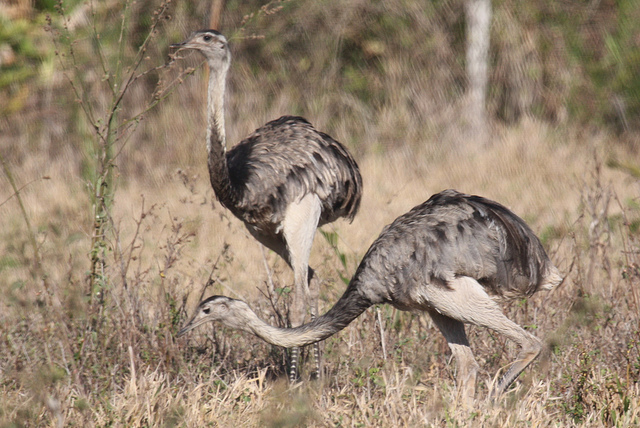 Rheas are an important species for the indigenous Tehuelches people / source[/caption]
Darwin's Rhea (Pterocnemia pennata)
Known in Argentina as a Choique or Ñandú, the rhea is a native bird of the Patagonian steppe. Similar to an ostrich, this flightless bird can reach land speeds of up to 45km per hour. The rhea has been domesticated for thousands of years by the indigenous people of Patagonia, who derive value from all parts of the bird, including the flesh, feathers and legs. The rhea is a polygamous bird and the male takes care of hatching the eggs. At birth, the father also is responsible for the young. These birds are very protective of their young, and get aggressive with any man or animal they consider a threat. [caption id="attachment_6580" align="aligncenter" width="640"]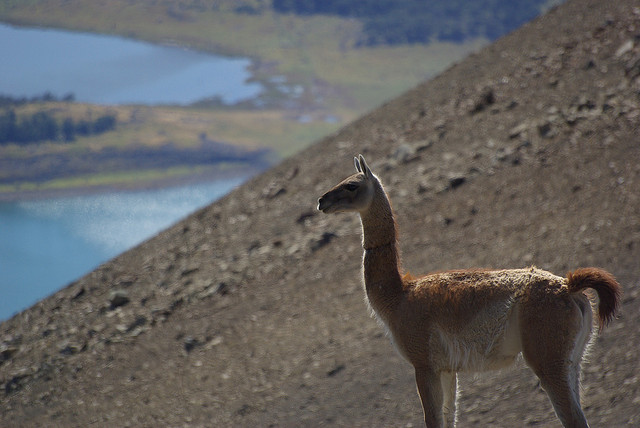 Don't mistake the Guanaco for a llama! / source[/caption]
Guanaco (Lama guanicoe)
In the same family as camelids, guanacos look similar to llamas, but with longer legs and necks. They're further distinguished by their colour, large eyes and long eyelashes. Guanacos are herbivores that feed on grass, shrubs and lichens. It is common to see herds of guanacos throughout Patagonia. Guanacos form herds with one dominant male. Each female has a single offspring per year (called a chulengo), with an 11 month gestation. The guanaco's natural predator is the puma and occasionally the Andean fox, so their survival is crucial for the Patagonian ecosystem. [caption id="attachment_3267" align="aligncenter" width="610"]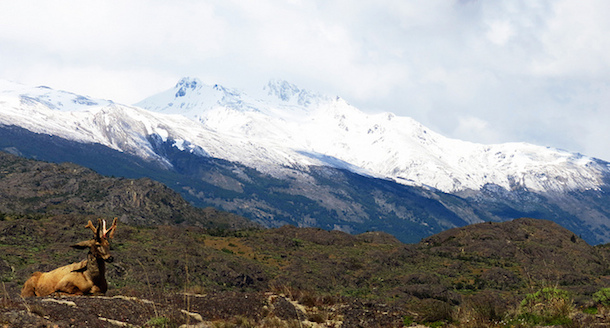 The Huemul is a protected species in Patagonia's National Parks/ source[/caption]
Huemel (Hipocamelus bisulcus)
The huemul, or South Andean deer, is a native Patagonian species of the cervidae family. They are at high risk of extinction. However, it is still possible to find herds in the forests of Rio Negro near El Bolsón, as well as near El Chaltén in the Los Glaciares National Park. Huemels can weigh up to 100kg and are recognisable by their dark brown fur and small antlers on the male's head. They are herbivores. Females give birth to one offspring a year, which means their survival now depends largely on the conservation efforts by the National Parks of Argentina and Chile. [caption id="attachment_3268" align="aligncenter" width="610"]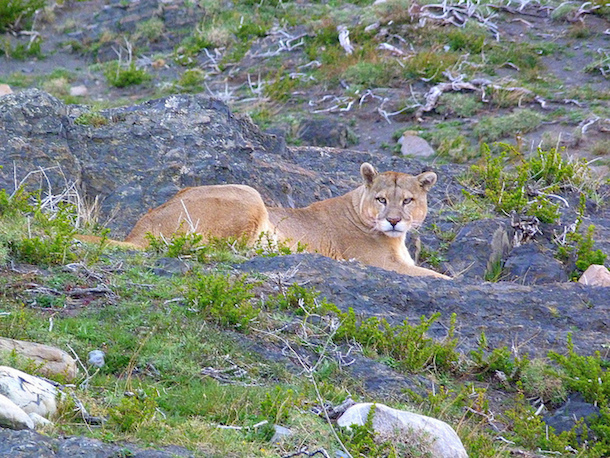 The mighty puma is a rare but incredible sight / Source[/caption]
Puma (Felis concolor patagonica)
The Patagonian Puma is a carnivorous nocturnal animal. Also called a cougar, the puma feeds on prey like cauquén, rhea, guanacos, foxes, and sheep. Usually it inhabits areas close to the mountains during the day and seeks refuge in gullies and caves. The puma can travel up to 40 km in one night. Individual adults reach a length of 2.4 metres, from nose to tail and can weigh between 50 and 80kg. [caption id="attachment_3269" align="aligncenter" width="610"]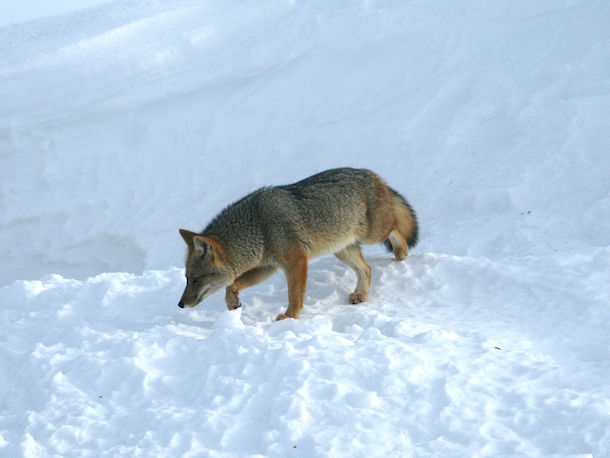 The Andean fox has been helping to control the rabbit population in Patagonia / Source[/caption]
Andean Fox (Lycalopex culpaeus)
The Andean fox, also known as a Culpeo, belongs to the carnivorous Canidae family (which includes dogs and wolves). Between the size of a red fox and a coyote, it is characterised by its tawny colour, long fur on its stomach, legs and head, with a grey back and a black tail. Andean foxes eat eggs, birds, and rodents, and occasionally sheep and lambs. Females can have up to 5 pups, and their only natural predator is the puma. However, widespread drought and deforestation in Patagonia have forced this type of wild dog to expand its diet to include the rabbits that were introduced to Patagonia, as well as what it can scavenge from humans. If you're a nature lover and travelling to Patagonia, keep your eyes wide open for the opportunity to observe the amazing animals of Patagonia.Argentina4u offers a range of tours and activities in Patagonia. Visit argentina4u.com for more information.
Written by: David Luna / Translated by: Nicole Eberhard
Published by Has Chacon on 03/06/2026


