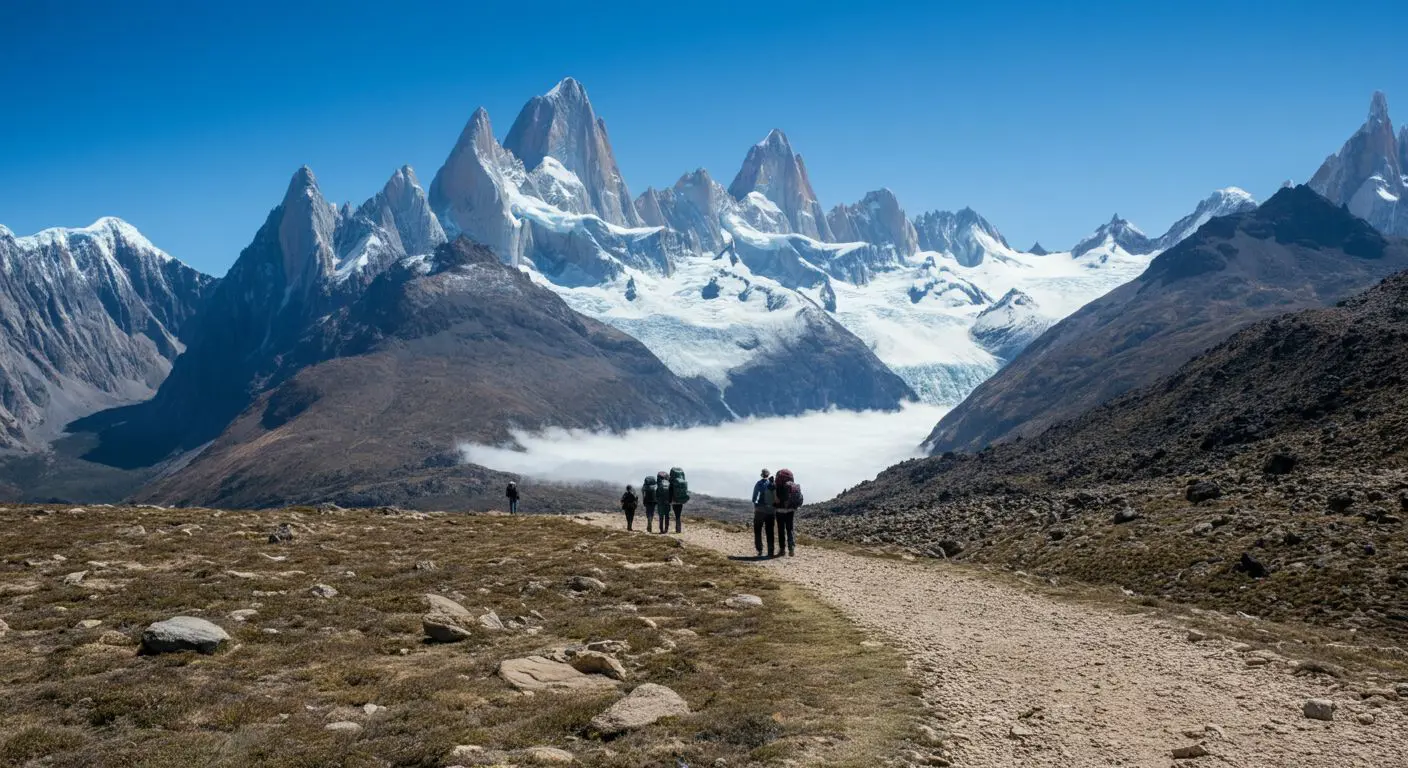
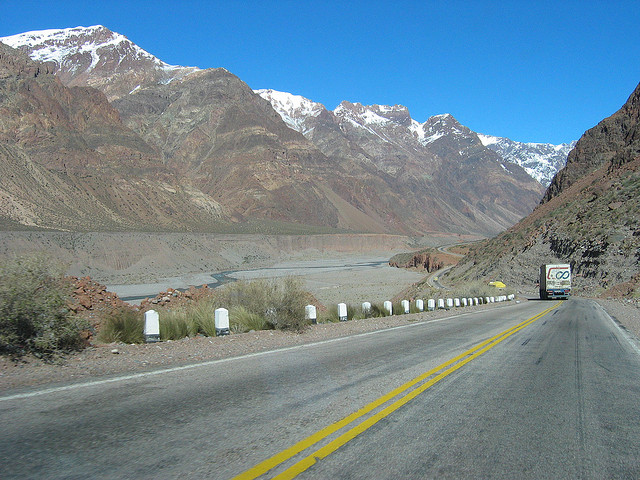
 Spectacular landscapes on the High Mountain Tour. / Source: Argentina4u [/caption] The bus picks you up early from your hotel in Mendoza and takes you along National Route 7, also known as Paso Internacional Los Libertadores , which connects Mendoza to Santiago, Chile . The scenery along the route is absolutely spectacular; it's impossible to tire of it. You find yourself in a landscape of austere vegetation, surrounded by mountains in a multitude of hues. As you travel, the mountains change color, becoming covered under a layer of permanent snow. Passing by the Mendoza River , our guide explained the geography and history of this region, emphasizing the importance of the Mendoza River for a region as dry and desert-like as the province of Mendoza. It's incredible to think that all of Mendoza 's crops, not to mention the thousands of hectares of vineyards, are irrigated by the Mendoza River. This excursion begins with a stop at the Potrerillos Dam , built to mitigate water shortages in case of low river levels. After marveling at the blue water at the foot of the mountains, we stopped in Uspallata , where we took a quick break for coffee and a restroom break. This unusual little town, with a casino, a gas station, and a few other buildings, is no accident. Trucks using this crossing often have to stop here for several days when the border closes due to bad weather. [caption id="attachment_2117" align="aligncenter" width="800"]
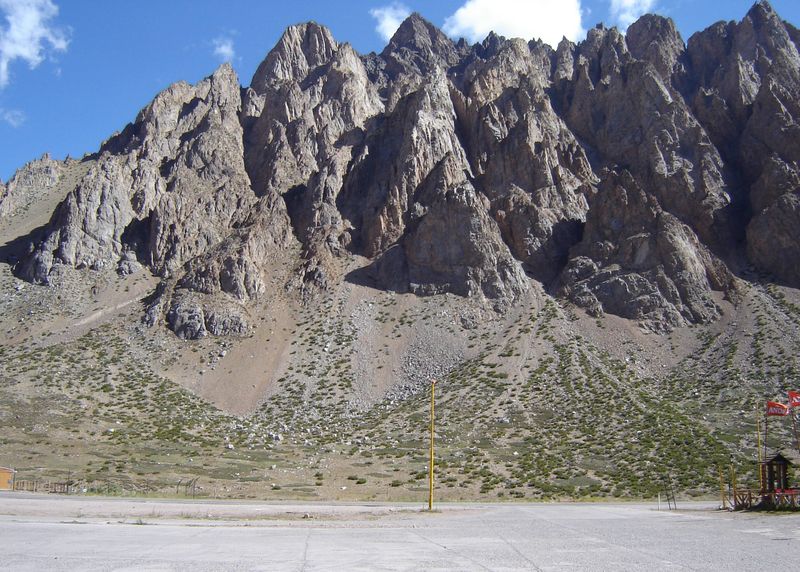 The Potrerillos Dam enabled the development of hydroelectric power, irrigation, and water level control in this area. / Source: Argentina4u [/caption] The region's history is also significant, as this area was a crossroads used by General San Martín during the liberation of Chile and later Peru. The High Mountain excursion includes stops at historically important sites. During the day, we stopped to visit an old stone bridge built by the Spanish and used by messengers to cross the river through the mountains between Argentina and Chile. Then, before rejoining the main road, the excursion passed a fort, a testament to the importance of this military zone. [caption id="attachment_2119" align="aligncenter" width="540"]
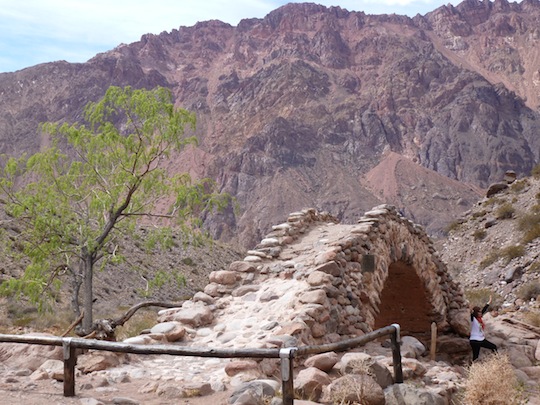 The old Spanish bridge. / Source: Argentina4u [/caption] The road continued through magnificent scenery, the colors changing as we gained altitude, passing by the now-defunct Trans-Andean Railway . The high-mountain excursion then stopped at the Los Penitentes ski resort , located just off the main road. The ski slopes were not open at this time; however, there was still plenty of snow on the mountaintops. A ski lift was operating to admire the stunning view from above. This activity is optional and costs approximately 100 pesos. [caption id="attachment_2120" align="aligncenter" width="405"]
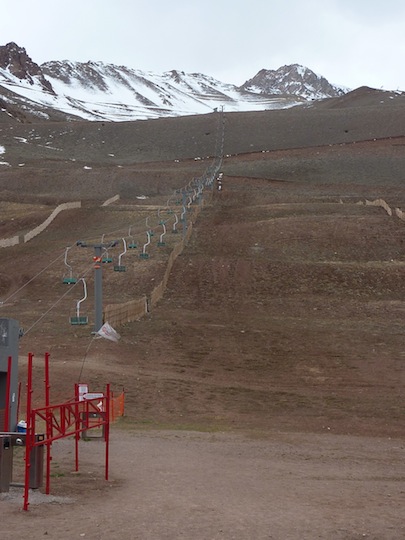 The ski lift at the Los Penitentes ski resort. / Source: Argentina4u [/caption] Finally, we arrived at Mendoza's iconic mountain: Aconcagua . Considered the highest mountain in the world (after Everest), it doesn't require technical equipment to climb, making it extremely popular with those seeking a challenge. [caption id="attachment_2121" align="aligncenter" width="540"]
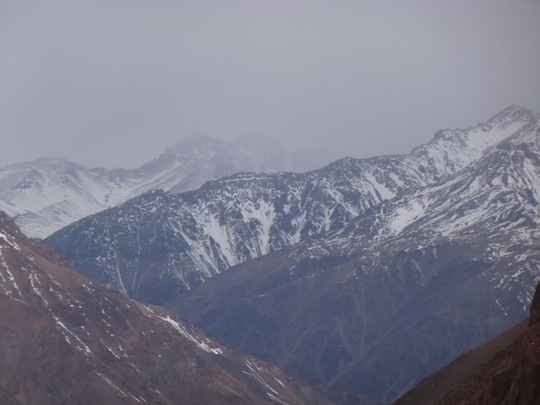 The summit of Aconcagua hidden by clouds. / Source: Argentina4u [/caption] Although the weather wasn't cooperating, snow began to fall as we left Aconcagua and continued until our arrival in Las Cuevas , a town at the entrance to the tunnel towards Chile. Consequently, our high-mountain excursion itinerary had to be adjusted for safety reasons. We enjoyed a delicious buffet lunch (not included) while admiring the spectacle unfolding before our eyes. On the way back, we passed the Inca Bridge , formed naturally by river erosion and the clash between hot and cold springs. Since the avalanche, only a church and the tunnel leading to the springs remain. [caption id="attachment_2123" align="aligncenter" width="540"]
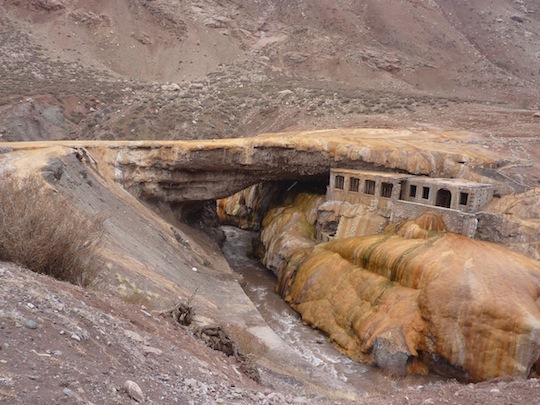 The Inca Bridge. / Source: Argentina4u [/caption]
Finally, we retraced our steps along the same route, admiring the landscapes from a new and equally breathtaking perspective. Note that the High Mountain excursion normally includes an optional activity where you can hike from Las Cuevas to the Christ the Redeemer statue. However, due to adverse weather conditions and for our safety, the itinerary was modified. Be aware that changes are always unpredictable, just like the weather in the High Mountains . The scenery is truly breathtaking, vast, isolated from the rest of the world, and utterly captivating. For me, the drive was the highlight of the day. Furthermore, the guide only increased my interest in this region. So, if you are ever in Mendoza, I highly recommend this High Mountain excursion! Click here to book the activity . By: Nicole Eberhard / Translation: Morgane Meaux
Published by Has Chacon on 04/06/2026


