 Learn more about Buenos Aires and get ready for your trip
THE LANGUAGE IN ARGENTINE
The official language of Argentina is Spanish, or Castilian. Both names are valid because they are synonymous. In addition, there is a lexicon specific to Porteños (the inhabitants of Buenos Aires) that originated with Italian and Spanish immigrants, called lunfardo , similar to slang. The most notable difference between standard Spanish and Argentine Spanish is the use of "vos" instead of "tú" or "usted ." The interjection "che" is widely used to get someone's attention, like the English exclamation "hey," and it can also be used as an interjection meaning "man." Tip: Learn a new language by taking Spanish classes in Buenos Aires !THE CLIMATE IN BUENOS AIRES
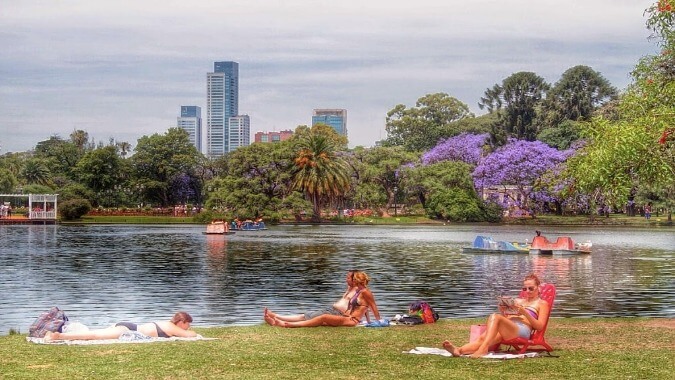 In summer, the days are longer
In Buenos Aires, the four seasons are clearly defined. Winter officially begins on June 21 and ends on September 20, with an average temperature of 8°C, making July the coldest month of the year. Summer officially begins on December 21 and ends on March 20, with an average temperature of 23°C. Between January and February, temperatures can reach 40°C, though this is rare. Humidity levels range from 75% to 90%, and rainfall is more frequent in the summer. Check local forecasts on Infoclima. THE TIME ZONE IN BUENOS AIRES
Although Argentina is in the UTC-4 time zone, the Argentine National Congress has established UTC-3 as the official time. Each province is free to use or not use the official time, depending on its geographical location. It was only in 2009 that daylight saving time was suspended, and all provinces adopted UTC-3. In winter, the sun sets around 5:00 PM, while in summer, it sets at 9:00 PM.WORK HOURS AND PUBLIC HOLIDAYS IN BUENOS AIRES
Businesses and call centers in Buenos Aires are usually open to customers from 9:00 a.m. to 6:00 p.m. , Monday through Friday. Shops are generally open all day until 8:00 p.m., and many are open on Saturdays and Sundays. However, the major tourist attractions and activities in Buenos Aires are available seven days a week. Lunchtime is typically between 12:00 p.m. and 4:00 p.m. If your travel itinerary doesn't allow you to have lunch during this time, you'll need to have a snack and wait until 8:00 p.m., when restaurants open. For more information, see the official public holidays in Argentina .RELIGIONS IN ARGENTINE
The official religion of Argentina is Catholicism . However, the Argentine Constitution recognizes and guarantees freedom of religion, and you can easily find synagogues, mosques , and many other places of worship of different faiths. Argentina has the second-largest Muslim and Jewish communities in Latin America. Tip: Check out our cultural tour of Buenos Aires' Jewish Quarter !BANKS AND CURRENCY EXCHANGE IN BUENOS AIRES
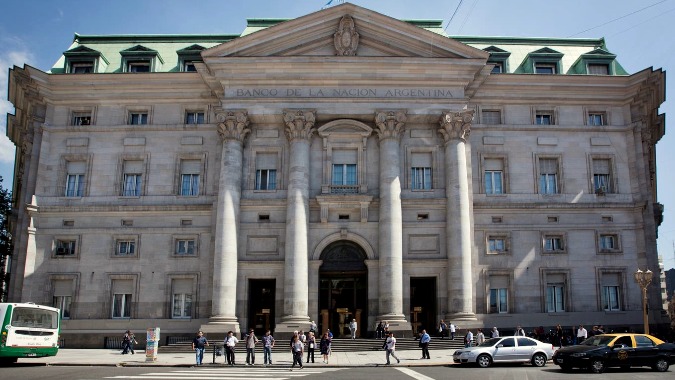 Remember that banks close early and are open Monday to Friday.
To exchange currency in Buenos Aires, the easiest way is to go to one of the city's many exchange bureaus. They are generally open Monday through Friday, from 10:00 AM to 3:00 PM. At Ezeiza International Airport , you'll find a 24-hour exchange bureau at La Nación bank in Terminal A. If the money you exchange isn't enough, or if you're in a financial emergency, ATMs are available 24/7 . The most common banking services are provided by Banelco and Link . Keep in mind that ATMs typically have a daily withdrawal limit of around 1,000 pesos. Also, ATMs are likely to be out of service during holidays and vacations.CURRENCY, EXCHANGE AND CREDIT CARDS
The local currency is the Argentine peso (ARS $). Banknotes are available in denominations of 1000, 500, 50, 20, and 10. Coins are available in denominations of 10, 5, 2, and 1. To exchange money in Buenos Aires, you must present your passport. Some shops in tourist areas also accept payment in dollars, and some even offer a 10% discount for this payment. In 2013, the Argentine government released a special edition of the 100 ARS banknote featuring the image of former First Lady Eva Perón to commemorate the 60th anniversary of her death. Tip: Learn more about Eva Perón's life with our Buenos Aires tour!TAXES IN ARGENTINE
The VAT rate in Argentina is 21%. When you shop at stores displaying the "Tax Free" symbol, you can claim a tax refund at the airport. Simply request a tax voucher at the point of purchase. Then, locate the Tax Free booth at the airport, fill out a form, and present the voucher along with your receipt to receive your refund. Tax Free stores typically display this symbol prominently, such as in the window. Before paying, confirm with the store staff that the Tax Free system is in operation, and remember to keep your receipt to present at the airport .BUENOS AIRES AIRPORTS
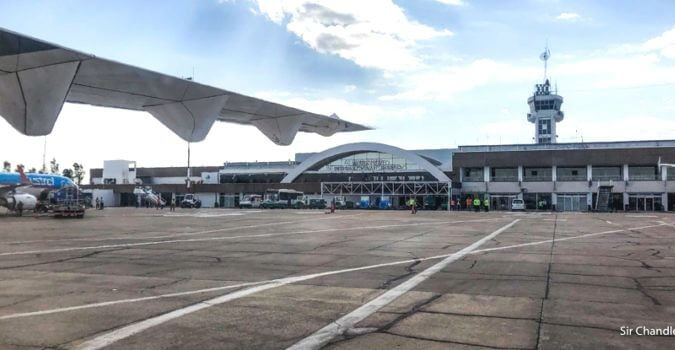 Daytours4u offers you the best private transfer services
Buenos Aires Ministro Pistarini International Airport, commonly known as Ezeiza Airport (EZE), is located outside the city of Buenos Aires. It is situated 35 kilometers south of the city center. The best way to reach the city center is by private shuttle , taxi from the airport , or Remise service . Prices for private cars and taxis can vary, so we recommend booking a shuttle for greater comfort and safety upon arrival in Buenos Aires. There is also an inexpensive bus service, but the downside is that it takes between two and three hours to reach the city center and can only be paid for with SUBE (Buenos Aires public transport card). The city's other airport is primarily used for domestic flights and international flights to neighboring countries (some flights to Chile and Brazil operate from this airport). The airport is called Jorge Newberry Airport or Aeroparque. It is located northeast of Buenos Aires on the Río de la Plata coast. It is easier to land at this airport because it is only 15 minutes from the city center.TRANSPORTATION IN BUENOS AIRES
Getting around Buenos Aires by public transport is very easy. The metro stations are well-signposted, and it's easy to find your bus because the city is laid out in a grid pattern. Taxis are also inexpensive compared to other world capitals. Before taking a taxi, check the route and main avenues beforehand to avoid going around in circles. Uber and other apps are also available. Remember that to use public transport, you need to buy a SUBE card, which you can get at kiosks and metro stations. Most of Buenos Aires' public bus lines, or colectivos , operate 24/7, and traveling on them is quite safe and comfortable. Once on board, you tell the bus driver your destination, and they will tell you the fare. The ComoLlego and ComoViajo apps are popular and offer several options for navigating public transport. Buenos Aires also has a metro system, which is reliable and safe. It has six lines (A, B, C, D, E, H) , connecting the entire city with the city center (Microcentro). The "Subte" (as it's called in Buenos Aires) is certainly the fastest way to get around the city, and its routes cover almost all of the capital's tourist attractions. The Buenos Aires subway system is open Monday through Friday from 5:00 a.m. to 10:00 p.m., and on Saturdays, Sundays, and holidays from 8:00 a.m. to 10:00 p.m. Each ride costs ARS 20. There is also an intercity train service connecting the city of Buenos Aires and its surrounding areas, including the city limits. The most popular line for tourists is the Mitre line , which runs to the northern coast of Buenos Aires Province, reaching Tigre or San Isidro. The train is not as popular for long distances, as buses are generally much more reliable, comfortable, and faster. There are stations where the train and metro connect, such as the Retiro terminal, which is the main place to buy train and bus tickets to other destinations in Argentina and neighboring countries. Tip: Enjoy our excursions to Tigre !TELECOMMUNICATIONS IN ARGENTINE
The country code for Argentina is +54, the area code in Buenos Aires is 11, and the mobile phone prefix is usually 15. Mobile phones in Argentina often require the area code, so if you're trying to call a mobile phone in Buenos Aires somewhere in Argentina (or vice versa), you must dial the city code before the mobile phone number (e.g., 11 + 15 for Buenos Aires). But if you're calling from a mobile phone in Buenos Aires or from abroad, you must dial 54 + 9 + 11 + the mobile number without the 15 prefix. If you're calling from abroad from a public phone booth, be sure to dial 00 before the country code. The Buenos Aires government has free Wi-Fi networks installed in hundreds of locations throughout the city. The Wi-Fi network is called BA . Check the Buenos Aires Free Wi- Fi website to find out where you can get free internet access. Often, these are museums or parks .ELECTRICITY IN BUENOS AIRES
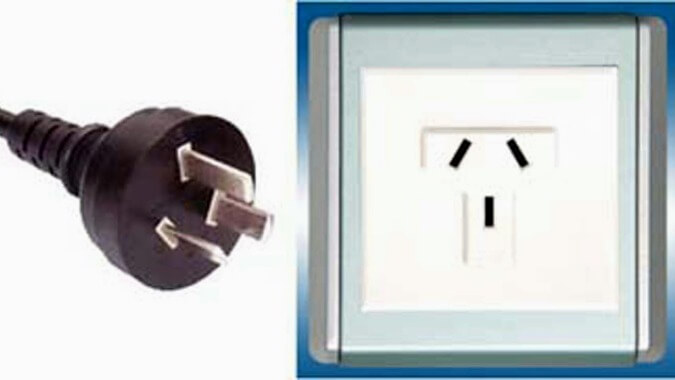 Don't forget to always have a universal charger on hand.
The metric system is used in Argentina (kilograms, kilometers, and liters), and the electrical voltage is 220 volts , 50 Hz. Electrical outlets have two cylindrical prongs or two flat holes with a ground connection. If you need to plug in a device that operates on 110 to 220 volts, you can buy an adapter at any electrical store for about 100 Argentine pesos.HEALTH IN BUENOS AIRES
Vaccinations are not required to visit Buenos Aires. Public water is safe and drinkable. In some tourist areas, you will find clean public restrooms, and you may be asked to tip the person cleaning them. Public hospitals are open to travelers and are free of charge. Local doctors are reliable and internationally renowned, and emergency ambulance services are also free by dialing 107.SECURITY IN BUENOS AIRES
Buenos Aires is a safe city, but remember to take basic precautions to avoid any unpleasant experiences. Protect your belongings in any area with a high concentration of people, where pickpockets often take advantage of moments of distraction to steal wallets, passports, cell phones, and cameras . This also applies to crowded buses and subways. Be vigilant with purses and backpacks when in cafes or restaurants; don't leave your belongings on tables or hanging behind chairs, and keep them out of sight. At night, limit the amount of cash you carry and always know exactly where you are going. It's good to know areas to avoid at night, such as La Boca , and avoid being alone in dangerous areas. Only use taxis labeled "Radio Taxi," as these are official and authorized by the government. They are safer than independent drivers. And if someone tries to steal your belongings, don't resist; nothing is more important than your own safety. There's also the "Tourist Police," a unit specializing in security at major tourist sites. If needed, you can contact the police station dedicated to tourists in Buenos Aires by calling 4346-5748 . Assistance is available in English, Spanish, Portuguese, Italian, and French.ARGENTINE CUISINE
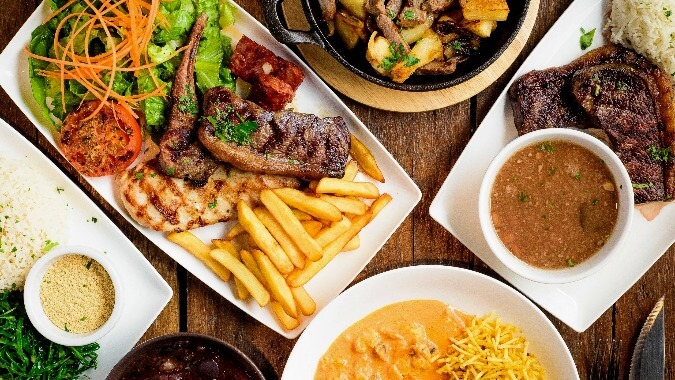 You'll find the best food tours at Daytours4u, ideal for everyone!
Despite the physique of the Porteños (residents of Buenos Aires), which might lead one to believe that Buenos Aires cuisine is the healthiest in the world, Argentine cuisine is a blend of European and gaucho influences, making it incredibly rich. It's a real temptation for all tourists! However, it can sometimes be a nightmare for vegetarians. Vegetables and fruits are available, but they are generally more expensive and less popular than beef. Grilled meat, such as asado (the name given to barbecue), is a staple of the Argentine diet. You'll also find pizzas, pastas, and delicious empanadas, which are part of the Italian heritage . The favorite drink of Argentinians is a traditional infusion made from yerba mate , a bitter herb that contains stimulants like caffeine. Tip: Discover Argentine gastronomy in Buenos Aires ! POPULATION
The cultural diversity of Buenos Aires is evident in its society, customs, and habits. This diversity is the result of a government that encouraged European immigration during the 18th century. Spaniards, Italians, English, Jews, Germans, and other ethnic groups arrived in Argentina. This mix of immigrants shaped the Porteña idiosyncrasy, represented by tango . The arrival of these immigrants opened the door to many years of prosperity and wealth in the city and its surrounding regions. Tip: Choose your tango show in Buenos Aires !By: The Daytours4u Internet Content Team.
Published by Has Chacon on 04/06/2026


