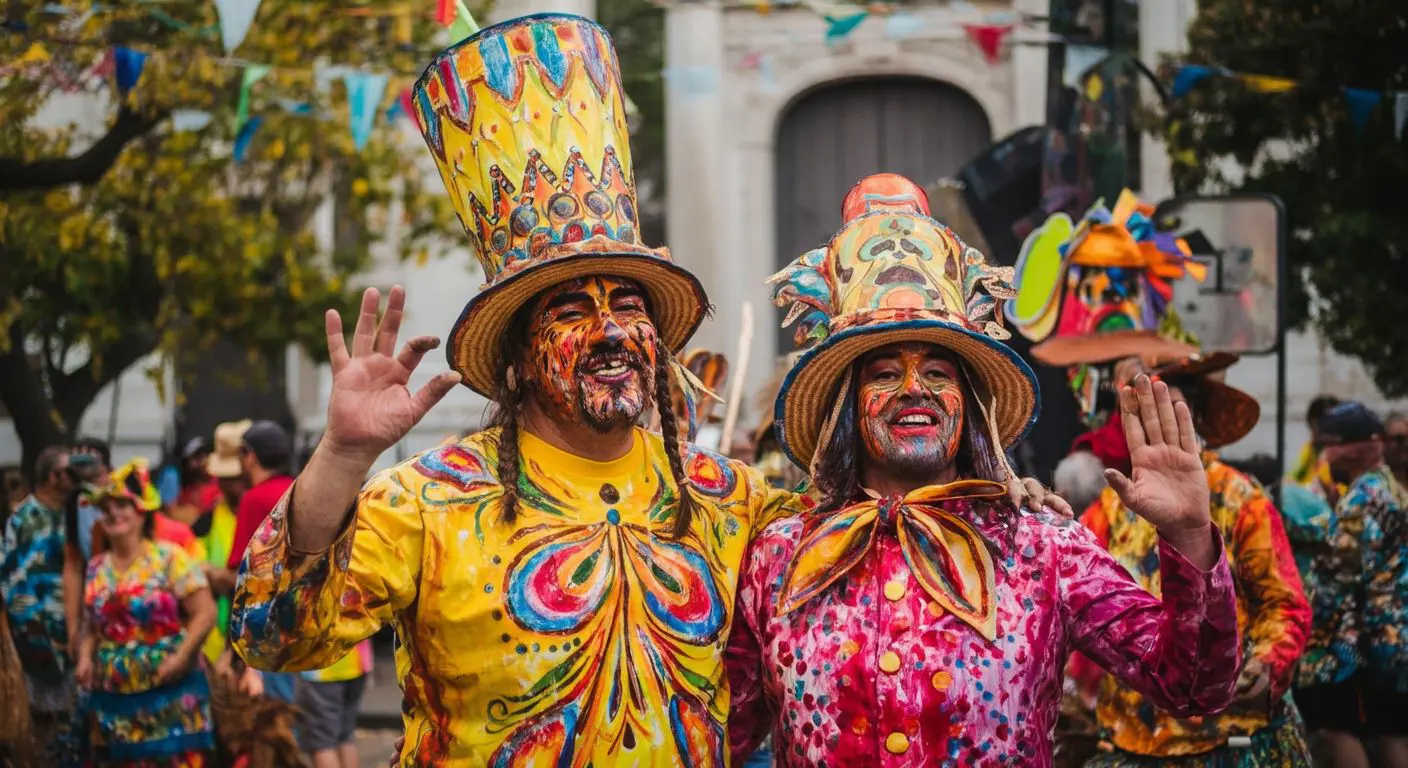
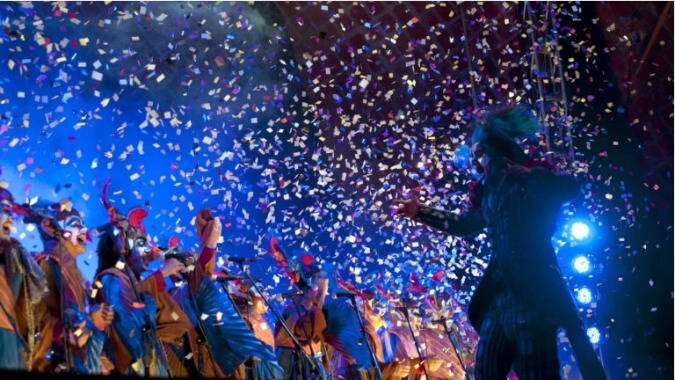
 The longest carnival in the world / Photo: Courtesy of the Carnival Museum[/caption]
However, a common misconception is that it's a single, monolithic celebration. In reality, depending on the region of the country, you can enjoy carnivals with distinct characteristics : those in border cities with Brazil, for example, combine samba with local rhythms; while in Montevideo, candombe and murgas (street bands) take center stage; for young people looking for a good time, the beaches of the Rocha department are probably the favorites, especially the one in La Pedrera, something like a local version of the Full Moon Party, where every year the main street fills with groups of friends in costume, determined to have a blast. The date of Carnival is international, varies each year, and is established after the dates of Passover and Holy Week are set. For its most important date, Easter Sunday, the first Sunday after the first full moon of autumn (spring in the Northern Hemisphere) is chosen, and then 40 days are subtracted to calculate the Carnival date. In Uruguay, the holidays for this celebration are two days, Monday and Tuesday, although many people choose these dates for their vacations (here the law grants 20 days of paid vacation for all salaried workers) and take the whole week off.
CAPITAL CELEBRATIONS
In Montevideo, we can distinguish three types of celebrations : the Carnival Inaugural Parade, held on Avenida 18 de Julio; the Llamadas Parade, which takes place in the Sur and Palermo neighborhoods; and the Tablados shows, open-air stages distributed throughout most of the city's neighborhoods. The Carnival Inaugural Parade , held on Avenida 18 de Julio—one of the city's main avenues, located in the Centro neighborhood—opens the carnival season, offering a mix of comparsas ( carnival troupes), murga groups, comedians , parodists, and other artists associated with the genre, some even riding on floats. In addition, the people chosen that year as Carnival Figures , Llamadas groups , and Samba Schools parade; until 2017, these roles were filled by the "queens" of the three categories, but currently, people of either sex can be chosen as representatives. [caption id="attachment_3819" align="aligncenter" width="675"]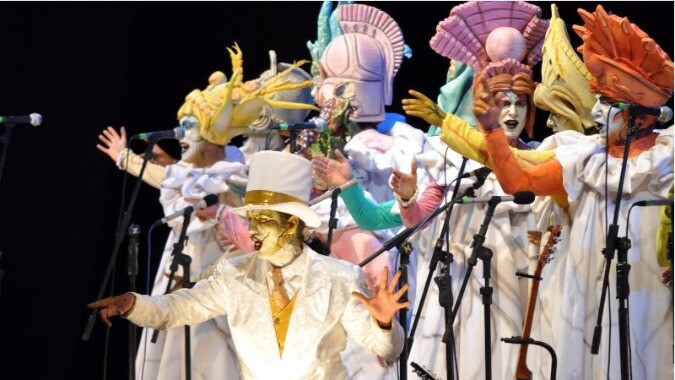 Comedians and choirs in the parades / Photo: Courtesy of the Carnival Museum[/caption]
The Llamadas Parade , held since 1956, offers a two-day spectacle of forty comparsas (carnival troupes) in the Sur and Palermo neighborhoods , parading along Carlos Gardel and Isla de Flores streets. Among the most awarded are Yambo Kenia—the 2017 official competition champion—Cuareim 1080—the 2016 winner—Tronar de Tambores, La Gozadera, and Generación Lubola. The term "llamas" referred in colonial times to an impromptu gathering, in which some members of the comparsa summoned the rest using the rhythmic language of the drum. The neighborhood carnival parades of Montevideo are another carnival experience worth noting: 18 are held each year, spread throughout the city, providing travelers with the perfect excuse to explore a neighborhood off the beaten tourist track and join in this authentic celebration. Tablados , on the other hand, are not parades but open-air stages . They are usually found in most neighborhoods, and the programming varies each night, as they are visited by groups of artists divided into five categories: comparsas (carnival troupes), murgas (street bands), comedians, parodists, and variety shows. For this reason, it's important to check the daily schedule if you're planning to see a particular act. The best and most comprehensive tablado is the Teatro de Verano (Summer Theater) , an open-air amphitheater in the Parque Rodó neighborhood, where the jury for the Official Carnival Groups Competition is also located. They score the various performances to choose the winner each year. Among the most popular and award-winning groups of artists, Don Timoteo , the murga of soccer player Chino Recoba, is worth keeping an eye out for. Its roster includes renowned carnival artists such as Edu "Pitufo" Lombardo, Marcel Keroglián, and Pablo "Pinocho" Rutín. Also included are La Gran Muñeca , winner of the 2016 edition in the murga category; Los Patos Cabreros, famous for their choruses; and Cayó la Cabra, which has won awards for its lyrics in several editions. Among the parodists, Nazarenos and Zíngaros are usually among the favorites, while in the humorist category , Cyranos, Sociedad Anónima, and Los Chobis tend to stand out for their shows. [caption id="attachment_3820" align="aligncenter" width="675"]
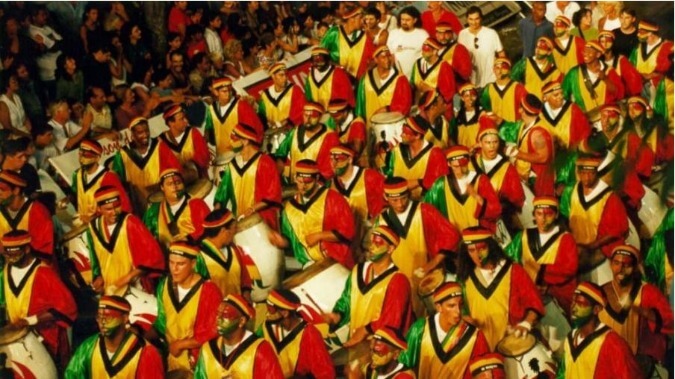 Colorful carnival troupes during Carnival in Uruguay / Source [/caption]
BORDER RHYTHMS
The departments of Artigas , Rivera , and Cerro Largo border Brazil , and due to the strong influence of their neighboring giant, they offer combined celebrations of samba, axé, and other Brazilian rhythms. The celebration in Melo, the capital of Cerro Largo, is perhaps the most "showbiz-oriented," as it often invites renowned Uruguayan and Argentinian showgirls. In contrast, the celebration in the city of Artigas, capital of the department of the same name, is inspired by the Rio de Janeiro Carnival and is probably the most professional, with four samba schools that rehearse intensely throughout the year for each February: Barrio Rampla, Emperadores de la Zona Sur, Imperio del Ayuí, and Académicos. Each school brings together about a thousand performers , so a walk along Avenida Lecueder—the city's main avenue, where the parade takes place and where most of the duty-free shops are located—can last up to an hour, from the time the first performers to the last of the same school. For its part, the Rivera Carnival strongly embraces interculturalism, blending the candombe and murga rhythms from the south with the samba and axé from the north. Also, for about ten years now, its main avenue, Sarandí, has featured an Electric Trio: a giant truck that combines sound, lighting, and movement, along with dancers, singers, and psychedelic lights. The parades always conclude with a show on a public stage located at the end of that street, facing the main square. [caption id="attachment_3821" align="aligncenter" width="675"]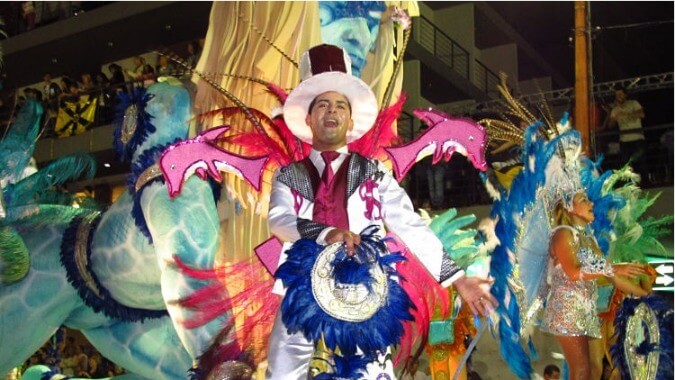 The Artigas Carnival has a Brazilian influence/ Photo: Carina Fossati[/caption]
PARTY ON THE COAST
There's no official organization behind it ; it's a self-generated phenomenon fueled by the popularity of past events and social media . It's a favorite among young people who want to party until dawn, and those who attend don't come to see any parade. Instead , groups of friends spontaneously dress up and head out to the main street of the resort town to have fun. Its popularity is such that a couple of years ago, the mayor of the region himself asked in a radio interview that people stop coming because La Pedrera—a small resort in the department of Rocha—was overcrowded. However, in recent years, the authorities have increased security, cleaning, public restrooms, and other measures to ensure a pleasant atmosphere for the public celebration.THINGS TO KEEP IN MIND
- In Uruguay, the official Carnival days (working holidays) are Saturday, February 10, Sunday, February 11, Monday, February 12, and Tuesday, February 13, when celebrations take place in most departments. However, the Carnival Inaugural Parade , along Avenida 18 de Julio, will be on Thursday, January 25 ; the Llamadas Parade will be on Thursday, February 8, and Friday, February 9 ; and the final ceremony of the Official Carnival Competition will be on Thursday, March 15. - If you want to enjoy the border carnivals, it is very important to book accommodations in advance , since February is when these places receive the most visitors and hotels tend to be overwhelmed. On the Atlantic coast, hotels also tend to fill up quickly and even increase prices from Saturday to Tuesday of Carnival. - Except for the La Pedrera Carnival, the festivities and parades held in public areas are usually fenced off and have a variable entrance fee . The Tablados (street stages) and the Summer Theater also have an entrance fee , which varies depending on the day and the shows. - In recent years, murga groups and other styles have emerged in the interior of the country; therefore, some departmental governments have arranged for artists from the capital to visit other regions, so today it is also possible to enjoy some of these shows during Carnival outside of Montevideo. - For the past 10 years, the city has had its own Carnival Museum (Rambla 25 de Agosto de 1825, Ciudad Vieja, phone +598 2915 0807, open from 11 a.m. to 5 p.m.), which offers displays of costumes, sets, props, and historical material. Furthermore, this museum is next to the Mercado del Puerto (Port Market ), a renovated old building where several steakhouses offer their spaces as a meeting place for travelers and locals who wish to try Uruguayan meats paired with medio y medio , the market's typical drink.…
Don't miss the diverse manifestations of Uruguay's Carnival , and if you're looking for other activities to do during this time or at any time of year, contact us through Uruguay4u , where you'll find the best tours in Montevideo , Punta del Este , Colonia , and more.By: Carina Fossati , journalist and author of the blog Hills To Heels
Published by Has Chacon on 03/06/2026


