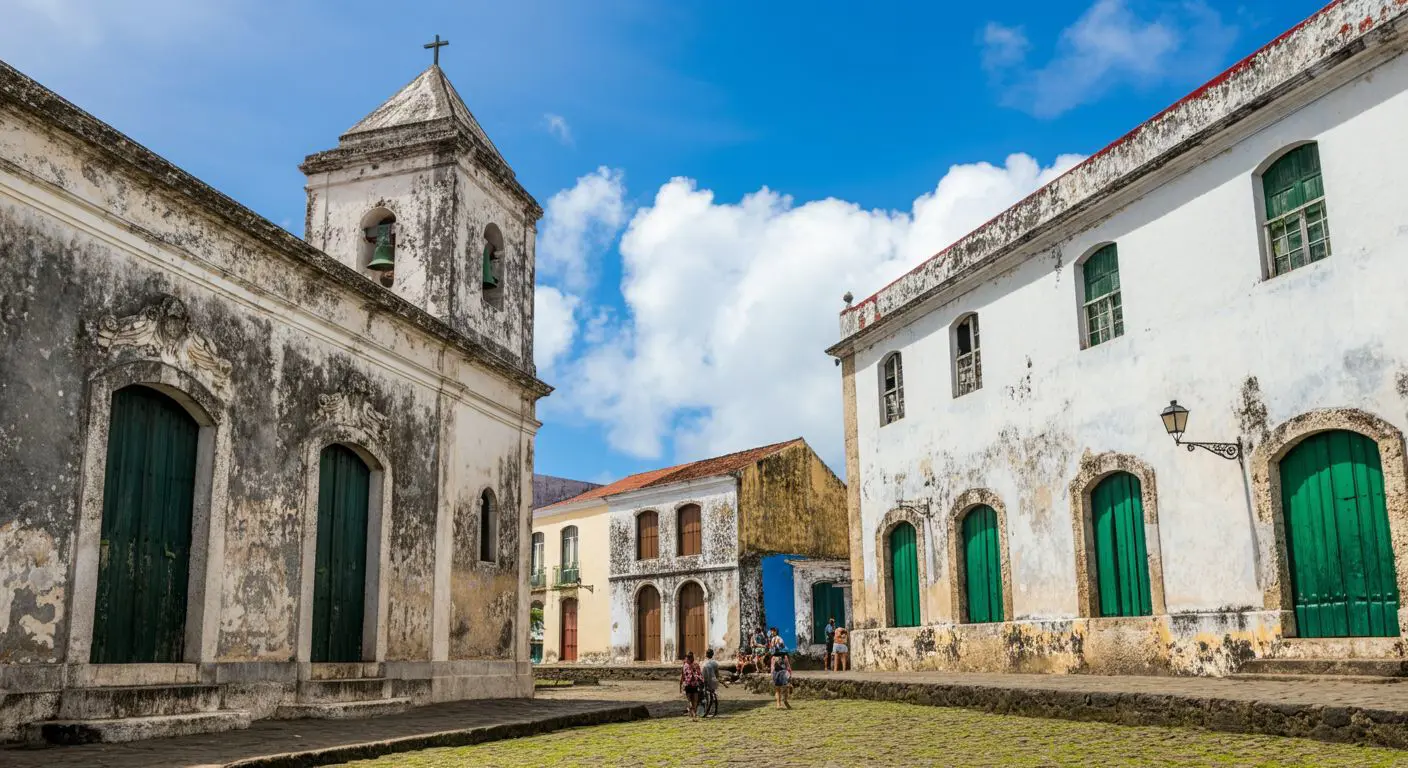

The cultural and historical richness of Salvador de Bahia is concentrated mainly in the Pelourinho, where numerous churches and colonial houses fill the landscape / Photo: Tiffany Flour
1- Marvel at the streets of Pelourinho
If there's one place you absolutely can't miss in Salvador, Bahia, it's the historic center. Pelourinho, as those in the know call it, is a veritable Portuguese colonial-era neighborhood. Its authentic streets, reminiscent of the city's oldest part, are a testament to its rich Portuguese architecture . Perched high above the city, this district captivates visitors with its vibrant pastel colors, its panoramic views of All Saints' Bay from the famous Lacerda Elevator , its numerous churches, and the artistic displays that adorn every corner. In fact, every time you venture into Pelourinho, you're sure to witness a capoeira circle in Praça Sé , a percussion group in front of the Church of Nossa Senhora do Rosario dos Pretos , or women in traditional dress posing for photos along Largo Terreiro de Jesus. Travel Tip: To fully appreciate the historical and cultural richness of Pelourinho, I recommend taking a City Tour of Salvador and learning about the rich past of these typical streets, declared a World Heritage Site by UNESCO. The Largo do Pelourinho square, where the Nossa Senhora do Rosário dos Pretos church is located, is a true artistic meeting point between percussion, capoeira and the Jorge Amado Foundation House / Photo: Tiffany Flour
2- Explore the flavors of Brazil
You don't truly know a culture until you experience its cuisine. And for good reason: Afro-Brazilian culture is so rich in tastes and flavors that it's exported not only throughout the rest of this vast country but also to the far corners of the world. Bahia and its gastronomy are sure to delight your palate with dishes like bobo de camarão , feijoada baiana, acarajé, vatapa, and moqueca , among others. For those with a sweet tooth, sweet tapioca and passion fruit mousse are not to be missed . The best restaurants and bars in the city are located in the historic center, Pelourinho, and in the Barra neighborhood, home to the lighthouse. Don't hesitate to experiment with the street food, which is ubiquitous in Salvador and perfectly in tune with the local Afro-Brazilian culture. For a stroll through an authentic Bahian market, the São Joaquim Market , located north of the Bay of All Saints, is especially lively and sought after for its fresh fruits and vegetables, as well as other local products such as handicrafts, statues, and necklaces used during Candomblé ceremonies. Travel Tip: Want to experience Bahian nightlife? Don't miss one of the city's best folk dance performances , accompanied by typical Brazilian food. An unforgettable night is guaranteed!3- Walk along its fine sand and bathe in its turquoise waters
With its breathtaking views of the Bay of All Saints and the blue horizon of the Atlantic Ocean, Salvador de Bahia sets the rhythm of daily life to the beat of the waves and tropical temperatures. However, the most beautiful beaches aren't found in the city center, as these tend to be small and urban, where cleanliness and safety aren't always guaranteed. But just a few kilometers away, Salvador de Bahia offers idyllic settings with fine sand and turquoise waters. Several boats can take you for a day trip to some of these beautiful neighboring beaches: Frailes and Itaparica in the south, or Praia de Guarajuba and Praia do Forte in the north. All you have to do is choose. Travel tip: Morro de São Paulo Island , located off the coast of Tinharé Island, is a very popular tourist destination in Brazil, offering an exceptional view of paradise. But if you want to discover something quieter, more authentic, and eco-friendly, don't miss Boipeba Island, located just below it.4- Experience all the charm of Bahia
Despite having a culturally respected and well-preserved historic center, it doesn't offer all the excitement that Salvador de Bahia boasts. In fact, the Barra neighborhood is a favorite spot for locals and tourists alike to enjoy excellent bars and restaurants , as well as a vibrant street life, with artistic performances accompanied by percussion instruments and street art. It's also a more tranquil area to enjoy an afternoon on the grass along Avenida Oceanica and the ocean. A pleasant stroll along this avenue will allow you to discover Morro do Cristo, the Farol da Barra lighthouse , and the Forte de Santa Maria if you continue along Avenida Septembre. Can you miss it? Absolutely! The sunset at the Farol da Barra is a truly spectacular sight!
Located just 5 km from Pelourinho, the Barra neighborhood is the second most popular destination for locals and tourists alike, thanks to its beaches, sunsets, and vibrant nightlife. / Tiffany Flour
5- Going out to meet art
Salvador de Bahia is one of those magical places where a simple stroll becomes a visit to an art gallery. You can find tiles in almost every shop and other artistic spaces along the street, depicting landmarks of the city and the Balinese customs of the locals. More than just taking home a souvenir, it's a true artistic experience fostered through art . The Bahia region is also very popular for its rich handicrafts, diverse in colors and materials—there's something for everyone! The famous Brazilian "canga" (sarong), African bracelets, loincloths, jewelry, and more. You're sure to find what you're looking for in the numerous shops of Pelourinho or in the Mercado Modelo, located in the lower part of the city, accessible by the Lacerda funicular. Travel tip: Plan your trip with the best of Salvador de Bahia here
Salvador de Bahia is one of Brazil's most popular places for street art. Residents express their creativity through political, cultural, and religious statements on the city's stones. / Photo: Tiffany Flour
Salvador de Bahia is a destination that can be described as a journey in itself. Such historical , cultural, and natural richness requires several days to properly enjoy and immerse oneself in the enchanting Bahian culture. Through your five senses, Salvador takes you on a journey to discover its African origins, its weighty colonial past, and the flame that still keeps it dynamic, warm, and joyful today. So, open your heart, and Bahia will welcome you with open arms.By: Tiffany, passionate communicator, avid marketer, enthusiastic traveler, and contributor to Daytours4u
Published by Has Chacon on 03/06/2026


