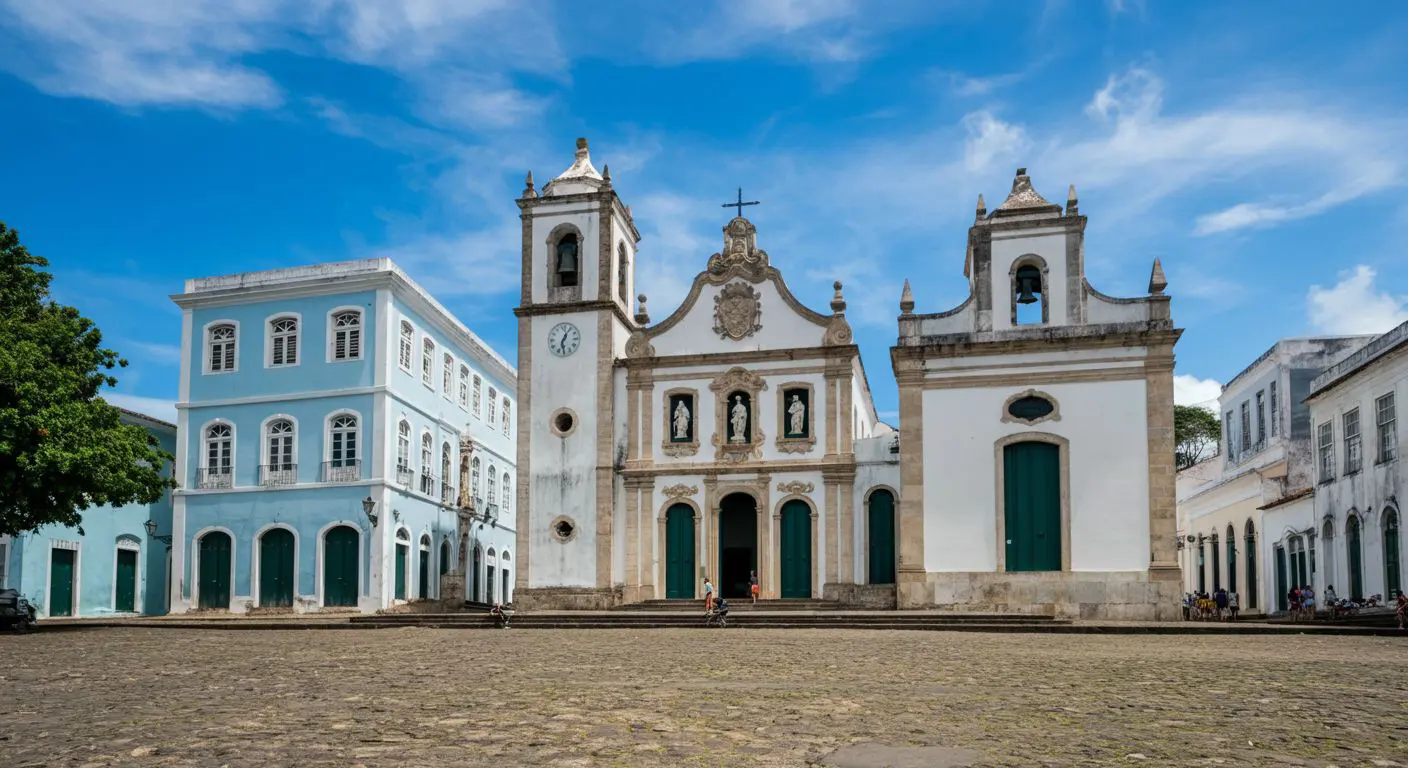

The cultural and historical wealth of Salvador de Bahia is essentially concentrated in the Pelourinho district, where numerous churches and colonial houses dominate the landscape / Photo: Tiffany Flour
1- Marvel while strolling through the streets of Pelourinho
If there's one place you absolutely must visit in Salvador de Bahia, it's the historic center ! Pelourinho, as it's affectionately known. Authentic streets dating back to the colonial era, with their Portuguese architectural style , line the oldest part of Salvador. Perched on the city's heights, the neighborhood captivates all its visitors with its vibrant pastel colors, its view of the Bay of All Saints from the famous Lacerda Elevator, its numerous churches, and the artistic displays that adorn every corner. Indeed, on every outing to Pelourinho, you're likely to encounter a Capoeira circle in Praça Sé, a percussion group in front of the Nossa Senhora do Rosario dos Pretos church , or women in traditional dress posing for photos along the Plaza 15 de Novembre (Largo Terreiro de Jesus). Traveler's tip: To enjoy all the historical and cultural riches of Pelourinho, it is recommended to participate in a City tour of Salvador , to learn about the heavy past of these typical streets declared a world heritage site by UNESCO.
Largo do Pelourinho square, where the Nossa Senhora do Rosário dos Pretos church is located, is a true artistic meeting place, combining percussion, Capoeira, and the Jorge Amado Foundation House / Photo: Tiffany Flour
2- Explore Brazilian flavors
You don't truly know a culture until you've tasted its cuisine! And for good reason: Afro-Brazilian culture is so rich in taste and flavor that it's not only exported throughout this vast country, but to the ends of the earth. Bahia and its cuisine tantalize the taste buds with dishes like bobo de camarão, feijoada baiana, acarajé, vatapa, and moqueca, among others! For those with a sweet tooth, don't miss the must-try sweet tapioca and passion fruit mousse . The best restaurants and bars in the city are located in the historic center, Pelourinho, and in the Barra district, where the lighthouse stands. Be sure to try the street food, ubiquitous in the streets of Salvador, which perfectly reflects the local Afro-Brazilian culture. For a stroll through an authentic Bahian market, the São Joaquim market, located north of the Bay of All Saints, is particularly lively and popular for its fresh fruits and vegetables, as well as other local products such as handicrafts and statues and necklaces used in Candomblé ceremonies . Traveler's tip: Want to experience Bahian nightlife? Don't miss one of the city's best folk dance shows, accompanied by typical Brazilian dishes. An unforgettable night is guaranteed!3- Walk on its fine sand and swim in its turquoise waters
With breathtaking views of the Bay of All Saints and the blue horizon of the Atlantic Ocean, Salvador de Bahia's daily life revolves around the rhythm of the waves and tropical temperatures. However, the city center isn't where you'll find the most beautiful beaches, as they tend to be quite small and urban, where cleanliness and safety aren't always guaranteed. But just a few kilometers away, Salvador de Bahia offers idyllic settings with fine sand and turquoise waters. Several boats can take you to spend a day at some of these beautiful nearby beaches: Frailes and Itaparica in the south, or Praia de Guarajuba and Praia do Forte in the north. The choice is yours! Traveler's tip: Morro de São Paulo Island , located on the island of Tinharé, is a very popular tourist destination in Brazil, offering an exceptionally beautiful panorama. But if you want to discover something calmer, more authentic and ecological, don't miss Boipeba Island, located just below.4- Fully experience the charm of Bahia
Despite its culturally respected and preserved historic center, it doesn't offer all the same vibrancy as Salvador de Bahia. In fact, the Barra district is a favorite spot for locals and tourists alike, offering excellent bars and restaurants , as well as a lively street scene with artistic performances accompanied by drummers roaming the streets and street art murals. It's also a quieter area, perfect for a relaxing afternoon on the lawn along Avenida Oceanica and the ocean. A pleasant stroll along this avenue will lead you to Morro do Cristo, the Farol da Barra lighthouse, and the Forte de Santa Maria if you continue along Avenida Sept de Sept Señora. And don't miss the sunset at the Farol da Barra – a truly spectacular sight!
Located just 5km from Pelourinho, the Barra district is the second most popular spot for locals and tourists alike, thanks to its beaches, sunsets, and vibrant nightlife. / Photo: Tiffany Flour
5- To discover his art
Salvador de Bahia is one of those magical places where a simple stroll transforms into a visit to an art gallery. Azulejos (tile art) are found in almost every shop and other street art venue, depicting scenes of the city and Balinese customs. More than just a souvenir, this art form encourages a genuine artistic process. The Bahia region is also highly prized for its rich handicrafts, diverse in color and materials—there's something for everyone! From the famous Brazilian "canga" (sarongs), to African bracelets, traditional wrap dresses, jewelry, and more, you're sure to find something you love in the many shops of Pelourinho or at the Mercado Modelo, located in the lower part of the city, accessible via the Lacerda Elevator. Travel tip: Build your travel itinerary with the best of Salvador de Bahia here.
Salvador de Bahia is one of Brazil's most popular spots for street art. Residents express their creativity through political, cultural, and religious messages on the city's buildings. / Photo: Tiffany Flour
Salvador de Bahia is a destination that feels like a journey in itself. Its rich history, culture, and natural beauty demands several days to fully appreciate and immerse oneself in the charming Bahian culture. Through all five senses, Salvador invites you to discover its African roots, its complex colonial past, and the enduring spirit that keeps it vibrant, welcoming, and joyful today. So, open your heart, and Bahia will welcome you with open arms!By: Tiffany, passionate communicator, seasoned marketer, enthusiastic traveler and contributor to Daytours4u
Published by Has Chacon on 04/06/2026


