
Diving in the waters of Easter Island (Rapa Nui) is one of the most unique experiences on the planet. When diving at Easter Island, you can expect visibility of up to 60 meters and an ecosystem teeming with endemic marine life. If you're planning your next dive to Rapa Nui, learn everything you need to know in this guide.
Rapa Nui Immersion Summary
Average visibility: 40 to 60 meters (legendary clarity in the South Pacific).
Water temperature on Rapa Nui for diving: Between 20°C (July-August) and 24°C (January-February).
Depth of the submerged Moai: Between 18 and 22 meters.
Marine fauna: Fish families and turtle sightings Honu.
Start: Departures from the coves of Hanga Roa (Otai and Roa).
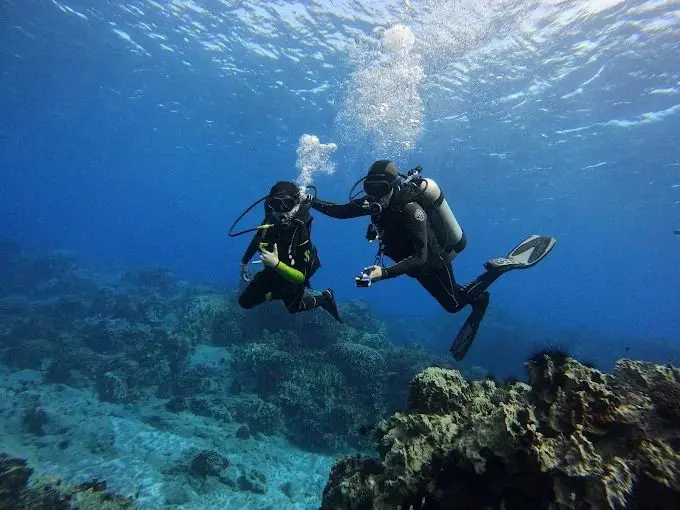
What is the underwater experience like in Rapa Nui?
Diving in Rapa Nui is to immerse yourself in a dramatic and desert-like landscape. Because it is a remote volcanic island and lacks rivers to carry mud or sediment to the ocean, the water is exceptionally pure.
The result? Visibility that easily reaches depths of 50 to 60 meters , a figure difficult to match in other latitudes. The scarcity of floating particles and plankton makes its waters crystal clear. Ideal for discovering the best diving centers in Hanga Roa and diving with complete safety.
Travel Tip: Find the requirements and learn everything you need to know to travel to Easter Island here.
The myth of the submerged Moai in Rapa Nui: Depth and technical requirements
The underwater Moai is the most sought-after attraction for travelers. It's vital to understand its technical characteristics before scheduling a dive to avoid frustration at the dive center.
Is the archaeological Moai real?
No, it's not an ancient structure swept away by a cataclysm, nor a relic of seafaring ancestors. The submerged stone giant is a concrete replica that was placed there in 1994.
It was built by local artisans in collaboration with diver Mike Rapu for the production of the film Rapa Nui . After filming, the structure was anchored to the seabed as a tourist attraction and artificial reef.
Certifications required to descend to the Moai of Rapa Nui
The statue sits on a sandy bottom at a depth of between 18 and 22 meters off the coast of Hanga Roa. Authorities prohibit inexperienced individuals from descending to the bottom.
To visit this site, a PADI Easter Island certification (or its CMAS/SSI equivalent) is required. Additionally, the area is often exposed to variable South Pacific currents. A minimum level of underwater technical proficiency is required.
Travel tip: Experience the adventure of diving on the outer coast of Hanga Roa here.
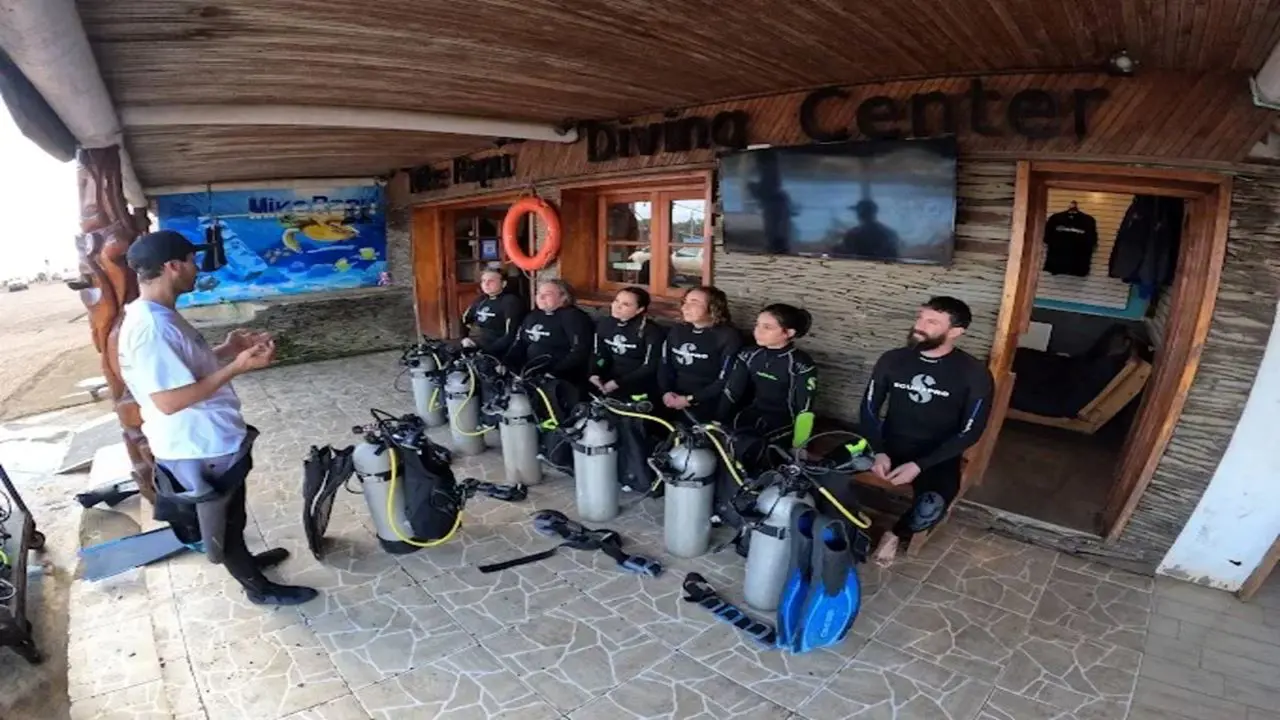
Easter Island Introductory Scuba Diving: Your First Dive in Hanga Roa
If you don't have an international diving certification but don't want to miss out on the experience of diving, the Baptism excursions are the right option for you.
Hanga Roa Otai Bay and turtle watching (Honu)
The Easter Island introductory scuba diving tour is designed for beginners and requires no prior experience. The activity begins with a technical briefing on land at Hanga Roa Otai cove.
The dive takes place in a protected area of the bay at a controlled depth of between 8 and 12 meters, always with a professional instructor. Here, it is very common to interact with the endemic marine fauna of Rapa Nui , especially close encounters with sea turtles (known locally as Honu ).
The destination also offers accessible diving options on Easter Island for travelers with reduced mobility. It guarantees safe entry into the water from the cove's ramp.
Advanced level sites: Diving at Motu Nui and ocean cliffs
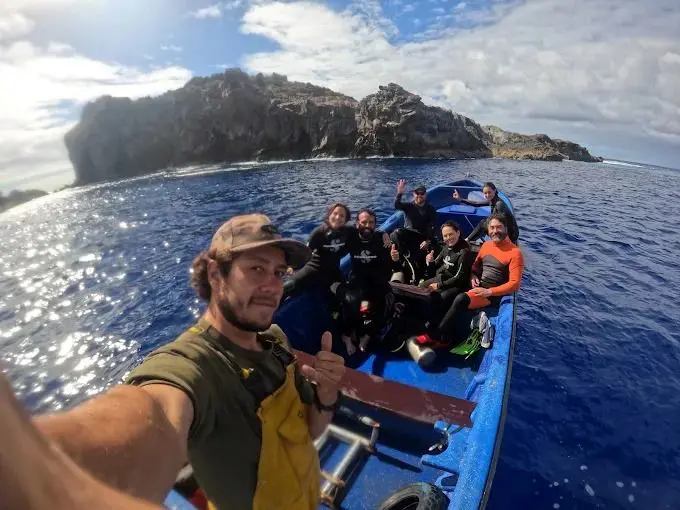
For experienced divers with up-to-date logs, the best diving excursions on Rapa Nui head towards the southwest of the island. These are islets known as Motu Nui, Motu Iti, and Motu Kao Kao .
This area is famous for its vertical cliffs that plunge into the ocean abyss to depths of over 80 meters. Here, the dive takes you through a system of caves, lava arches, and volcanic passageways. In these zones, visibility is at its peak, and the currents demand perfect buoyancy control.
This is the ideal setting to appreciate the endemic marine fauna of Rapa Nui . The volcanic fissures are home to unique species such as the Easter Island butterflyfish, long-spined sea urchins, and hard corals from the underwater world. It's a pure adventure diving experience in insular Chile.
Travel tip: Prepare in advance, book your spot and go diving in Los Motus.
Frequently Asked Questions about Diving in Rapa Nui
Organizing immersion days in one of the most isolated territories on the planet requires time and information on local climate dynamics.
How much does it cost to dive on Easter Island?
Prices vary depending on your experience level. For certified divers, two-hour technical dives to the cliffs of the southern islets (Motus Diving) start at $82 USD. Open water dives off the Hanga Roa Outer Coast average $142 USD with full equipment. If you're uncertified and looking for your first underwater experience, a Discover Scuba Diving experience in the bay starts at $162 USD.
Water temperature in Rapa Nui and equipment
Unlike the Caribbean, the water here isn't always warm. Sea temperature is influenced by the South Pacific currents.
Southern Hemisphere Summer (January - February): The water reaches its maximum temperature, ranging between 23°C and 24°C . At this time, a 3mm or 5mm wetsuit is usually sufficient for most divers.
Southern Hemisphere Winter (July - August): The temperature drops to 20°C . For dives of 45 to 50 minutes at this temperature, it is essential to use 5mm to 7mm wetsuits. It is recommended to wear a thermal rash guard or heated vest under the rented wetsuit to prevent technical chilling.
Is it necessary to know how to swim to do a scuba diving baptism?
You don't need to be a swimmer, but it is important that you feel comfortable in the water and don't suffer from hydrophobia or a fear of the marine environment. During your introductory dive on Easter Island , you will be accompanied by a certified instructor who will monitor your buoyancy and equipment at all times. The dive takes place in a sheltered, shallow bay.
If I'm traveling with people who don't dive, are there options for them?
Yes, the island's volcanic topography offers good conditions for snorkeling. Mixed boat trips can be arranged. Certified divers descend into the caves or to the Moai. Companions can enjoy guided snorkeling on the surface of the Motus or in areas near the main bay.
Can I go diving on the same day as my return flight to Santiago, Chile?
No. For safety, you must wait at least 18 to 24 hours between your last dive and boarding a commercial flight. Ignoring this rule increases the risk of decompression sickness due to residual nitrogen in your body. Plan your trip to Rapa Nui by scheduling diving at the beginning of your stay.
I have an old Open Water certification and haven't dived in years, can I go straight to Moai?
If you haven't dived in over a year, most operators require a Check Dive in the bay. The Moai is located at a depth of 20 meters; you need to have your safety check up to date before diving into open water.
Is diving equipment included in the excursions?
Yes. Authorized centers include all standard equipment: wetsuit, buoyancy compensator (BCD), regulator with console, mask, fins, weights, and air tank. If you have your own regulators, please bring them with you for your personal comfort.
Get ready to dive in Rapa Nui!
Secure your spots and plan your dives in advance. Book your Rapa Nui diving excursions here and immerse yourself in the purest blue sea on the planet.
By: Hasbleidy Julieth Chacón | Web Content Creator for Daytours4u.com
Published by Daytours4u.com on 18/08/2026


