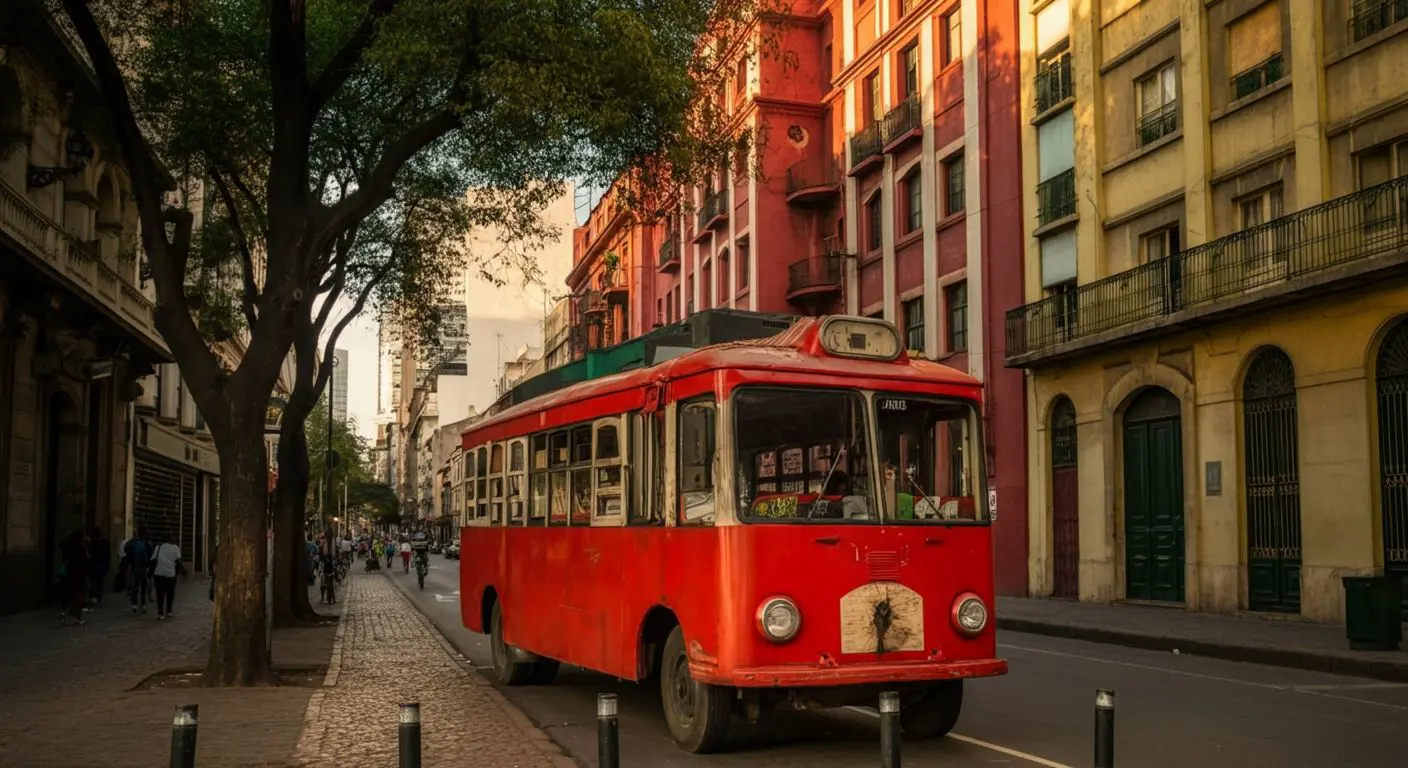
Anyone who has been to Buenos Aires must have noticed a type of lettering (or design) that is everywhere. It's called "fileteado porteño," a pictorial technique that is one of the best representations of the city. Roughly speaking, fileteado can be considered a sophisticated relative of the decorations on Brazilian truck bodies. It also originated on cars and with phrases coined in popular wisdom.
Unfortunately, there are few official records of the beginning of this work in Argentina. Among the pioneers of the Buenos Aires-style fileteado are three Italians – Cecilio Pascarella , Vicente Brunetti , and Salvador Venturo – who began painting the sides of the carts used to deliver goods in the late 19th century (which until then were gray) and separating them with a thin line of a more intense or consistent color, what we call today a filete. Later, they moved on to cars and buses.
[caption id="attachment_4617" align="alignright" width="300"]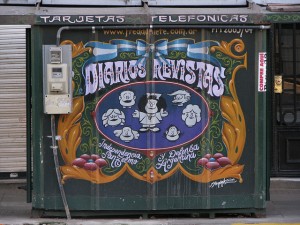 Fileteados in Buenos Aires / Source
From there, a specific repertoire of designs was created that characterizes the Buenos Aires-style fileteado : flowers, leaves, birds, ribbons with the blue and white of the Argentine flag, balls, dragons, and also straight and curved lines of different thicknesses that blend with scenes of the countryside and popular characters , such as the Virgin of Luján and Carlos Gardel.
In the 1970s, the use of paint strips was banned by law because it could distract drivers . And it almost disappeared. But it was precisely this ban that led to paint strips being used on other surfaces.
Unlike in Brazil, in Argentina the technique has gained new uses . It moved from vehicles to the easels of art studios. Today, the filleted design is seen everywhere, including on clothing and, lately, even on skin. The filleted tattoo is super trendy .
[caption id="attachment_4605" align="alignleft" width="300"]
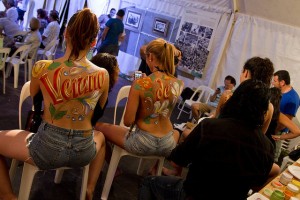 Filleted tattoos / Source [/caption]
[caption id="attachment_2935" align="alignright" width="356"]
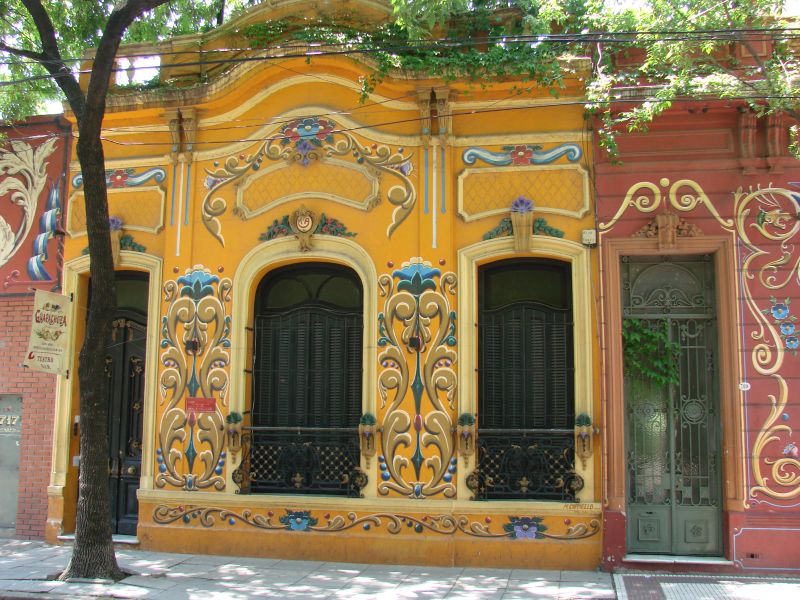 Fileteado Walk / Fountain [/caption]
Among the most recognized artists in this technique are the Polish artist León Untroib (who died in 1994). From the current generation, Martiniano Arce and, more recently, Alfredo Genovesi , who is revolutionizing the commercial use of filet lace, working for major brands such as Nike and Coca-Cola.
Anyone wanting to learn more about the subject can visit the Filete Museum and Bar , on the ground floor of the City Museum in San Telmo (Defensa 217). It's a very simple place, but still worth stopping by for coffee or lunch (very affordable daily specials) and appreciating the work of masters like Luis Zorz and León Untroib, among others. The collection on display belonged to the Wildenstein Gallery and was donated to the City Museum in 1971.
Another suggestion is the Fileteado Walk , on Jean Jaurès street, around number 700 (between Zelaya and Tucumán), where six facades were painted using this technique in 2003 by various artists from Buenos Aires. For those interested in the subject, there are many books on fileteado.
Author: Gisele Teixeira. Brazilian, journalist graduated from the Federal University of Santa Maria and a "citizen of the world," as she describes herself. Author of the blog Aqui me Quedo, she has lived in Buenos Aires for five years. She is a journalist and also a tango teacher, trained at the Centro Educativo del Tango de Buenos Aires. Passionate about the dance of Buenos Aires, Gisele is our guest blogger, sharing a little more about tango, its techniques, rules, and other secrets every two weeks! To read more of Gisele's work, visit Aqui me Quedo .
Published by Hernan Garriga Zimmermann on 03/06/2026


