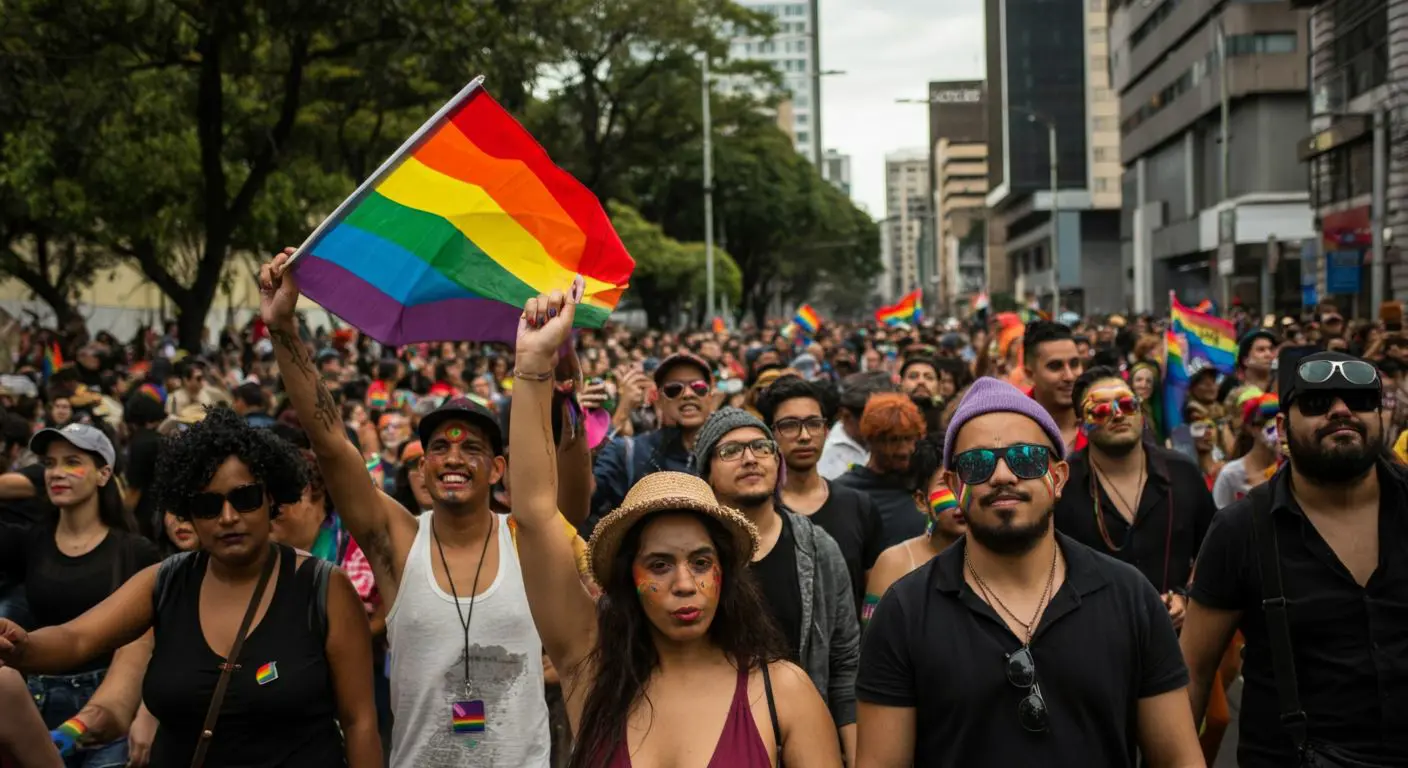
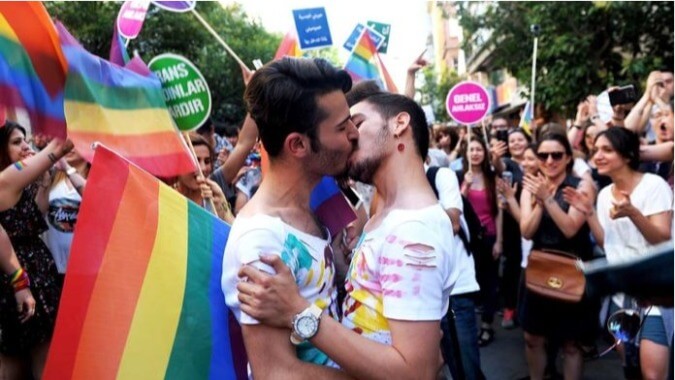
 The rainbow flag with pink triangles is prominently displayed at Gay Pride marches / Photo: GoMadridPride[/caption] The meaning of the word “pride” that defines this movement lies in the fact that no one should be ashamed of their biological sex, their sexual orientation, or their gender identity. Linguistically, the word “pride” aims to designate the dignity and affection that each person possesses as deserving of respect: a feeling of satisfaction toward something oneself or something close to that is considered meritorious. It is worth remembering that it all began in June 1969, half a century ago, with the well-known Stonewall riots , which consisted of a series of spontaneous demonstrations against a police raid that took place at the Stonewall Inn, a bar in the Greenwich Village neighborhood of New York City, targeting the gay community. These riots are cited as the first time in United States history that the LGBT community fought against a system that persecuted homosexuals with the full consent of the government.
Gay Pride March in South America
Although most South American nations hold conservative views on homosexuality, primarily due to the strong influence of the Catholic Church, a significant number of countries have enacted laws supporting the LGBT+ community. However, it's no secret that South America knows how to throw a spectacular party, and Pride celebrations are no exception. This region hosts some of the world's largest and most vibrant Pride marches in support of the LGBT+ community! Therefore, in celebration of Pride Day , we've compiled a list of the biggest marches in South America .São Paulo - Brazil
The São Paulo Gay Pride march last Sunday—after the Corpus Christi religious festival—brought together some three million people who filled the streets of Paulista Avenue in the heart of São Paulo . Groups of all ages and styles paraded, alternating between dancing, kissing, hugging, and chanting slogans against Jair Messias Bolsonaro, the president of Brazil. The slogan for 2019 was “50 Years of Stonewall: Our Conquests, Our Pride in Being LGBT.” This 23rd edition of São Paulo LGBT Pride was also the first to take place after a landmark ruling by Brazil's Supreme Court, which ten days prior classified homophobia as a criminal offense similar to racism. As part of Pride 2019 , the City Hall authorized the temporary display of same-sex couples on pedestrian traffic lights along Paulista Avenue, replacing the single figure. Likewise, several buildings along the iconic avenue displayed rainbow-colored decorations in their windows. This parade rivals the New York City Pride march to see which is the largest in the world. Officially, the festivities last five days. However, they extend for about three weeks, packed with discussions , films, concerts, cultural events, street markets, and lots and lots of fun. Note: During the next three weeks of activities, we recommend visiting The Week , Brazil's largest and most popular gay club. [caption id="attachment_4276" align="aligncenter" width="675"]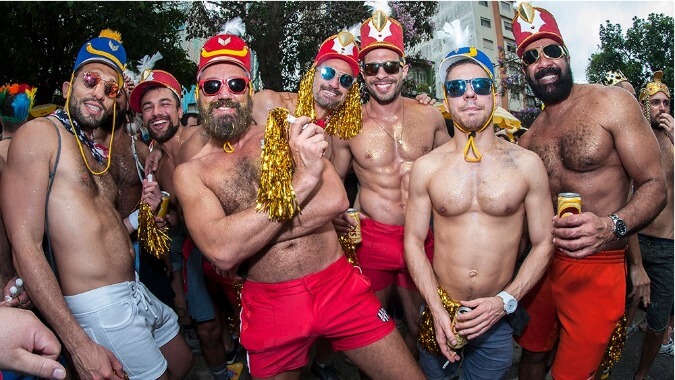 Sao Paulo's gay pride parade is considered the second biggest event in the Brazilian city, second only to Formula 1 / Photo: Closet Magazine[/caption]
Rio de Janeiro - Brazil
Rio de Janeiro 's Gay Pride march, while not as large as São Paulo's, is just as festive. The city's parade is a huge, colorful party on the famous Copacabana beach. There, you'll find a carnival atmosphere filled with samba music throughout the city. More than a million people from all over Brazil will fill Copacabana beach on October 13 (date still to be confirmed) to kiss, dance, and demonstrate their rejection of homophobia. The celebrations continue until the early hours of the following morning, and different neighborhoods—like the Madureira district in northern Rio—even have their own mini-parades that take place alongside the main one. Note: After the main parade, the revelers will head to the Papa G club , where the crowd dances in the streets until dawn. [caption id="attachment_4277" align="aligncenter" width="675"]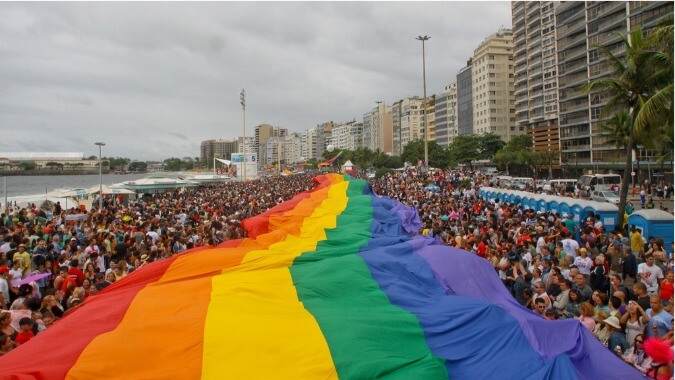 The Gay Pride Parade in Rio is the third most important public event in the city, after New Year's and Carnival / Photo: Viajeabrasil.com[/caption]
Bogotá, Colombia
Colombia is a country that has embraced the celebration of Gay Pride Day; in fact, Bogotá was the pioneering city , joining the movement 23 years ago. Following Bogotá, most South American capitals joined in, replicating and contributing to this cry for equality. The first gay pride march took place on June 28, 1982, with only 32 participants. Currently, the Bogotá march is known as the March for Full LGBT Citizenship and draws around 50,000 people. Like New York, the Colombian capital will celebrate its LGBT Pride March in grand style, under the slogan: “I choose to be, I want to live.” According to the event organizers, the march will begin on June 30 at 12:30 p.m. in Bogotá's National Park and will culminate in Bolívar Square . Take note: Bogotá is home to South America's largest gay club, Theatron , and this is where partygoers will find the biggest event of the celebration. The massive nightclub complex has 13 different gay clubs spread across 5 floors and can accommodate around 5,000 people. Each has its own theme: one room is dedicated to 80s hits, another to salsa music, there's one exclusively for men, another just for women, and more! [caption id="attachment_4278" align="aligncenter" width="675"]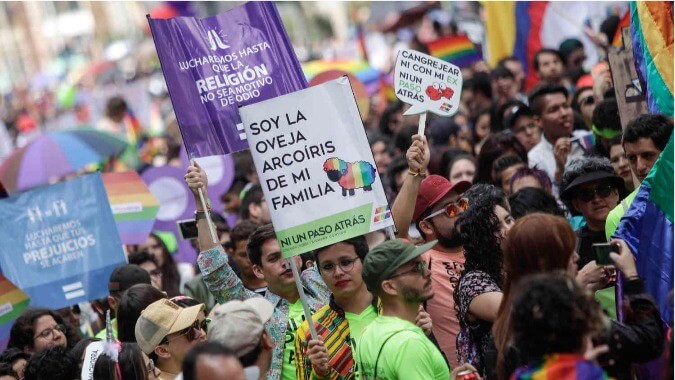 Around 50,000 people participate in the LGBT Full Citizenship March in Bogotá / Photo: Daytours4u[/caption]
Montevideo - Uruguay
Uruguay has been doing things right regarding diversity and equal rights. In fact, it became the second Latin American country to legalize same-sex marriage. Every June 28th , Uruguay also celebrates International LGBT+ Pride Day, and Montevideo celebrates Pride Week . However, many claim that due to weather conditions, the Gay Pride march in Montevideo has been held on the last Friday of September each year since 2005. It is the second largest annual demonstration in Uruguay, after the March of Silence, and was declared of ministerial interest by the Ministry of Social Development (MIDES) in 2012. Currently, it begins in Plaza Independencia , where the "Pre-March" event (with activities and booths before the start time) is also held, and ends at the esplanade of the Law School of the University of the Republic. Take note: The growing turnout is one of the reasons why the march is also taking place in other Uruguayan cities, such as Colonia del Sacramento , Las Piedras and Santa Lucía in the department of Canelones, and Minas and José Pedro Varela in the department of Lavalleja. [caption id="attachment_4279" align="aligncenter" width="660"]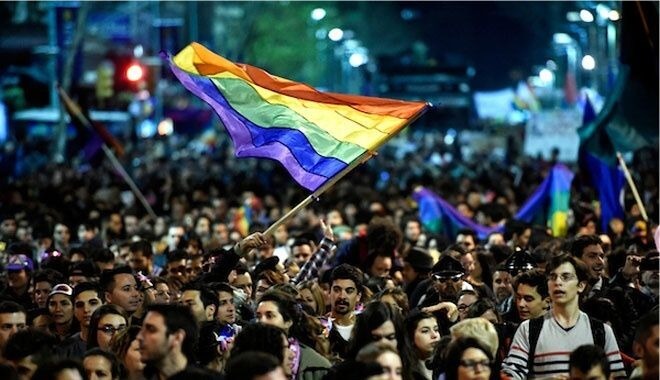 The Gay Pride march is the second largest annual demonstration in Uruguay, after the March of Silence / Photo: Daytours4u[/caption]
Quito - Ecuador
In some countries, such as Ecuador, the legal framework continues to categorize the LGBT+ community as second-class citizens by denying them access to adoption. However, the enormous efforts of the Ecuadorian community led to the Constitutional Court of Ecuador (CEE) approving same-sex marriage on June 12th with 5 votes in favor. The struggle continues, and Quito faces new challenges 20 years after homosexuality was decriminalized in the Andean nation. In addition to the symbolic street march, film screenings, art exhibitions, debates, and showcases of local businesses are planned to raise awareness of its members and activists. Note: This Saturday, June 29th , starting at 3:00 PM, the LGBTIQ+ Pride March will take place along Guayaquil Street in Quito's historic center . With signs, flags, high heels, costumes, and plenty of glitter, around ten thousand people will demand that their rights be respected. [caption id="attachment_4280" align="aligncenter" width="675"]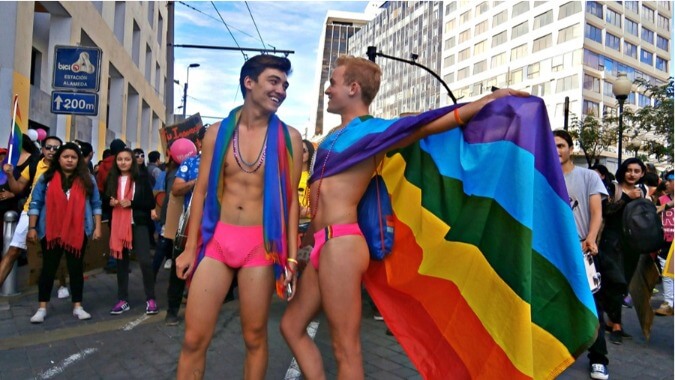 This Saturday the 29th, the streets of Quito will be filled with the colors, shouts and slogans of freedom and equality / Photo: Daytours4u[/caption]
Lima - Peru
In Lima , the capital of Peru, the 18th Pride March will take place on Saturday, June 29th, starting at 2:00 PM from Campo de Marte on Avenida de la Peruanidad . The march will continue along Avenida Guzmán Blanco, Avenida Garcilaso de la Vega, and Avenida Nicolás de Piérola, finally arriving at the iconic Plaza San Martín in downtown Lima. According to organizers who announced the event on social media, the purpose is to "demand equality and respect for sexual and gender diversity" in Peru. [caption id="attachment_4282" align="aligncenter" width="675"]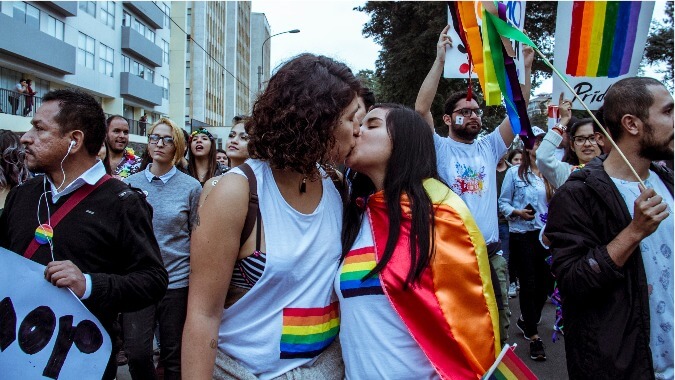 The Lima Pride March will have its 18th edition this year / Photo: Ana Victoria Pérez [/caption]
Special Case: Buenos Aires - Argentina
Argentina celebrates Pride Day on a Saturday in November, commemorating the founding of "Nuestro Mundo," the first gay organization in the country, in 1967. Argentina was the first Latin American country to legalize same-sex marriage in July 2010, including full adoption rights. Since 2012, gender reassignment has been fully legal, and anti-discrimination laws are in full force in Rosario and the capital, Buenos Aires . The most gay-friendly city in Latin America according to the British LGBT Awards, Buenos Aires hosts the biggest celebration of diversity in November, with a week of LGBT festivities and the annual Pride Parade on Saturday, November 17. Note: If you want to experience the Pride Day festivities, you should visit Glam Club in Recoleta; Sitges Bar in Palermo; Contramano Club in Recoleta; and Pride Café in the San Telmo neighborhood. [caption id="attachment_4284" align="aligncenter" width="675"]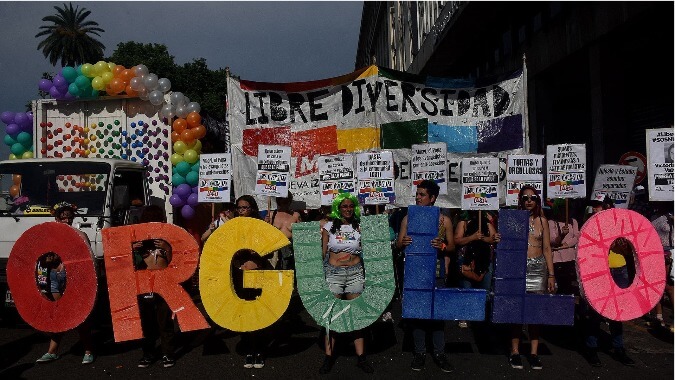 Buenos Aires is one of the most gay-friendly cities in South America and one of the countries where the LGBT community receives the most support from the State / Photo: Infobae[/caption]
...
Undoubtedly, the fight for LGBTQ+ rights is a global cause, though it faces objections and misgivings in some parts of the world. That's why Google's doodle for Pride Day isn't universal and is limited to certain countries. In the Americas, it appears in Argentina, Chile, Peru, the United States, and Canada. It's featured in Western Europe, Romania, India, South Africa, Australia, and New Zealand. It's absent from Russia, Mexico, Brazil, Central America, and most African countries. At Daytours4u, we believe everyone can make a difference in creating a world without discrimination. That's why we join the various campaigns and actions that advocate for the rights of the LGBTQ+ community, and from our position, we offer inclusive services that align with our values of respect and equality. If you enjoyed this article, you might also be interested in these: LGBT Pride Day: 8 Gay-Friendly Tourist Experiences in South America ; Why Uruguay is the Best LGBT Destination in South America; and LGBT Tours and Activities in Buenos Aires.By: Nathaly Bosch , Venezuelan, social communicator by profession and curious traveler by choice. Spanish writer for Daytours4u.
Published by Has Chacon on 03/06/2026


