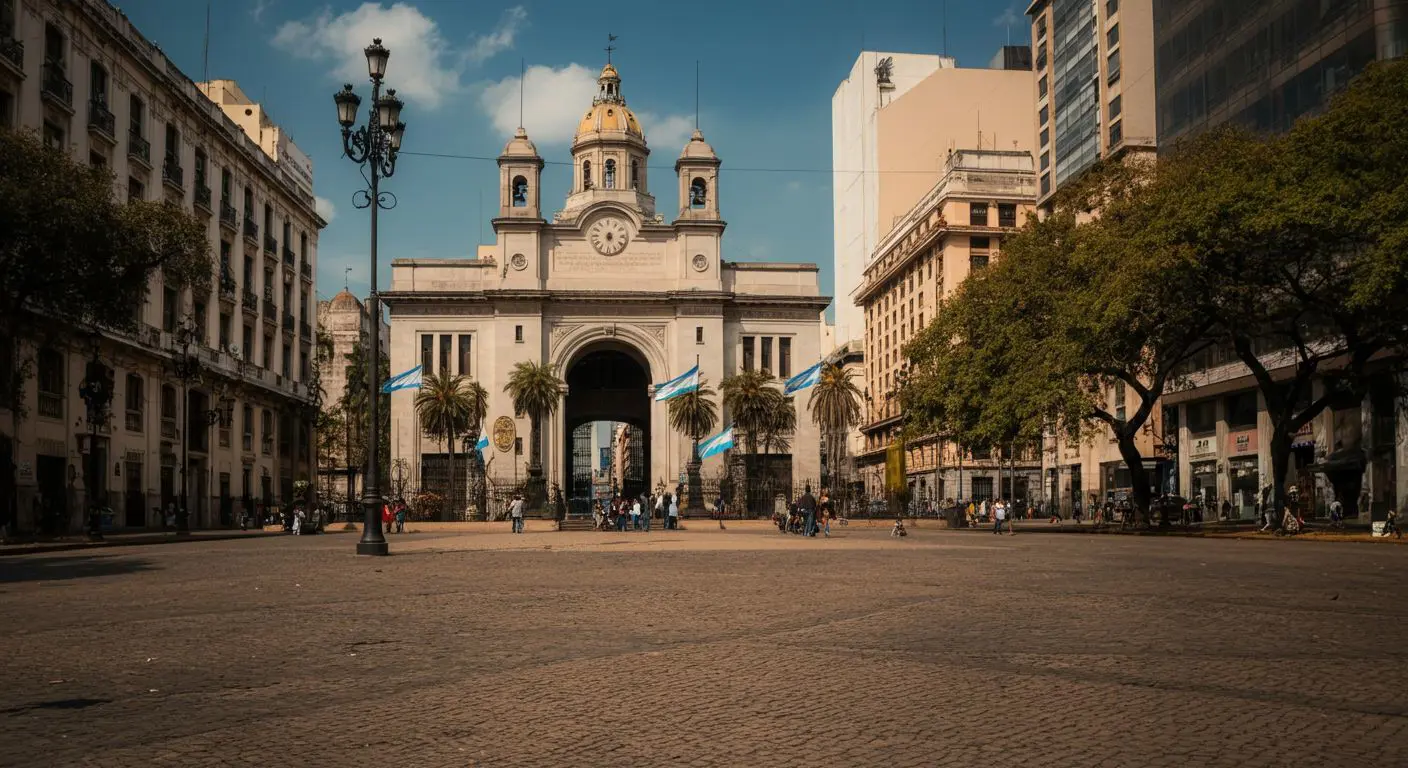
If you're on vacation in Buenos Aires, you may have noticed that the city was unusually quiet last Monday. The reason was the celebration of the Day of Respect for Cultural Diversity, a national holiday that celebrates immigration and the city's great cultural diversity – as the name clearly suggests.
If you've ever been to the beautiful city of Buenos Aires, you've probably noticed the great mix of people and cultural influences. Obviously, the Argentine capital has its own characteristics that include – as Buenos Aires guidebooks rightly say – the meat, the tango, the temperament of the porteños (residents of Buenos Aires), and the unique Argentine accent. But the truth is that much of what is considered typically Argentine or porteño is due to immigration, which has played a very important role in shaping Buenos Aires' identity – from the first immigrants who arrived in the city in the 16th century during the Spanish colonization, through the thousands of Europeans who fled the two world wars and settled in the country, to the recent immigration of Asians and nationals from neighboring countries.
[caption id="attachment_5024" align="alignnone" width="896"]From 1895 to 1915, Argentina experienced an incredible population boom , growing from 4 million to 7.9 million – almost doubling in just 20 years! This was mainly due to the large migratory flow at the turn of the 19th to the 20th century, with the arrival of immigrants from Eastern Europe, such as Armenians, and from the Middle East, such as Syrians and Lebanese, to the city's port.
However, without a doubt, the vast majority of immigrants who arrived in Buenos Aires came from Italy. A current estimate indicates that almost half of the Argentine population has some level of Italian ancestry. And this Italian heritage, as they usually say here, is evident in Buenos Aires: lunfardo , for example, as the local slang is called, is widely used today, but its root is in the Italian language and it began to be used in tango lyrics. Another similar characteristic between porteños and Italians is the habit of "talking with their hands," using many gestures to complement the meaning of the conversation. Obviously, we cannot fail to mention the Italian influence on Argentine cuisine. Any typical Buenos Aires restaurant has a menu full of options for pizzas, milanesas, and polenta.
Another notable wave of immigration to Buenos Aires was that of Jews who escaped Nazi persecution. The Jewish community in the Argentine capital is the largest in Latin America and the seventh largest in the world – affectionately, the locals refer to it as "la cole," a diminutive of "la colectividad judia" (the Jewish community). Therefore, Jews play such an important role in shaping the city and in the fact that the country officially recognizes Jewish holidays such as Rosh Hashanah, Yom Kippur, and Passover.
As you can see, this is just one part of Buenos Aires' fascinating history. To learn more about the Argentinian capital, we recommend taking a guided tour. There are several cultural itineraries on the subject: the Architecture Tour shows the influence of Spanish immigrants on the city's buildings, the Jewish Community Tour takes you through the history of the community, and the Immigration and Tango Tour focuses specifically on the influence of foreigners on the creation and development of the national rhythm.
For more tips about Buenos Aires, visit our catalog of tours and activities !
Published by Hernan Garriga Zimmermann on 03/06/2026


