 Source: Giphy[/caption]
Brazil: Eu sou brasileiro, with much pride, with much love
Brazil is the benchmark for football not only in South America but in the world: it has won more titles than any other national team (5 in total) and is the only team to have qualified for every World Cup. Brazil's most important figure is Edson Arantes do Nascimento, better known as Pelé , recognized by FIFA as the best footballer of the 20th century. The pride Brazilians feel for their national team is as vast as the country's territory, and in every World Cup, the nation comes to a standstill to support their team, wearing the famous Canarinha , the name of the green and yellow jersey that distinguishes them. During your time in Brazil this month, join the celebration of jogo bonito and become a fan yourself. How do Brazilians celebrate? They gather at home or in an office to watch the game at any time , preparing food and drinks, and there's always music. They wear yellow clothing, sing the national anthem as if they were at the stadium, and then belt out the classic "eu sou brasileiro, com muito orgulho, com muito amor" (I am Brazilian, with much pride, with much love), which was written 65 years ago. Here's the chant for you to practice: [embedyt] http://www.youtube.com/watch?v=i6evEud1sDs[/embedyt]Uruguay: The first world champion and the unforgettable sky blue of the Maracanazo
The Uruguayan national team was the first to win a FIFA World Cup (1930), the first champion of the Americas, and one of the three with the most official titles—19 in total—recognized by FIFA. Despite these exceptional achievements, Uruguayan fans consider the famous Maracanazo —the incredible victory against Brazil in Rio de Janeiro in 1950—to be the most important event. Just like in Brazil, Uruguayans celebrate by gathering with friends and family, watching the matches from beginning to end. Besides churros and fried cakes, there will be mate, and everyone will wear the sky-blue jersey of the national team , as well as having their face painted with the colors of the flag. It's also common to celebrate in the city's bars, where owners set up televisions to watch the matches. If you're in any Uruguayan city until mid-July, we recommend learning some parts of this song by The Party Band that begins: "I didn't ask to be born here, I was just lucky, and the feeling has already grown: I'm sky blue until I die." [embedyt] http://www.youtube.com/watch?v=RO9gQB1xYVo[/embedyt]Argentina = Maradona and Messi
Nine out of ten Argentinians consider themselves fans of a football team; but as you travel through the cities of this beautiful country, you'll notice that 10 out of 10 support the Albiceleste with all the passion that characterizes them. Like Brazil and Uruguay, Argentina boasts World Cup legends of the caliber of Diego Armando Maradona and Lionel Messi . They have two World Cup titles and are one of the three national teams with the most official titles in history (19 in total). Celebrations in Argentina are usually a family affair; a house is chosen to watch the matches, and that place is generally designated as the main headquarters for the entire month of the World Cup. Besides wearing the sky-blue and white jersey, the national flag is always present. They are superstitious ; during free kicks or penalties, they cross their fingers, and the emotion overwhelms them to the point of swearing to release their frustration. Argentina also has some of the most popular chants in the history of the World Cup. In 2014, the famous "Brazil, tell me how it feels" was heard in unexpected places, and this year the song "I Love You Argentina" will seek to replicate that same popularity. The lyrics say: "I thank life for being born in Argentina. Fans and players defend the colors. Maradona and Messi are incomparable. I love you Argentina, I wouldn't trade you for anything. I wouldn't trade you for anything," and it follows the rhythm of the song "Todavía cantamos " by Víctor Heredia. [embedyt] http://www.youtube.com/watch?v=A7qlYIjqAY0[/embedyt]Colombia: With James Rodríguez to the rhythm of ras tas tas
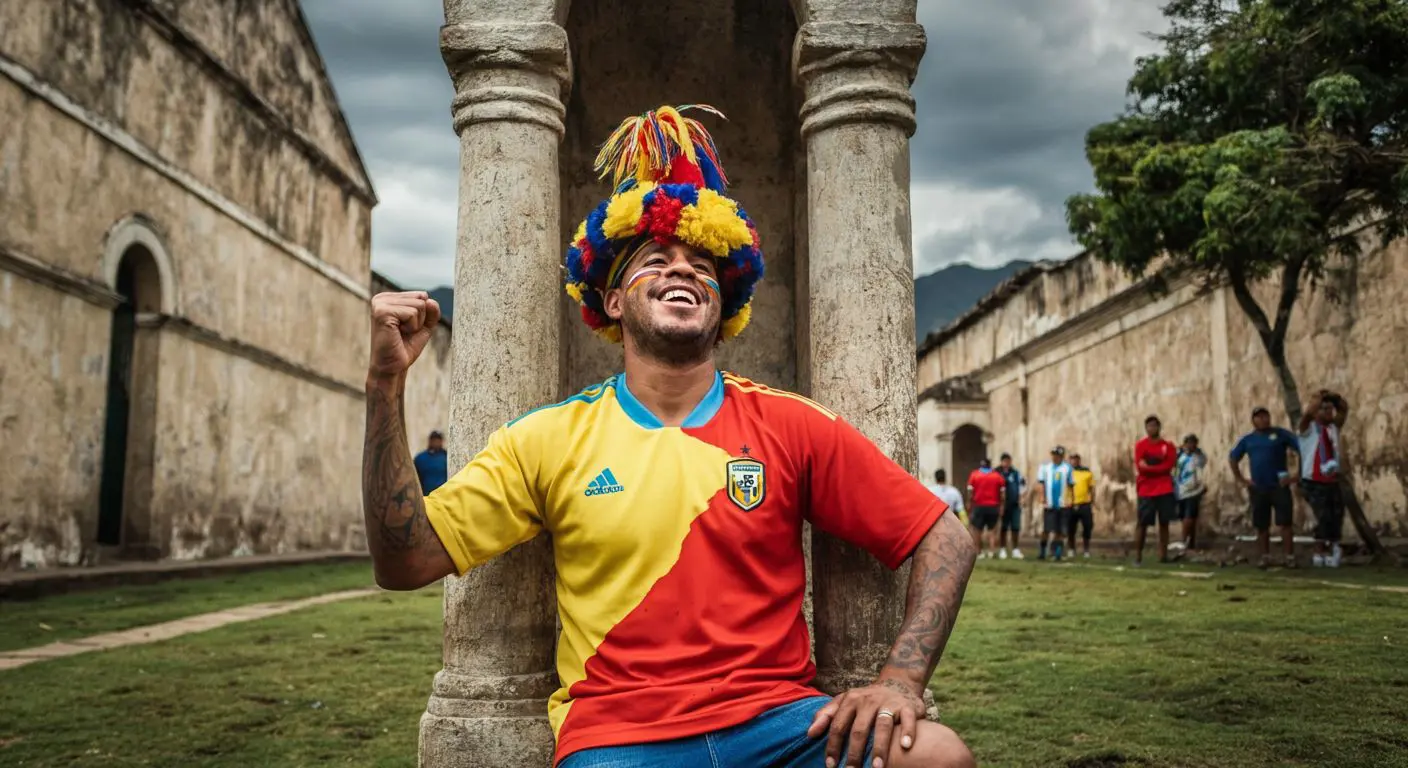
After finishing fifth in the 2014 FIFA World Cup in Brazil, Colombia clearly demonstrated the quality of its football and its national team. They have participated in six World Cups, including this year's (1962, 1990, 1994, 1998, 2014), and players like James Rodríguez and Radamel Falcao García are internationally recognized for their exceptional skill. The celebrations in Colombia haven't stopped since they secured their place in Russia, and families across the country are ready to watch their team's debut. The yellow jersey is a common sight in every city, and if you're in Colombia this month, we suggest you join in the festivities. Another essential activity before the matches is the "polla," the Colombian term for a bet: each person bets on a score, and the winner is the one who correctly predicts the outcome. While you're here, take the opportunity to buy a stylish "vueltiao" hat in the colors of the Colombian flag (yellow, blue, and red), and learn the catchy Ras tas tas dance to celebrate Colombian national team goals with this video: [embedyt] http://www.youtube.com/watch?v=UjxARZzPU8I[/embedyt]Peru: The return of the "blanquirroja" after 36 years
Like Colombia, Peru will be attending its sixth World Cup this year . After a 36-year wait, the red and white jersey is once again bringing great joy to Peruvians, who arrive in Russia with a 15-game unbeaten streak in recent competitions. Led by Paolo Guerrero and Jefferson Farfán , the Peruvian national team will attempt the impossible in Group C, which also includes Denmark, France, and Australia. Peruvian fans typically celebrate with lots of music and fireworks , so get ready for a spectacular show in the skies over major cities. They'll also be dancing to the beat of the drums and waving the national flag everywhere they go. The excitement of returning to the World Cup is so great that the National Stadium in Lima will open its doors to enjoy the team's matches on three giant screens. Admission is free on Saturday, June 16 (vs. Denmark) at 11:00 am, Thursday, June 21 (vs. France), and Tuesday, June 26 (vs. Australia). Like the previous teams, Peru didn't lag behind, and this is the official song to cheer on the team: [embedyt] http://www.youtube.com/watch?v=RuXv0LBebfg[/embedyt]Join the football party and make the most of your time by experiencingthe best travel adventures in South America . Explore the continent's most dazzling tourist attractions with Daytours4u and discover the unique local culture of each country.
By: Keilma Rojas , web content editor at Daytours4u
Published by Has Chacon on 03/06/2026


