
I bet that at some point during your trip to Rio de Janeiro, you'll want to leave the beaches behind and explore other horizons (Hard to believe, isn't it?). At that point, you'll realize the city is enormous and the distances to travel are vast, and then the issue of public transportation will become unavoidable.
Fortunately for everyone, Rio's transport is easy to use, even if you don't speak Portuguese, and there are numerous ways to get around Rio de Janeiro .
Which bus to take in Rio de Janeiro
Buses in Rio de Janeiro are the most accessible way to get around the city. Most are air-conditioned and very easy to use. Just keep in mind that at certain times of day, they can get very crowded and traffic can be heavy. Even so, public buses are a safe way to get around during the day, although it's best to avoid them at night.
- The standard fare is R$3.40 . If you can pay with small bills or small change, even better. Some buses have an attendant on board who collects the fare and gives you change before letting you through the turnstile, but others don't.
- There are also blue buses that provide a special service to travel between the airports and the South Zone of the city.
- The bus routes are clearly marked with the route number and final destination. Buses stop at designated stops; however, to signal the driver that you want to board, you must extend your hand.
- The busiest bus lines, which you'll likely need to use, are the 583, which runs from Capacabana and Ipanema to the Corcovado train station (take the 584 to return), and the 511, which goes to Sugarloaf Mountain (take the 512 to return). The drivers who run these routes know the tourists and will usually let you know when you arrive at the stop.
- To find out the bus routes , you can consult vá de ônibus or pick up a map with information at the tourist offices in Rio.
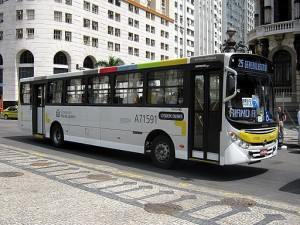 Taking the bus is the cheapest way to get around Rio. / source [/caption]
How to use the Rio Metro
The subway in Rio de Janeiro is another fast and inexpensive way to get around the city and, except during rush hour, a comfortable mode of transport. As a privately run system, the subway is kept clean, modern, and, most importantly, air-conditioned. Like any other subway system in the world, it gets very crowded during rush hour, so it's best to avoid it during those times.
- Tickets cost R$3.50 and can be purchased at Metro stations. For single-trip tickets, insert the pass into the turnstile. For multi-trip tickets, swipe the card.
- The Metro operates from 5 a.m. to midnight, Monday through Saturday , and from 7 a.m. to 11 p.m. on Sundays and holidays. During Carnival, the Metro runs smoothly all night.
- There are two lines, the green and the orange, that connect Botafogo with the stops at Central Station. You can see the Metro map here .
- There are separate carriages for women during peak hours to prevent harassment.
- There's an additional bus line that connects to the subway, called Metrô Na Superficie , which runs through Ipanema, Lagoa, and the Botanical Garden. When you buy your subway ticket, be sure to mention that you'll be using this above-ground line to receive the extra ticket you need.
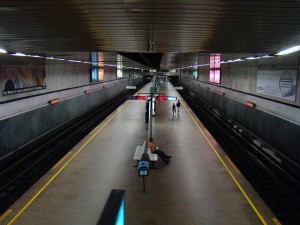 The Rio de Janeiro Metro has cars exclusively for women. / source [/caption]
Taking a Taxi in Rio
Taxis are undoubtedly the most convenient way to get around Rio de Janeiro and are the fastest way to travel from one destination to another. They are available in almost every area of the Rio Metropolitan Region, except in the favelas, and are generally a safe and clean mode of transportation.
- In Rio there are two types of taxis : yellow taxis, which use a taximeter, and radio taxis, which use a set price.
- When using a yellow taxi , opt for a licensed taxi rather than an independent one; you can distinguish them by the logo affixed to the car. And don't forget to make sure the meter is running when you get in. If it isn't, ask the driver, " Is the meter on?"
- The fare system uses two flag-based rates . Flag 1 starts at R$5.20 + R$2.05 per km, and Flag 2, which is in effect every day from 9 pm to 6 am, as well as on Sundays and holidays, starts at R$5.20 + R$2.46 per km. However, please note that this may not be the exact fare displayed on the taximeter. It takes time to recalibrate all taximeters when city costs increase, so taxi drivers use a conversion rate , which should be clearly displayed and available inside the cab.
- To find out how much your taxi ride should cost, you can use this taxi price range calculator .
- Radio taxis are the most reliable, but also the most expensive. Taking one is an excellent idea when you need to arrive at a specific time or meeting point. When you call, the operator will give you a non-negotiable price, so there will be no surprises. It's a very useful service during peak traffic hours, especially during Carnival or large events, such as the upcoming 2016 Rio Olympics.
- Recently, the option to use Uber in Rio de Janeiro has also become available.
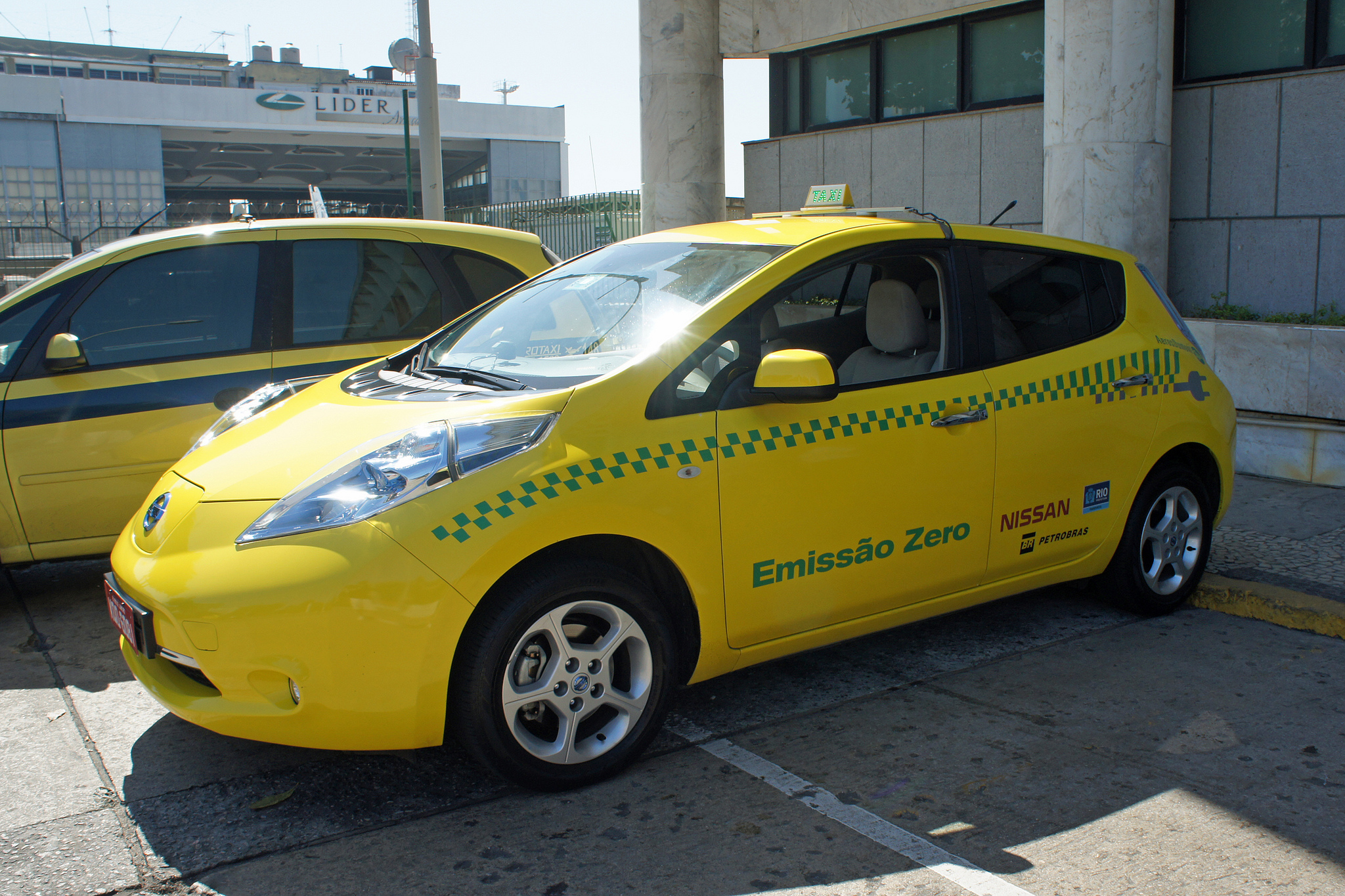 The best option when you're in a hurry is to take a taxi! / source [/caption]
Take the ferry to Niterói
There are several ferries you can take to reach Niterói , the city nestled at the other end of Guanabara Bay. If you have time for this trip, it's worth visiting the Museum of Contemporary Art , designed by Oscar Niemeyer, and the Santa Cruz Fortress . You'll also find many beautiful beaches, where you'll encounter far fewer tourists than in Rio. And that's not all; the ferry ride across the bay is a scenic, inexpensive, and relatively quick excursion.
- The ferry company is called CCR Barcas . Tickets can be purchased on the ferry.
- The boats depart from Praça XV in Rio , the pier is located next to Santos Dumont Airport.
- You can take the ferry to Praça Arariboia (in downtown Niterói). The trip takes 20 minutes, costs R$5.00 , and departs every 10 minutes during the week, between 6 a.m. and midnight, and every 30 minutes on weekends.
- Another favorite destination is Charitas , one of the southern neighborhoods of Niterói, where you'll find good restaurants and beaches, especially for windsurfers. The ferry takes 20 minutes and costs R13.90 . This route uses modern catamarans, making the trip much more comfortable.
- The ferry can also be taken from Praça XV to Paquetá – one of the islands in Guanabara Bay. The trip takes between 50 and 70 minutes and costs R$5.00 .
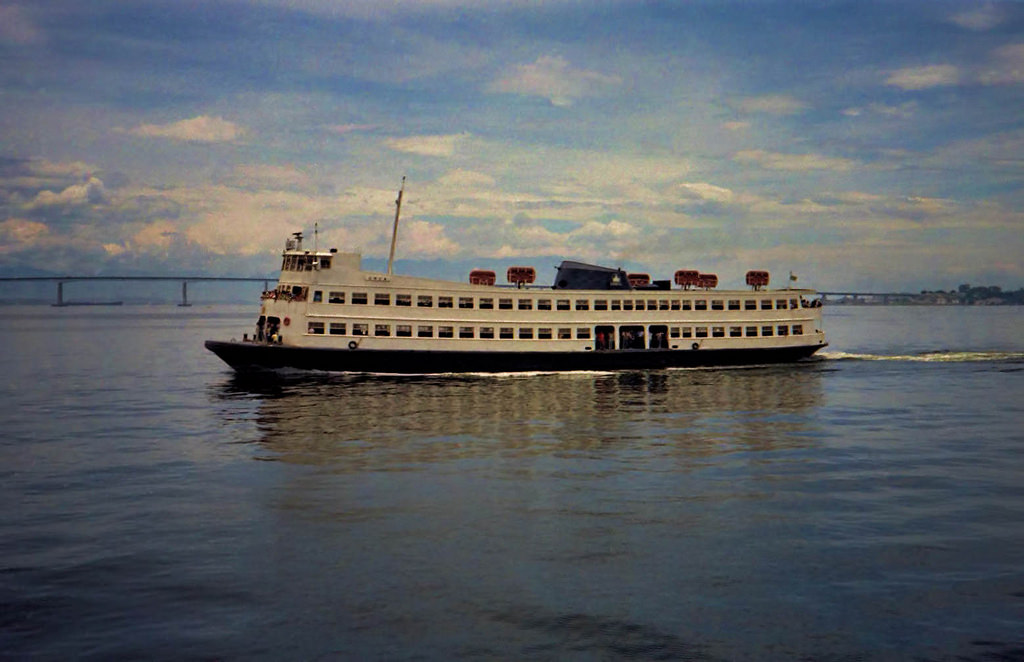 Traveling by ferry to Niterói is a spectacular option. / source [/caption]
Of course, other wonderful options for getting around Rio de Janeiro are walking or cycling . Both are the best way to travel between the beaches and among the people strolling along the boardwalks of Copacabana and Ipanema. By the way, you'll be surrounded by thousands of Cariocas enjoying outdoor activities.
Remember! If you need transportation to get to or from the airport or to travel around Rio, to places like Paraty or Angra dos Reis, you can book a transfer service with Rdj4u to ensure a smooth and delay-free trip!
Author: Nicole Eberhard
Translated by David Luna Durán
Published by Has Chacon on 03/06/2026


