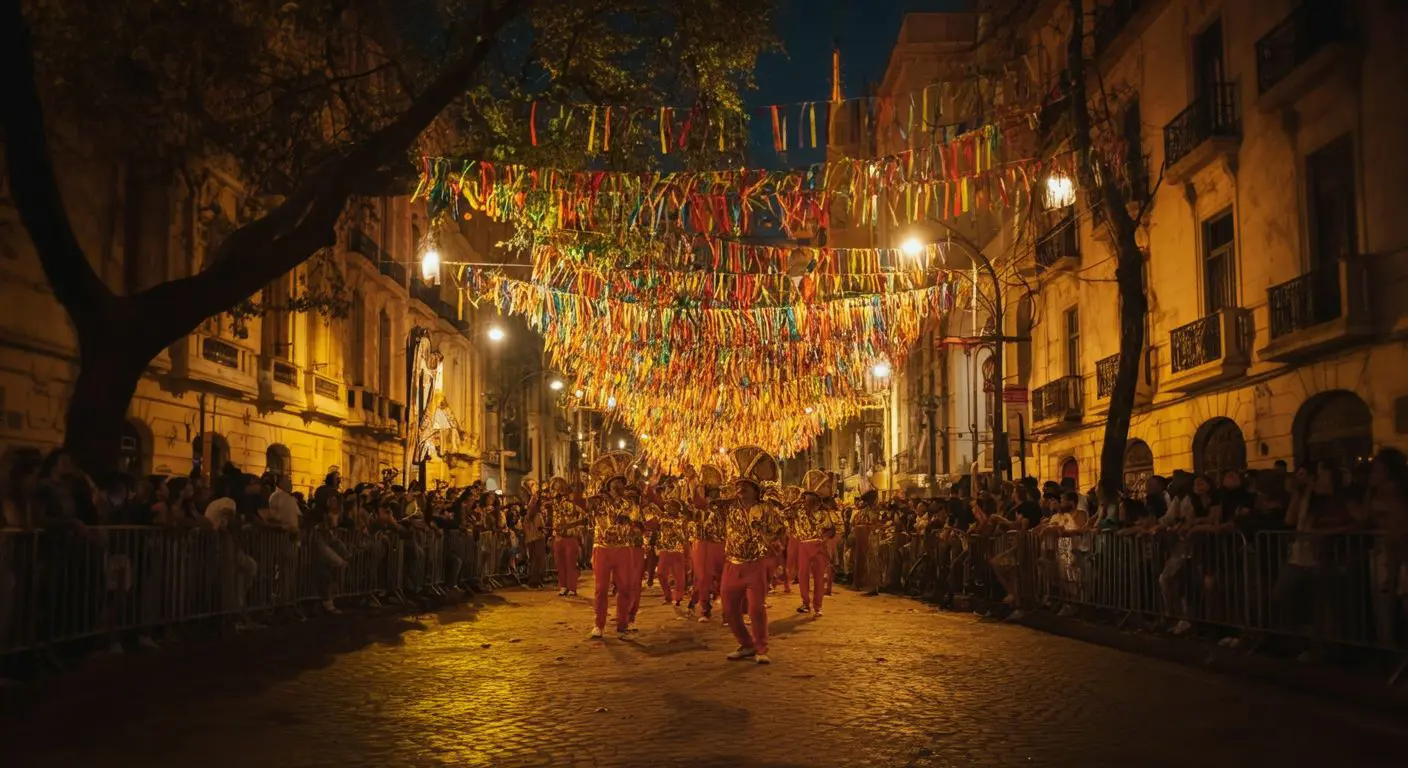
History of the Buenos Aires Carnival
Carnival in Argentina grew in the late 18th century, around the same time as Tango. With similar working-class roots, Argentine Carnival adopted the murga style as a way to express dissatisfaction with its situation and to make fun of those in power. Initially, there was a distinct ethnic element to Murgas, with those of African slaves differing from the Murgas of European immigrants. Eventually, Murgas came to represent neighborhoods rather than ethnic or religious groups. It became a popular part of the Argentine calendar until the military government of the 1970s stopped the celebrations. With the implementation of democracy came the rebirth of Carnival, and the Buenos Aires Carnival became a popular festival again.What is a Murga?
Murga is a percussion-based rhythm performed by a band marching through the streets, accompanied by acrobatic dances. The lyrics of the songs are referred to as "critiques," as they combine social criticism with humor, often targeting corrupt politicians. Murgas in Buenos Aires can be performed by dancers (also called murgueros) in colorful, glittering costumes with gloves, a tall hat, and a cane—all symbols of the aristocracy of the colonial era. This is very different from the carnival costumes used in Brazil, and even in Gualeguaychú and the Andean communities of northern Argentina.Carnival today
Today, Carnival celebrations and parades in Buenos Aires consist of parades and murgas that take place throughout the city. The murgas are linked to neighborhoods, and each one represents its neighborhood with its name. The parades include a band and dancers, often accompanied by murga singers. The main Carnival parade takes place along Avenida de Mayo. The blocos (corsos) are less formal; anyone can participate, and they don't wear their best clothes. A large part of Buenos Aires' street carnivals are the foam wars. Mostly between neighborhood children, spraying foam on each other, adults can easily be targeted as well. Keep an eye on the Buenos Aires Carnival website to find out when and where each parade takes place. All parades are free.Buenos Aires is an inspiring city with a wide range of activities. We enrich your South American travel experience.
By Nicole Eberhard / Translated by Luiza Cavalcante
Published by Hernan Garriga Zimmermann on 03/06/2026


