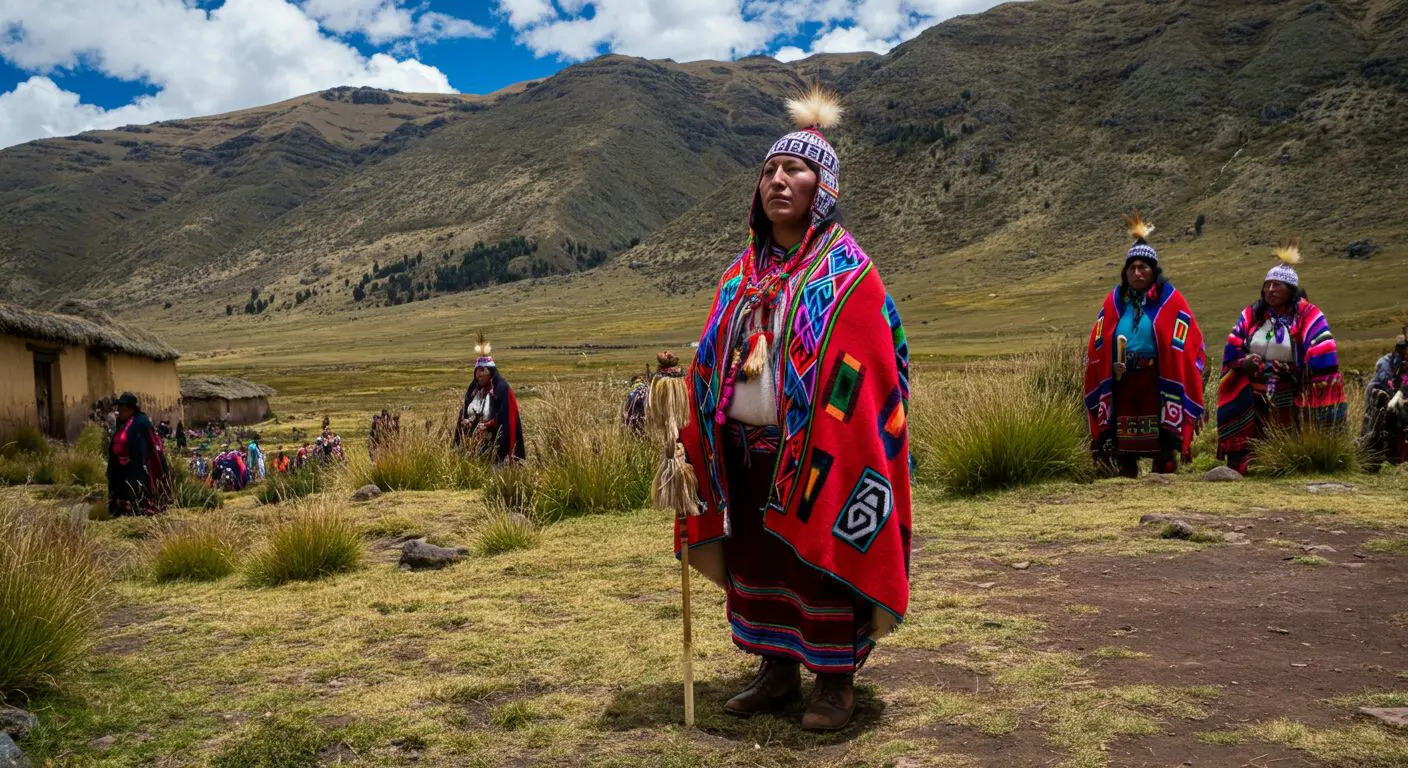
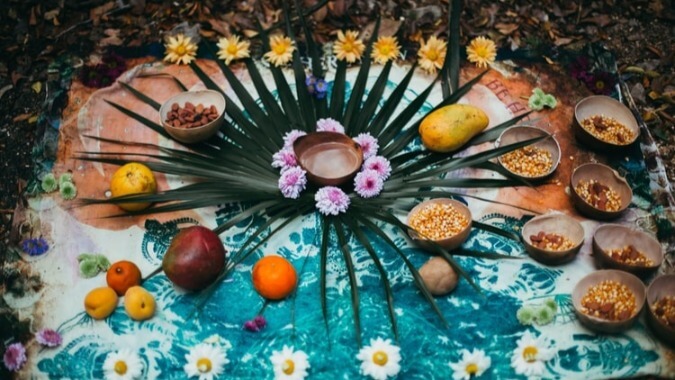
 The Pachamama festival is a celebration organized to thank, pray to, and bless the creations of Mother Earth / Photo: Daytours4u[/caption]
Offerings and ceremonies
According to legend, August is the ideal time to celebrate Mother Earth , a time of abundant harvests for animals and fertile soil. These beliefs led to the celebration of this festival on the first day of the month with rituals of gratitude , which survived Spanish colonization and crossed borders. These traditional rituals have nevertheless varied over time, taking on different forms and being enriched by the cultural, historical, and social heritage of different communities . Thus, depending on the ancestral customs of each people, the mode of celebration may change. [caption id="attachment_4759" align="aligncenter" width="675"]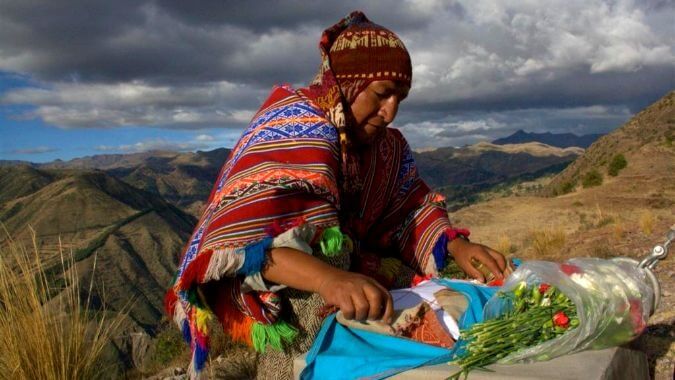 On August 1st, the ritual of gratitude to the earth is celebrated, a rite that survived Spanish colonization and crossed borders. There are essentially two types of ceremony: one communal , led by Andean priests or elders, and another more intimate , with private and family offerings in homes. Smoke is the typical symbol of this celebration . It is part of a purification process, and tradition dictates that it be made from muña muña , a very popular herb in this part of the region, although frankincense, myrrh, and sandalwood are also used. The house, shops, workplaces, and even the people, relatives, and loved ones are smoked, all to ward off negative energies and begin a new cycle. At the beginning, Pachamama is thanked and forgiveness is sought in a collective prayer : trash is gathered from the corners, placed on a shovel with embers, and local plants are added. The ceremony begins when the cacique , the tribal chief, nails a knife to the right of the well as a defense in case something harmful emerges from the earth. Then comes the "cleansing tea," used to prepare and cleanse the bodies of those participating in the ceremony. This infusion is made from seven natural and medicinal herbs typical of the Puna region (rich glass, glass, añagua , tola, chuchicaña , Flor de Puna , and coca leaves). In northern Argentine provinces like Jujuy and Salta , Pachamama is venerated through age-old ceremonies , during which all kinds of food, beverages, and coca leaves are offered to "Mother Earth." There are places where the celebration takes on greater significance, such as Purmamarca, Tumbaya, Valle Grande, and throughout the Puna Jujeña region. In other communities, on July 31st at midnight, or before dawn, families and neighbors gather to dig a pit in the ground, decorating it with streamers and paper cutouts. This is the corpachada . It is there that they place the "first fruits" of the food prepared for the offerings to Pachamama: a clay container with cooked food, a little chicha (a refreshing drink), coca leaves, lit cigarettes nailed to the ground, and colorful pieces of alpaca wool. Something red must not be forgotten —it's Pachamama's favorite color! These offerings to the Earth serve as a symbolic expression of gratitude for all that she gives us. [caption id="attachment_4760" align="aligncenter" width="675"]
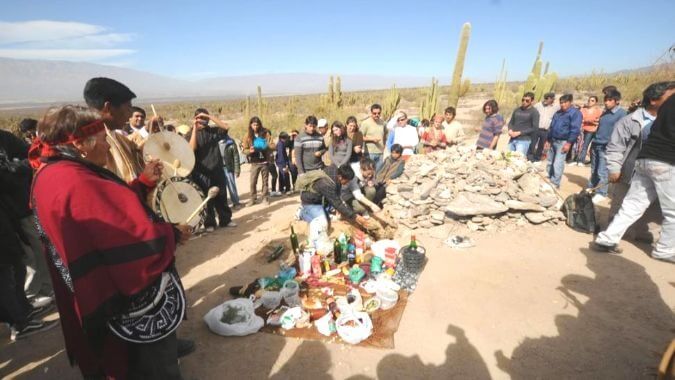 In the corpachada , one must not forget the color red, Pachamama's favorite color. / Source [/caption] In several cases, the belief in Pachamama coexists with Christianity . For example, in Bolivia, Pachamama is identified with the Virgin of Copacabana in La Paz, and with the Virgin of Socavón in Oruro. In Peru , Pachamama is identified with the Virgin of Candelaria. It should be noted that Jujuy is the national capital of Pachamama; thus, August 1st is a public holiday for schools and government offices , in honor of the ancestral ritual of the Pachamama ceremony.
The ritual at home
If you find it difficult to find a natural space to make an offering, don't worry, you can perform your own ritual at home : - Use a pot filled with soil and make a hole in it. It's customary to do this by hand to connect with the energy of the ritual . - This creates a kind of well where you place food and drinks as an offering to Pachamama. - The choice of food is quite wide , from fruits to Creole foods and seeds. For drinks, we suggest chicha, natural juices, honey, wine, and even coca leaves. - Finally, simply cover the well with soil and flowers . Each year, more and more people are turning to this tradition, putting aside daily work, reflecting, becoming more aware of the question of human beings on Earth and thus performing this recognition and ritual of gratitude towards Mother Earth , including everything that makes up our life: man, earth, air, animals, water, fire, etc.By : Nathaly Bosch , Venezuelan, communications professional and curious traveler by passion. Spanish writer for Daytours4u.
Published by Has Chacon on 04/06/2026


