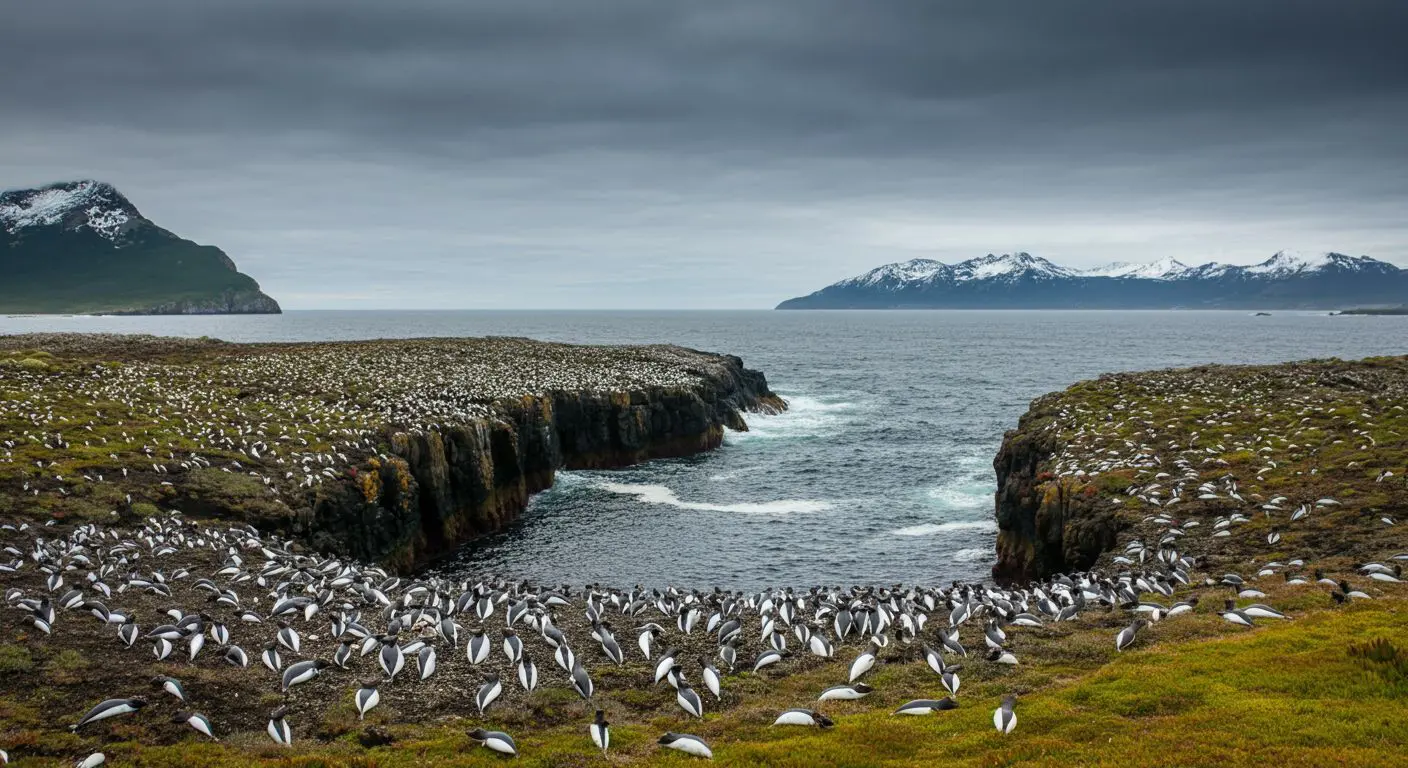
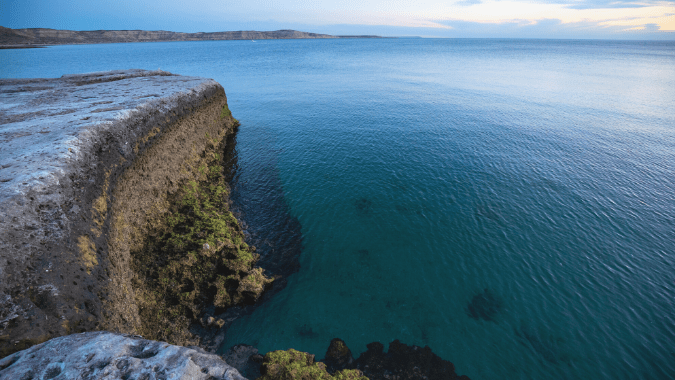
 With its two bays, one to the north and the other to the south, the Península Valdés provides a tranquil stopping point for southern right whales / Photo: pvcrossi, canva pro.
If you are planning to visit the Península Valdés now that the high season is approaching, here are some tips for planning an unforgettable trip.
1- Admire the wildlife up close
The Valdes Peninsula is Patagonia's premier wildlife destination. It's one of South America's finest nature reserves , a paradise spanning over 3,600 square kilometers for nature and wildlife enthusiasts. From enormous southern right whales to friendly penguins, from beached orcas to elephant seals, opportunities for close encounters with wildlife abound.And what about the whales?
The Valdes Peninsula is one of the most densely populated destinations in the world, making it a very special place for both conservation and whale watching . Orcas and southern right whales can be seen here, very close to the coast, allowing for incredible sightings by boat, plane, kayak, and even on land. Travel tip: Don't miss the whale watching excursion in Puerto Pirámides.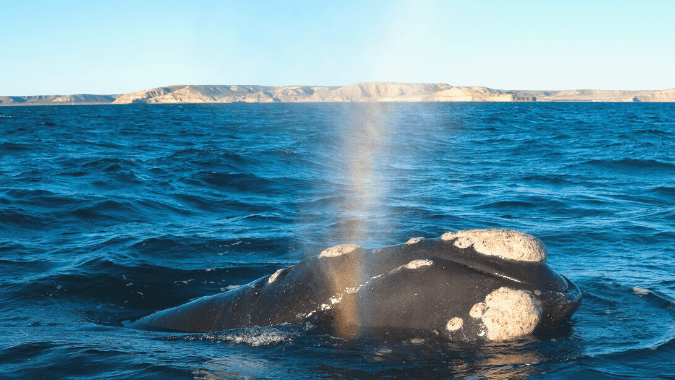 Seeing a whale jump into the ocean right before your eyes is a dream come true / Photo: edurivero, canva pro.
2- Diving in Puerto Madryn
Puerto Madryn is undoubtedly the underwater capital of Argentina due to its unique climate and the diversity of its cold-water flora and fauna. Thanks to its strategic location in the Gulf of Nuevo , its waters are clear and calm, with a temperature of around 18 degrees Celsius and little swell, offering greater safety for scuba diving in Patagonia.Travel tip: If you have never dived, you can try a scuba diving baptism, and if you already have experience, you can come and visit the various dive sites of the Península Valdés.
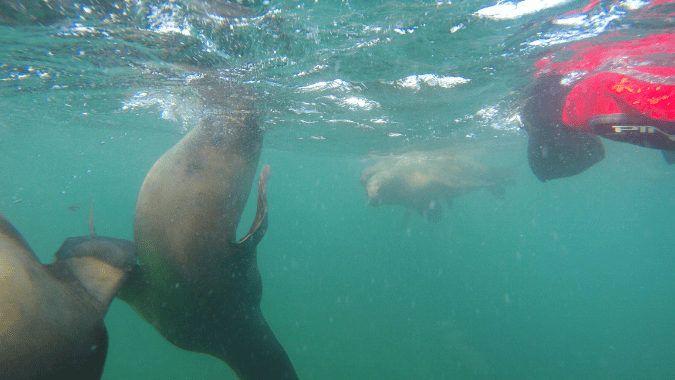 Dare to dive in the best natural sites of Golfo Nuevo / Photo: Daytours4u
3- Visit to the elephant seals in Caleta Valdés
Elephant seals always seem to be smiling and have a snout resembling a small trunk (which is why they are called elephants). Interestingly, the Caleta Valdés Provincial Reserve was created in 1983 to protect the natural breeding grounds of elephant seals and Magellanic penguins. This privileged stretch of beach is located 77 km from Puerto Pirámides. In the reserve at the southern end of the cove (Punta Cantor), you can observe a colony of elephant seals year-round, especially during the months of August to March, as they are present in greater numbers than during other months.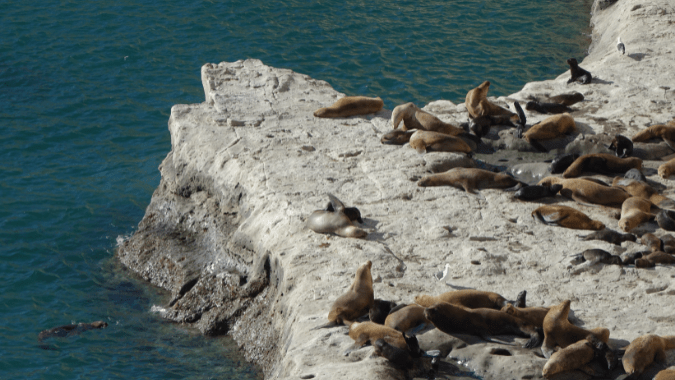 At Caleta Valdes, you can descend a staircase to the cliffs to see the elephant seals up close / Photo: manikini, canva pro.
Travel tip: The road from Puerto Madryn to Puerto Pirámides is paved. However, once you pass Puerto Pirámides and reach the main "ring road" of the peninsula, it becomes a dirt and sand track. This means you cannot drive faster than 60 km/h.
4- Discover Bustamante Bay
Traveling south on dirt roads (approximately a three-hour drive from Trelew Airport ), you'll reach the Bahía Bustamente Private Reserve. Here, you'll encounter abundant wildlife almost immediately: as you drive through the reserve, you're likely to spot rabbits, Mara sheep, foxes, and guanacos. Bahía Bustamente is a private reserve that only receives a very limited number of visitors at a time. Originally a seaweed processing plant and workers' village, it's also an offshore location where you can visit other Magellanic penguin colonies.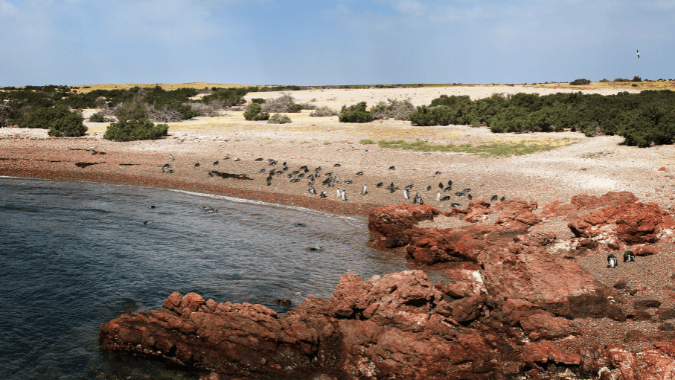 Bahía Bustamente has an air of being at the end of the world, undiscovered / Photo: gydyt0jas
When to visit the Península Valdés?
September, October, and November are the ideal months to visit. It's mid-spring, a time when many animal species breed in the area. For example, penguins come ashore to incubate their eggs, males fight for females, and orcas approach the shore.Things to keep in mind:
- Bring cash (pesos or dollars) to pay for access to the protected natural area.
- We recommend that you take precautions against seasickness, as boat trips are generally quite bumpy due to the wind.
- Bring clothing to protect against wind and cold.
- Don't forget to use sunscreen when you're sailing.
- The roads are gravel, so you have to be extremely careful.
- Be aware that guanacos may cross the road on many occasions. You must be very attentive to wildlife to avoid accidents.
Without a doubt, the Valdés Peninsula is a vast and diverse region, with plenty to see and do. Leave it in our hands! Start planning your next adventure in Península Valdés with Argentina4u and Dayoturs4u .
By: Nathaly Bosch , a social communicator by profession and a curious traveler by choice. Spanish writer for Daytours4u. Updated 2024.
Published by Has Chacon on 04/06/2026


