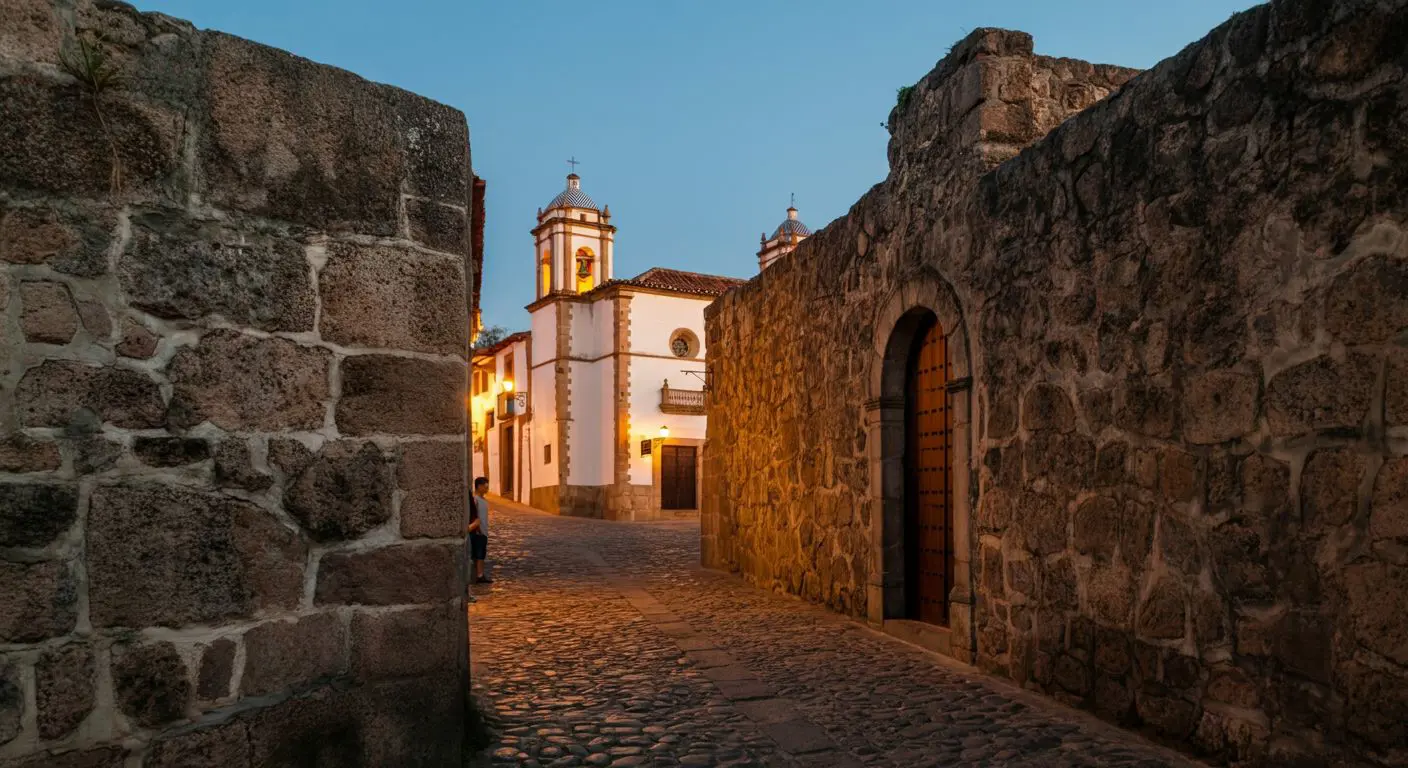
Much has been said about the activities, attractions, and other tourist services offered in Rio de Janeiro , but very little has been said about the beauty and value of the heritage of Rio's Historic Center . That's why, when one thinks of Rio, the first images that come to mind are those of the paradisiacal beaches of Ipanema, always full of beautiful people playing sports in a completely relaxed atmosphere. Almost completely forgetting the extraordinary beauty of a legacy that has made the city one of the most important symbols of Latin America for tourists from all over the world who come to visit the Marvelous City .
Before embarking on this journey into Rio's past to discover the city that, until just a few decades ago, was the economic, political, and cultural capital of Brazil —from 1763 to 1960—and of the Portuguese Empire—from 1822 to 1889—it is important to highlight the restoration work carried out by the city government in 2009 on the tangible and intangible heritage found in the port area and the surrounding historic center , through a program called Porto Maravilha (Marvelous Port). Thanks to this program, Rio's residents have witnessed the rebirth of that marvelous past that attracts hundreds of tourists, who come here to discover, amidst the architecture and local art, that unique style that makes everyone fall in love with Rio.
[caption id="attachment_417" align="aligncenter" width="702"]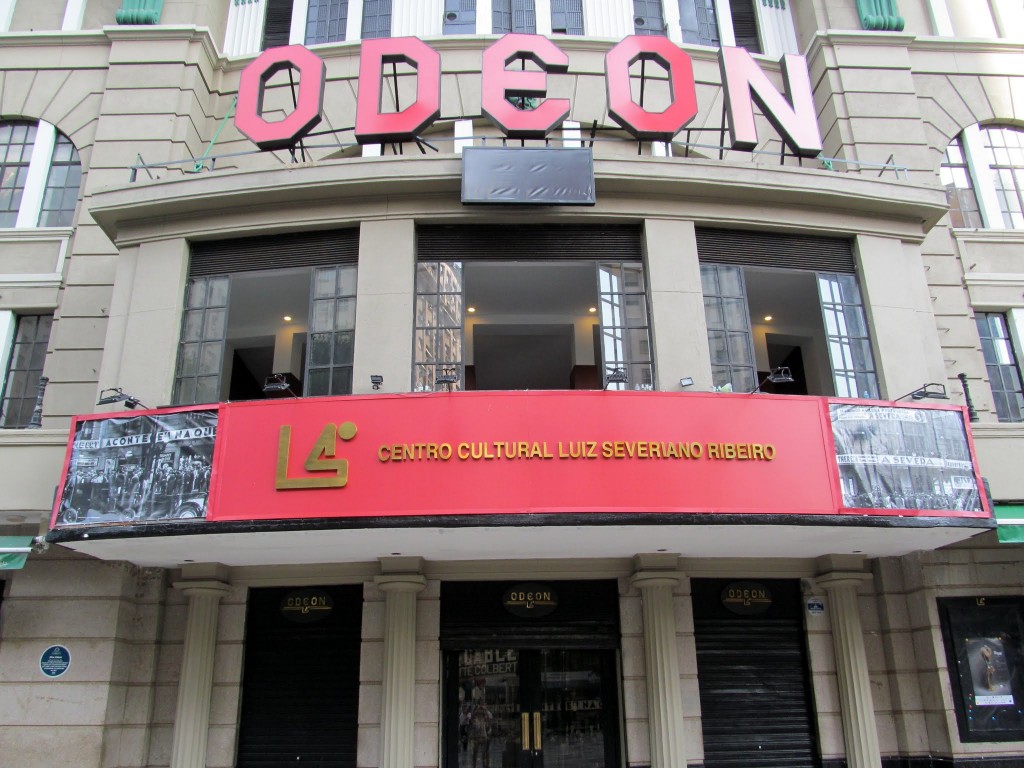 Opened in 1926, the Odeon Cinema is one of the most iconic cinemas in Rio's Historic Center. / Credits: Daytours4u[/caption]
Cinelandia: architecture, art and glamour to start
The historical tour of downtown Rio actually begins in Ipanema (South Zone) with a short subway ride to the Cinelândia station. Upon arriving, you get the feeling of having entered a completely different Rio de Janeiro: with businessmen in suits bustling about and people caught up in the city's frenetic pace, making it seem as if the beach and the sea are thousands of kilometers away—a curious detail that adds to its charm. This part of the city is called Cinelândia and is bordered by Marechal Floriano Peixoto Square . It bears this name because during the 1920s it was considered the Broadway of Rio , housing the most important cinemas and theaters of the time, among which the Cine Odeon remains standing, a recently remodeled building, around which you will find some of the most imposing architectural pieces of the city, each with its own architectural style: the Câmara Municipal, the Biblioteca Nacional, the Museu Nacional de Belas-Artes, the Centro Cultural de la Justiça Federal and of course, the beautiful Teatro Municipal.
After stopping to learn about the history of this important landmark in Rio, the walk continues along Rua Araujo Porto Alegre . A truly exciting place where it's easy to get lost, watching life spring up from every corner amidst eclectic architecture that blends the imperial past with the botequinhos, barzinhos, restaurants selling food by weight, and street vendors that are part of the current lifestyle of the Marvelous City.
Praça Quince: Tiradentes Palace and other Rio beauties
Next, the Tiradentes Palace makes its imposing appearance on the tour. We'll leave its history and the reason for its name for the visit, because it's as interesting as its architecture, which dates back to 1926. It's worth pausing here for a moment to take photos of the façade, the mosaic floors, the Roman columns, the modernist sculptures, and all the other elements that make up the building, so that the eye can discover the richness of the details that are lost at first glance.
Right next to the Palace is the Paço Imperial , a beautiful colonial-style house converted into a cultural center, which served as the residence of the Portuguese monarchy during the 18th century. Both buildings are located around Praça Quince de Novembro , an ancient square that served as the city's main landing point until the 20th century. Here you can also find other buildings of historical interest, such as the city's Stock Exchange and the Arco do Teles —a colorful and picturesque passageway that connects Praça Quince with Rua do Ouvidor.
[caption id="attachment_419" align="aligncenter" width="702"]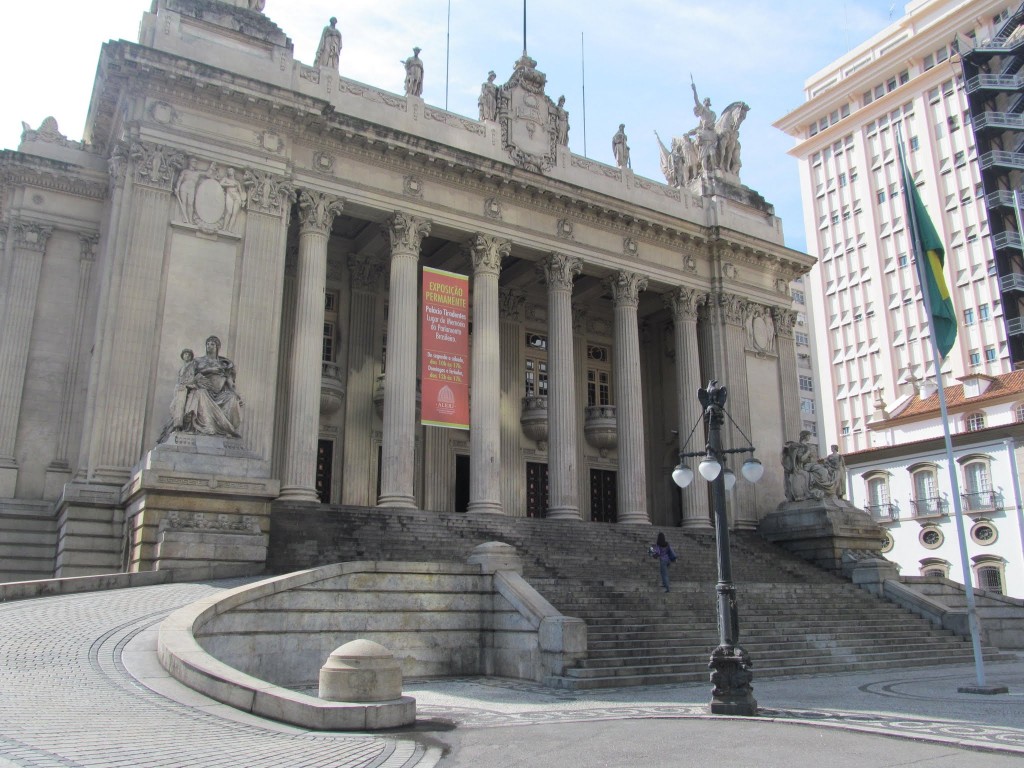 The Tiradentes Palace remains a monument to Brazil's republican and democratic values. / Credits: Daytours4u[/caption]
Discovering Rua do Ouvidor and the Colombo Confectionery
Rua do Ouvidor is one of Rio de Janeiro's most intriguing sights. Its minimalism and colonial simplicity stand in stark contrast to the impressive architectural monuments of Praça Quince. To reach this spot, frequented only by those curious enough to step through this kind of time portal that reveals Rio's colonial past, you must pass through Arco do Teles and Travessa do Comércio and venture into the narrow, cobblestone streets lined with colorful neighborhood bars, alongside a collection of aging houses and a church steeped in its own religious legend.
I'm talking about the Church of Nossa Senhora da Lapa dos Mercadores , a beautiful colonial building constructed in 1747. Legend has it that it once had a sculpture of Our Lady of Lapa atop its roof, until during a battle it was struck by a cannonball, knocking it to the ground with only one finger miraculously broken. As proof of this, you can still see the cannonball and the finger in the Virgin's sacristy today!
After hearing this religious anecdote, we continued our tour through a more commercial and contemporary part of Rua do Ouvidor, which led us to the famous Confeitaria Colombo . This pastry shop stands out not only for its delicious traditional Brazilian pastries but also for being a space with over 100 years of history, where the spirit of Rio's Belle Époque remains alive through the unique Art Nouveau style that adorns the marble walls, stained-glass windows, Belgian mirrors, and every corner of the interior, which today stand as works of art suspended in time.
After stopping to recharge our batteries with a delicious cafezinho and a salgado to stave off hunger, still eager to continue discovering more about the history of this city, we continued our tour with the charismatic guide who accompanied us that afternoon.
[caption id="attachment_418" align="aligncenter" width="702"]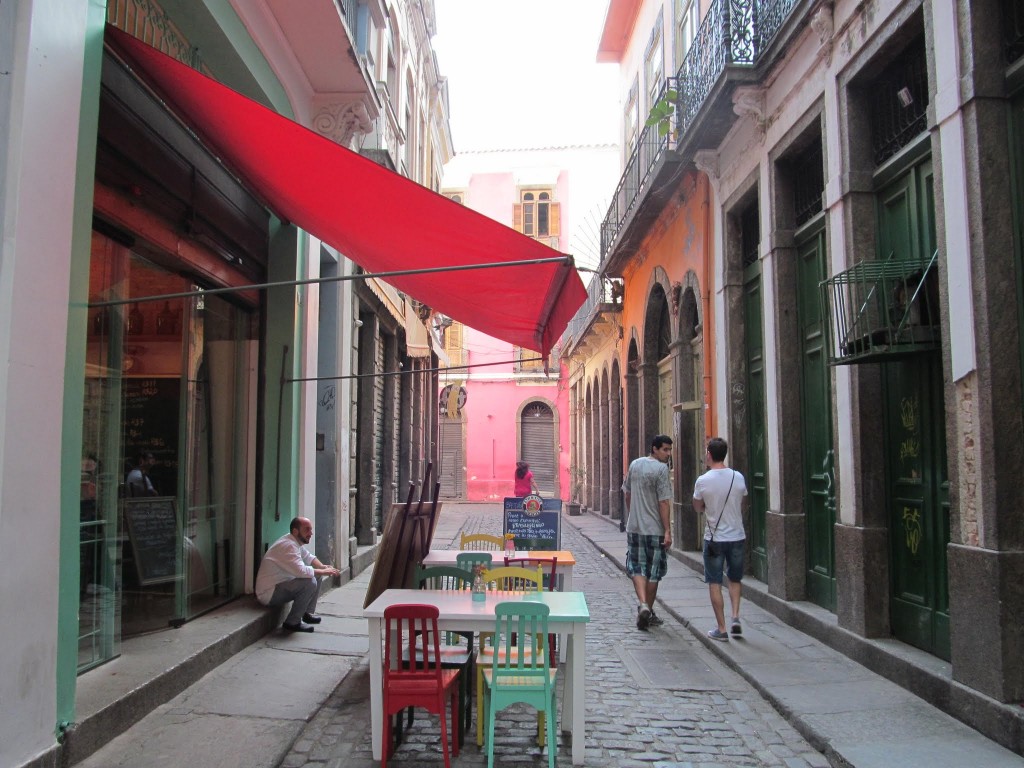 The old Travessa do Comércio in Rio is a charming and romantic place to have a coffee. / Credits: Daytours4u[/caption]
Largo do Carioca, Arcos de Lapa and Escadaria Selarón:
Largo do Carioca is a square located at the Carioca Metro Station in Rio de Janeiro. This important and bustling spot is frequented by Rio's working class and offers a glimpse into the everyday life of a Carioca (a Rio native). The view from here is stunning, providing a perfect backdrop for a picture-postcard view of the city, with the Monastery of Saint Anthony in the background—located on the hill of the same name—the Metropolitan Cathedral of Rio, with its intriguing design inspired by Mayan pyramids (see comments below), and the Lapa Arches, all in one place.
We decided to continue to the well-known Arcos de Lapa or the Acueducto da Carioca, built in 1750 to supply water to the city, and from there, a few meters away, we continued the tour to the famous Escadaria Selarón , the work of the late Chilean artist Jorge Selarón, who since 1990 dedicated himself to decorating piece by piece the staircase that led to his home, building a large mosaic in which tiles that were brought from different parts of the world predominate.
After taking the respective photos at each point of the staircase, when we started walking towards the Cinelandia metro station where we began this tour, we spontaneously came across Rio de Janeiro's first public park , the Passeio Público , built in 1783 by the renowned artist of the Brazilian colonial period, Mr. Valentim da Fonseca e Silva.
Click here to book a Historic Tour of Downtown Rio!
Technical notes of the tour:
- This private tour took 3.5 hours.
- To make the most of your time on the tour, it is recommended to bring water, comfortable shoes, and sunscreen.
- The walking tour of Rio de Janeiro's historic center is a private service whose itinerary can be tailored to individual interests . It cannot be compared to free tours, as this is a professional service conducted by a specialized guide.
- The city center is surrounded by numerous colonial-era churches, which tell the story of Rio de Janeiro and showcase its distinctive architecture, making it a major attraction for architecture and religious history enthusiasts. On this walking tour, we asked the guide to quickly pass by churches like the Candelária Church and skip the Metropolitan Cathedral of Rio de Janeiro, as it's usually included in the full city tour . Instead, we opted to spend more time on the Selarón Steps and along the Passeio Público.
- Downtown Rio is a very busy area on weekdays, but that doesn't mean you can't enjoy a pleasant stroll. On the contrary, for safety reasons and because of the high volume of people, it's recommended to take the bus or train in the morning on weekdays.
- When returning to the hotel, the guide can drop passengers off at the entrance of the Metro station to take the train to Zona Sul, or if the passenger wishes, they can request his escort to the hotel door.
By: Nohelia Sánchez / Editing and adaptation by David Luna Durán .
Published by Has Chacon on 03/06/2026


