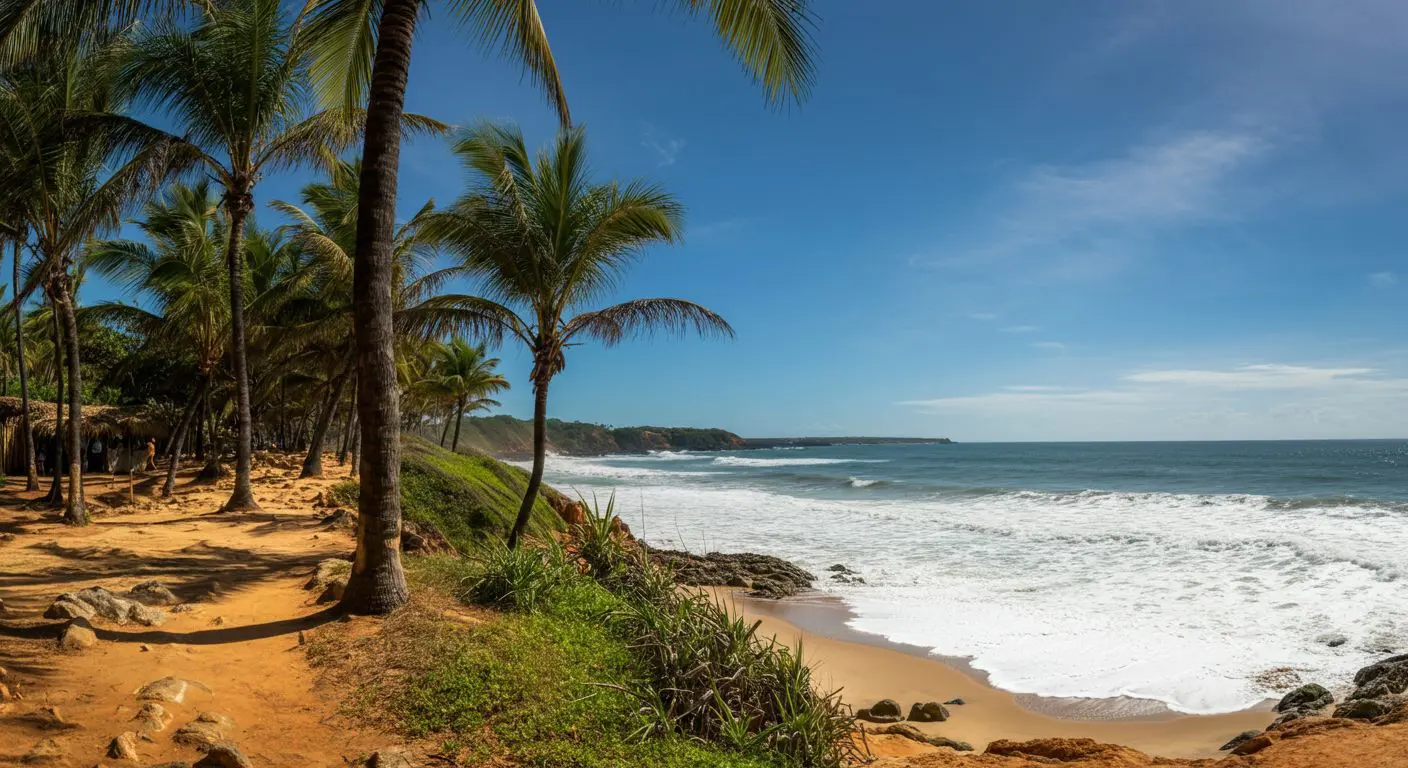
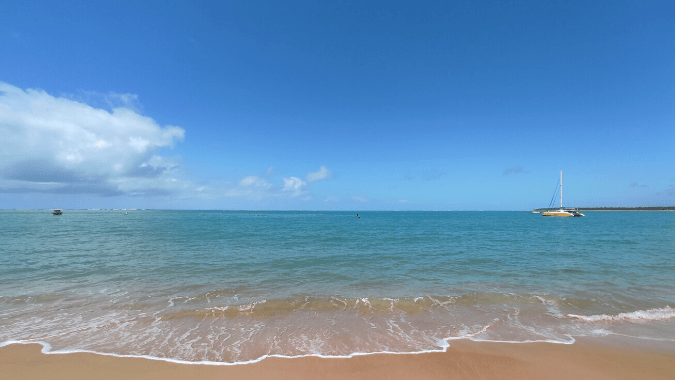
With its tropical climate and postcard-perfect scenery, the Pernambuco coastline is a favorite destination for Brazilians and tourists from all over the world / Tiffany
Praia de Tamandaré and Praia dos Carneiros
Our itinerary begins at Tamandaré Beach , located 20 km past the border with the state of Alagoas . This beach is particularly known for its proximity to Praia dos Carneiros, considered one of the most beautiful in Brazil. A true postcard image, it is iconic for its small chapel dedicated to Saint Benedict, built in the 18th century, overlooking the sea. It is also one of the ideal places to enjoy the numerous natural pools that dot the coastline. With a different current, Tamandaré Beach is more frequented by surfers and those seeking a calm beach and a peaceful atmosphere. A few huts offering food and drinks line the shore, but above all, it is serenity that Tamandaré offers, complementing the rather crowded Praia dos Carneiros . Traveler's tip : Located 90 km from Recife, the excursion to Playa dos Carneiros allows you to spend the day fully enjoying this tropical gem, which offers activities including canoeing, therapeutic mud baths and walks on ecological trails.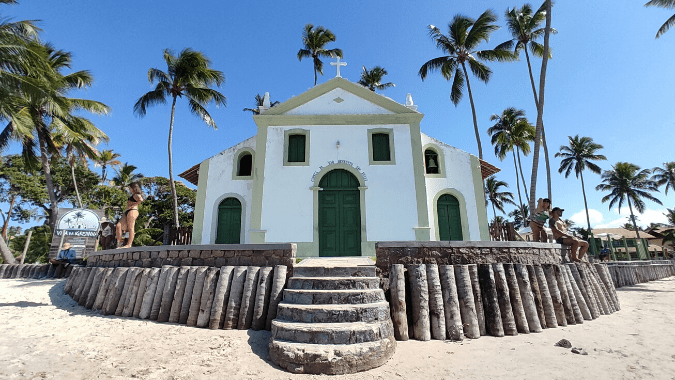
The Chapel of Saint Benedict was built in the 18th century on Praia dos Carneiros. Surrounded by giant palm trees, it overlooks the turquoise sea, offering a truly idyllic panorama steeped in history. / Tiffany
Barra do Sirinhaém and Santo Aleixo Island
Our next stop stretches for nearly 6 km! Plenty of space to truly enjoy the fine sand and turquoise waters. Barra do Sirinhaém is quite popular with Brazilians during the high season, but the rest of the year it's practically deserted. A pristine landscape where golden sand leads you to calm, clear waters, offering a wild and always unique panorama. It's also from Barra do Sirinhaém that you can access Santo Aleixo Island, a volcanic island covering 30 hectares, declared an Environmental Protection Area. As it's privately owned, the maximum stay allowed on the island is 5 hours, but its beauty is truly worth the trip! Travel tip : it's also possible to access it from Porto de Galinhas with agencies offering 3-hour tours. But be sure to visit this wonderful island responsibly; its preservation is a priority for several Brazilian organizations.Porto de Galinhas
This unusual name, "Port of Chickens," has its tragic origins in the era of the abolition of slavery, when the trade continued illegally, with slaves hidden in crates of chickens. Its name has survived the evolution of the destination , and today it is undoubtedly the most popular spot on the Pernambuco coast after Recife! Porto de Galinhas is a major tourist destination in the Northeast, known for its nightlife and family-friendly activities, promising many a fantastic seaside vacation. Natural pools, aquabiking, snorkeling, or simply relaxing on the beach—there's something for everyone! If you're looking for a more tranquil atmosphere and a more unspoiled landscape, Maracaipe Beach is ideal. With its hippie vibe and laid-back energy , it also features a small village with accommodations that allow you to enjoy a comfortable stay. Traveler's tip : Maracaipe beach is located south of Porto Galinhas , but heading north, a long walk of about 8 km along the seafront will allow you to discover the beaches of Cupe and Muro Alto .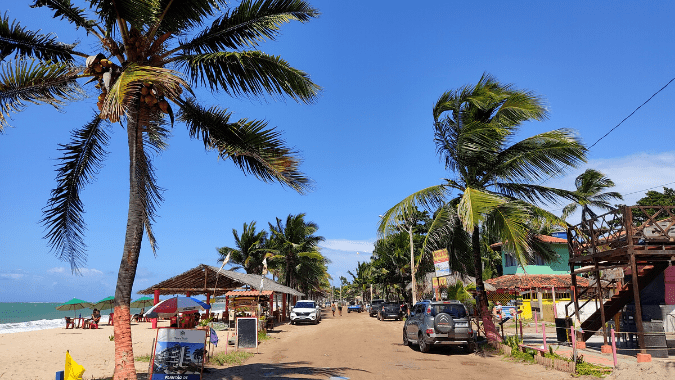
The Maracaipe neighborhood and its beach are a haven for locals and visitors seeking more peace and quiet, a more authentic, down-to-earth atmosphere. / Tiffany
Recife, the Venice of Brazil
Founded in 1537 as a small fishing port, Recife became the capital of Dutch Brazil in 1630 after its colonization. Known as "New Holland," it passed into the hands of the Portuguese, Brazilians, Indigenous peoples, and Africans in 1654 and became the capital of the state of Pernambuco in 1837. Today, Recife takes its name from the reef barrier along its coast and is known as the Venice of Brazil for its many bridges, rivers, and canals, many of which date back to the Dutch colonial period. The fifth largest city in Brazil, boasting over 10 kilometers of beaches, it is a favorite destination for tourists, especially for its incredible carnival! When you think of Recife, you can't help but think of the authentic little town of Olinda , with its colonial ruins designated a UNESCO World Heritage Site since 1982, and its iconic Boa Viagem beach. A city of striking contrasts between the immense and countless buildings that dominate its city center, the authentic Olinda, declared Brazil 's first European Capital of Culture in 2005, and its picturesque historic center, Recife has plenty of surprises and discoveries in store! Traveler's tip : for a successful visit to Recife, take a guided city tour to ensure you don't miss any of its history, anecdotes, and secrets. A visit to Olinda is a must to learn more about its incredible vestiges of Brazil's past.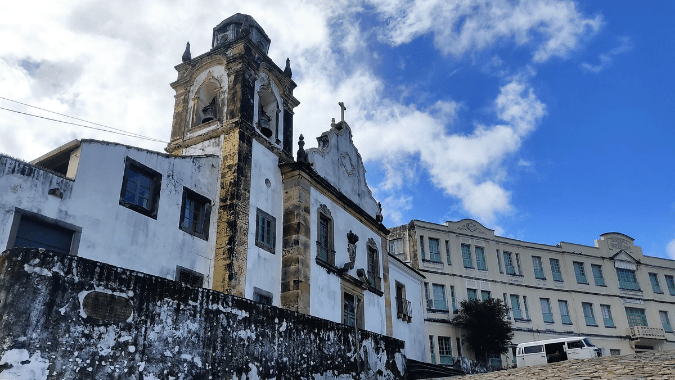
The Church of Nossa Senhora da Misericórdia is one of the oldest religious sites in Brazil; its annex notably served as the country's first hospital. / Tiffany
Itamaraca Island
Our itinerary ends halfway between Recife and the border with the state of Paraíba, on Itamaraca Island. This ecological paradise is separated from the mainland by the Santa Cruz Channel, accessible via the President Getúlio Vargas Bridge from the town of Itapissuma. Coconut palms, idyllic beaches, crystal-clear waters, and colonial vestiges await you on this charming island off the coast of Pernambuco. While fishing and tourism are the island's main economic activities, it's fascinating to discover a completely different way of life, a stark contrast to the frenetic pace of Recife. Between calm and serenity, your visit to the island unfolds amidst natural wonders such as Sossego Beach, the Peixe-Boi Conservation Center, Pontal da Ilha Beach, and Baixa Verde Beach , among many others! But also among its historical riches such as the Forte Orange, erected by the Dutch in 1631, the Forte de Santa Cruz, the church dedicated to Nossa Senhora de La Conceição and that of Nossa Senhora do Pilar.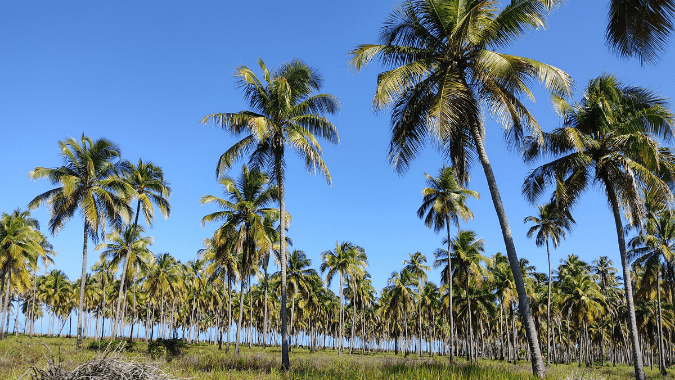
The entire northeastern coastline is a succession of coconut palm forests, offering a landscape that is both impressive and peaceful, to be admired without restraint / Tiffany
We've reached the end of our journey along the Pernambuco coast , a journey through natural beauty and historical remnants. This state truly reflects Brazil's diverse character, a blend of its rich past, vibrant culture, and incredible biodiversity. Whether you visit during its vibrant Carnival season or its more tranquil moments, Pernambuco has incredible places to discover and extraordinary experiences to offer! So don't hesitate any longer and let yourself be charmed by this gem of Brazil's Northeast.By: Tiffany, passionate communicator, seasoned marketer, enthusiastic traveler and contributor to Daytours4u
Published by Has Chacon on 04/06/2026


