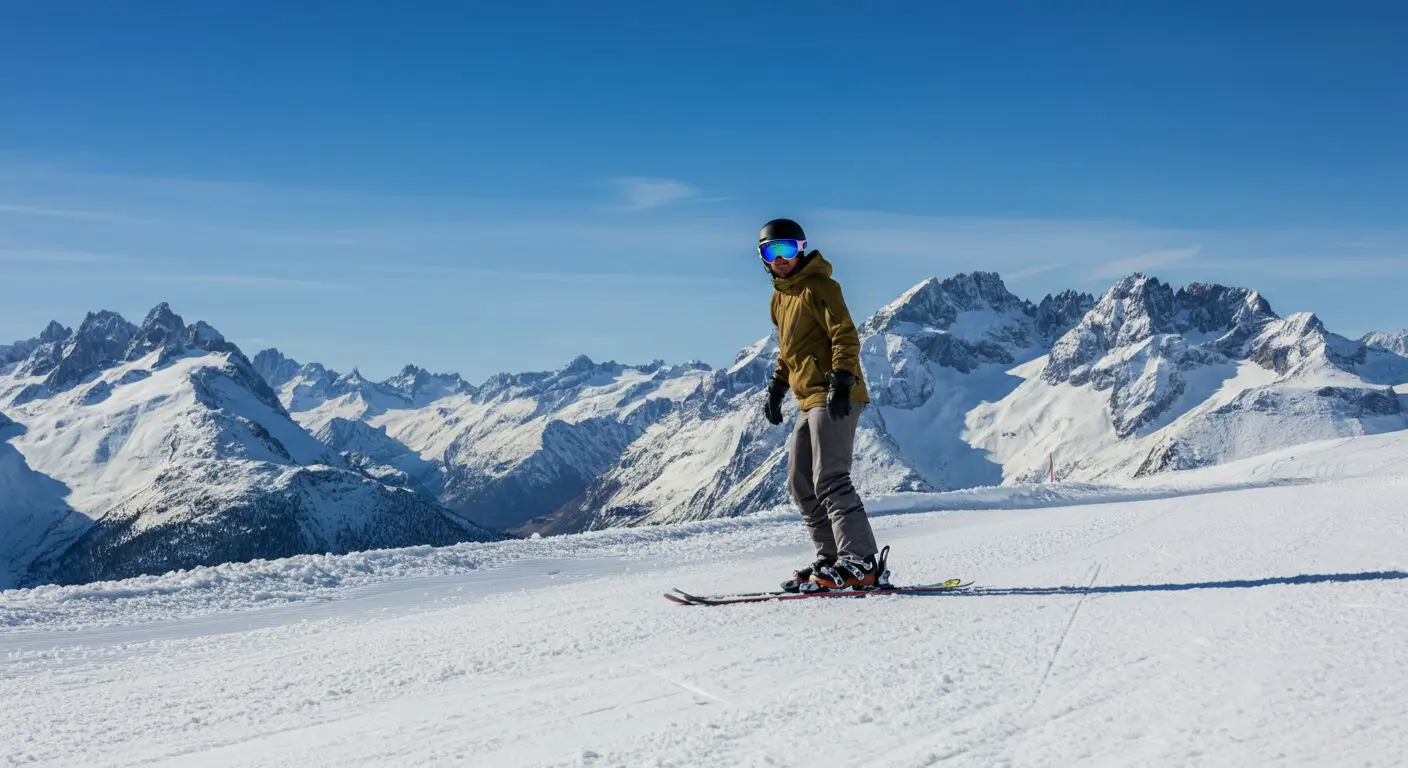
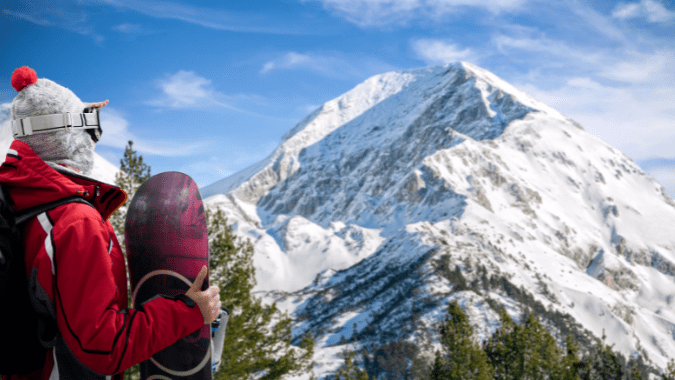
 Between June and September, the snow-covered slopes of the Andes Mountains become the best place in the world for skiing and snowboarding. / Photo: LuckyBusiness Canva Pro
Skiing or snowboarding?
The first major difference between skiing and snowboarding lies in their very different origins. In fact, traveling on skis has been practiced for thousands of years—8,000 years, to be precise. Originally, it wasn't a sport but rather a means of transportation ; skis allowed people to move across snowy or icy terrain. Of course, times have changed, and so have skis. Before the 20th century, skiing wasn't the mass sport it is today. Snowboarding, on the other hand, is a much more recent sport, having emerged in the 1960s. Initially, it was simply a pastime, like a toy attached to a rope, used for sliding down snowy hills. It was invented in Michigan by the engineer Sherman Poppen for his daughters.Which one is the easiest to practice?
Many argue that "skiing is easier to learn but harder to control, while snowboarding is harder to learn but easier to control." Here are some arguments that might help you choose between skiing, snowboarding, or both this winter :Freedom of movement
On skis, your legs are separated, giving you complete freedom of movement. No matter how fast you're going, you can use the motion of both legs to balance, brake, skid, or simply stay upright. On a snowboard, however, both feet must be on the same board, which can feel awkward and restrictive at first, especially when faced with the force of some falls or simply when trying to move around on flat terrain. Remember that on a snowboard, you don't use poles for propulsion or balance, and both legs are on the same board.Body position
Skiing requires a natural stance that we're used to. From head to toe, our entire body is facing forward, and we glide across the snow by changing the angle of our skis. This natural bipedal position isn't as easy to achieve in snowboarding. This isn't a problem for experienced snowboarders, but it's something to consider for your first time on snow.Moving around or standing
Skis allow you to stand naturally and rest. To do this, you need to position your skis perpendicular to the steepest line of the slope. You can also move by shifting your weight from one ski to the other and using your poles for support. With a snowboard, you have to sit in the snow to rest, and in flat areas, you'll need to take one foot off the board to move forward, stand up, or take a lift. However, snowboarders can move easily in their boots on virtually any terrain, which isn't the case for skiers because the materials used for alpine ski boots are rigid.Is it expensive?
One thing is certain: skiing in South America is not cheap. Both Argentinian and Chilean resorts offer expensive lift passes and accommodations that are much more costly than in Europe or the Pyrenees. Furthermore, you need the right equipment and some knowledge to be able to hit the slopes and practice these sports safely. August is the shoulder season, and prices are lower than in July . September, for example, is a bit more affordable. If you're skiing for the first time, keep in mind that there are several rental shops, whether for equipment (snowboards, poles, and boots) or appropriate clothing. It's also advisable to take a few lessons beforehand (some schools offer 1, 2, or 3-hour lessons) on the easy slopes at the base of the mountain and in the lower part of the slope. You can also do other activities such as sledding, dog sledding in the forest, snowshoeing, rappelling, zip-lining, inflatable tube sliding, etc.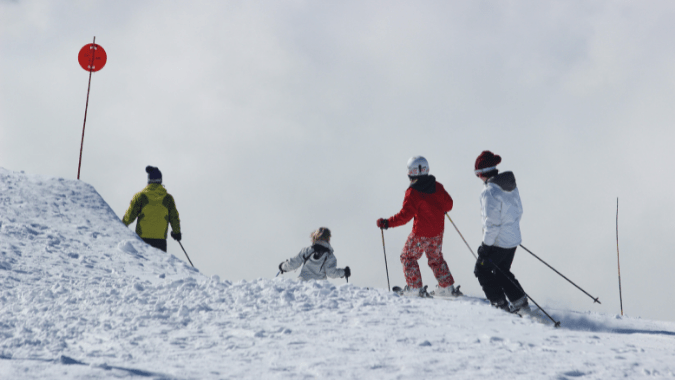 We might sometimes think that skiing is an exclusive sport, for athletes and adventurers, but in reality it's open to everyone. / Photo: Shimura, Canva Pro
Which are the best stations?
There are ski resorts to suit all tastes, ages, and situations. Here are our top 5 favorites.1- Portillo, the best slopes in the region
The legendary Portillo ski resort in Chile boasts some of the best runs in the region for Advanced, Expert, and Extreme skiers. The exhilarating Roca Jack and Cara Cara runs offer steep descents to the stunning turquoise lagoon known as Laguna del Inca . The Super-C run, accessible after a two-hour hike, is one of the most adrenaline-pumping, with its descents from 1,500 meters. Portillo is also one of the best ski touring resorts near Cerro Catedral in Argentina and offers excellent services for families. Tip: Portillo offers the best nightlife, the best dining, and the least crowded slopes. The resort is never overcrowded, as it only accommodates 450 skiers per day.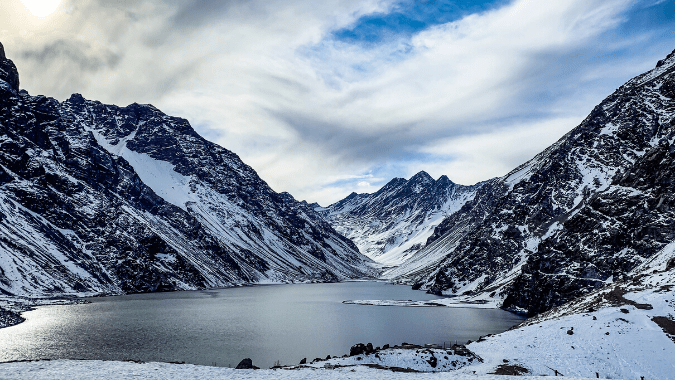 Portillo is considered one of the most exclusive ski resorts in the world and the oldest in South America. / Photo: Richard Yukio, Canva Pro
2- Valle Nevado, the best atmosphere for families
Valle Nevado is considered one of the best ski resorts in South America due to its advanced infrastructure compared to other resorts in the region. Its vast terrain, long runs, high-quality chairlifts, off-piste skiing , and excellent service for English-speaking visitors are the main attractions that draw both local tourists and visitors from the United States and Europe. The Valle Nevado resort is located just half an hour from Santiago, Chile . While no run presents such a challenge for advanced skiers, the resort boasts some of the best runs in South America for beginner and intermediate skiers. In addition, it offers a spa, a bar, shops, a wide variety of restaurants, and several accommodation options.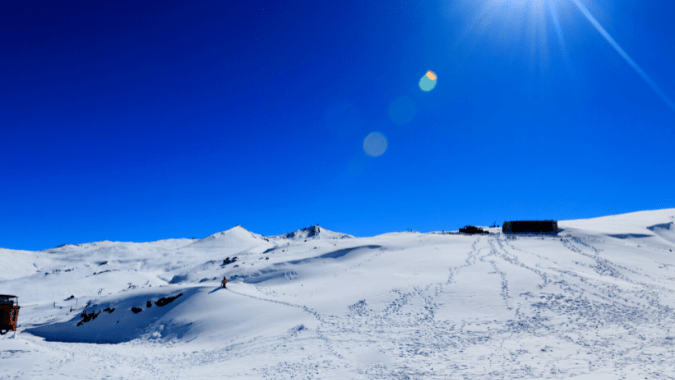 Valle Nevado has a reputation for being the best ski resort for families / Renato_Pessanha, Canva pro
Tip: Valle Nevado shares lift passes with the resorts of La Parva and El Colorado, forming a ski area of over 120 kilometers known as the "Three Valleys".3- Nevados de Chillán, relaxation in the thermal baths
According to many skiers, Nevados de Chillán boasts the best powder in the Andes , and once the snow is no longer fresh, you can put on your gear for sightseeing or ski touring, climb the Chillán volcano , and ski back down on pristine snow. And it's not just for advanced skiers! Nevados de Chillán, like El Colorado, has some of the best terrain in South America for beginners. The added bonus of this resort is that once you're at the bottom, you can enjoy the soothing thermal waters that naturally spring from the ground.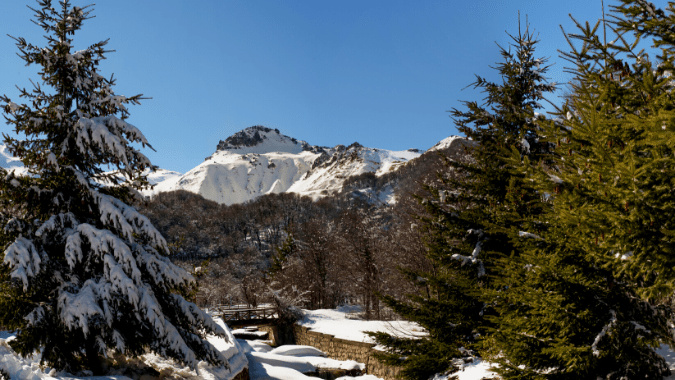 This ski resort is renowned for having some of the deepest accumulated snow in the Southern Hemisphere. / Photo: Marcela Vieira, Canva pro
4- Cerro Catedral, the best access by ski lifts.
Located in the heart of the magnificent Nahuel National Park , Cerro Catedral is one of the largest and most modern ski resorts in South America. With 37 lifts and 121 hectares of terrain, it offers slopes for intermediate and advanced skiers, as well as terrain ideal for sidecountry and ski touring. Once you're back at the bottom, the culinary scene will satisfy every palate. There's a wide range of accommodation options, and the nightlife is vibrant.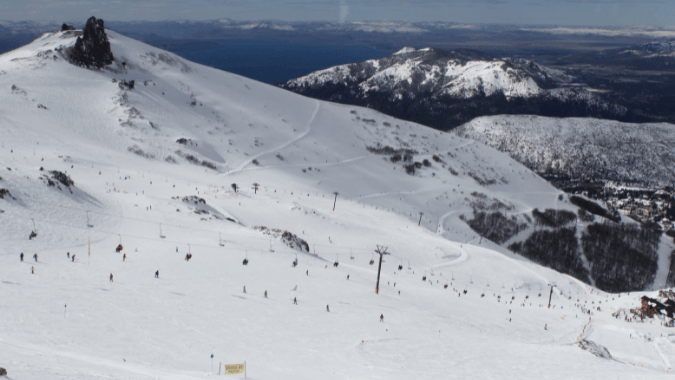 If conditions allow, Cerro Catedral becomes a ski touring paradise where you can enjoy the best powder in Argentina. / Photo: Cleberson Silva, Canva Pro
5- Las Leñas, the best off-piste skiing
With 17,482 hectares, Las Leñas is by far the largest ski resort in South America . Its steep slopes and narrow, precipitous drops have served as the backdrop for dozens of ski films. The resort is well-known among freestyle professionals for its long, steep runs, some of which are among the most exhilarating in the region. Even the most experienced skiers can have fun on its slopes. These are the most challenging runs accessible by chairlift, compared to those accessible off-piste.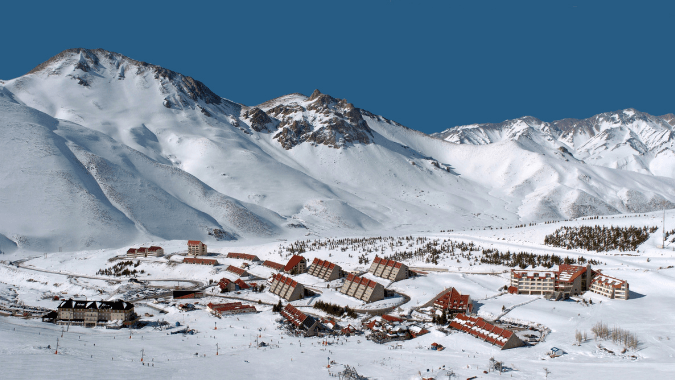 In Las Leñas, the snow cover can be very thin one day and then very deep the next in a single snowstorm. The slopes can be difficult to ski on one day and a freeride paradise the next. / Photo: Daniel Wolkomirski, Canva pro
Spectacular landscapes of snow-capped volcanoes and glaciers likePerito Moreno offer countless vistas to explore, making South America a paradise waiting to be discovered. Are you ready to join us?By: Nathaly Bosh , a social communications professional and curious traveler. Spanish writer for Daytours4u. Roxane Thomassin-Dupas , translation intern for Daytours4u.
Published by Has Chacon on 04/06/2026


