We tested the ExpansionSpanish language center for you to give you tips for Spanish courses in Buenos Aires. Mr. Gabriel Aragona, the school's Academic Director, explains the secrets, mistakes, and the countries and nationalities that love, hate, and admire this language of love and romance, called Castilian or Spanish.
Spanish courses in Buenos Aires: an overview of the competition and training
Buenos Aires is the second most populous city in South America, with just over 3 million inhabitants today and a very attractive tourism sector. It is a culturally rich and highly appealing city. For the past two years, the number of students has been increasing, and there is a growing number of tourists who come to discover the city and also to take Spanish courses in Buenos Aires. This is known as language immersion tourism .
A congress on idiomatic tourism has recently been established, with the aim of developing tourism in Buenos Aires.
Finding a Spanish language school in the capital is highly competitive, as there are many schools. A significant number of schools opened around 2001/2002 during the economic crisis. However, these schools have gradually closed, and today only the best and largest remain, catering to the ever-increasing influx of tourists eager to learn Spanish.
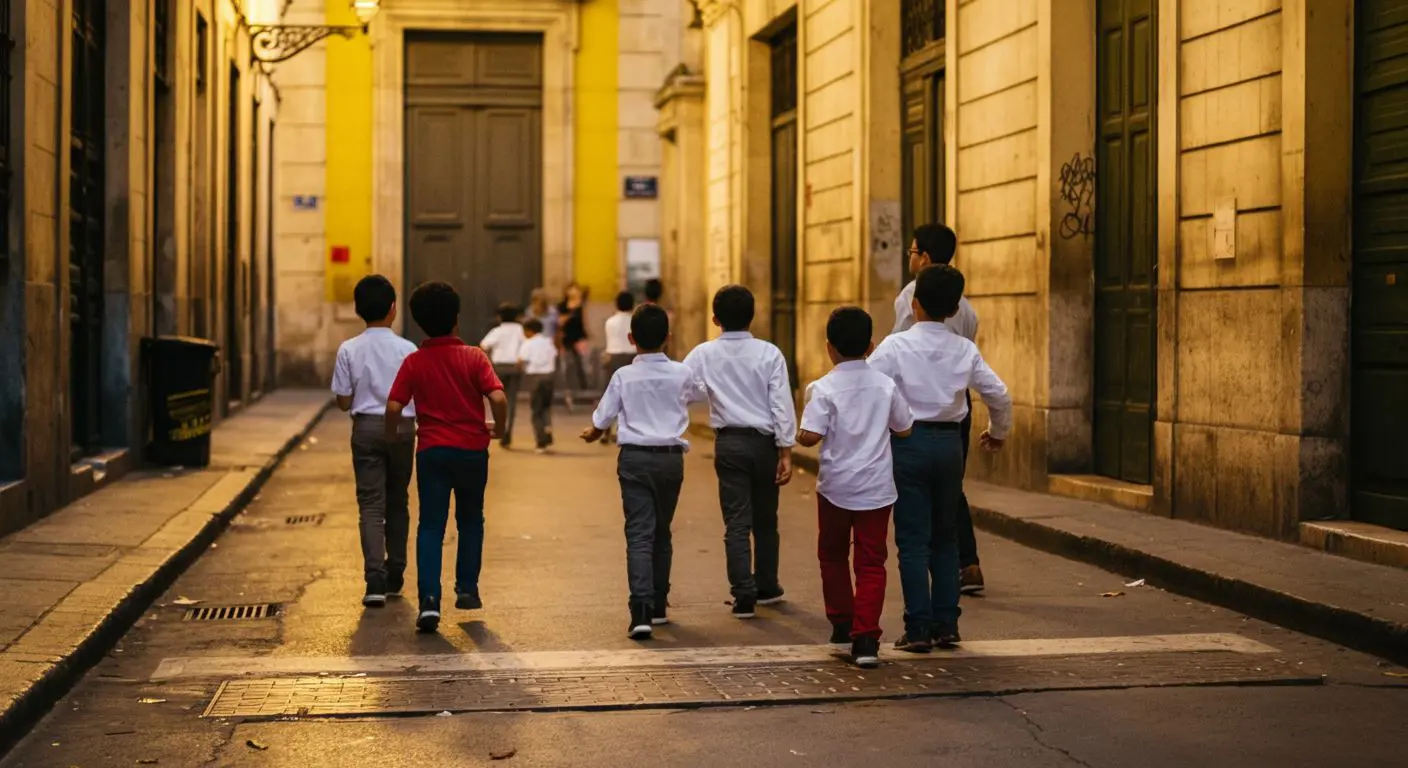
[caption id="attachment_201" align="aligncenter" width="540"] ¿Habla español? , Spanish lessons in Buenos Aires. / Source [/caption]
Spanish lessons in Buenos Aires: complexity and encounters
Spanish is a complex language that shares many similarities with other European languages such as French, Italian, Portuguese, and Romanian, all of which are Romance languages and Latin in origin. Therefore, it is easier for them to learn Spanish and take Spanish lessons. In Buenos Aires, the problem stems more from people coming from the Netherlands, England, or the United States. Indeed, English in general is simpler than Spanish, which has much more complex conjugation and grammar. For example, English speakers are completely unfamiliar with the rules of the subjunctive mood, a much more complex form to learn. Consequently, Spanish becomes a very difficult language for people who speak English, German, or Dutch.
There are other aspects as well; Europeans are used to speaking other languages because it's a continent where countries are close together. Therefore, a German will almost certainly speak English, a Swiss person will speak French, a French person will have a better grasp of Spanish… In any case, the trend is to speak several languages.
In the United States or Australia, for example, it's different; there isn't this awareness of learning other languages, of taking Spanish lessons, and that's why it's generally more difficult.
Mr. Aragona, Academic Director of the EXPANISH school, explains that the Swiss are ranked first in the world for learning Spanish. He attributes this to Switzerland's location, which gives it an easier grasp of neighboring languages such as German, French, and of course, English. Furthermore, he specifies that the Swiss have a greater aptitude for learning a new language, a trait reinforced by their love of travel.
Mistakes: Spanish lessons in Buenos Aires, what should you focus on most?
This professor reveals to us the common mistakes for all those taking Spanish courses in Buenos Aires such as the use of por and para , of ser and estar , people coming from the United States and Australia for example frequently make confusion on this basic, but very important rule.
For other nationalities, such as the French, prepositions like "de" are the most frequent errors. He concludes by saying that prepositions and sentence structure are the most difficult errors to correct. The use of the subjunctive mood is also the most complex grammatical rule!
Anecdotes: Spanish lessons in Buenos Aires, a foreigner learning Castilian!
There are many examples; the best are, for instance, at the language school, people who have been taking Spanish classes in Buenos Aires for a very long time. They started as beginners and after five months of study have reached a very advanced level and often want to stay and find work in Buenos Aires because they love the city. The interesting thing is that later, when they speak with teachers from Colombia, Uruguay, or Spain, they speak with an Argentinian accent that they weren't necessarily taught here: "che ," "vos "—it all feels very foreign, very Argentinian. So, it's a porteño , but it's not proper Spanish; Argentinians have a very strong accent, like the "che" ... But you get used to it quickly, and it's quite fun to try out this new form of Spanish.
To take Spanish lessons, but not only that, to also discover our full range of activities, visit our website and check out all our excursions and activities in Buenos Aires .

By: Fannie Marti
Published by Has Chacon on 04/06/2026


