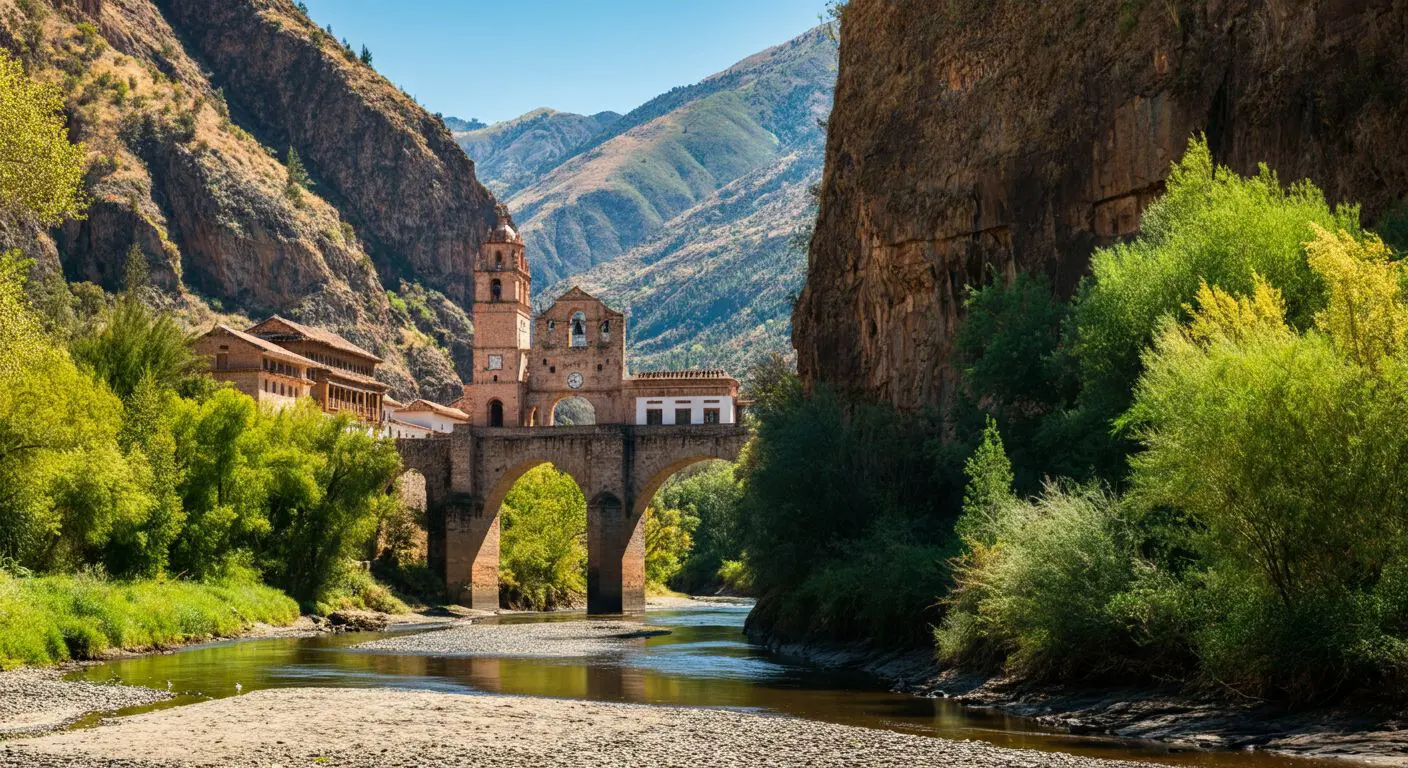
1. HUNCHBACK

Rio's most famous postcard features Christ the Redeemer / Photo: Gisele Teixeira
Corcovado is located west of the city center and rises majestically to 710 meters (2,329 feet) above Rio de Janeiro . Its name translates to "hunchback" in Portuguese, and it is one of Rio's most famous icons. It is known worldwide for its statue of Jesus with outstretched arms – Christ the Redeemer – perched atop the mountain, as if embracing Rio. Corcovado is undoubtedly Rio de Janeiro's most iconic landmark, making a visit to Christ the Redeemer a must-do activity during your vacation in the city. Not only does it offer an unparalleled view of Rio, but it is also one of the tallest and most imposing monuments in the world. The project began in 1824 with the construction of a railway line to the mountain's summit, and it wasn't until 1922 that the first stone of the Christ statue was laid. Nine years later, it was completed and is now considered one of Brazil 's most important engineering feats. In 2007, the Christ the Redeemer statue was chosen as one of the New Seven Wonders of the Modern World, along with other landmarks such as the Great Wall of China and Machu Picchu in Peru. A trip to Corcovado Mountain is Rio's most popular tourist activity, both to see the statue and to enjoy the magnificent views of the bay and the city. Be sure to choose a clear day to make the most of your visit to Corcovado. Travel tip: Book your guided tour of Christ the Redeemer and Tijuca Forest now. You won't regret it!2. SUGAR LOAF
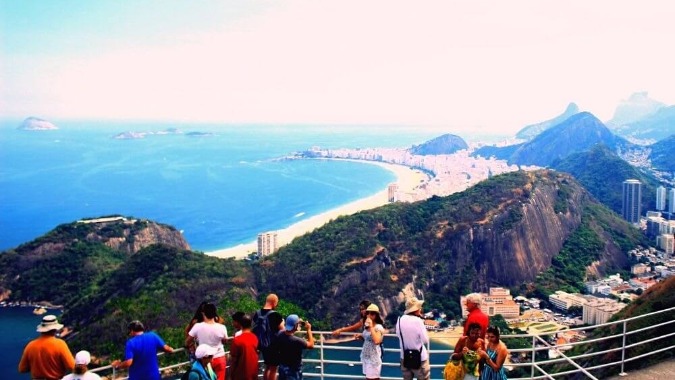
Visiting Sugarloaf Mountain is a must for those visiting Rio for the first time / Photo: Daytours4u
Sugarloaf Mountain (Pão de Açúcar in Portuguese) is a mountain located at the mouth of Guanabara Bay in Rio de Janeiro. An icon of Rio de Janeiro 's landscape, Sugarloaf Mountain rises majestically to 396 meters (1,299 ft) above sea level and is situated between two smaller hills: Morro da Babilonia and Morro da Urca . Sugarloaf Mountain is one of the many monolithic granite and quartz hills that rise directly onto the shore of Rio de Janeiro Bay. The mountain gets its name from its resemblance to the traditional shape of a loaf of refined sugar, and its image—along with the cable car (Bondinho) that connects the other two hills—has become famous worldwide. The incredible view from the top of Sugarloaf Mountain attracts thousands of visitors each year. Most visitors opt for the more convenient ascent, the cable car ; others, however, prefer to don their climbing gear and, with a bit of effort, reach the summit. Sugarloaf Mountain is also very popular among climbers, being one of the world's largest urban climbing areas, with over 270 routes of varying difficulty. Visitors can reach the top by taking the cable car, commonly known as the Bondinho de Pão de Açúcar. The Sugarloaf Mountain cable car was the first cable system built in Brazil and the third in the world. For over a century, this glass-paneled cable car has connected Praia Vermelha (Red Beach), in the Urca neighborhood, with Morro de Urca and Sugarloaf Mountain on a 1,400-meter journey, with a capacity of 65 passengers. From Sugarloaf Mountain, you can enjoy spectacular views of one of the most beautiful places in the world, especially if you arrive at sunset to witness an incredible and romantic sunset as the lights of Rio de Janeiro come on. Travel tip: Enjoy our Sugarloaf Mountain and Beach Panoramic Tour3. Historic Center of Rio

Downtown Rio is home to several of the city's most outstanding historical buildings / Photo: Daytours4u
In downtown Rio de Janeiro, many of the city's most important historical treasures are hidden within the financial district, as is the case in most major cities. Some of Brazil 's largest companies are headquartered there, such as Petrobras and Vale (formerly Companhia Vale do Rio Doce ).
To make the most of a tour of downtown Rio, it's recommended to go during the week, when most attractions, restaurants, and cafes are open and the area is safer. However, on weekends you can more easily find activities or exhibitions at the various cultural centers.
Places of Interest in Downtown Rio de Janeiro
You can find places of interest such as the Imperial Palace (Paço Imperial ), built during the colonial era. Originally the residence of the Portuguese governors of Brazil, it is now an important cultural center. There are also many historic churches, such as the beautiful Candelaria Church, the modern and imposing Rio de Janeiro Cathedral , and the Colonial Cathedral , one of the city's most important historical buildings. Rio's historic center boasts one of the city's most interesting spots, Floriano Square, better known as Cinelândia Square (cinema-land) because in the 20th century it was surrounded by numerous cinemas, many of which have closed but still retain their majestic, old-world Belle Époque aesthetic. These buildings still stand around the lively square, filled with cafes and restaurants. Cinelândia is also home to the incredible Municipal Theater , the National Library , and the National Museum of Fine Arts . If you enjoy art and history , you'll undoubtedly enjoy a visit to the National Museum , a former imperial palace built by King João VI of Portugal to encourage exploration of the New World. Today, the museum boasts one of the largest collections in the Americas, featuring animals, insects, artifacts from indigenous cultures, Egyptian mummies, and numerous other archaeological finds from Brazil and South America . You can also enjoy a stroll through the beautiful Passeio Público, a meticulously landscaped 18th-century public garden. Don't miss the stunning arches of the Rio Aqueduct , also known as Arcos da Lapa, located in the vibrant and charming Lapa neighborhood . This famous landmark is a Roman-style aqueduct built around 1750 to carry water from the Carioca River to the city. Until recently, you could ride the Santa Teresa tram (which departed from the station in the city center and crossed the aqueduct) and stroll through the cobblestone streets of the beautiful Santa Teresa neighborhood, but the tram was recently closed for repairs. Travel tip: Enjoy our Classic City Tour of Rio de Janeiro and have an unforgettable experience.4. THE BEACHES OF RIO DE JANEIRO
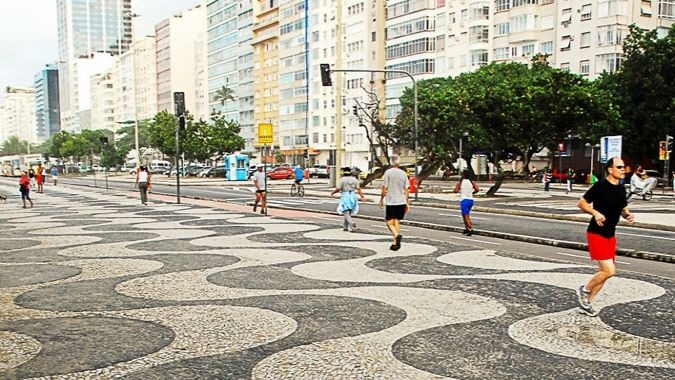
The Copacabana boardwalk is about 4.15 km long and stretches along Leme and Copacabana beaches / Photo: Daytours4u
Rio de Janeiro is known for its magnificent beaches . Rio's beaches are where locals and tourists alike come to enjoy their free time, and anyone who has ever been to Brazil will tell you there's nothing quite like it anywhere else in the world. Sunbathing, surfing, running, playing soccer, or simply enjoying a cold beer, mate, or even better, a refreshing coconut water: spending the day on a Rio beach is pure pleasure!Copacabana
The beautiful Copacabana beach is what comes to mind when you think of Rio de Janeiro's beaches . Located next to the neighborhood of the same name, it's an extraordinary, long, and wide crescent-shaped stretch of sand, ideal for sunbathing and swimming. Copacabana's famous boardwalk is adorned with Portuguese cobblestones in a black and white wave pattern, making it a perfect place for a stroll along the beach and enjoying the beautiful view. Copacabana's main street, Avenida Atlântica, is home to most of Rio de Janeiro's hotels , including the luxurious Sofitel Rio Palace and the exclusive Copacabana Palace, the oldest hotel in the city, built in 1923.Ipanema
Ipanema is the second most famous beach in Rio de Janeiro . It begins at Pedrado Arpoador (Arpoador Rock), bordering Copacabana , and ends at Jardim de Alá (Garden of Allah), a complex of plazas and gardens along the canal that connects Lagoa Rodrigo de Freitas to the sea. Ipanema's tranquil beaches are a far cry from the bustling neighborhood. It's one of the most expensive and elegant places to live in Rio de Janeiro, with 7.5 kilometers (4.6 miles) of beach. It's considered the "sexiest" beach, with soft white sand, crystal-clear waters, a pleasant and relaxed atmosphere, attractive tans, skimpy bikinis, and plenty of surfers. Its cool blue waters beckon tourists to take a dip.Leblon
Leblon boasts some of the most tranquil and cleanest beaches in the area , and is undoubtedly one of Rio's most expensive and chic neighborhoods. Its beaches are often favored by families and anyone seeking a peaceful place to relax, read, exercise, or simply take a nap. However, caution is advised due to the strong currents at Leblon beach, so it's best not to swim too far out, especially on rainy days.Barra de Tijuca
The Barra da Tijuca neighborhood, located southwest of downtown Rio de Janeiro , is a bit off the beaten tourist track. This relatively new neighborhood has earned the nickname " Brazil's Miami" in the last thirty years, thanks to its large condominiums and shopping malls. Here you'll find Rio's largest beach , Barra da Tijuca Beach, which stretches for 18 kilometers along the coast. It's a favorite spot for surfers and fishing enthusiasts, and its beaches are becoming increasingly popular every year. Travel tip: Enjoy our Classic City Tour of Rio de Janeiro for an unforgettable experience.5. SAINT TERESA

The Santa Teresa cable car is a tourist attraction and a historical relic of Rio de Janeiro's transportation system / Photo: Gisele Teixeira
Santa Teresa is a beautiful neighborhood in Rio de Janeiro , located near the city center and Lapa, and is one of the oldest in the city. In the 19th century, Portuguese settlers built their first mansions around the Santa Teresa Convent, a strategic location offering a beautiful view of the city and the ships arriving in Guanabara Bay. During the 1960s and 70s, the upper class began to move to more modern areas, such as Ipanema and Barra da Tijuca . Over the years, its winding cobblestone streets, colonial architecture , and the picturesque grandeur of its colonial mansions have made Santa Teresa a popular spot for artists and tourists visiting Rio de Janeiro, rediscovering it as one of the city's most important tourist destinations. Take a trip back in time to Rio de Janeiro by strolling through the charming cobblestone streets of Santa Teresa. Discover the artisan shops, art galleries, bars, cafes, and restaurants of this bohemian neighborhood . A great tip: walk to Parque das Ruinas , where you can enjoy an incredible panoramic view of the city. It's the perfect opportunity to take beautiful photos of your Rio de Janeiro vacation !6. BOTANICAL GARDEN

The Botanical Garden is a great option for those who want to relax and enjoy nature / Source
The Botanical Garden is located at the foot of Corcovado Mountain , beneath the right arm of the Christ the Redeemer statue. This park covers 140 hectares (1.4 square kilometers) and is home to more than 6,000 species of tropical and subtropical plants, including 900 different types of palm trees. The Rio de Janeiro Botanical Garden was created by Dom João VI to acclimatize some of the plant species brought to Brazil during the colonization of the West Indies. This is one of the must-see tourist attractions in Rio, as it is one of the largest natural sanctuaries in the world . The Botanical Garden is the perfect place for a pleasant stroll among exotic birds and playful monkeys that you might encounter along the way. The Rio de Janeiro Botanical Garden is isolated from the noise of the city, so you'll feel far removed from the hustle and bustle. Furthermore, the dense tropical vegetation creates cool, shady spots, making it an ideal place to explore on a hot day. Among the highlights within the park are the majestic Palm Avenue and the incredible orchid garden ; you'll also find a museum, a café with a terrace, a gift shop, and a sensory garden for the visually impaired. Although not as well-known, this is a highly recommended, almost unmissable, activity during your vacation in Rio de Janeiro. Travel tip: Book your guided tour of Christ the Redeemer and Tijuca Forest now. You won't regret it!7. LAPA
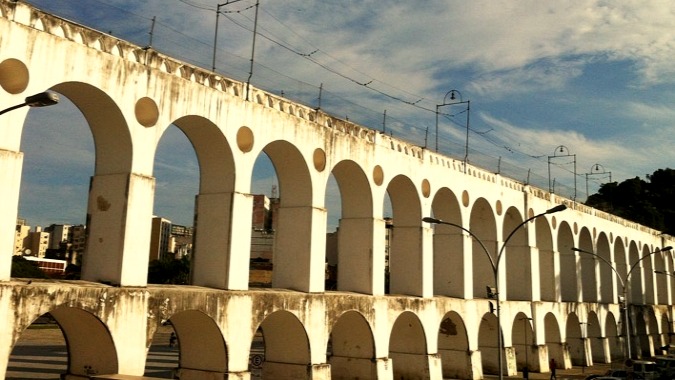
The Lapa Arches are the largest architectural work from the colonial period in Brazil / Source
Lapa is a neighborhood located just outside downtown Rio de Janeiro , tucked away from the coastal tourist hotspots of Ipanema and Copacabana . Since the 1950s, Lapa has been famous for its vibrant cultural scene , with its numerous restaurants and bars that, over the years, have become a meeting place for Brazilian artists and intellectuals. It boasts a wide variety of samba and forró bars and performance venues, such as the beautiful Rio Scenarium, Democráticos, Voador Circo, and Fundição Progresso (where many international bands perform). At night, the neighborhood transforms into an open-air party , its cobblestone streets teeming with tourists , artists, and locals. If you want to experience the true Rio nightlife , stroll through the streets of Lapa on a Friday night and enjoy caipirinhas or fruit cocktails while listening to great music. A visit to Lapa after sunset is an unmissable experience during your Rio de Janeiro vacation . Always remember to be alert and keep an eye on your belongings, as Lapa can get very crowded at night.8. Maracanã Stadium

The Maracanã Stadium was the scene of an epic moment in world football: Pelé's 1,000th goal / Source
It's no secret that football plays an essential role in Brazilian culture. If you're a football fanatic , or simply a curious tourist, you can't miss the chance to see a football match in Rio de Janeiro at the famous Maracanã stadium. It's famous for many reasons. It's the home of the Campeonato Carioca and the official stadium of Rio's four biggest football teams: Botafogo, Flamengo, Fluminense, and Vasco da Gama . Furthermore, it was the place where the extraordinary Pelé celebrated the 1,000th goal of his career in 1969. Likewise, the Maracanã has hosted major events such as the massive masses celebrated by Pope John Paul II, international concerts, and sporting events.9. RODRIGO DE FREITAS LAGOON
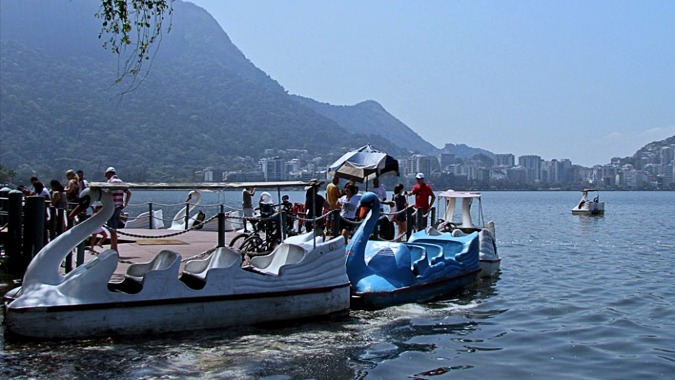
On the shores of the Rodrigo de Freitas lagoon, locals and visitors enjoy sports, picnics, and moments of relaxation / Photo: Gisele Teixeira
The Rodrigo de Freitas Lagoon , more commonly known as Lagoa , is a natural lagoon located in the South Zone and is one of Rio's main symbols . It's connected to the ocean by a narrow channel that runs through Jardim d'Alá Park and is surrounded by the neighborhoods of Ipanema, Leblon, Jardim Botânico, Copacabana, and Botafogo. It's a wonderful place for a stroll and a romantic, relaxing walk along the lakeside. The Rodrigo de Freitas Lagoon has a 7.2-kilometer-long bike path and a walking trail around its perimeter. Bicycles can be rented near Brigadeiro Faria Lima Park, or you can enjoy a unique view of Rio by renting a rowboat on the lagoon. During the Christmas season, the lagoon attracts a large number of visitors who come to see the traditional and enormous Christmas tree, built on a floating platform that moves around the lagoon. For those who prefer sipping a caipirinha to cycling or skating around the lake, there are kiosks at Parque dos Patins , an open-air area with a wide selection of restaurants offering all kinds of cuisine, from Italian to Japanese. After 9 p.m., you can enjoy live Brazilian music and jazz. Rodrigo de Freitas Lagoon is located between Avenida Epitacio Pessoa and Avenida Borges de Medeiros. Travel tip: Book your guided tour to Christ the Redeemer and Tijuca Forest now! Don't miss out on this amazing adventure!10. TIJUCA FOREST
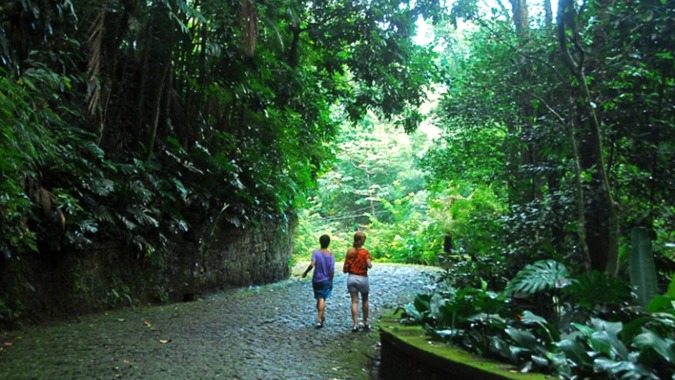
Tijuca Forest is one of the largest in the world / Photo: Daytours4u
It is one of Rio de Janeiro 's main tourist attractions . The Tijuca Forest is located within Tijuca National Park, the largest urban rainforest in the city, situated in the heart of Rio de Janeiro. In the 19th century, the Tijuca Forest was almost completely deforested to make way for coffee plantations. In 1861, the government recognized that deforestation was affecting local rainfall and causing a shortage of drinking water, so a reforestation project was developed over the course of 13 years. Today, the Tijuca Forest is one of the city's most important natural areas, considered the "green lung" of Rio de Janeiro. It is full of Amazonian vegetation, waterfalls, and lagoons, and if you're lucky, you might spot monkeys and tropical butterflies. In 1961, the Tijuca Forest was declared a National Park. Some of the tourist attractions found in the park include the iconic Christ the Redeemer statue atop Corcovado Mountain , the Cascatinha waterfall, the Mayrink Chapel , Lago da Fada (Fairy Lake), Acude da Solidão (Cave of Solidarity), and several caves. Keep in mind that to visit the highlights of Tijuca National Park, you'll need at least two days, as some of its best attractions, like Pedra da Gávea, can take up a full day round trip. The park also boasts several viewpoints , such as Vista Chinesa and Mesa do Imperador (Emperor's Table ). From there, you can enjoy an incredible and unforgettable view of Rio de Janeiro and Guanabara Bay . Don't miss this important landmark during your Rio vacation!By: Daytours4u Content Team
Published by Has Chacon on 03/06/2026


