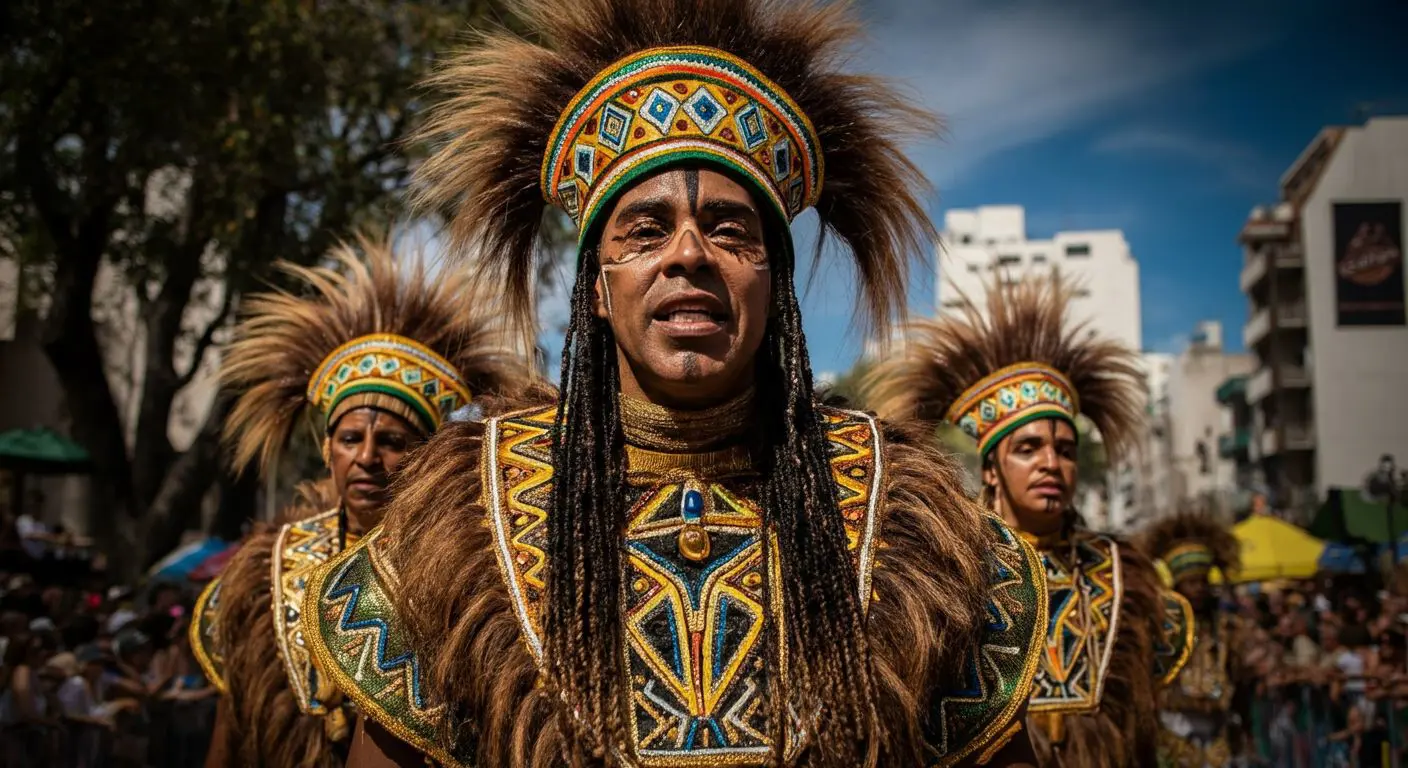
When people talk about Carnival in South America, they immediately think of the Carnival of Rio de Janeiro , the Carnival of Buenos Aires, or even the Carnival of Barranquilla in Colombia . But the festivities of this small country, despite not being as famous, are just as, if not more, vibrant, colorful, and expressive than the others. Although Uruguay's Carnival is an event that involves the entire country, the biggest celebrations take place in Montevideo . Thousands of people dress up and take to the streets in eye-catching sequined costumes, while fireworks explode in the sky and drums beat to the African rhythm of Candombe.
[caption id="" align="alignnone" width="904"]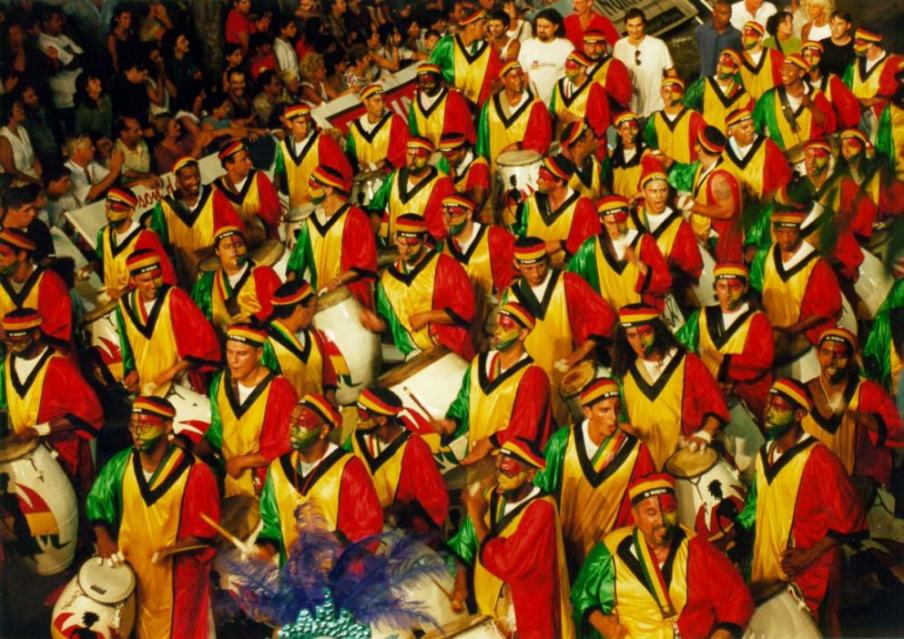 Uruguay's Carnival is an explosion of color, energy, and culture / Source [/caption]
The history of Uruguay's Carnival dates back to the African population that arrived in Montevideo in the mid-1700s, when the city was one of the main ports for enslaved people sold to work in the Río de la Plata region. Despite coming from the same territory, these enslaved people belonged to different ethnic groups, and together they formed a shared identity. They longed for their musical heritage, religious practices, and cultural customs from their exile. Before Uruguay abolished slavery, these men and women gathered in houses located in humble, impoverished neighborhoods and evoked their origins through music and dance. Some masters allowed their workers to hold more extravagant celebrations in which their African heritage could be honored.
These celebrations grew in popularity , and once the freedom of slaves was guaranteed, African communities began to hold increasingly large gatherings, especially in poorer areas like Sur and Palermo. The distinctive sounds of Candombe —now recognized by UNESCO as Intangible Cultural Heritage of Humanity —served to bring people together, thus giving rise to the well-known calls so important to the Uruguayan Carnival as we know it today.
[embed]https://www.youtube.com/watch?v=QbHcN-AHwcE[/embed]The modern phenomenon of Uruguay's Carnival dates back to 1956, and since then it has become an unmissable event on Uruguay's tourist calendar . More recently, Uruguay's Carnival has gained international recognition due to the diverse styles of Candombe, a product of its various African roots. This recognition has strengthened the expansion of the Afro-Uruguayan cultural movement , while also fostering an understanding of Afro-Uruguayan history. In this way, the carnival has contributed to building bridges within society.
[caption id="" align="alignnone" width="800"] Uruguay's diverse ethnicities and social classes come together every summer in Montevideo for an unparalleled celebration. / Source [/caption]
Almost all the ostentation and glamour of Carnival today is a tribute to the African slave communities: the costumes, the makeup, and of course the music, pay homage to bygone days. White men paint their faces black, and women wear their finest traditional African dresses. From then until now, all social classes come together to ignite the party in Montevideo during the 40 days of non-stop celebration.
Want to join the Uruguayan celebrations? Enhance your travel experience by booking with Uruguay4u!
m
[button link="http://www.uruguay4u.com/en/?___from_store=es" size="medium" target="new" color="orange" rel="nofollow"]Book your tours and excursions in Uruguay here[/button]
Original English version by: Simon Hall
Published by Has Chacon on 03/06/2026


