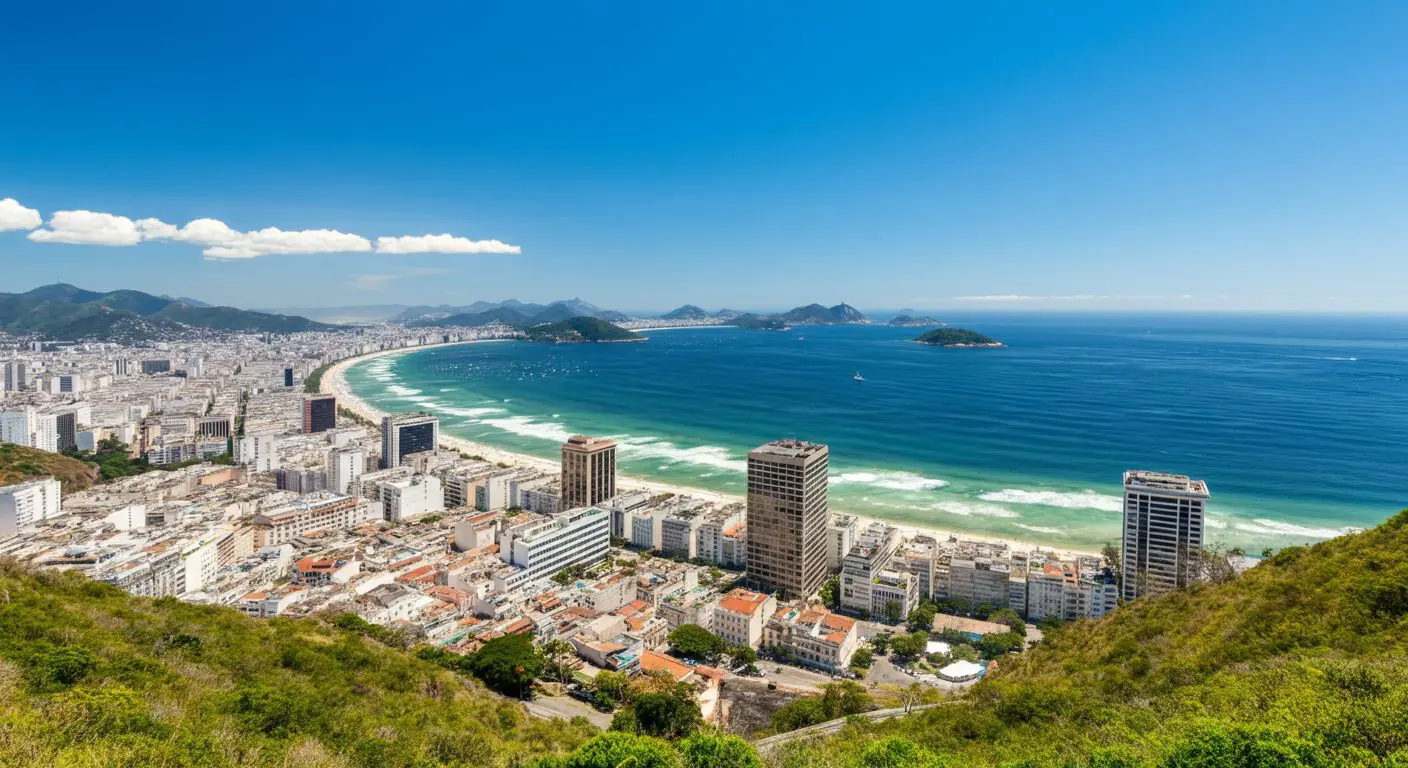

Downtown Rio is home to several of the city's most outstanding historical buildings / Photo: Daytours4u
1. LANGUAGE
Portuguese is the sole official language of Brazil and is spoken by almost the entire population, being practically the only language used in schools, newspapers, radio, and television. Brazil is the only Portuguese-speaking country in the Americas, which implies a distinct culture from that of its Spanish-speaking neighbors. Throughout Brazil 's vast national territory, primarily in the north, many indigenous groups speak different languages or dialects. The main indigenous languages include: Apali, Arara, Bororo, Canela, Carajá, Cariba, Guarani (also spoken in Paraguay), Kaingang, Nadëb, Nheengatu, Terena, Tucano, and Tupiniquim, among others. Watch this video to get started and learn some key phrases in Portuguese.2. CLIMATE IN RIO

Rio de Janeiro boasts a beautiful tropical climate, ideal for visiting year-round / Photo: Daytours4u
Rio de Janeiro is located on the Tropic of Capricorn , which is why the city enjoys a beautiful tropical climate . During the winter months, the temperature in Rio during the day is approximately 20°C (68°F), and a couple of degrees lower at night. Between December and March—the summer season in Brazil—the temperature rises significantly, ranging from 25°C (77°F) to 45°C (113°F). The average annual rainfall is 1,086 mm. In Rio de Janeiro's main tourist areas , such as the South Zone (where the beaches are located), the temperature is moderated by the cool sea breezes. Although Rio is an ideal vacation destination to visit year-round, during the winter months (June to August) it can be somewhat cloudy and rainy, though the weather is always pleasant.3. TIME
Rio de Janeiro is in GMT-3 time. During the winter, the sun sets around 5:00 pm, and in the summer, around 8:00 pm. However, activities in Rio continue late into the night year-round. Current time in Rio de Janeiro .4. ELECTRICITY
The electrical voltage in Rio de Janeiro is 110 volts , 60 Hz (although some hotels may also have 220 volts). This is the same for the entire southeast and north of Brazil. However, in the northeast and south, the voltage is 220V. Nevertheless, it's common for Rio hotels to operate on 220 volts , and electrical outlets or plugs are compatible with both American and European models. Regardless, flat-blade to round-prong adapters can be found in any supermarket or electrical supply store.5. RELIGION IN BRAZIL
The Brazilian constitution guarantees absolute freedom of religion . With the proclamation of the Republic in 1889, Brazil ceased to have an official religion, although in 1994 almost 70 percent of the population declared themselves Catholic. There is a growing number of Protestant evangelicals of various denominations and small Muslim communities in the major cities. Large populations practice Candomblé, Macumba , Santería, and other religions originating in West Africa, which are still practiced (with slight variations) in the way they are practiced in Africa.6. HEALTH
It is recommended to purchase comprehensive health insurance before traveling to Brazil . Vaccinations are not required to visit Rio de Janeiro , but drinking tap water in the city is not recommended. Rio de Janeiro is sometimes vulnerable to dengue fever outbreaks, especially during the summer months, particularly in late February and March. If this occurs, be sure to use insect repellent and, if you are staying in an outdoor area, ensure there is no standing water (insects breed in waterlogged conditions). Private medical facilities in Rio de Janeiro are generally comparable to those in developed countries. However, treatment in private clinics and hospitals in Rio is very expensive. Public hospitals are free for tourists, but in serious cases, it is recommended to go to a private hospital. Below are some hospitals in Rio de Janeiro specializing in medical care for tourists, with English-speaking doctors, 24-hour service, and even house calls. They also accept most travel insurance plans: The Tourist Doctor : Av. Nossa Senhora de Copacabana 605/406, Copacabana. Tel: 3596-1222. Clínica Galdino Campos : Av. Nossa Senhora de Copacabana 492, Copacabana. Tel: 2548-9966. This is a list of English-speaking hospitals in Rio de Janeiro .7. PUBLIC TELEPHONES
Public telephones in Rio de Janeiro can be found throughout the city and operate with phone cards, although they have gradually fallen into disuse. They generally do not accept coins, but rather phone cards that can be purchased at any newsstand or kiosk. The best option for international or national calls in Rio de Janeiro is to go to a LAN ( Internet Café or Call Center ) where a wide variety of international phone cards are sold. The country code for Brazil is +55, the area code for Rio de Janeiro is 21 , and if you are making a long-distance call within Brazil, you must also dial the operator's number (21 or 31). Therefore, if you are calling a landline or mobile phone in Rio de Janeiro from other locations in Brazil , you must dial the operator's code + the area code for Rio de Janeiro and then the number (31 + 21 + phone number).8. SCHEDULES AND HOLIDAYS
Businesses in Rio de Janeiro are typically open Monday through Friday from 9:00/10:00 am to 6:00/7:00 pm. Supermarkets are generally open all day until 8:00 pm, and many remain open on Saturdays. Tourist attractions and activities in Rio de Janeiro are available seven days a week, although the city center becomes much quieter on holidays, with only a few activities open.Business Hours
Banks in Rio de Janeiro: Monday to Friday, 10:00 am to 4:00 pm (many with 24-hour access). Post Office : Monday to Friday, 9:00 am to 6:00 pm. Supermarkets and Department Stores in Rio de Janeiro: Monday to Friday, 9:00 am to 7:00 pm; Saturday, 9:00 am to 2:00 pm; closed on Sundays. Museums : Open daily from 9:00 am to 6:00 pm, although many museums and galleries are closed on Mondays. Offices : Monday to Friday, 9:00 am to 6:00 pm.Holidays in Rio de Janeiro
New Year's Day: January 1st Rio Carnival: March 1st to 4th, 2014 Good Friday: March 29th (2013) and April 17th and 18th (2014) Easter Sunday: March 31st (2013) and April 20th (2014) Tiradentes Day: April 21st Labor Day: May 1st Corpus Christi: May 30th (2013) and June 19th (2014) Independence Day: September 7th Our Lady of Aparecida: October 12th All Souls' Day: November 2nd Proclamation of the Republic: November 15th Christmas: December 25th9. BANK
Banks in Rio de Janeiro are open Monday to Friday from 10:00 am to 4:00 pm. It is recommended to buy Brazilian reais (R$) in Brazil, as the exchange rate is usually better there. You can bring up to US$10,000 in cash into Brazil without declaring it. We do not recommend using traveler's checks in Rio de Janeiro because the exchange rate tends to be more favorable, and it is not easy to find places in Rio that cash traveler's checks. The best way to withdraw money with your credit or debit card is through ATMs of Citibank, HSBC, or Banco do Brasil. You can withdraw up to 1,000 reais per day at HSBC banks, and up to 2,000 or 3,000 reais per day at Citibank and Banco do Brasil ATMs. During holidays like Christmas and New Year's, or Carnival season, ATMs are often out of cash, so be sure to withdraw your money before these dates. For security reasons, all ATMs close at 10:00 pm. Travel tip: Don't reveal your PIN to anyone, and be careful when entering it at ATMs. Never hand your credit card to a waiter and let them take it to make a transaction; always accompany them to the card reader or ask them to bring the machine to your table.10. COIN
The local currency is the Brazilian Real (R$). Banknote denominations are R$100, R$50, R$20, R$10, R$5, and R$2, and coins come in denominations of R$1.00, R$0.50, R$0.25, R$0.10, and R$0.05. The official exchange rate is approximately R$2.00 per US$1 or R$2.60 per €1. Click here to see the exchange rate in Brazil .11. TAXES
The VAT rate in Rio de Janeiro is 19%. When making a purchase at stores displaying the "Tax Free" symbol, you must request a tax refund form and apply for a refund at Rio de Janeiro airport by completing an application and presenting the receipts or invoices. International flights have a departure tax of US$36, payable in US dollars or Brazilian reais at the tax counter, immediately after check-in.12. AIRPORTS
Rio de Janeiro's main international airport is Antonio Carlos Jobim (GIG) (also known as Galeão International Airport) and is located on Ilha do Governador, in Guanabara Bay, about 20 kilometers north of downtown Rio. There is a bus (Empresa Real) that provides transportation to the city, but it's more common to use Rio de Janeiro airport taxis at standardized rates (the price of a private car service is around R$50 from the airport to downtown Rio de Janeiro). You can also book an airport transfer service, a safe and reliable option, by booking it in advance before departing for Rio de Janeiro . The airport bus passes along Avenida Atlântica every 30 minutes. Unfortunately, it's difficult to spot, and the bus stop isn't clearly marked. The fare from GIG International Airport to the South Zone or downtown is R$6 per person, and the route also includes Rio's second airport , Santos Dumont, which operates domestic flights. Santos Dumont Airport is only 10 minutes from downtown Rio de Janeiro, so it's more convenient to take a taxi from there to reach your final destination (since the price is around R$10).13. TRANSPORT
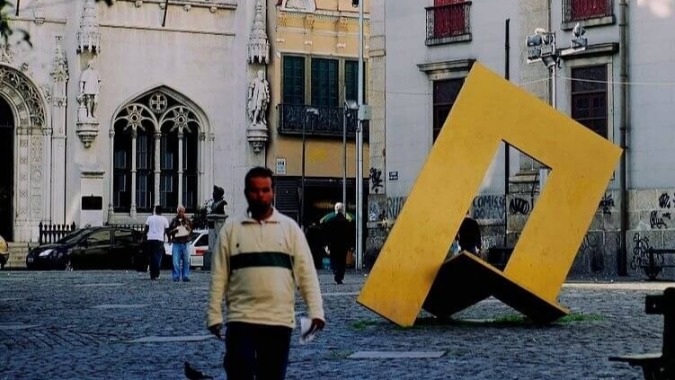
Rio de Janeiro's public transportation system is cheap and efficient. / Photo: Daytours4u
Although Rio de Janeiro is a large and sprawling city, the neighborhoods most frequented by tourists are close to one another and easily accessible. Rio's public transportation system is inexpensive and efficient, and most tourist attractions can be reached by bus or the Rio Metro . The fastest and easiest way to get around Rio is via the metro system, but its coverage is limited as there are only two lines. Buses are a cheap transportation option as they travel throughout the city as quickly as traffic allows; however, it is common to encounter unreliable bus drivers. Public transportation in Rio ends around midnight, and although some buses operate 24 hours a day, it is safer to travel by taxi at night. Taxis in Rio are readily available and relatively inexpensive. For added security and peace of mind, you can request a taxi by phone.- City bus service
The city bus in Rio de Janeiro is an inexpensive way to travel ; a single trip costs around R$2.75. The fare is paid on board the bus, directly to a conductor. Previously, Rio's buses were targeted by criminals, but nowadays they are much safer. During the day, it's a good transportation option as long as you know the route and are sure it's in a safe part of the city; however, it's not recommended to use it late at night .- Taxis in Rio de Janeiro
Rio de Janeiro has a large fleet of yellow taxis with a blue stripe that can be hailed on the street or called. There are also several special taxis operated by authorized companies that can be found at Rio de Janeiro's airports or ordered by phone . The flag, or "Bandeira" in Portuguese, indicates the fare. The system operates with two flags (1 and 2). The standard flag is 1, and the minimum fare currently starts at R$4.70. However, after 11:00 pm, on Sundays, and on public holidays, the fare will be 2, indicating a price increase of approximately 20%. Some taxi drivers charge fare 2 at night, but this practice is illegal. Always make sure the meter is running. Tourists are advised to use only Rio taxis that have an official identification sticker on the window—this indicates that it is an official vehicle. Taxis are very popular in Rio, even among locals. They are undoubtedly the best way to get to faraway places and to enjoy the party nights in Rio.- Metro Rio
The Rio de Janeiro Metro is a mass transit network with 32 stations and two separate lines, transporting an average of about half a million passengers daily. The system consists of two lines. Line 1 runs from the city center and financial district to the neighborhoods of the South Zone, the most tourist-oriented area. Line 2 runs from the residential neighborhoods of the North Zone to the South Zone, in the city center; peak hours are when it is busiest. The fare is $3.20 and includes connections to buses that serve neighborhoods without metro stations, such as Gávea and Barra da Tijuca. For travelers, the metro is the most convenient way to explore Rio de Janeiro's tourist neighborhoods .14. SECURITY
In the last decade , safety in Rio de Janeiro has improved enormously . However, despite the fact that thousands of tourists visit Rio de Janeiro every year and have never felt their safety threatened, it's important to remember that Rio is a large metropolis with a significant gap between social classes and can be dangerous. Even if you stay in the South Zone (which includes Copacabana, Ipanema, Leblon, Gávea, the Botanical Garden, Flamengo, Laranjeiras, Botafogo, and Urca) or the West Zone (Barra and Recreio), you may experience some tense moments. The key to feeling safe in Rio is to avoid looking like a foreigner, as tourists are considered easy targets. Be aware of your surroundings. Avoid poorly lit or deserted areas; don't wear expensive (or seemingly valuable) accessories, clothing, or shoes; always keep your bags closed and close to your body, your wallet in a front pocket, and don't carry large amounts of cash. If you're carrying a backpack, be especially careful, as it's easy to open and reach inside. Never take valuables to the beach; just bring a towel and some cash for a snack. Be alert on city buses, as pickpockets are common, and avoid speaking English or other languages loudly to avoid attracting attention.15. FOOD
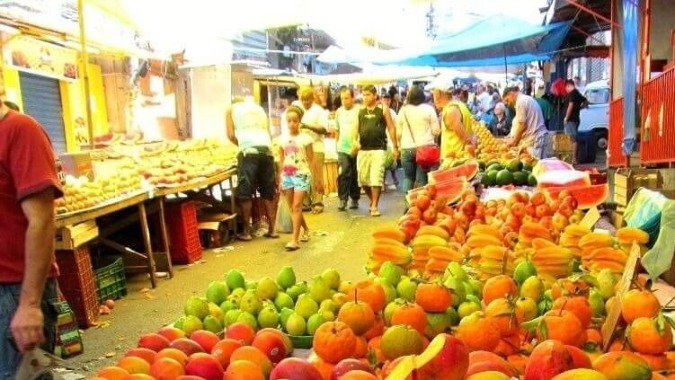
Be sure to try the wide variety of tropical fruits and fresh juices (suco) that you can find on every corner / Photo: Daytours4u
One of the classic spots for locals is the churrascaria , a Brazilian steakhouse. Most operate on a rodizio (all-you-can-eat) system. We also recommend trying restaurants specializing in Comida Bahiana, the cuisine of Bahia (a city in northeastern Brazil), with a strong African influence and spicy dishes featuring a generous selection of delicious seafood, meats, vegetables, and fruits. Brazil's national dish, traditionally eaten for Saturday or Sunday lunch, is feijoada , a delicious stew of black beans cooked with large chunks of pork, sausages, and smoked meats, served with rice, farofa (toasted cassava flour), and kale; and to refresh the palate, lemonade or orange juice. There are many traditional restaurants in Rio de Janeiro's South Zone that offer these dishes, and the food is generally of very good quality. In the Santa Teresa neighborhood, you'll find the famous Botequim (small restaurants or bodegas) serving delicious homemade Feijoada. Rio de Janeiro offers a wide variety of culinary options, from Portuguese and Italian to Asian cuisine. Brazil has the largest Japanese population outside of Japan, and sushi has become very popular in Rio. If you love sashimi and sushi, you'll find many places serving it in Rio. For a quick and inexpensive meal, we recommend trying one of Rio 's many restaurants that sell food by weight. The food is served buffet-style, and you can choose whatever you like. The price depends on the weight of your plate (generally between 3 and 5 reais per 100g). For vegetarians, for example, this can be a great option, as there's a wide variety of good salads in the South Zone or the city center. Juices are a very important part of Brazilian cuisine, which is why juice bars are all over Rio de Janeiro , especially in the South Zone. Be sure to try the wide variety of tropical fruits and fresh juices (suco) served there and at the Lanchonetes (street food stalls ) on almost every corner. At most Lanchonetes , you can enjoy a pastry or salgado ( a type of savory pastry) for less than R$5. Typical pastries include coxinha and joelho (a rolled pastry filled with ham and cheese, a unique Rio dish). You can also try pão de queijo (baked cheese bread) and tapioca, a type of crepe made from cassava flour, offered by street vendors. Obviously, a trip to Rio isn't complete without trying the traditional Caipirinha , made with cachaça, sugar, lime, and ice. You won't regret it!16. CULTURE
Rio de Janeiro has always been a city with a rich and diverse culture. This is mainly due to its enormous population of diverse ethnic and cultural backgrounds, which has shaped a variety of artistic expressions. This is evident in the music, dance, and lifestyle of the Cariocas, a trait especially noticeable during Carnival. African, European, and indigenous influences are very apparent every day. The architecture reflects French and Portuguese styles, the musical rhythms come from Africa, and the warmth and way of life from Latin America. The people are very friendly and open, which probably explains why Rio de Janeiro is such a popular tourist destination . Rio receives more visitors per year than any other city in South America, with over 2 million international tourists annually. There are many cultural attractions in Rio de Janeiro , including a wide variety of art galleries, museums, cultural centers, and theaters. During your vacation in Rio de Janeiro , you're sure to find cultural activities to suit all tastes!17. RESOURCES
Wiki Travel City Government Website Bus Lines in Rio de Janeiro Novo Rio Bus Terminal Airports in Brazil Embassies and Consulates in BrazilMap
Click here to see the Ipanema map. Click here to see the Copacabana map. Click here to see the City Center map. Discover everything we have for you in Rio de Janeiro and experience authentic Rio culture with Daytours4u!By: Daytours4u Content Team.
Published by Has Chacon on 03/06/2026


