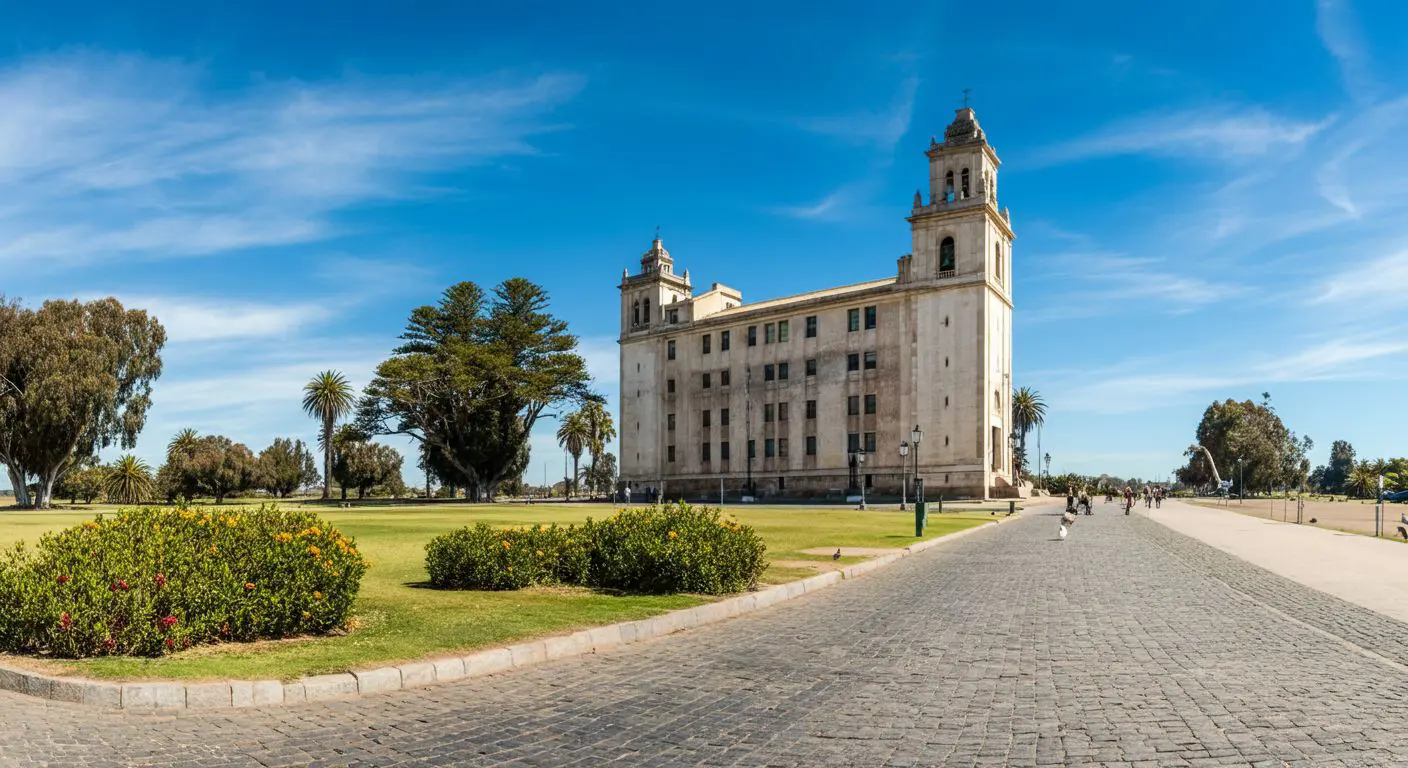
1. LANGUAGE
The official language of Uruguay is Spanish . Its accent is very similar to that of Argentinians, thanks to the same Mediterranean influences . Like the Spanish spoken in Buenos Aires, across the Río de la Plata , the dialect used in Uruguay is called Rioplatense . One of the characteristics of this dialect is the use of " vos " instead of "tú" to address others. Another word you'll often hear in Uruguay is the interjection "¡ ta !", which shortens the expression "¡Ya está!" (That's it!). Another language used informally on the border between Uruguay and Brazil is " Portuñol ," a mixture of Spanish and Portuguese words. The specific type of Portuñol Riverense spoken in the Frontera de la Paz (the border section between the sister cities of Rivera in Uruguay and Santana do Livramento in Brazil) is more similar to Portuguese, but with Spanish influences.2. CLIMATE
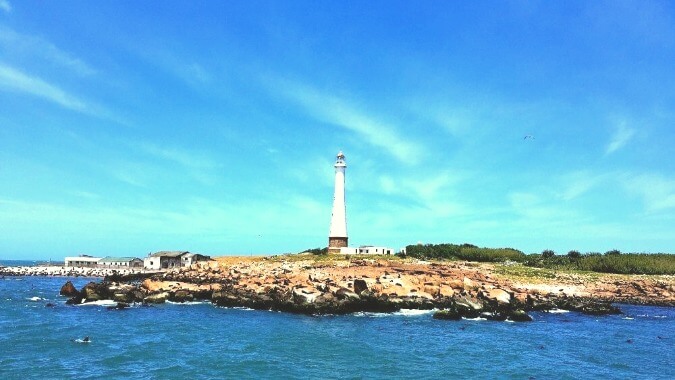
Uruguay's climate has distinct seasons, but without drastic variations. It is generally humid subtropical. / Photo: Canva Pro
Uruguay has a humid subtropical climate. Located in the temperate zone of the Southern Hemisphere, the country experiences distinct seasons , but without drastic variations. In summer, the average high temperature is 28°C (82.4°F) and the average low is 17°C (62.5°F). Summer is characterized by the Zonda , or warm winds that blow from the north.In winter, the temperature can vary between 6° and 14°C (57.2 and 42.8°F). Cold winds called pamperos , coming from the pampas, bring cold and dry conditions .
Since there are no mountains, the wind tends to blow very strongly across the country, which can drastically change the weather and produce fast-moving storms and fronts. There is no specific rainy season ; the amount of rainfall is consistent throughout the year and is generally quite moderate.
3. TIME
Uruguay is in the UTC/GMT -3 time zone . The country observes daylight saving time, which begins on the first Sunday of October and ends the second week of March. The longest day of the year is 14 hours and 20 minutes long, and the shortest is 9 hours and 30 minutes long.4. WORKING HOURS
The typical workday is Monday through Friday from 9 a.m. to 5 p.m. , and while the midday siesta remains a tradition, tourist areas and major shopping centers stay open. The same applies during peak season in places like Punta del Este and other coastal cities, where restaurants and large department stores remain open. Shops generally stay open until 6:30 or 7 p.m. , and are open for half a day on Saturdays.5. RELIGION
Uruguay is a secular country with no official religion and complete religious freedom . The most widely practiced religion is Catholicism, with 47% of the population. Meanwhile, at least 40% of the population identifies as non-religious .Uruguayan secularism is considered one of the reasons for its liberal laws , especially when compared to other Latin American countries. Uruguay was the second country in Latin America to legalize same-sex marriage and welcomes all travelers. Uruguay has also become known for legalizing abortion and the cultivation and medical use of marijuana .
6. BANKS AND EXCHANGE
To exchange money in Uruguay, you must go to a currency exchange office or a bank. It's best to avoid exchanging money at the airport , as they offer the worst rates. BROU is the nation's official bank . There is no commission charged for transactions, and there isn't a significant difference between the rates offered by banks and exchange offices. Banks are only open in the afternoon, between 1 pm and 6 pm . You can withdraw US dollars from ATMs throughout the country. Depending on the bank, there is a withdrawal limit of US$300 , but you can make multiple transactions in a single day. However, keep in mind that there are often lines at ATMs during the week, especially in Colonia , where many Argentinians and immigrants living in Argentina go to withdraw dollars.7. COIN
The official currency of Uruguay is the Uruguayan peso , indicated by the symbol $ (while the US dollar is indicated as US$ ). Banknotes come in denominations of 50, 100, 500, and 1,000 pesos, while coins come in denominations of 1, 2, 5, and 10 pesos. It's always advisable to have small bills or loose change on hand , as many places do not accept high-denomination bills. The approximate exchange rate is 1 US dollar to 43 Uruguayan pesos . Check the exact exchange rate here . Although it's easy to exchange money, particularly US dollars, euros, Brazilian reais, and Argentine pesos, many places also accept foreign currency , given the large number of day-trippers who come from Buenos Aires.8. VISAS
The only countries that require visas are Russia, Morocco, India, Guyana, Egypt, Armenia, and Albania. There is no entry tax. You only need a valid passport. Citizens of neighboring countries —Argentina, Brazil, and Paraguay—only need to show their national identity document .9. TAX-FREE PURCHASES
Foreigners are exempt from Value Added Tax (VAT) in Uruguay. To receive a refund, purchases must be made with debit or credit cards from foreign banks. Refunds can be requested at airport, seaport, or land border crossings .10. AIRPORTS
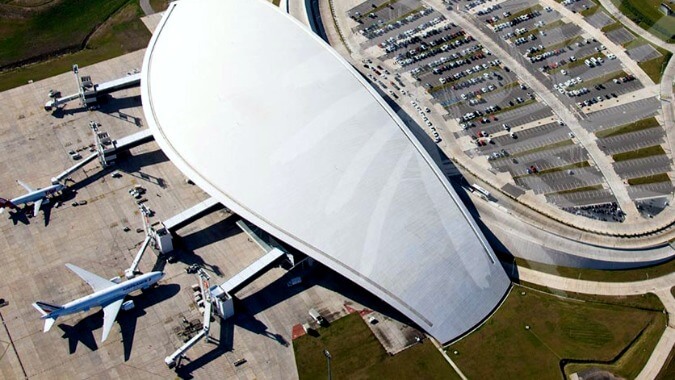
Carrasco International Airport has been chosen as one of the 22 most beautiful airports in the world by the renowned British newspaper HuffPost / Photo: Canva Pro
Carrasco International Airport in Montevideo is the country's main airport. Airlines operating at this airport include American Airlines, Air France, Iberia, LATAM Airlines, TAM Airlines, Aerolíneas Argentinas, and Avianca . A new national airline in Uruguay, Alas Uruguay , is being launched to replace the defunct PLUNA (the former national airline). This airline will offer flights from Montevideo to Asunción , Buenos Aires , Santiago , São Paulo , and Rio de Janeiro .11. TRANSPORT
Uruguay has a well-established public transportation system . Taxis and private hire vehicles (remises) are readily available in all cities. Montevideo boasts an excellent bus system. Additionally, minibuses connect various towns regionally, and national buses connect the country and extend to Argentina, Brazil, and Paraguay. The main bus terminal in Montevideo is Terminal Tres Cruces . Bus routes and fares can be found on the Omnilineas website . While several domestic airports offer flights , Uruguay's relatively small size generally makes it easier to travel by bus or rent a car . Most nationalities only need to present a driver's license, passport, and a credit card with sufficient available credit for a rental car. Other nationalities require an international driving permit. Citizens of other countries in the Americas will need to obtain an IADP (Inter-American Driving Permit). Keep in mind that Uruguay has some of the highest gasoline prices in Latin America.12. TELEPHONE AND CODES
Public telephones are available in Uruguay. These operate with a prepaid card that can be easily purchased at Antel (the national telephone company) offices or newsstands . Cards are available in denominations of 20, 50, 100, 200, or 500 pesos. It's also easy to buy a local SIM card for your cell phone. They can be purchased at many newsstands. There are three providers to choose from: Antel , Movistar , and Claro . To call a number in Uruguay, use +598 followed by the area code. To call Montevideo, dial +598-2, and for Punta del Este, dial +598-42. You can find a good number of internet cafes in the main cities. Additionally, you can connect to Wi-Fi in most restaurants, cafes, hotels , and public buses . Best of all, Uruguay has one of the fastest and most affordable internet services in Latin America .13. ELECTRICITY
Electricity in Uruguay is 220-240V, 50Hz . Bring a transformer if you need to plug in your electrical appliances. The power outlets and plugs used are types C, F, I, and L. They are usually the type with two round prongs or the flat, V-shaped prongs. Check if you need an adapter before you travel .
14. HEALTH
There are no disease risk alerts for Uruguay . No vaccinations are required to travel to the country. Drinking water is considered safe in cities . One precaution tourists should take in Uruguay is to apply sunscreen with a high SPF. Since there is a hole in the ozone layer over Uruguay, which has led to an increase in skin cancer, if you will be spending time outdoors, especially during the summer, be sure to protect your skin by always applying sunscreen .
Medical treatment is not inexpensive in Uruguay, so all travelers are strongly advised to have travel insurance that covers medical emergencies . There are both public and private hospitals . In private hospitals, you will need a valid travel insurance policy or proof of sufficient funds before receiving treatment.
In case of a medical emergency, dial 105 to call an ambulance and 911 for general emergencies .
15. SECURITY
Uruguay is considered one of the safest countries in South America . Most crime is concentrated in Montevideo, the capital. The Old City in Montevideo is not the safest place at night and is best avoided. Take the same precautions as in any other large city. Most street crime is opportunistic. Violent crime rates are very low in Uruguay.
16. KITCHEN
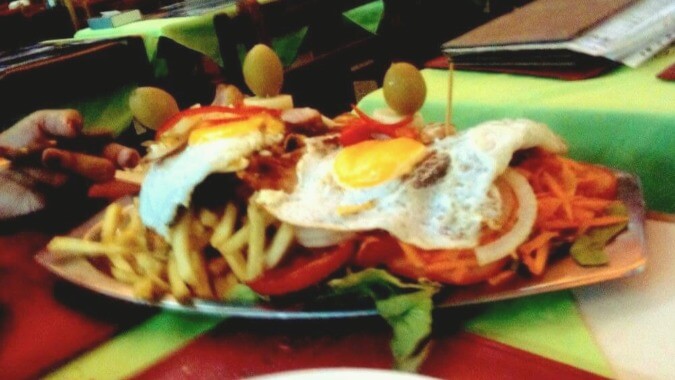
The chivito is one of the few dishes whose origin can be attributed exclusively to Uruguayan cuisine / Photo: Canva Pro
Uruguayan cuisine is heavily influenced by the country's European roots . You'll find a wide variety of pasta, pizza, and sausages . However, the undisputed king of Uruguayan cuisine is beef . With an average annual consumption of three cows per person , Uruguayan beef is considered among the best in the world.The most common way to eat meat is grilled , where various cuts are available, accompanied by blood sausage and sweet bread . Another way to enjoy a good steak is in a chivito —a type of sandwich with meat, ham, cheese, egg, and mayonnaise.
Among the desserts, dulce de leche , a type of caramel, is as popular as it is in Argentina. There's also flan and chaja —a sponge cake topped with cream and meringue pieces.
The quintessential Uruguayan beverage is mate , a type of infusion made with yerba mate leaves, served in a totuma, or gourd. Wherever you go around the country, you'll see a Uruguayan with their mate, ready to drink, whether in the car, on the street, or behind a desk. In terms of alcoholic beverages, Uruguay produces excellent wines and is renowned for its Tannat grapes . Another typical drink is grappamiel , made with grappa mixed with honey. Medio y medio is a combination of half white wine and half champagne. Uruguay is also one of the world's largest consumers of whiskey per capita. A typical scene in Montevideo involves groups of older people gathering in the bars of the Old City around 5 pm to enjoy a glass of whiskey.17. PEOPLE
Uruguayans are warm and friendly people. It's customary to kiss the right cheek as a greeting. Like other Latin American cultures, punctuality isn't as important. They tend to dress conservatively.
Uruguay is one of the most demographically homogeneous countries in Latin America. Almost 90% of the population is of mixed European and European descent , mostly from Spain and Italy. The remaining portion is made up of Indigenous, Afro-descendant, and immigrant minorities. Uruguay places great emphasis on education . With a 98% literacy rate and a growing middle class, the country prides itself on having much lower levels of inequality than the rest of South America. Travel Tip : We'll take you to the most iconic cities, Montevideo and Colonia del Sacramento . Don't miss out! Book your Uruguay experiences with Daytours4u !By: Daytours4u Content Team.
Published by Has Chacon on 03/06/2026


