
Planning a trip to the Galapagos Islands requires a bit more preparation than other destinations due to their strict conservation regulations and entry fees. This guide will provide you with step-by-step logistics, real costs, island exploration options, weather, and much more.
Information for Your Trip
National Park Fee: Payable in cash upon landing, it is mandatory.
Transit Control Card (TCT): Payable in cash at the departure airport (Quito or Guayaquil).
Documents: Valid passport with a minimum of 6 months validity.
Inter-island Logistics: Daily fast boats (2 to 2.5 hours of navigation between main islands).
Currency and Cash: US Dollar ($ USD). ATMs are limited to Santa Cruz and San Cristóbal only.
Travel Insurance: Mandatory travel insurance for Galapagos is recommended to cover any medical or logistical situation in remote areas.
1. Requirements for traveling to Galapagos: TCT, ABG and National Park Entrance
Requirements for entering the Galapagos Islands as a tourist
The requirements that tourists must present at the Quito or Guayaquil airports are:
Valid passport: Must have a minimum validity of 6 months from your date of entry.
Transit Control Card (TCT): This is obtained at the Quito or Guayaquil airports before flying to the islands. It costs $20 USD (cash only).
Galapagos National Park Fee: This is the entry fee to the islands. For most adult foreign tourists, the cost is $200 USD and is payable in cash only upon arrival in the Galapagos.
Hotel reservation or invitation letter: When passing through immigration control, you will be asked for proof of where you will be staying (authorized hotels or cruise ships).
Travel tip: Find out about Galapagos National Park entrance fees here.
Transit Control Card (TCT) and National Park Entrance Fee
The immigration process to the islands begins before checking in with your airline at the Quito or Guayaquil airports. At the airport terminal, you must go to the counter of the Governing Council of the Special Regime of Galapagos (CGREG). There, you will register and pay in cash for the Galapagos transit control card, which costs $20 USD per person.
Once you land at the Baltra or San Cristóbal airports, you must go through local immigration control. There, you must pay the Galapagos entrance fee for foreigners , which is $200 USD for non-resident adults. It is important that you bring cash in physical bills and in good condition. Credit cards and online payments are not accepted at the National Park ticket offices.
Travel tip: If you want to speed up your process at the airport, pre-register online for entry to Galapagos here.
ABG Biosecurity Control: What you cannot bring into the islands
Your checked and carry-on luggage will be inspected by the Galapagos Biosecurity and Quarantine Regulation and Control Agency (ABG). The goal is to prevent the introduction of non-native species that could endanger native flora and fauna.
It is forbidden to bring in fresh fruit, vegetables, seeds, plants, organic chemicals, or any type of unprocessed food. Be sure to thoroughly clean the soles of your shoes before your trip to avoid unintentionally carrying spores or seeds.
2. How much does it cost to travel to the Galapagos Islands? Estimated budget
The cost of a trip to the Galápagos Islands depends on the type of accommodation and how far in advance you book your excursions. As a remote island destination, food, fuel, and logistical costs are higher than on the Ecuadorian mainland.
An average daily budget per person can range from $250 USD (budget travelers) to over $900 USD (luxury options or cruises). Round-trip flights to the Galapagos from the mainland average $250–$400 USD. Add to that the $220 USD initial fixed fees.
Daily tours in Galapagos: prices and how to save by booking online
Daily tour prices in the Galapagos Islands vary depending on the distance traveled and site permits. To optimize your budget and secure your spot on the boats, book in advance. You can view our catalog of daily tours in the Galapagos Islands .
3. Transport logistics: How to get around between islands in the Galapagos
Fast Boats (Public Ferries)
It's the most common and cheapest option ($30-$40 USD per trip). They operate twice a day (morning and afternoon) and the trip takes between 2 and 2.5 hours.
From July to November the surf is strong; take a seasickness pill an hour before.
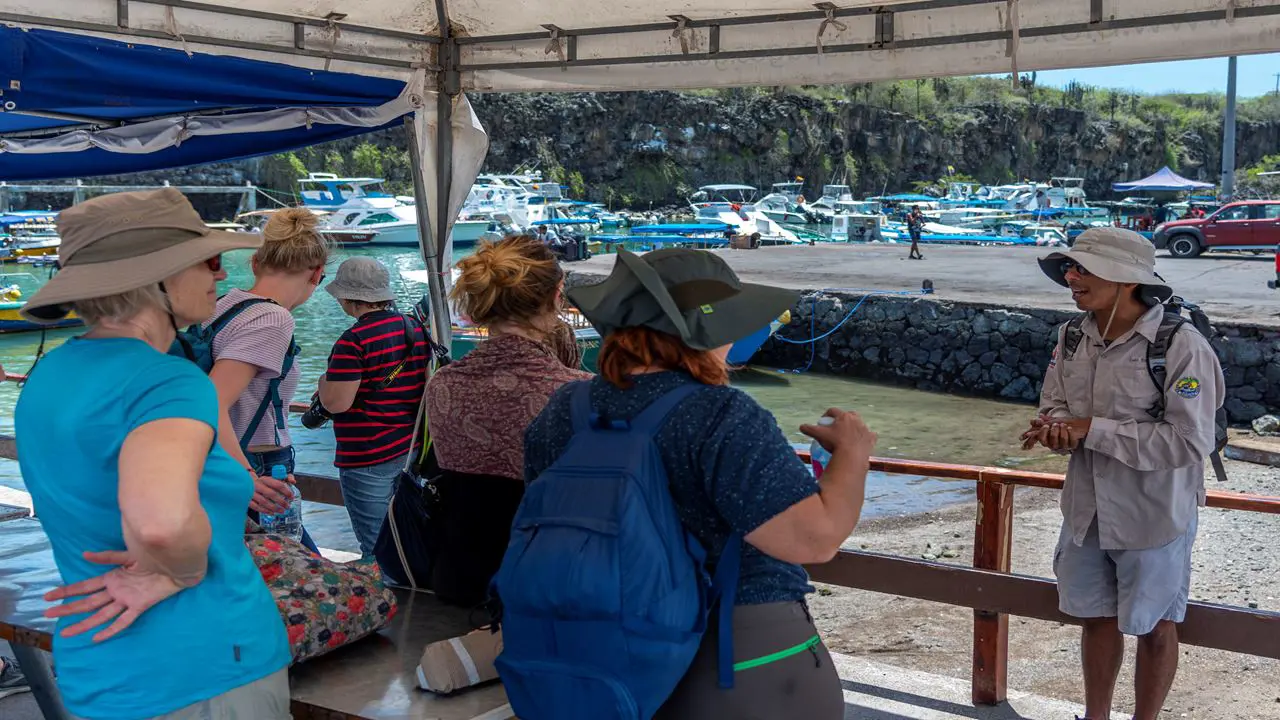
The boats don't go directly to the dock. You'll have to pay $1 USD in cash to a water taxi to take you onto the boat, and another dollar upon arrival. Additionally, there's an extra $10 USD entrance fee on Isabela Island.
Small Internal Planes (EMETEBE or Fly Galapagos)
They connect the islands with flights of just 40 minutes. It's the most comfortable option, but also the most expensive.
Strict restriction: The baggage limit is only 25 pounds (11 kg) per person. Extra weight will be charged separately.
Santa Cruz is the central hub. There are direct boats from Santa Cruz to Isabela and from Santa Cruz to San Cristóbal. However, there is no direct boat between Isabela and San Cristóbal. To travel between them without losing a whole day making a stopover, you'll have to fly by small plane.
Travel tip: Book your transfer from your hotel on Santa Cruz Island to Baltra Airport . It's a great way to save time!
4. What is the best time to travel to the Galapagos and what to bring?
The Galapagos Islands are an ideal year-round destination, but they have two very distinct peak seasons due to ocean currents:
Warm and Rainy Season (December to May): The sea water is warm (ideal for snorkeling without a wetsuit). There are short but intense rain showers in the afternoons. This is the time when you can see birds courting and sea turtles nesting.
Dry and Cool Season (June to November): The Humboldt Current cools the ocean water and brings in nutrient-rich waters. The sky is often cloudy and the water is cold. This is the best time to see abundant marine life , including whales, sharks, and sea lion pups.
What to pack for the Galapagos Islands
Prioritize items that respect the archipelago's ecological regulations:
Sunscreen and insect repellent: They must be biodegradable and reef-friendly.
Technical footwear: Trekking shoes with good grip for trails of sharp volcanic rock and closed sandals for wet landings.
Clothing with UV protection: Breathable long-sleeved shirts and wide-brimmed hats to mitigate the strong radiation of the equator.
Optical and photographic equipment: Underwater camera and binoculars for observing bird colonies. These do not violate the rules of the Galapagos National Park, which prohibit approaching wildlife within two meters.
Reusable water bottle: Single-use plastic is prohibited throughout the island territory.
5. Practical tips for traveling to the Galapagos
Money and Cards
ATMs: Only available on Santa Cruz and San Cristóbal. There are NO ATMs on Isabela and Floreana Islands.
Credit cards: Many local businesses do not accept them or charge a 5% to 10% surcharge for using them.
Tip: Always travel with enough cash in $10 and $20 USD bills that are in perfect condition. Torn or marked bills are rejected throughout Ecuador.
Internet connection
Internet throughout the archipelago is satellite-based, slow and unstable.
Download Google Maps to use offline before you travel.
Hotels: Book in advance
Even if you're traveling independently, don't travel without a hotel reservation. Immigration officials will ask for your name or hotel reservation upon arrival in the islands.
Stay close to the main docks of Puerto Ayora, Puerto Baquerizo or Puerto Villamil to save money.
Food: Where to eat well and cheaply
The "Kiosks": If you're traveling on a budget, in Santa Cruz you should have dinner on Calle de los Kioskos (Kiosk Street). It's a pedestrian street full of outdoor tables where they sell "lunches" or local dishes (fresh fish, rice, beans) for $5 to $10 USD.
Restaurants: À la carte dishes at beachfront tourist restaurants average $15 to $25 USD.
Health and Vaccines: What is needed?
Vaccinations: No vaccinations are required to enter Galapagos (not even the Yellow Fever vaccine, unless you are coming from an endemic country).
Water: There is no severe endemic malaria or dengue fever. The water on the islands is NOT potable; always drink bottled water (bring your reusable thermos!) to avoid stomach problems that could ruin your trip.
6. Recommended Itineraries in Galapagos
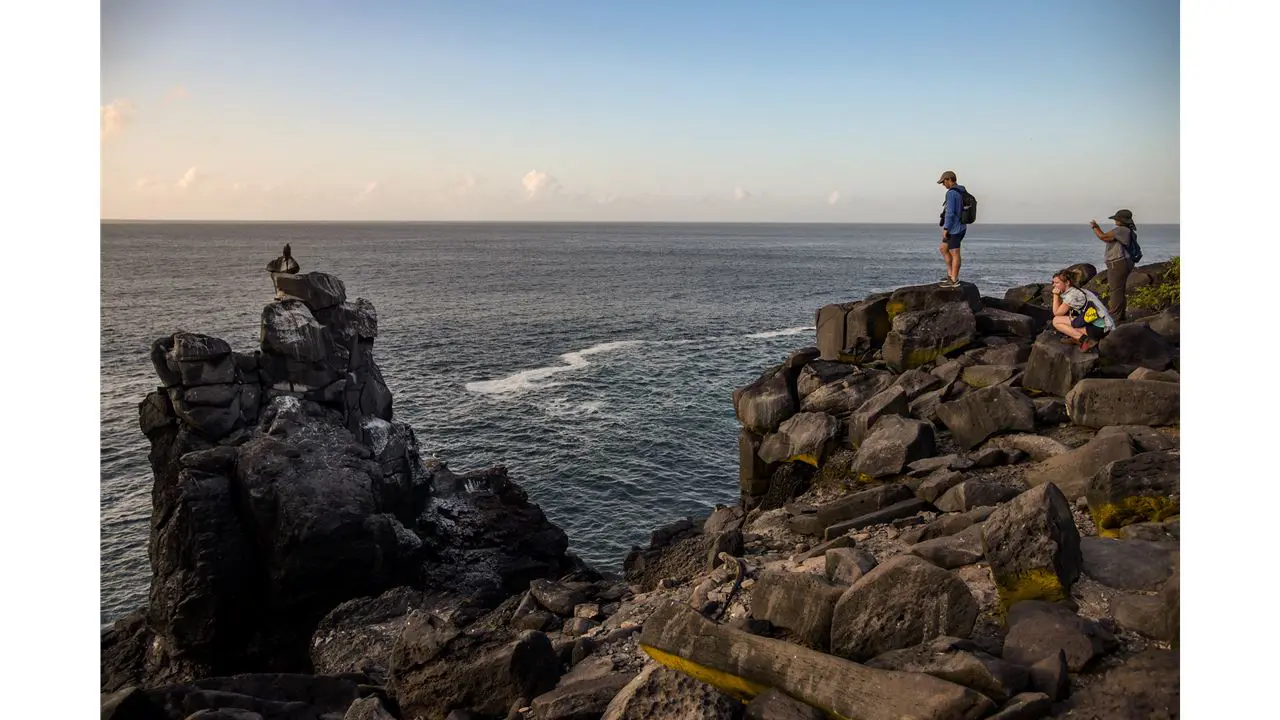
Since the National Park has strict routes, the best way to ensure the best sightings is by booking a planned tour. Here are the best itineraries based on your available days and the type of experience you're looking for:
Short and Essential Getaways (4 to 5 Days)
Ideal if you have little time or want to combine your trip with mainland Ecuador.
Galapagos Essentials Cruise (4 Days / 3 Nights): The perfect option to optimize your time. It takes you directly to the key wildlife and nature spots without wasting a single second.
Classic Wild Galapagos Cruise (5 Days / 4 Nights): A tour focused on the most iconic wildlife. Marine iguanas, blue-footed boobies, and sea lions.
Unforgettable Galapagos: Premium Expedition (5 Days / 4 Nights): Superior onboard comfort combining guided walks on volcanic islands and high-quality snorkeling sessions.
In-Depth and Luxury Expeditions (6 to 8 Days)
For those who want to explore the most remote, isolated and exclusive corners of the archipelago.
Luxury Cruise: Bartolomeu and Genovesa (6 Days / 5 Nights): Takes you to the famous Genovesa Island (a birdwatcher's paradise). Experience the iconic postcard-perfect Pinnacle view on Bartolomeu Island, all with first-class service.
Galapagos Grand Expedition (8 Days / 7 Nights): Eight full days immersed in wildlife and pristine nature. Experience the archipelago in its entirety and enter its most protected sanctuaries.
Did you have any questions about your trip?
If you're planning your trip to the Galapagos Islands and want to know more about transfers, hotels, rates, and excursions, contact us! We'd love to help you plan your next adventure in Ecuador.
By: Hasbleidy Julieth Chacón | Web Content Creator for Daytours4u.com
Published by Daytours4u.com on 18/08/2026


