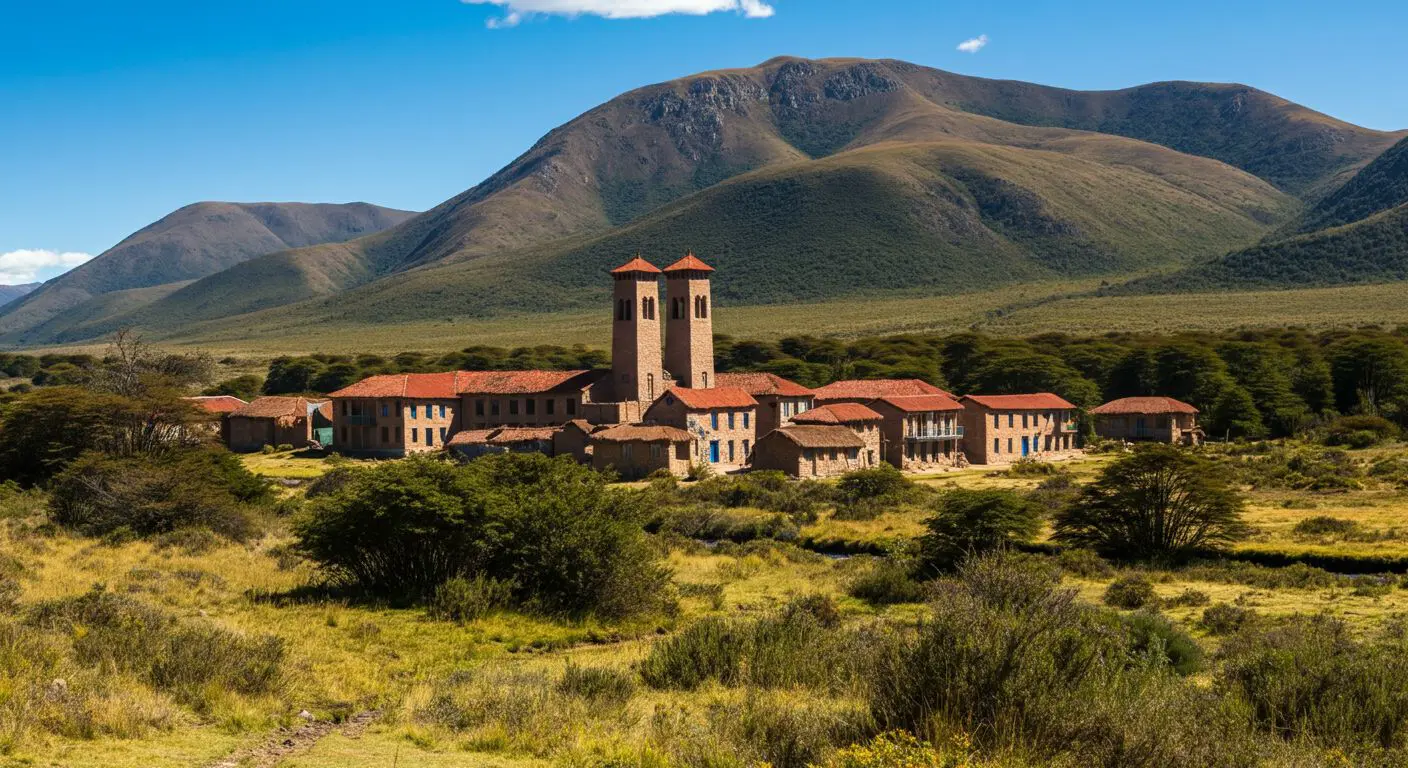
1- A reddish valley with shapes that resemble melted candles
Province of Salta
Precisely because it's a little-known place, it doesn't have easy or well-established access. There's no road to get there except on foot. It's called the Valley of the Caves , a canyon with incredible rock formations of intensely colored reddish sandstone. After about two hours, you reach some caves that make the entire journey worthwhile. The best way to describe them is as a place where giant, melted candles seem to hang. They are also known as the Acsibi Caves and are located in the town of Seclantás, in the Calchaquí Valleys of the province of Salta .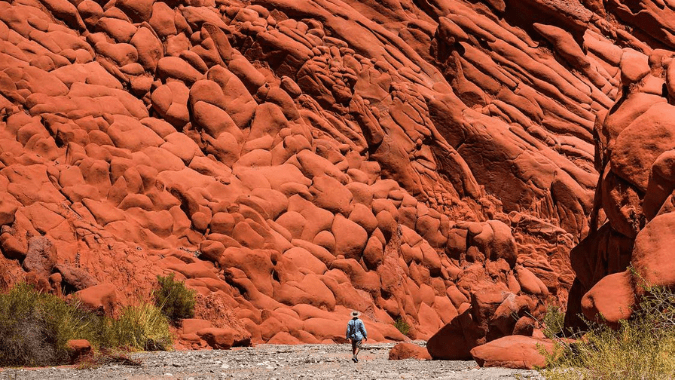 The Acsibi Caves are a geographical feature located 15 km from the town of Seclantás within the Calchaquí Valleys, in the province of Salta / Photo: source
2- Salar de Arizaro: An almost perfect natural cone in the middle of a salt flat
Province of Salta
Due to its relative remoteness, it's not a mass tourist destination, but there are excursions from the city of Salta to visit the Arizaro Salt Flat , in the Atacama Plateau . If the landscape already seems otherworldly due to its unusual scenery, add to that the Arita Cone , a formation so regular and perfect that it doesn't seem natural. It rises about 200 meters high, resembling a pyramid (as mentioned, it's a cone) above the salt flat. Travel tip: Those who want to discover this amazing destination can choose between booking a guided tour or going on their own, following the map's coordinates. It's very important to bring food and drinks (whose waste must be disposed of in a garbage bag that each visitor will take with them on the way back) and an empty camera memory card, as it will fill up quickly.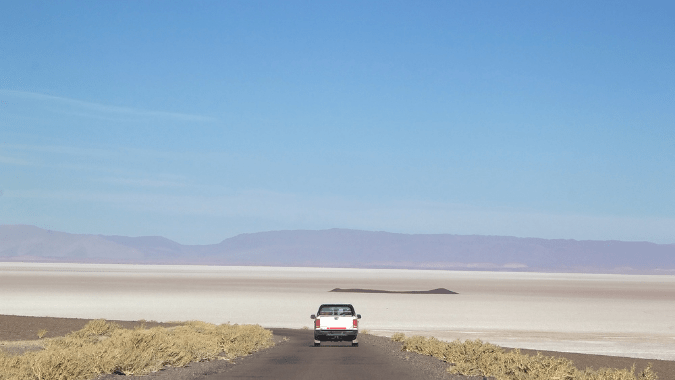
The Arizaro Salt Flat, located more than 3,000 meters above sea level, is the third largest salt flat on the continent / Photo: Canva Pro
3- A village among hills of seven colors
Jujuy Province
The Quebrada de Humahuaca, located in this northwestern part of Argentina, boasts one of the most curious and unique arrays of colors. This is the result of geological processes including marine, lacustrine, and fluvial sedimentation, culminating in tectonic movements. A colorful geological experiment unfolds in a place recognized for its cultural and scenic value as a World Heritage Site . The town , Purmamarca , is in the province of Jujuy and features low, adobe houses that appear even more picturesque at the foot of a seven-colored hill, surrounded by other red hills.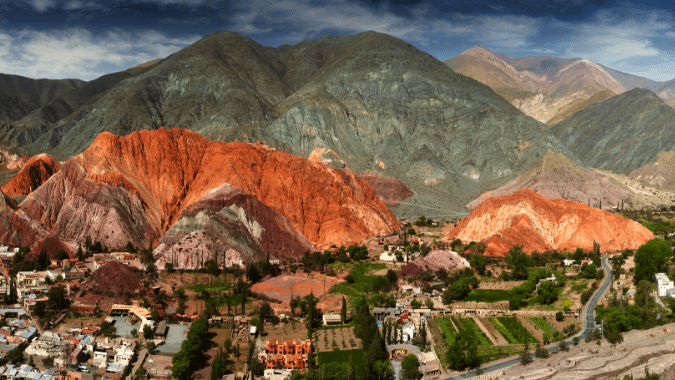
The Quebrada de Humahuaca, with its adobe villages and colorful mountains, is one of Argentina's great undiscovered gems / Photo: Canva Pro
4- A landscape that looks like the planet Mars
Province of Salta
Imagine a sparsely populated area, with a village of adobe houses nestled in a landscape averaging 4,000 meters in altitude, its colors, shapes, and textures reminiscent of a Martian landscape. This is Tolar Grande , in the province of Salta . As a curious fact, it's worth mentioning that near Tolar Grande, a few years ago, in the so-called "eyes of the sea" (deep, high-altitude salt lakes), some of the world's most remarkable bacterial colonies were discovered: stromatolites , one of the oldest known signs of life on Earth.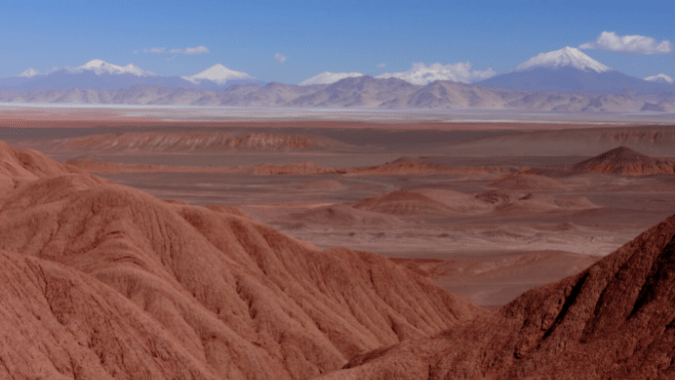
There are few places in the world like Tolar Grande. Volcanoes over 6,000 meters high, reddish mountains, vast salt flats of pure white, and the blue of its lagoons are some of its main attractions. / Photo: Canva Pro
Travel tip: At over 6,700 meters above sea level, the Llullaillaco Volcano is home to the highest archaeological site in the world. There, the frozen remains of three Inca children were discovered along with their ceremonial regalia. Nestled in a majestic landscape, it was recently declared a UNESCO World Heritage Site . A must-see!5- Tilcara and its archaeological treasure
Jujuy Province
Did you know that Tilcara is considered the Archaeological Capital of Northwest Argentina (NOA) due to the large number of artifacts buried beneath its soil? It's a place where time seems to have stood still, and where its inhabitants preserve many of the traditions and beliefs held by their ancestors centuries ago. Its name comes from the ancient Omaguaca people and their local subgroup: the Tilcara. Today, it has 10,300 inhabitants. Travel tip: Strolling through its dusty streets, chatting with the locals, and attending a folk music performance at one of its many "peñas" (traditional music venues) will fill much of your time.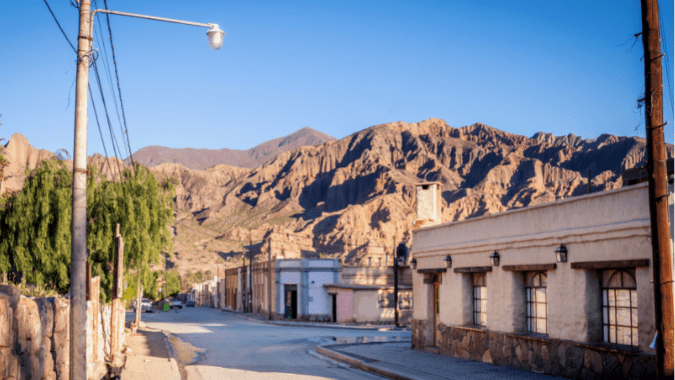 Visit this city in Jujuy during January and February, during Carnival season. You won't regret it! / Photo: Canva Pro
Due to the characteristics of this region, these provinces are ideal for a stop along the way, spending a few days in complete peace, contemplating the slow pace of local life, and enjoying a natural landscape and an intense blue sky that are hard to find anywhere else. Are you up for it? Travel tip: Don't miss these new travel packages at Argentina4u so you can continue discovering the best regions of all of Argentina. Book now!By: Nathaly Bosch, social communicator by profession and curious traveler by choice. Spanish writer for Daytours4u.
Published by Has Chacon on 03/06/2026


