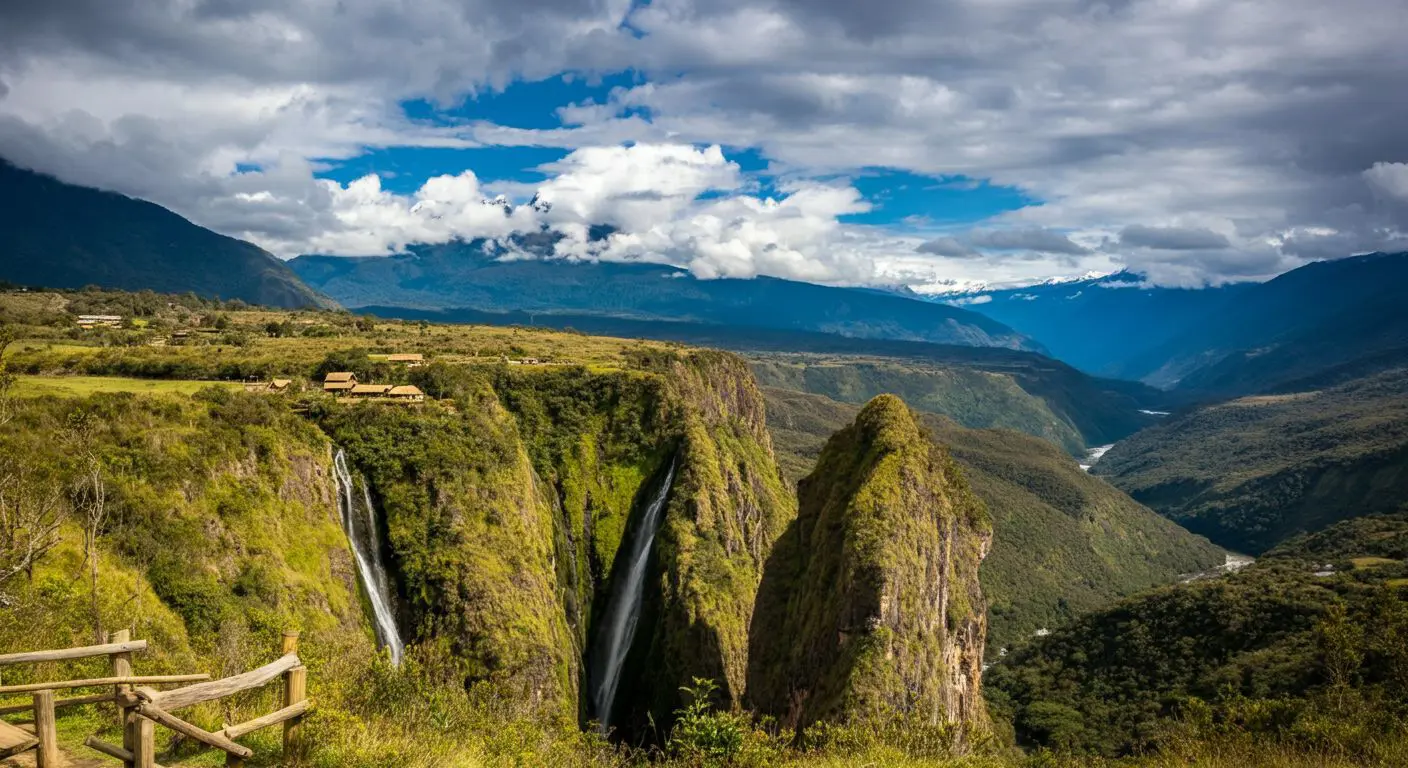
 Only 12% of the world’s population breathes clean air / Photo: Rcn Radio[/caption]
Half of the people living in cities are exposed to pollution up to 2.5 times higher than the standards recommended by the World Health Organization (WHO). In fact, according to a study conducted in 1,600 cities from 91 different countries, it was found that only 12% of the world's population breathes clean air.
Although this study found that Latin America was not one of the most polluted regions, such as the Middle East, Asia, and Africa, many of its cities did exceed the 20u/m3 limit recommended by WHO.
Specifically, five Latin American countries appear among the 50 with the world's worst air pollution indexes according to the Global Air Quality Report in 2018 by Air Visual and Greenpeace. Peru tops the list at spot 21, followed by Chile at 26, Mexico at 33, 44 for Brazil and Colombia at 50.
If we consider capital cities, the rankings change a bit. Santiago, Chile ranks 20th with the worst air quality, Lima 22nd, Mexico City 30th and Bogota 44th in the world ranking (in less than a month and a half, Bogota has decreed an environmental emergency due to the poor air quality three separate times).
[caption id="attachment_13918" align="aligncenter" width="675"]
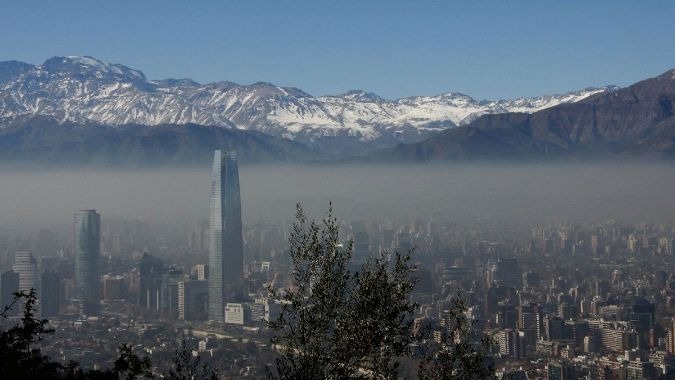 Among the capitals with the worst air quality, Santiago occupies spot 20, Lima 22, Mexico City 30, and Bogota 44 / Photo: Radio Chile CI[/caption]
It isn’t easy to calculate the exact level of pollution in a city. There are too many variables that come into play, each with different measurement criteria. This report is based on measuring the level of pollutant particles called PM 2.5- the smallest and most damaging, as they can penetrate directly into your lungs- and, therefore, are the best indicator of the health risks of environmental pollution. What was considered a “reasonable” level of these particles is an annual average of up to 10 micrograms per cubic metre. If the amount is greater than that number, the air is considered polluted at a level that is detrimental to health and if it is less, the air is considered clean.
But not all is lost, thankfully, as South America has destinations where you can breathe in some fresh air and today we are going to talk about the top three:
Salvador de Bahía, Brazil
It is the Latin American city with the cleanest air because the annual average indicates that there are only 9 micrograms of PM 2.5 in throughout every cubic meter of air. Beaches, forest reserves, rivers, lakes, coral reefs and lots of unique vegetation from what is called the Línea Verde (Green Line), whose ecology is protected by a foundation for the defense of nature. One town here has one of the most important reserves for turtles in Brazil. In addition to all of this, there are nearly one million inhabitants that have great respect for the environment and take care to avoid contamination and have a direct impact on the lower levels of pollution here. [caption id="attachment_13919" align="aligncenter" width="675"]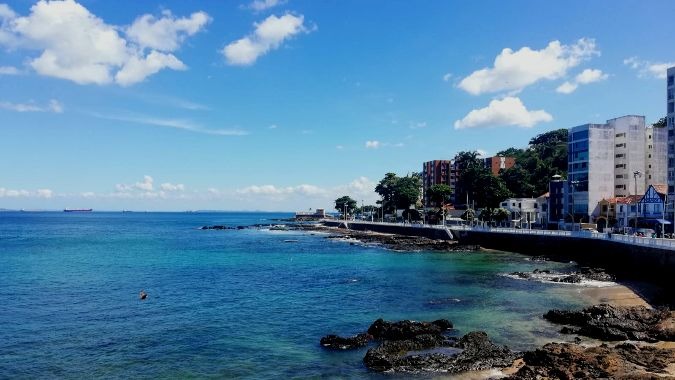 Salvador de Bahía is the city with the cleanest air in South America / Photo: Daytours4u[/caption]
Ibarra, Ecuador
It can be found in second place because it also has 9 micrograms of PM 2.5, but there are 18 micrograms of PM 10 while in Salvador the PM 10 levels are at 18. One of the reasons why Ibarra has such clean air, according to Segundo Fuentes, Assistant Secretary of the Environment, is due to the fact that the Chota Valley where this city is located receives a variety of different air currents coming from the coast. This, along with with relatively new auto industry, very little industrialization, and the conservation of forests are a few of the factors that allow Ibarra to have such clean air. [caption id="attachment_13920" align="aligncenter" width="675"]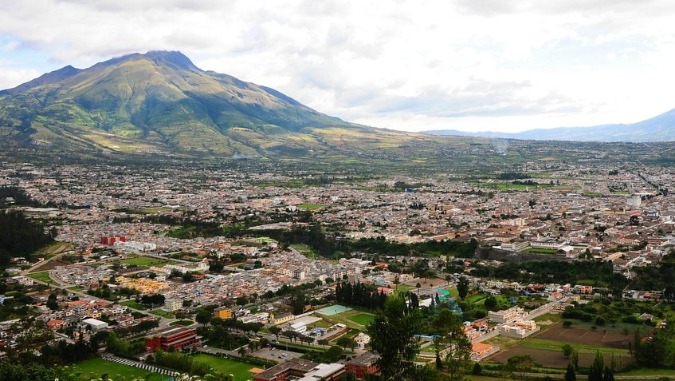 A relatively new auto industry, very little industrialization, reforestation projects, and the conservation of forests are some factors that allow Ibarra to continue having such clean air / Photo: Marcelo Quinteros[/caption]
Montevideo, Uruguay
In 2018, this Uruguayan capital surprised us with a nearly perfect score with regards to chronic exposure to PM 2.5 particles, well above most of its Latin American counterparts. The prevalence of winds, its smooth terrain with few topographical features, and its proximity to Río de la Plata give Montevideo a favorable location for the natural dispersion of any possible contaminants. Some activities that have a constant effect on air quality are the burning of fuel for transportation and factories; the use of firewood for commercial or residential purposes; the generation of electricity in thermal power plants, and open-air waste burning. The government of Montevideo has taken steps in the right direction, including a reliable air-quality monitoring network with annual reports since 2005, a national program to promote sustainable transportation, and a transition to electric busses. [caption id="attachment_13921" align="aligncenter" width="675"]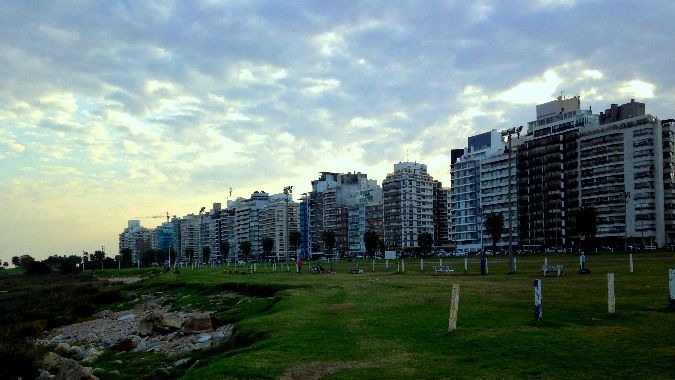 The prevalence of winds, its smooth terrain with few topographical features, and its proximity to Río de la Plata give Montevideo a favorable environmental situation / Photo: Daytours4u[/caption]
Special Mention: We can’t forget about Buenos Aires, since this Argentinian capital has fewer contamination particles than Quito, Asunción, San Pablo, Caracas, Mexico City, La Paz, Santiago de Chile, Bogota y Río de Janeiro, but more than Guadalajara and San José in Costa Rica, when compared to other large cities in the region.
How can you contribute to ensuring clean air for everyone?
- Reducing the use of vehicles by using public transportation is a critical part of getting back to cleaner air. But there is no single solution, each city must find methods that will best suit their terrain, climate, and circumstances. - Avoid the use of paints, oils, solvents, and aerosols. - Replace buses with hybrid or hydrogen models, encourage the use of ride-sharing and electric cars, which due to their “green technology” are cleaner than any combustion engine. Quick Tip: You can always go above and beyond while waiting on political decisions to be made, for example, choosing to use renewable energy. - The bicycle is one of the greatest allies in our fight for a cleaner world. In fact, for younger generations having a car isn’t a priority. In Copenhagen, 50% of students travel by bike; in Germany, they have opened the first highway for bikes, and in France, the initiative Indemnité Kilométrique Vélo pays 25 euro cents per kilometer to the employees of about 20 companies that bike to work. More Info: Websites and apps like those developed by Aqicn.org and the World Air Quality Project can show you the air quality in real time of more than 60 countries throughout the world. In short, whether due to public health or climate change, for the health of our lungs or the well-being of future generations, to be able to enjoy the sunset without a wall of pollution in the way, or to protect the mountains and the oceans; it is crucial that we work towards cleaner, purer air in every city. If you want to continue receiving eco-friendly tips for day-to-day life and for your travels, follow us on Instagram and join our #GuestOfHonor campaign.By: Nathaly Bosch, Venezuelan, social communicator by profession and curious traveler by choice. Spanish editor for Daytours4u.
Published by Has Chacon on 03/06/2026


