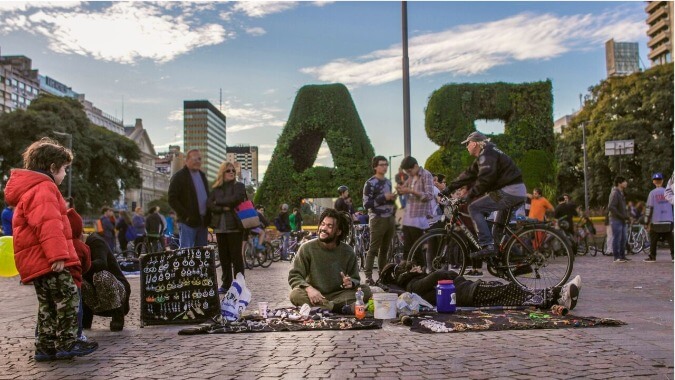
 Buenos Aires has many areas connected to the BA WiFi network, which includes museums, squares, parks and other places / Photo: Daytours4u[/caption]
1) Download and use Google Maps
It might seem obvious, but some people haven't downloaded it yet, and others have but don't use it. Google Maps is an incredibly useful tool for traveling the world; it's also more environmentally friendly than paper maps and a comprehensive tool for accurately determining real-time traffic conditions, schedules, and many other parameters. Two apps related to Google Maps that every traveler should also have are: HereWeGo , for downloading maps and having them on your phone in case there's no Wi-Fi on the street, and CityMaps2G , another app for downloading maps and information about hotels, bars, train stations, and other users' reviews of specific places.2) Find out the WiFi passwords for the airports you will be travelling to.
Airports often have free Wi-Fi networks , but they offer limited access time and weak network security , so personal data can be exposed. Therefore, you can find the passwords for other, more secure networks in airports around the world on this map:3) Remember to always bring adapters
As the saying goes, forewarned is forearmed. So don't forget to pack extra cables to charge your devices, as well as universal adapters that work with outlets in multiple countries . This will also be useful for your hairdryer and other frequently used appliances. Tip: In addition to the plug type, you should check the voltage of the country you're traveling to before buying an adapter. Keep in mind that in North America, Japan, the Caribbean, and many South American countries, the voltage is between 100 and 125 volts. Europe, Asia, and the rest of the world use voltages between 220 and 240 volts. It's best to have a universal adapter so you don't have to buy adapters every time you travel to a new destination. They generally cost less than $400, and some also include a USB port, which is always handy.4) Register online
Another tech-related tip is to check in online on your airline's website and show it at the counter rather than printing your ticket. Like digital cards, this is a more environmentally friendly option, simplifies the process, and often allows you to choose your seat on the plane. [caption id="attachment_4331" align="aligncenter" width="675"]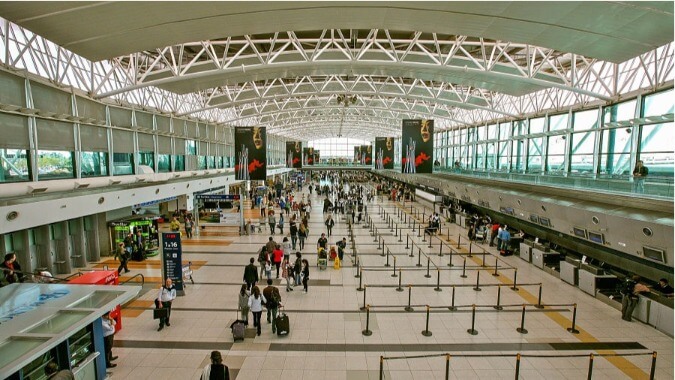 Buenos Aires has many areas connected to the BA WiFi network, which includes museums, squares, parks and other places / Photo: Daytours4u[/caption]
5) Discover where to access free internet in major South American cities
Major cities like Buenos Aires, Bogotá, Cartagena, Rio de Janeiro, and São Paulo offer free Wi-Fi access points for locals and tourists. Here are some of the most important access points: - Buenos Aires : BA WiFi is the Buenos Aires city government's network and is available in museums, plazas, hospitals, parks, and other public spaces. Locals and tourists can connect to this network in iconic locations throughout the city, such as the Museum of Modern Art , the Art Factory, Centennial Park , Chacabuco Park, Memory Park on the North Coast, Vatican Square (located next to the Colón Theatre), several streets in downtown Buenos Aires like Florida and San Telmo, and on the SUBTE (subway). Details of BA WiFi locations can be found here. - Rio de Janeiro : Unlike Buenos Aires, there are no such extensive free Wi-Fi networks. The solution is to go to bars, cafes, or restaurants to connect. Culture Trip magazine recommends some cafes: Sofía Café (in Copacabana), Livraria da Travessa (in Ipanema), Donninha (in Tijuca), Gringo Café (in Ipanema), among others. - São Paulo : This is one of the cities with the most options for connecting to free Wi-Fi. The network name in public places is WiFi Livre SP , and you can find it in the São Paulo, Mário de Andrade, and São Paulo Cultural Center libraries ; or in the Shopping Iguatemi São Paulo, Morumbi Shopping, Villa-Lobos, Anália Franco, Bourbon, Mooca, and Vila Olímpia shopping centers . [caption id="attachment_4332" align="aligncenter" width="675"] The São Paulo Cultural Center is one of the many places where you can connect to the Free WiFi SP network. In Bogotá, the Colombian capital, you can connect to the free WIFI_BOGOTA network in Bolívar, Las Nieves, and Rosario squares , as well as Simón Bolívar, San Cristóbal, and El Tunal parks . If you are in other areas of Bogotá or other cities in Colombia, you can connect to theFree WiFi for People network. In Cartagena , the beautiful port city offers free WiFi in the Castillo de San Felipe , Espíritu del Manglar Park, Plaza de la Aduana, Casa de la Justicia Chiquinquirá, Cancha Sintética La María, and Ciudad Bicentenario . In Montevideo, many public transportation options offer free WiFi for 15 minutes. Furthermore, in the Ciudad Vieja district, there are several places where you can connect to free Wi-Fi: Peatonal Sarandí, Plaza Zabala, and Plaza Constitución. The network name is "Montevideo IM." Once connected, simply open your browser to start using the network via UNO WiFi after viewing a few ads. Check out the Wi-Fi hotspots here . - Punta del Este: This popular tourist destination cannot be overlooked. Currently, it has over 30 routers offering free internet access. Some of the areas covered include Calle 20, Avenida Gorlero, sections of Avenida Pedragosa Sierra, and the area around Punta Shopping. The popular beaches of La Rocha and Cabo Polonio also offer free Wi-Fi.
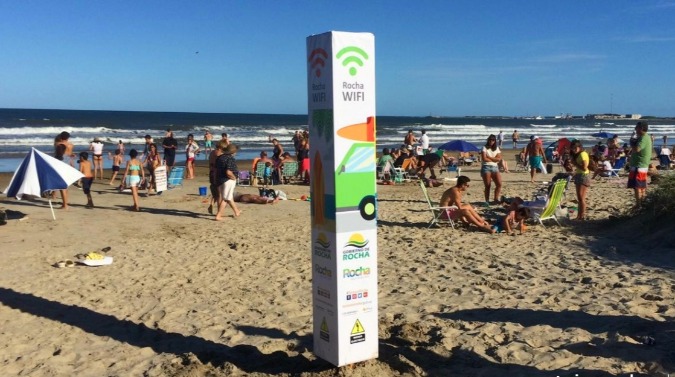
- Santiago de Chile: This city has more than 10 free WiFi zones for users: Plaza Bogotá, Almagro Park, Plaza Brasil, Plaza Sierra Bella, Forestal Park (in front of the Museum of Fine Arts), Plaza Benjamín Vicuña Mackenna, the Little Square of the Municipal Theater, Plaza Santa Teresa de Los Andes (access to the Santa Ana metro), the Bulnes promenade, and Plaza Manuel Rodríguez in the República district. Advice : If you have a smartphone or other internet-enabled device, you'll obviously want to take it with you when you travel abroad. Remember to go into your settings and disable mobile data roaming . This will prevent you from incurring charges due to foreign networks.The beautiful beaches of La Rocha and Cabo Polonio also offer free WiFi / Photo: La Rocha Tourist Office
6) Don't miss out on the latest apps!
There are currently countless apps available for both Android and iOS to help you make the most of technology while traveling. Here are some of our favorites: - Spotify Premium: It has an offline mode that lets you listen to downloaded music without limits and without needing to activate mobile data. - Datally: This Google app helps you save mobile data by setting a daily GB limit. Once you've used it up, the connection will automatically turn off. - TripIt: This app, which is also available as a web version, lets you create a travel itinerary. You name your itinerary, add a destination, and then start adding all the details you want: transfers, accommodations, restaurants, meeting points, places to visit, and points of interest. This way, your itinerary will be organized and readily available at any time during your trip. - Free Zone Wi-Fi and Wi-Fi Finder: These two apps allow you to find available Wi-Fi networks anywhere in the world (there are over 7 million today). - XE Currency: This app is essential for travel because it helps you convert local currency. Furthermore, if you're planning a multi-destination trip involving different currencies, this app will simplify your life.Make the most of your vacation and share your best travel photos instantly with the internet. If you're traveling to South America , book your excursions and activities online quickly and securely with Daytours4u, simplifying the process and allowing you to experience as much as possible that this magnificent continent has to offer.
By : The Daytours4u Internet Content Team
Published by Has Chacon on 04/06/2026


