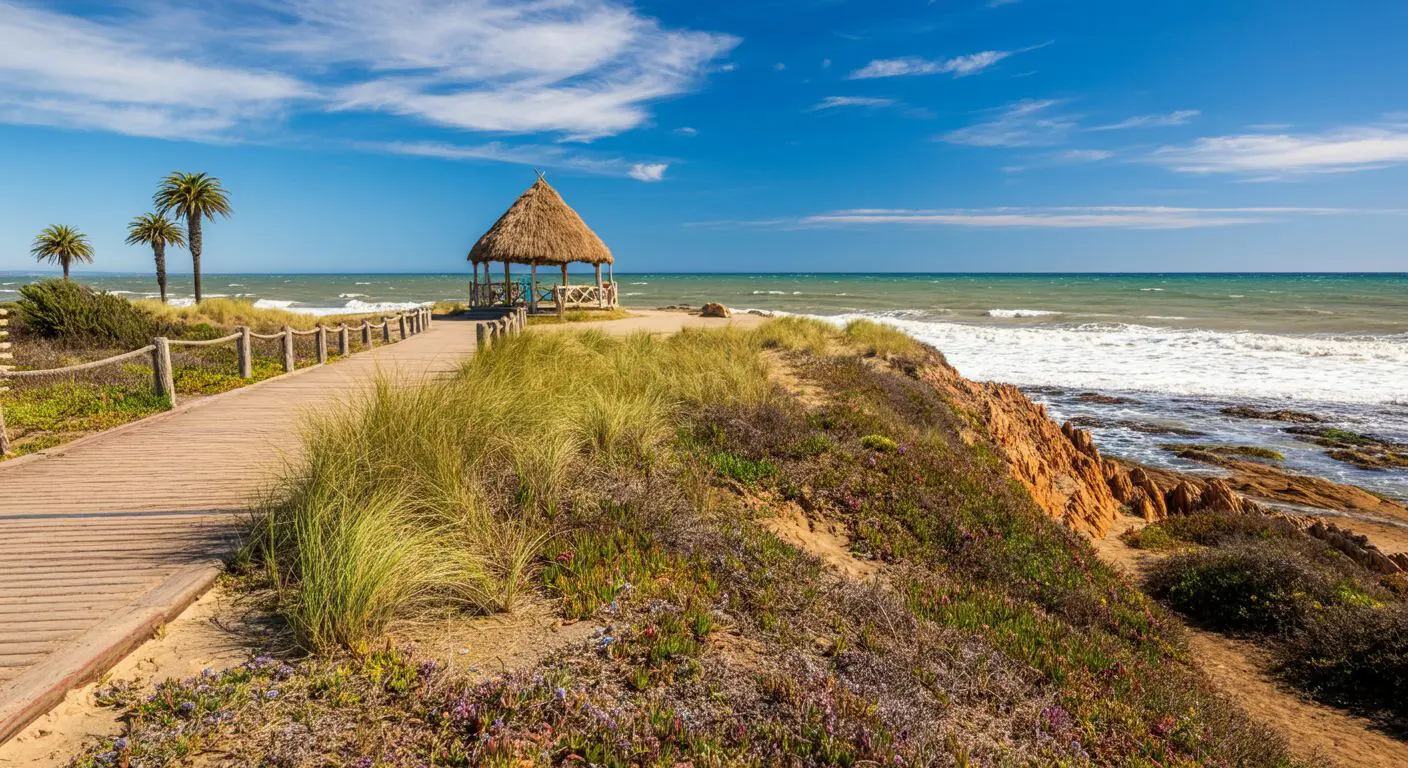
From the ocean beaches of the Rocha department to the tranquil waters of the Río de la Plata , Uruguay boasts some 600 kilometers of coastline, perfect for a road trip through some of its main cities and beach resorts. Here's a guide to Uruguay's beaches along a route that begins in Brazil , at the border town of Chuy, and ends in Colonia del Sacramento , from where you can reach Buenos Aires in less than an hour by boat.
[caption id="attachment_3387" align="aligncenter" width="675"]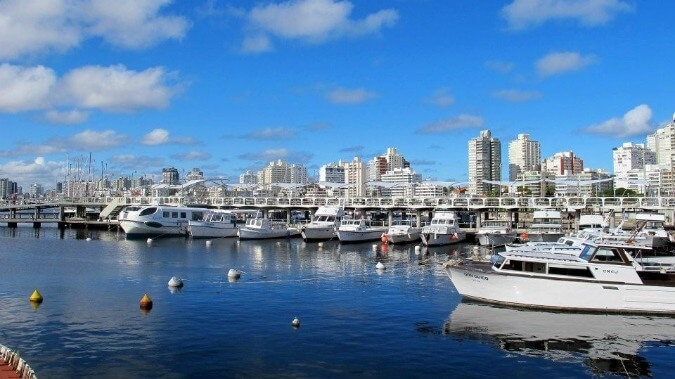 Uruguay can satisfy every tourist / Photo: Carina Fossati[/caption]
Saint Teresa
Rocha Department, km 302 of Route 9
Ideal for camping and nature enthusiasts, Santa Teresa National Park covers 3,000 hectares along the coast and boasts at its entrance one of the most beautiful and best-preserved colonial fortresses in the country, dating back to the mid-18th century. Two kilometers inland are beaches with rental cabins, a hostel, and a designated campsite.
Entrance to the National Park is free for all day visitors who come to enjoy its beaches and have a barbecue at one of the public grills. However, those wishing to stay overnight must register at the entrance and pay the corresponding fee. The Fortress is open from 10:00 AM to 7:00 PM during peak season and from 10:00 AM to 5:00 PM during off-peak season; the entrance fee is 40 Uruguayan pesos (about $1.50 USD) per person.
[caption id="attachment_3389" align="aligncenter" width="676"]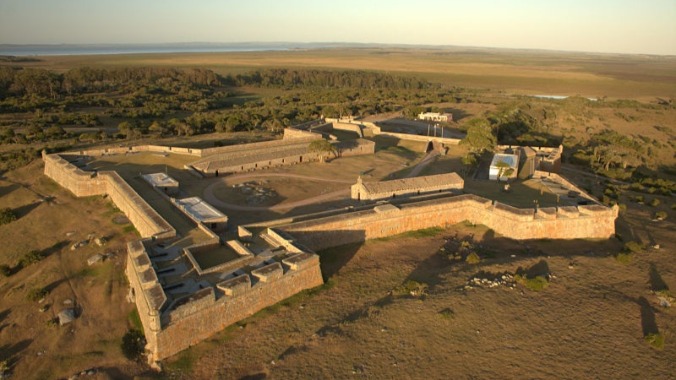 Discover the beautiful colonial fortresses of Santa Teresa / Photo: Carina Fossati[/caption]
Devil's Point
Rocha Department, km 298 of Route 9
The seaside resort was established in the 1930s and maintained its fishing village character until a few decades ago, when it was discovered by tourism and became a favorite summer destination for young Uruguayans during the high season. However, only about 800 people live there during the winter (according to the 2011 census), so the place still retains its original spirit. Along its 10 kilometers of coastline are three beaches: Los Pescadores in the center—the most family-friendly, characterized by colorful artisanal fishing boats that approach the beach to offer tourists the day's catch—Playa de la Viuda to the southwest, and Playa del Rivero to the northeast.
[caption id="attachment_3390" align="aligncenter" width="675"]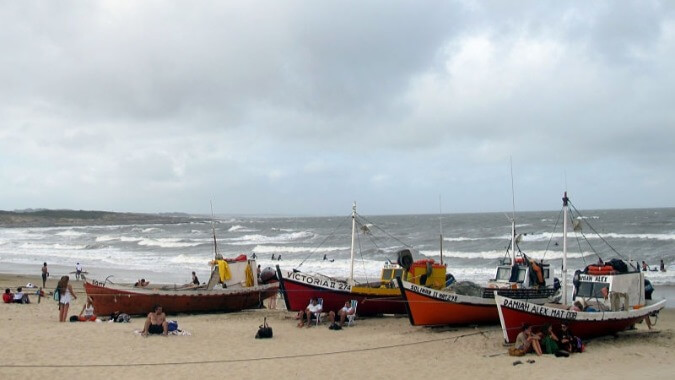 Colorful artisanal fishing boats on Los Pescadores beach/ Photo: Carina Fossati[/caption]
Valizas
Rocha Department, km 271.5 of Route 10
A small fishing village surrounded by towering dunes, Barra de Valizas is the most bohemian spot on the Uruguayan coast, a favorite haunt of musicians and artisans. Among its attractions are the remains of several shipwrecks, which can be explored by divers on clear days. A typical outing is the hike across the dunes to Cabo Polonio (about eight kilometers), which is longer if you take the coastal route, but the detour allows you to see the remains of the Don Guillermo, a U.S. Navy ship that ran aground in the 1950s.
Cape Polonio
Rocha Department, km 264.5 of Route 10
Without electricity or paved roads, this beach resort is also inaccessible from the highway—it can only be reached from the Puerta del Polonio Terminal by traveling seven kilometers through forest and dunes in a 4x4 truck; only those who own property there are allowed to enter in their own vehicles. The difficulty of access is precisely what ensures its preservation as a place with unique characteristics in the country, comparable only to Jericoacoara in northeastern Brazil. It boasts some of the best beaches in the country, but its greatest charm lies at night , when the only competition from the moon and stars comes from the lighthouse at the tip of the cape and the candles or lanterns carried by the locals.
Travel tip : If you're in Punta del Este and don't want to miss the incredible experience of visiting this place, book the Cabo Polonio and Monte de Ombúes Tour online and make the most of your trip.
[caption id="attachment_3380" align="aligncenter" width="675"]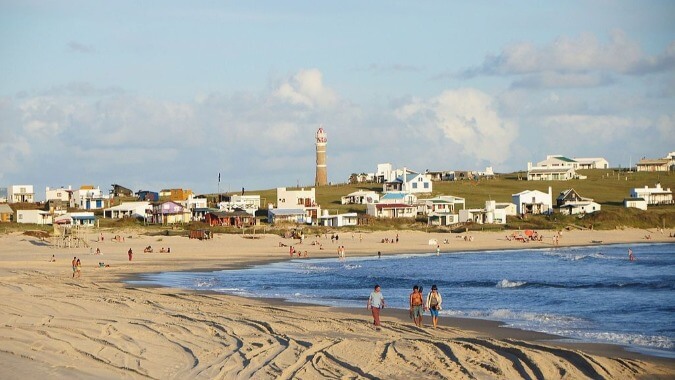 The Cabo Polonio Lighthouse, one of the most beautiful attractions in this place / Source [/caption]
The Quarry
Rocha Department, km. 228.5, Route 10
It's ideal for those who don't rent a car, as you can easily walk from any hotel, hostel, or inn to both its beaches (El Desplayado and El Barco) and the bars, restaurants, and shops on the main street. While it's a favorite among groups of young people, it's also popular with many families, except during Carnival holidays when they prefer to avoid it due to the loud music that goes on until the early hours of the morning.
About 10 kilometers away is La Paloma , a seaside resort town that welcomes both families and groups of young people during peak season, and offers more infrastructure and services. One of its beaches, La Balconada , is known as one of the best places to watch the sunset, as the sun dips directly into the sea there.
Punta del Este
Maldonado Department, km 132 of the Intercoastal Route
One of Latin America's most exclusive beach resorts, a favorite of the Río de la Plata jet set and also frequented by North American celebrities and European royalty. Those seeking beaches and Miami-style buildings can choose to stay on the Peninsula—home to the main avenue, Gorlero , and just a block away from the famous "Calle 20," where the most exclusive brands are located—while those who prefer a relaxed, hippie-chic vibe will find their place in La Barra , Manantiales , and José Ignacio . However, you should know that the best sunsets are in Portezuelo and Solanas, where the artist Páez Vilaró created his celebrated hotel, restaurant, and museum, Casapueblo . Don't miss the resort town's port, located on the Peninsula, and if you have time, take a ferry to spend the day on Gorriti Island .
Travel tip : Appreciate the sunset at Casapueblo from a different perspective and find extraordinary experiences in Punta del Este in this catalog.
[caption id="attachment_3391" align="aligncenter" width="675"]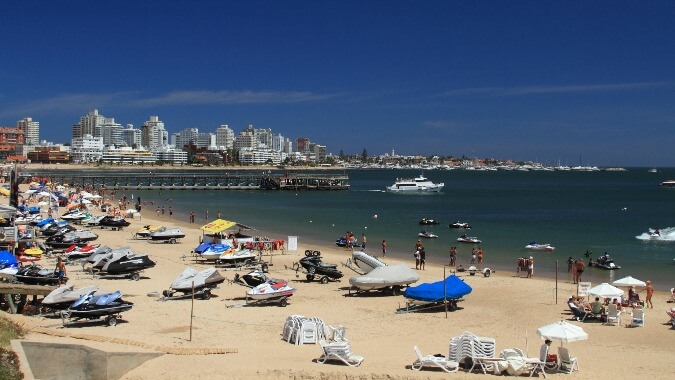 Punta del Este is one of the most exclusive beach resorts in Latin America / Source [/caption]
Piriápolis
Maldonado Department, km 82 of the Interbalnearia Route
This quiet, family-friendly, middle-class beach resort boasts a picturesque promenade bordered by hills, a rarity on Uruguay's otherwise flat coast. Chairlifts along the shore allow visitors to ascend to the top, an ideal spot for panoramic photographs. Singles can visit the San Antonio Sanctuary , known for its role in helping couples find love. Four kilometers away lies Pan de Azúcar Hill, one of the country's tallest peaks at 389 meters, easily recognizable from afar thanks to the 35-meter-high concrete cross atop its summit. Hiking trails lead to the top, and the resort also includes a seven-hectare reserve, the Cerro Pan de Azúcar Breeding Station, which shelters native wildlife such as pampas deer, wildcats, and capybaras. A few years ago, an Eco-Adventure Park was added, offering activities like zip-lining , trekking , falconry, rock climbing , and rappelling. Another recommended excursion is to Piria Castle, which belonged to the businessman Francisco Piria (1847-1933), founder of the seaside resort town. Although it is not very well preserved, it is worth a visit to discover the Masonic and alchemical symbols hidden within the structure.
Montevideo
Montevideo Department, km. zero of the country
Although it is no longer the Atlantic Ocean but the Río de la Plata that washes its shores, Montevideo's beaches have the unique feature of being bordered by a 22-kilometer-long waterfront promenade that connects them and allows them to be explored on foot, by bicycle, or by car. It is a favorite spot for Montevideans to walk, run, and sit and chat over mate , a type of tea that is shared in groups almost as a ritual.
Travel tip : Discover the hidden corners of the Uruguayan capital with Uruguay4u's Montevideo tours .
[caption id="attachment_3392" align="aligncenter" width="675"]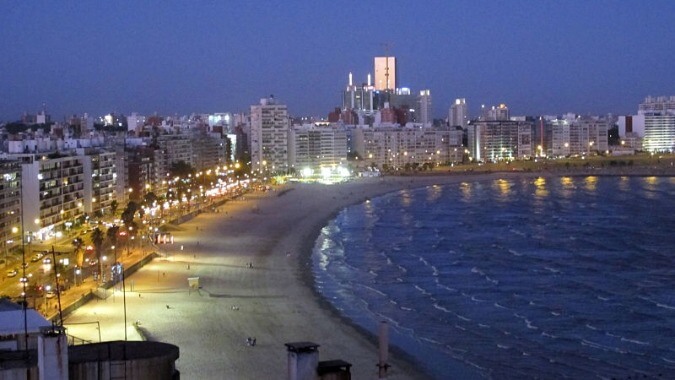 Montevideo's waterfront: Enjoy a Uruguayan night out! / Photo: Carina Fossati
Colonia del Sacramento
Colonia Department, km 176 of Route 1
Its historic center preserves narrow cobblestone streets lined with Portuguese and Spanish colonial-era buildings . Founded in 1680 by the Portuguese, it is the first and oldest city in Uruguay. A visit isn't complete without watching the sunset from its coast: yellows, oranges, reds, and purples blend together there in a way unique to the country, so remember to charge your camera battery. The neighboring city of Nueva Helvecia, located in the same department but 58 kilometers away, is also worth a visit: Uruguay's only Swiss colony, it boasts houses and public spaces decorated with the coats of arms of its inhabitants' cantons, creating a unique and charming ensemble.
Travel tip : Explore the charms of this enchanting city with these tours to Colonia del Sacramento .
[caption id="attachment_3393" align="aligncenter" width="675"]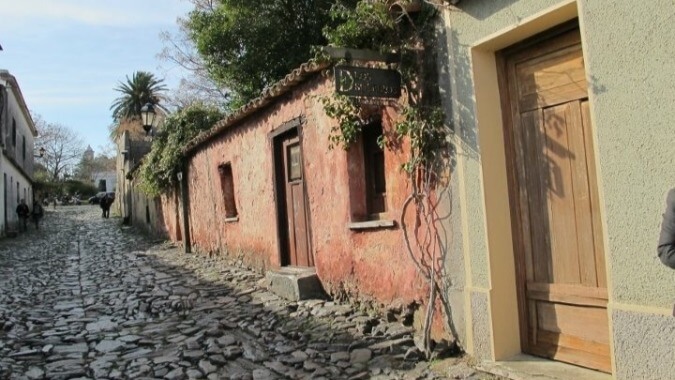 Narrow stone streets in the historic center of Cologne / Photo: Carina Fossati[/caption]
THINGS TO KEEP IN MIND
It's recommended to do this circuit from mid-spring to early autumn (September to early April) to enjoy the beaches. If you prefer a lively atmosphere, nightlife, and noise, the last week of December, the first two weeks of January, and Carnival week are ideal. Conversely, if you're looking for peace and quiet, a more family-friendly environment, and slightly lower prices, travel outside of those dates. This advice doesn't apply to Montevideo, which is actually its least busy time of year in January, with many shops, restaurants, and nightclubs closing for vacation.
In Uruguay, people eat later than in most parts of the world , and mealtimes are even more relaxed in the summer. The secret to surviving between lunch and dinner, which can stretch from ten o'clock to midnight, is the afternoon snack : mate, tea, or coffee with bizcochos, a local pastry similar to a croissant, offered plain or filled with cheese, ham, quince paste, or dulce de leche. On sunny days, Uruguayans like to have their afternoon snack on the beach, the waterfront promenade, in parks, or in plazas. On rainy days, especially in smaller towns or in the interior of the country, they might venture out if they find a street vendor selling torta fritas (fried cakes). Another secret to having energy at midnight is the siesta , a habit many Uruguayans enjoy during vacations and weekends. In the interior of the country and in small towns, many businesses close from noon until two in the afternoon so their owners can have lunch with their families and rest.
…
Come and discover the best of the Uruguayan coast and enjoy amazing experiences in this beautiful South American nation. If you're already convinced and want to start planning your itinerary, you'll also find some tips for traveling to Uruguay here. Likewise, if you'd like to know about the must-do activities in this country, check out the Uruguay4u tour catalog for valuable options to choose from, so you can pick the one that best suits your interests.By Carina Fossati , journalist and author of the blog Hills To Heels
Published by Has Chacon on 03/06/2026


