1. Vallenato , accordions and legends
This music, which uses the accordion as one of its main instruments, originated in the Colombian Caribbean , where people would leave their homes to escape the afternoon heat, drinking beer and listening to vallenato . Gradually, this rhythm incorporated new nuances and spread to cooler areas like Bogotá. Today, it's very common to hear vallenato in taxis in any Colombian city and in various neighborhoods. Its popularity is such that every year, Valledupar hosts the iconic Festival de la Légende Vallenato (Festival of the Vallenato Legend) , one of Colombia's top festivals and cultural events . This year, it will take place from April 26th to 30th , and a tribute will be paid to the popular singer Carlos Vives. Find all the information about this event on the festival's official page . [caption id="attachment_4356" align="aligncenter" width="675"]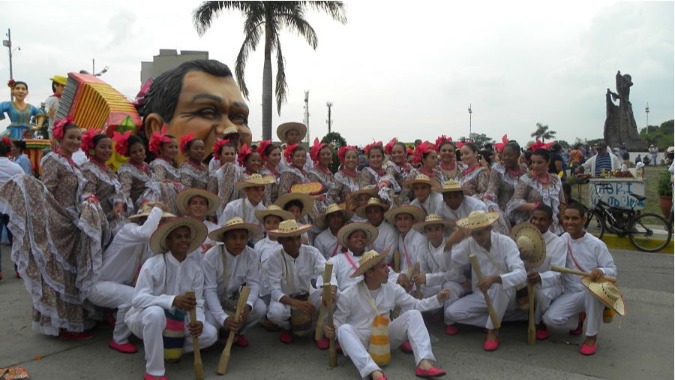 Join the Vallenata Legend Festival and enjoy every parade and musical performance.
2. La cumbia , “ ye mira que en Barranquilla se baila así”
This musical genre is present in many Latin American countries, but it originated in Colombia . African slaves, during the colonial era, invented percussion instruments to tell stories of love and seduction around the fire through music. During the dance, the woman moves her hips gently, takes small steps while wiggling her feet and shaking her skirt, while the man courts her. Cumbia is danced throughout Colombia in December, and in the Caribbean region, it's even year-round. So, if you're visiting Barranquilla, you can take the opportunity to listen to this rhythm at the Elsa Caridi Carnival Interactive Hall ; or go further and experience the local folklore with a trip from Chiva to Barranquilla . In her famous song "Hips Don't Lie , " Shakira , with a few influences, moves her hips to the rhythm of cumbia : [embed]https://www.youtube.com/watch?v=DUT5rEU6pqM[/embed]3. Champeta , the reggaeton of the Cartagena
Talking about champeta in Cartagena meant talking about the marginalized African population. Yet, with the 21st century, new songs revived champeta with young talent. This rhythm quickly found its way into the city's most stylish nightclubs and became a trend. Today, champeta in Cartagena is part of the coastal culture . A 10-minute walk from the walled city, you'll find a club called Bazurto Social Club , the birthplace of one of the genre's most representative groups: Bazurto All Star . If you want to complete your cultural experience, you can visit the Bazurto Market in Cartagena, where you can understand how champeta became an integral part of the city. Explore the entire city with a comprehensive guided tour . [embed]https://www.youtube.com/watch?v=kcBeROZ4PrA[/embed]4. Salsa caleña, from Cali with love
With hints of jazz, mambo, and bolero, salsa is a musical genre born in the Caribbean . In Colombia, this genre developed in the 1960s and 70s, to the point that some cities like Cali consider it their own. Cali is known as the salsa capital of the world —why? There are over 90 salsa academies and almost 120 venues for a Pachanga* night out. If you go up to San Antonio to see the city, you're sure to hear this rhythm. It's THE sound of the city! When you visit Cali, we recommend getting ready to dance with a salsa lesson . Every year, at the Cali Fair , which starts on December 25th, hundreds of music lovers, collectors, dancers, and salsa enthusiasts gather to celebrate. * Pachanga: a party or joyful gathering, almost always involving alcohol. [caption id="attachment_4355" align="aligncenter" width="675"]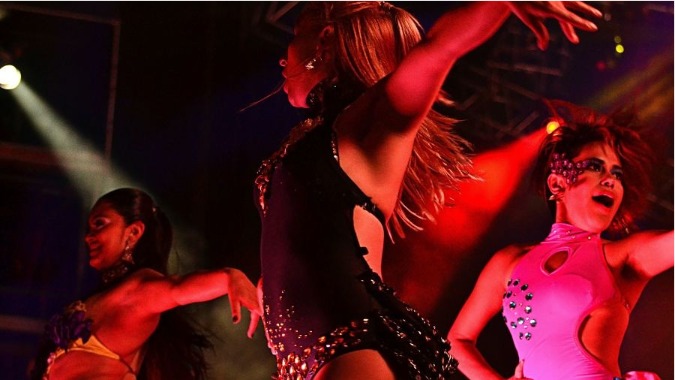 Let yourself be seduced by Cali's salsa. Attend dance classes.
5. El Calypso, the music of the islanders
The archipelago of San Andrés, Providencia, and Santa Catalina combines the best of Colombian and Caribbean culture; its musical blend is captivating. The quintessential musical genre of this archipelago is calypso. This rhythm, which originated in Trinidad and Tobago , primarily uses metal drums, violins, guitars, and maracas. Traditionally, it is sung in Creole and Spanish. Calypso is rarely heard in the rest of Colombia , so if you want to experience it, we recommend planning a trip to San Andrés and, at the same time, exploring one of the world's largest coral reefs. Book a tour to San Andrés [embed]https://www.youtube.com/watch?v=c04jMqPaElQ[/embed]Bonus: The carranga , the rhythm of the campaign
Born in the 1970s, this musical genre is one of the representative rhythms of the Andean region. It's danced in a waltz-like motion with hand movements. Currently, there are fusions with rock, as seen in the Rolling Ruanas, to attract a wider audience. Villages near Bogotá tend to listen to carranga , and unlike what you hear on the Caribbean coast in the streets, carranga is a genre reserved for parties, festivals, and concerts. [embed]https://www.youtube.com/watch?v=jwaNzvM2CZY[/embed]Let yourself be captivated by the most popular Colombian rhythms and have fun dancing until the early hours . Experience an unforgettable vacation in South America and find the best travel experiences in Colombia with Colombia4u.
By : Laura García Betancur , Colombian journalist and audiovisual communicator from the University of Manizales, Colombia.
Published by Has Chacon on 04/06/2026


