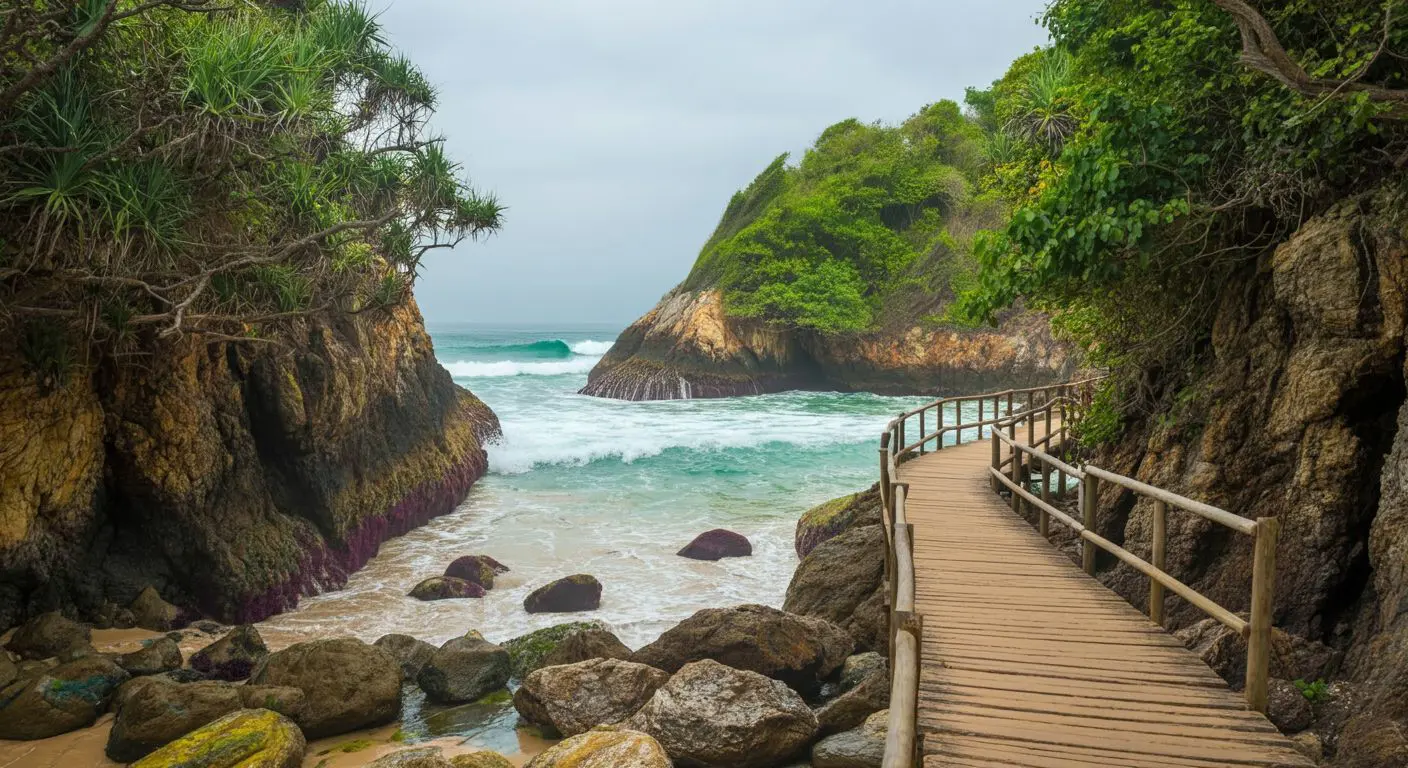
Yes, Tayrona National Park is worth visiting. But not at any time and not in any way.
The best overall window is usually February through April, with lower rainfall and more manageable trails.
The most common mistake is underestimating the logistics: choosing the wrong entrance, misjudging walking distances, or visiting during closures or peak-capacity days. That completely changes the experience.
Tayrona is not “just show up, walk to the beach, and relax.” It is a demanding natural park. When planned properly, it works. When improvised, it often disappoints.
When to visit Tayrona National Park (month by month)
- January: Very busy. Strong heat. Full days. Advance planning is key.
- February – March: The best balance. Drier weather, fewer crowds.
- April: Still good. Short rains begin.
- May – June: Higher humidity. Slippery trails. Fewer visitors.
- July – August: Local high season. Heat and crowds increase.
- September – October: More consistent rain. Heavy walking conditions.
- November: Variable. Conditions often improve toward the end of the month.
- December: Demand rises again. Heat and limited daily capacity.
Key point: Weather changes quickly. The challenge is not only rain, but mud, heat, and the real walking time.
When NOT to go — and why
- Indigenous closure periods: Usually in February and June (exact dates vary). The park closes completely.
- Holiday weekends: Daily limits fill early. Long entry lines.
- Heavy rain days: Difficult trails and strong sea currents.
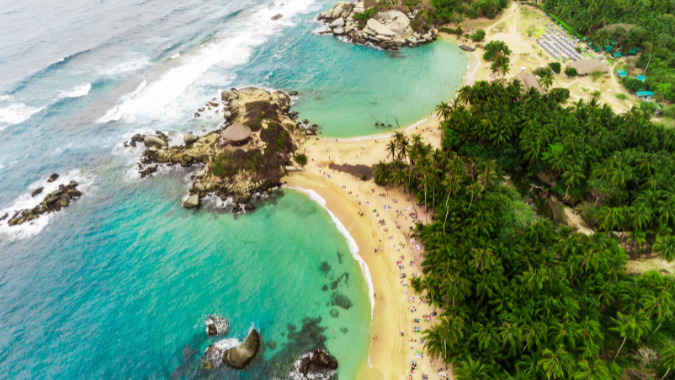
Which entrance makes sense for your plan
- El Zaino: The most commonly used entrance. Access to Cañaveral, Arrecifes, and Cabo San Juan. Long walks.
- Calabazo: Fewer people. A more demanding initial hike. Direct access toward Cabo San Juan.
- Palangana: Limited access. Less common for first-time visitors.
The right entrance = less physical strain + better use of your day.
How much walking is really involved
- El Zaino → Cabo San Juan: About 2.5 to 3 hours. Heat and elevation changes.
- Calabazo → Cabo San Juan: Similar total time, tougher at the beginning.
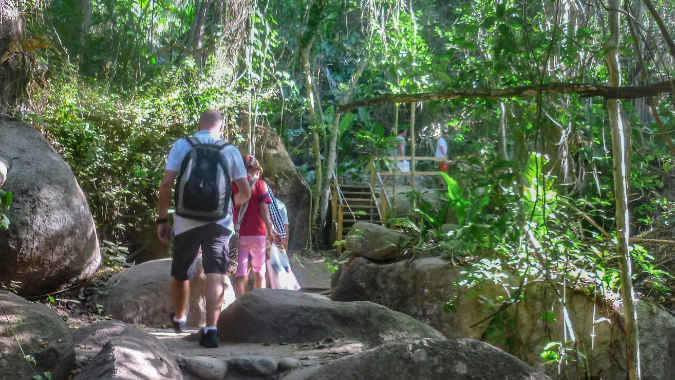
- Internal routes: No shortcuts. Everything is on foot.
It is not a technical hike, but it is physically demanding. Heat is more exhausting than distance.
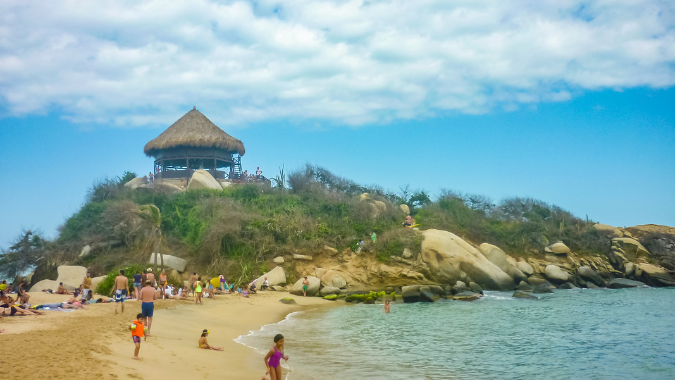
Different zones of Tayrona National Park and what each one offers
Not every traveler experiences Tayrona the same way. In fact, most disappointments come from choosing the wrong experience for the available time, group composition, or physical condition.
These are the options that work best in each case:
If you have only one day and want the “essential” Tayrona
Cañaveral – Arrecifes – Cabo San Juan
This is the most well-known route and what many people picture when they think of Tayrona.
- Main entrance: El Zaino
- Walking time: 1.5 to 2 hours per section, depending on pace and heat
- Includes iconic beaches such as Arrecifes, La Piscina, and Cabo San Juan
- Must be done round-trip on the same day
Works well if you are in good physical condition and enter early.
Not ideal if traveling with small children or elderly travelers.
This is where a guided day tour or an early transfer from Santa Marta often makes more sense, to avoid losing critical hours.
If you travel with children, older adults, or want to avoid long walks
Neguanje and Playa Cristal
This option often surprises travelers who do not want (or cannot handle) long hikes.
- Vehicle access to Neguanje
- Short boat ride to Playa Cristal
- Calmer, protected beach suitable for swimming
- Very low physical effort
It is not the classic long-hike Tayrona experience, but
It is the most realistic option for a relaxed, low-effort beach day.
Many travelers end up enjoying it more than the traditional route.
If you are interested in the park’s cultural side
Pueblito Chayrama
Often overlooked and poorly explained in many blogs.
- Moderate walks through jungle terrain
- Focus on indigenous history and culture
- Contact with communities that still inhabit the area
- Fewer beaches, more context
Best for curious travelers, not for those focused only on beaches.
Going with a guide is strongly recommended to understand what you are seeing.
If you are looking for extreme nature and serious trekking
Lost City (Ciudad Perdida) – not Tayrona, but often confused
Although often mentioned together with Tayrona, this is not a Tayrona visit.
- 4–5 day trek
- Long hikes, heat, humidity
- Overnight camping
- Physically and logistically demanding experience
Only suitable for well-prepared travelers.
Not a one-day or “add-on” excursion.
Why some travelers leave Tayrona disappointed
Because they choose the wrong experience assuming everything is the same.
- Looking for easy beach access → choose long hikes
- Limited time → enter through the slowest access
- Traveling with kids → underestimate physical effort
- Expecting extreme adventure → choose the wrong area
Tayrona is not a single experience.
Choosing the right version completely changes the outcome.
Accommodation
If you want to stay one or more nights inside the park, several lodging options are available. Budget travelers can rent a hammock or camp in a tent. For more comfort, there are wooden eco-habs with beds. For a higher-end stay, luxury eco-habs offer private bathrooms, sofas, and Caribbean Sea views, set inside the jungle with spa services available.
Food
Restaurants inside the park serve simple local dishes. Prices are higher than outside the park but not excessive. Drinks are available, but if staying overnight, bringing water and snacks is recommended. There are no ATMs inside the park, so carry enough cash.
Common mistakes when visiting Tayrona
- Entering late and walking under peak sun.
- Not carrying enough water.
- Choosing beaches without checking swimming conditions.
- Ignoring closures and daily visitor limits.
Expert tips to keep in mind
- Enter early. Before 9:00 am makes a major difference.
- Closed-toe shoes. Not sandals.
- Water and electrolytes. Heat is draining.
- Choose your entrance based on fitness, not popularity.
- Consider an organized transfer from Santa Marta to save time.
Can you swim at all Tayrona beaches?
No. Several areas have strong currents. Only designated zones are safe for swimming.
How many hours do you need to visit Tayrona?
A full day. Less than that means rushing and exhaustion.
Do you need a guide in Tayrona?
Not mandatory, but recommended for first-time visitors or high-demand days.
Tayrona is not just about showing up. Good planning defines the experience.
Choosing the right date, entrance, and visit style based on your time and physical condition avoids frustration and allows you to enjoy the park properly.
On , you can review the available Tayrona tour options and choose the one that best fits your trip, with clear expectations about effort level, real timing, and inclusions.
Originally written by Adam McConnaughhay, author of Cartagena Explorer.
Updated by Carolina Ferere.
Published by Has Chacon on 03/06/2026


