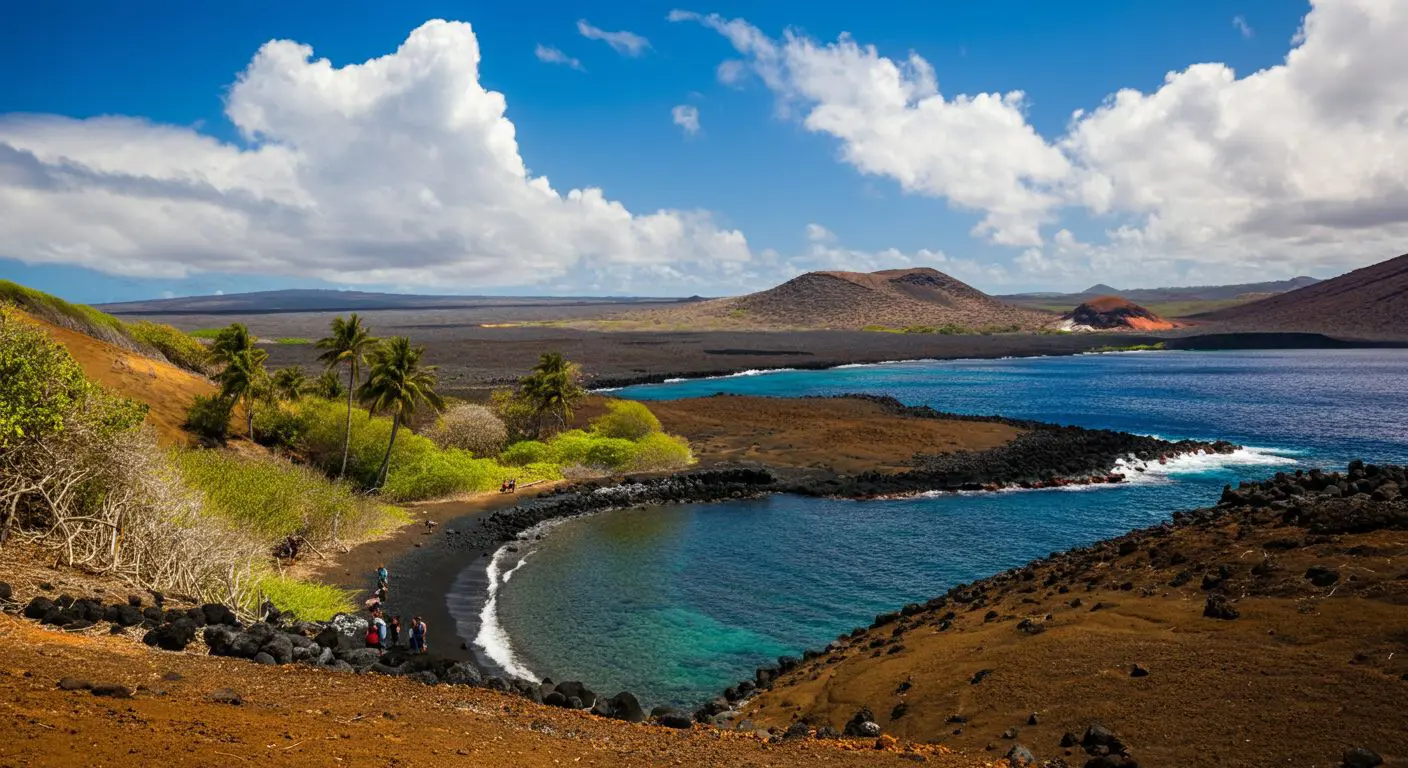
Isabela Island Galápagos: a guide to help you decide if it’s worth visiting
Some places feel different from the moment you arrive, even if travel guides don’t say it. Isabela Island Galápagos is one of those places.
It’s not known for luxury hotels or trendy restaurants. What makes it special is something much simpler: the feeling of being in a place that still keeps its natural rhythm. Everything moves slowly here no noise, no rush, no crowds.
Many travelers arrive without knowing what to expect. Some imagine it’s going to be similar to Santa Cruz or San Cristóbal. But all it takes is a couple of hours walking along the sandy streets of Puerto Villamil or snorkeling in Concha y Perla to realize that Isabela has a character of its own.
The island is named after Queen Isabella I of Castile and is one of the youngest islands in the archipelago.
Why Isabela feels different from the other islands
If you’ve already visited other islands, you know each one has its own personality. Isabela Galápagos surprises you in a different way through silence. It’s not that the island is empty. It’s that everything feels calmer, wider, and more connected to nature.
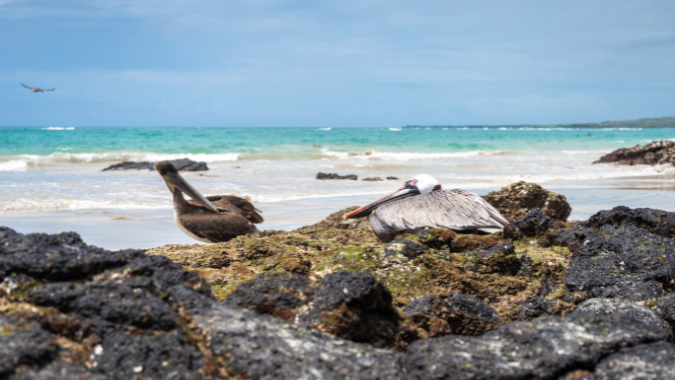
Here, animals run the place. Marine iguanas block the paths without fear. Giant tortoises cross the road. Penguins rest on the rocks and barely look around.
It’s a huge island the largest in the Galápagos and its size is part of its charm.
It’s not just a “place to visit.” It’s a living territory shaped by six volcanoes that continue to define the landscape. And you can feel that everywhere you go.
The terrain is rough and wild, almost lunar in some areas, yet surprisingly friendly to visitors because the main spots are close to town.
You won’t find big urban centers on Isabela. What you will find is room to breathe. And that makes many travelers consider it their favorite island.
Unique experiences you can only live on Isabela
You can describe beaches, volcanoes, and wildlife, but what truly makes Isabela special are the small moments you don’t plan for. For example:
- Watching a penguin swim beside you without changing direction.
- Walking along a trail where there are more iguanas than people.
- Seeing giant tortoises on the roadside while you ride a bike.
- Sitting by the ocean for half an hour listening to nothing but the waves.
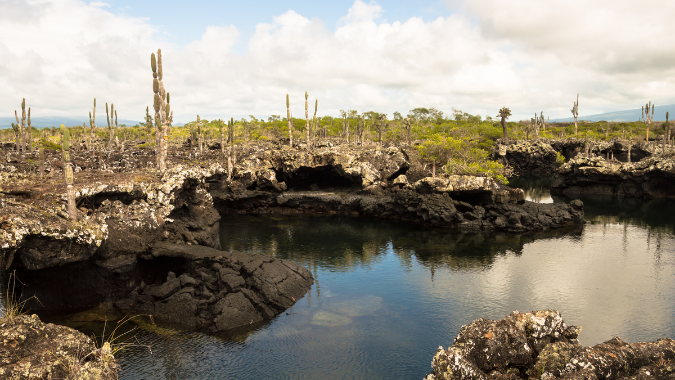
And, of course, there’s the famous Los Túneles Isabela Galápagos, a place that looks almost unreal. Lava formations sink into crystal–clear water, creating natural tunnels where sharks, turtles, rays, and seahorses swim calmly.
Many travelers say this experience is a turning point in their trip. Some even plan their stay on Isabela around this excursion when they don’t have much time.
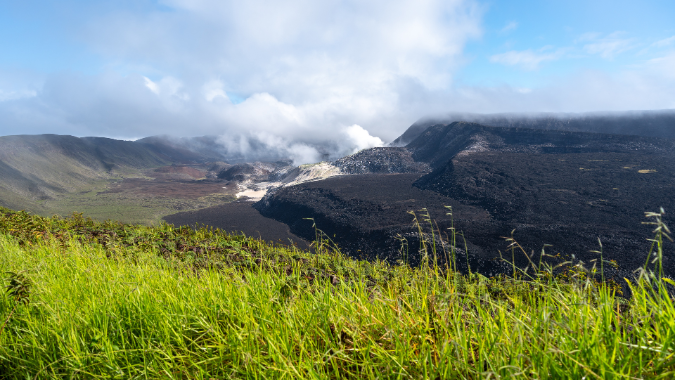
Another must–see experience is the Sierra Negra Volcano. It’s not only about the views. Walking across such a massive volcanic landscape gives you a sense of scale that’s hard to explain until you’re standing at the edge of the caldera looking at miles of dark lava fields.
How long to stay on Isabela
It depends on what you want to see. But there’s one rule most travelers agree on:
Two nights feel short.
Three nights feel right.
Four nights let you enjoy the island without rushing.
Many people underestimate the size of the island. They think they can arrive, do one activity, and leave on the next ferry. But Isabela is best enjoyed slowly. It’s not a place to jump from tour to tour.
If your plan was to stay just one day, chances are you’ll wish you had more time.
What to do on Isabela Island without taking a tour
One thing that surprises many travelers is how much you can do on your own, without booking paid excursions. And for real travelers, that’s a relief. Here are some options:
1. Puerto Villamil Beach
One of the longest and quietest beaches in all of Galápagos. Perfect for long walks, relaxing, and watching the sunset. There are no loud vendors or crowds.
2. Concha y Perla
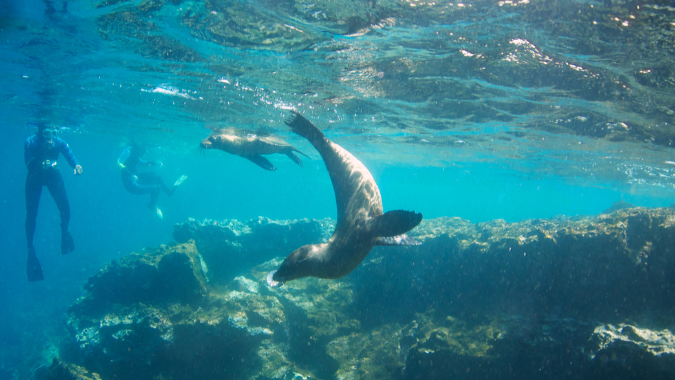
A great spot for snorkeling without booking a tour. The water is calm, and you’ll often see sea turtles, sea lions, and small harmless reef sharks.
3. Wall of Tears (Muro de las Lágrimas)
The bike route is an experience on its own. Along the way you’ll pass empty beaches, wetlands, viewpoints, and giant tortoises that cross the road freely.
Photo caption: Bike route to the Wall of Tears, surrounded by mangroves, quiet beaches, and marine iguanas.
4. Wetlands and lagoons
Easy to explore and great for spotting flamingos and other birds. You don’t need a guide or much planning.
5. Free things to do on Isabela
Beach walks, wildlife spotting, viewpoints, snorkeling at Concha y Perla—many meaningful experiences cost nothing here.
6. Camping on Isabela
It’s possible only in authorized areas and with a permit from the National Park. It’s not common, but if you’re looking for a deeper outdoor experience, it’s worth asking at the local office.
Tours that are truly worth it
You can do many things independently, but there are tours that genuinely justify the time and cost because they take you to places you cannot access on your own.
1. Los Túneles
This is Isabela’s most recommended tour. It combines a short boat ride with snorkeling in a landscape that looks unreal: arches and lava tunnels submerged in incredibly clear water, where you’ll often see huge turtles, white-tip reef sharks, seahorses, rays, and sometimes penguins. You don’t need to be an expert to enjoy it. It usually takes half a day and leaves a lasting impression.
2. Sierra Negra Volcano
A long but easy hike. The view of the caldera is striking, even for travelers who don’t usually go hiking.
3. Las Tintoreras
A calm excursion where you can observe white-tip sharks, penguins, iguanas, and very clear waters. Ideal if you prefer something shorter.
These three tours are more than enough to feel like you’ve experienced the essential side of the island.
What Puerto Villamil feels like
Puerto Villamil is small, simple, and very easy to walk around. The streets are sandy, and almost everything is within a short distance. The center has a handful of family-run restaurants serving fresh fish, simple meals, and generous portions: ceviches, grilled fish, seafood rice, soups, natural juices, and homemade desserts. Overall, prices are lower than in Santa Cruz.
There are quiet cafés where you can sit and read, and a few small beach bars that serve cocktails at sunset. Everything is relaxed—no loud music, wooden tables, and an early closing time. Most people eat dinner between 6:30 p.m. and 8:00 p.m.
It’s a friendly, calm, and very safe place.
Safety and National Park rules
The island is genuinely safe. You can walk at night without problems. What’s essential is respecting the National Park rules:
- Do not touch or feed the animals.
- Keep your distance at all times.
- No drones without a permit.
- Stay on marked trails.
- Don’t take anything from the environment (not even a rock).
These rules aren’t just formalities—they’re enforced and respected.
How to get to Isabela Island Galápagos
You have two main options:
1. Ferry from Santa Cruz to Isabela
There are several departures per day. The ride takes about two hours or more, and the ocean can be rough sometimes, so bringing motion-sickness medication is a good idea.
2. Small internal flights
Faster and more comfortable, but also more expensive. Planes are small and have limited luggage capacity.
How to travel from Isabela to Guayaquil
There are no direct routes from Isabela to Guayaquil. The only way is to leave the island first and connect from another airport in the archipelago. Most people take the early ferry to Santa Cruz and then transfer to Baltra Airport for a commercial flight to Guayaquil. Another option is flying from Isabela to San Cristóbal in small planes and catching a flight from there, though schedules and availability are more limited.
In either case, give yourself plenty of time. Ferries can be delayed due to ocean conditions, and internal flights have limited seats. If you’re visiting during high season, it’s best to book all segments in advance.
What travelers expect… and what they actually find
Many visitors arrive in the Galápagos expecting to see wildlife everywhere. And yes, you do see lots of animals—but not in an “organized” way. Isabela doesn’t have shows or staged encounters. Everything is natural.
The wildlife interactions are spontaneous: a tortoise crossing the road, a penguin swimming by, a sea lion sleeping on the pier. That natural, unfiltered feeling is what surprises most people.
Most travelers leave with a sense of connection—a quiet kind of connection that comes after spending days close to the ocean, without noise, without rushing.
Common mistakes when planning a trip to Isabela
- Staying only one night.
- Not booking Los Túneles in advance.
- Ignoring the weather forecast before going.
- Trying to visit the island as a day trip.
- Not carrying enough cash.
- Underestimating distances within the island.
- Packing too many activities into a short stay.
Useful tips for visiting the island
- Bring comfortable sandals—the streets are sandy.
- Visit Concha y Perla early to avoid groups.
- Take a warm layer for the Sierra Negra hike.
- If you get seasick, choose the back seats on the ferry.
- Use high–SPF sunscreen—the sun is intense.
- If the tide rises, avoid staying on rocky shore areas.
- Slow down—Isabela is best enjoyed at a relaxed pace.
Isabela Island Galápagos isn’t a destination for nightlife or luxury. It’s for travelers who enjoy nature without filters, slow days, easy walks, real wildlife encounters, and the peaceful rhythm of a seaside town. It feels genuine—quiet, simple, and unhurried.
If that’s what you’re looking for, Isabela is not only worth visiting—it may become the place you remember most from your entire trip. And if you’d like to explore the best of the island without dealing with logistics, you can browse the tours available on Daytours4u to see the activities offered on Isabela Island.
Published by Has Chacon on 03/06/2026


