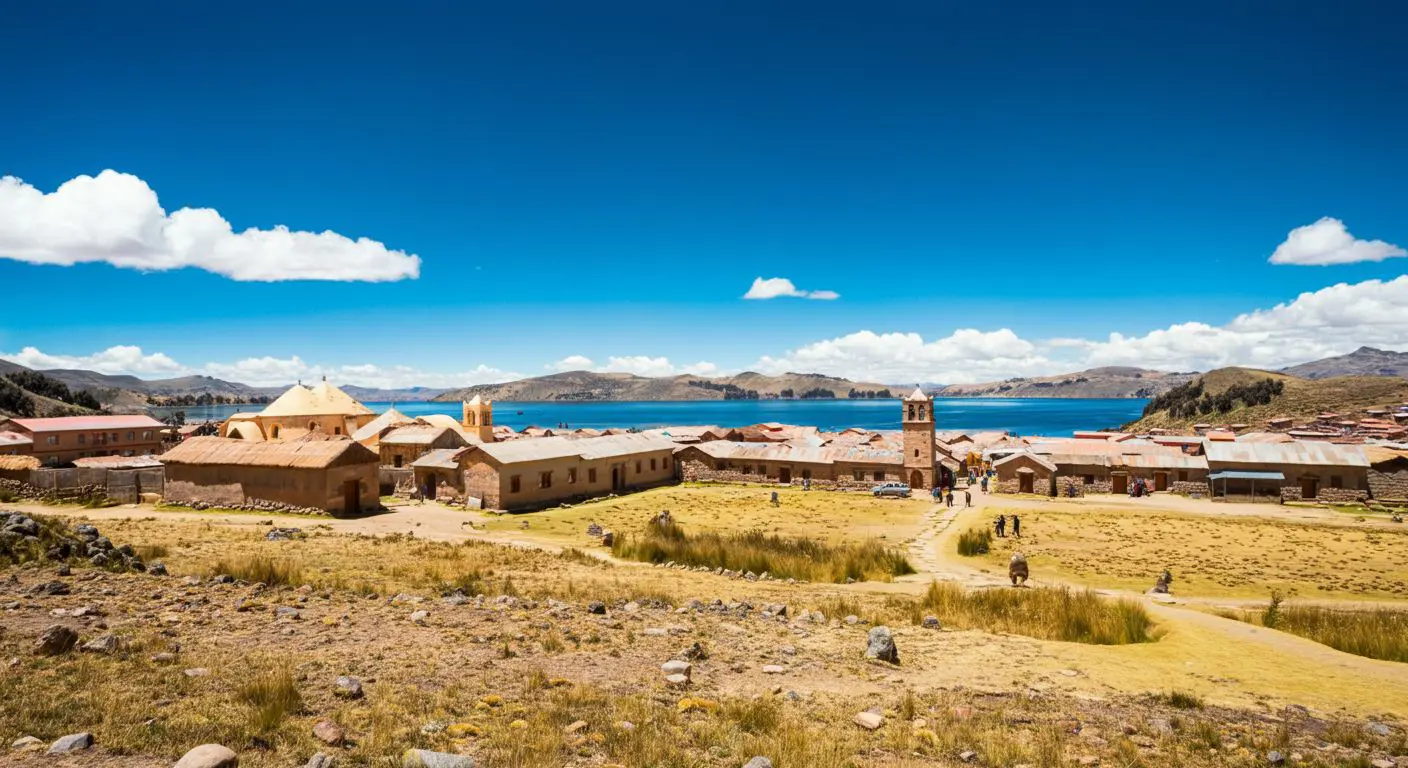
A complete guide to visiting Lake Titicaca from Puno, Peru
Lake Titicaca , located between Peru and Bolivia, is much more than a geographical landmark: it's the spiritual heart of the Andes. From the city of Puno , the main gateway to the lake on the Peruvian side, depart the best excursions to discover the vibrant cultures of Lake Titicaca's floating islands , as well as the islands of Taquile and Amantaní . At an altitude of 3,812 meters, this navigable lake offers not only spectacular scenery but also rich and authentic human experiences. In this guide, discover what to do at Lake Titicaca , how to get there, how many days to plan, and why you should include this region in your southern Peruvian itinerary.
Why is Lake Titicaca so important?
Lake Titicaca is a key location in the Andes. It is recognized as the highest navigable lake in the world , but also for its cultural, historical, and ecological value. According to Inca tradition, it is here that Manco Cápac and Mama Ocllo, the legendary founders of the Inca Empire, emerged. Island communities like Amantaní and Taquile still preserve ancestral traditions: handcrafted weaving, fishing from totora reed rafts, and terraced agriculture. The lake is also home to unique species, such as the giant Titicaca frog and several Andean birds, making this ecosystem a natural treasure.
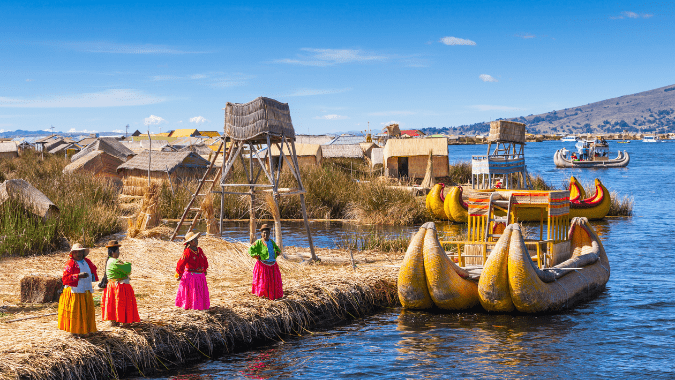 The famous floating islands of Lake Titicaca, built from totora reeds, are one of the main attractions to visit from Puno. / Photo: Andrey Khrobostov
Where is Lake Titicaca and how do you get there?
Located in the Andean Altiplano, at an altitude of 3,812 meters, Lake Titicaca stretches between Peru and Bolivia . It constitutes a strategic crossroads for travelers connecting Cusco, Arequipa, Juliaca or La Paz.
- From Cusco : 6 to 8 hours by bus or overnight train. It is also possible to fly to Juliaca, then transfer to Puno and Lake Titicaca .
- From Lima : flight to Juliaca (1 hour 40 minutes), followed by a taxi or shuttle ride of approximately 45-60 minutes.
- From La Paz : land route via Copacabana and Lake Titicaca . Buses or tours to Lake Titicaca from La Paz are available daily.
What to do at Lake Titicaca? Must-see activities
Explore the floating islands of the Uros
Among the most popular excursions on Lake Titicaca , a visit to the floating islands of the Uros is a must. These platforms are built from totora reeds, a plant native to the region. The inhabitants themselves explain how they build their houses, fish, and perpetuate this ancestral tradition.
Visit Taquile Island on Lake Titicaca
Taquile Island is renowned for its textile crafts and its autonomous community. Strolling along its paved paths offers stunning views and a glimpse into the daily lives of its inhabitants. Meals are simple and delicious: trout, quinoa, potatoes, and muña tea.
Spending the night on Amantaní Island: a cultural immersion
Staying with local families on the island of Amantaní is an authentic experience. They welcome you into their homes, share their daily lives, and invite you to participate in their traditional celebrations. Perfect for community-based and respectful tourism .
Activities on Lake Titicaca: kayaking, fishing and water biking
Wondering what to do at Lake Titicaca besides the usual excursions? Here are some active and cultural experiences for a different kind of adventure, closer to local traditions:
- Kayaking on Lake Titicaca : paddle among the totora reeds and access tranquil areas inaccessible to tourist boats. Sunrise and sunset excursions are available.
- Water bike ride : an original and ecological way to navigate the lake, especially around the floating islands .
- Traditional fishing : Join local fishermen in small boats and discover ancestral techniques for catching Andean trout or pejerrey. Some tours include a typical lunch featuring the fish caught.
- Birdwatching and observing Andean wildlife : the lake is home to a wide variety of species, including flamingos and grebes. Some kayaking excursions or hikes offer the opportunity to observe them up close.
- Totora raft navigation : an activity offered by some local communities to experience navigation as in the old days.
Viewpoints, beaches and peaceful walks
Besides the classic boat trips, there are lesser-known spots like the Titicaca viewpoint , Rosario – Lake Titicaca , or Chifrón Beach in the Capachica region. Ideal for admiring the sunset or relaxing at the end of the day.
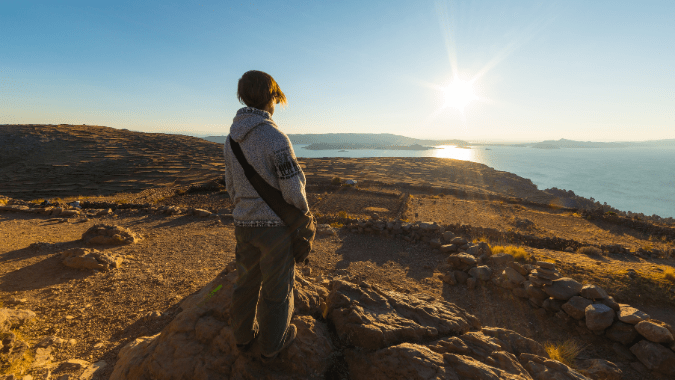 Sunset view over Amantaní Island, a prime location for an authentic community-based tourism experience. / Photo: fbxx
Recommended itineraries: how many days to visit Lake Titicaca?
- Day trip to Lake Titicaca : Uros + Taquile from Puno (perfect if you are short on time).
- 2 days / 1 night in Puno : with overnight stay on the island of Amantaní or Taquile.
- 3 days or more : to include Copacabana, Isla del Sol and other nearby destinations.
Where to stay near Lake Titicaca?
- In Puno : hotels like Sonesta Posada del Inca, GHL Lago Titicaca or Casa Andina offer a beautiful view of Lake Titicaca and good comfort.
- On the islands of Lake Titicaca : community accommodation is possible on Taquile and Amantaní, ideal for experiencing an authentic night in immersion.
Where to eat at Lake Titicaca: Andean specialties and good addresses
The cuisine of the Altiplano reflects the Andean identity: simple, nourishing, and made with local ingredients such as potatoes, quinoa, trout, and muña (a type of fish). If you're wondering where to eat in Puno or on the islands of Lake Titicaca , here are a few recommendations:
In Puno
- Mojsa : highly appreciated by travelers, with views of the Plaza de Armas and typical dishes such as grilled trout with native potatoes.
- La Casona : ideal for tasting Andean soups such as chairo or chupe de quinoa .
- Balcones de Puno : offers folk dance performances and traditional dishes such as roast cuy , ají de oca or quinotto with cheese .
- Valeria : a simpler, more local address, with homemade dishes and a warm welcome.
On the islands of Lake Titicaca
On the island of Amantaní or the island of Taquile , host families often offer homemade lunches consisting of:
- Quinoa or Andean tuber (oca) soup
- Fried trout or pejerrey with rice and fresh salad
- Local infusions made from muña , coca or eucalyptus to relieve altitude sickness
With prior booking, it is sometimes possible to participate in the preparation of meals – a wonderful cultural and human experience.
Tip : Bring cash as credit cards are not accepted on the islands. If you have any dietary restrictions, be sure to inform your guide or host in advance.
 Andean dish with grilled trout, native potatoes, and fresh salad – a local specialty to enjoy in Puno or on the islands of the lake .
Interesting facts about Lake Titicaca
- Altitude : 3,812 meters above sea level
- Average depth : 140 meters
- Water temperature : approximately 13°C during the day
- Lake Titicaca is shared between Peru and Bolivia
- Some places are home to submerged ruins and legends of lost cities.
Practical tips for visiting Lake Titicaca
Visiting Lake Titicaca requires some preparation, particularly due to the lake's altitude and the rural setting of many activities. Here are our recommendations for a hassle-free trip:
What to pack in your suitcase
- Warm clothing in layers: temperatures vary greatly between day and night
- Comfortable shoes for walking on stone or dirt paths
- Hat, sunglasses and sunscreen: the exposure is intense at this altitude
- Water bottle and snacks for the journey
- Cash (Peruvian soles): the islands do not accept bank cards
- Personal medications and altitude sickness pills (discuss with your doctor before the trip)
General recommendations
- Arrive at least one day in advance to acclimatize to the altitude before engaging in physical activities.
- If you are doing community-based tourism, bring a small symbolic gift for your host family (something useful but simple like a notebook or a flashlight).
- Respect local customs: always ask permission before taking photos and follow the guide's instructions.
- Use sunscreen, even on cloudy days.
These tips apply whether you're taking a day trip to Lake Titicaca from Puno or spending several days exploring the islands. Being well-prepared will allow you to fully enjoy the experience and better integrate into local life.
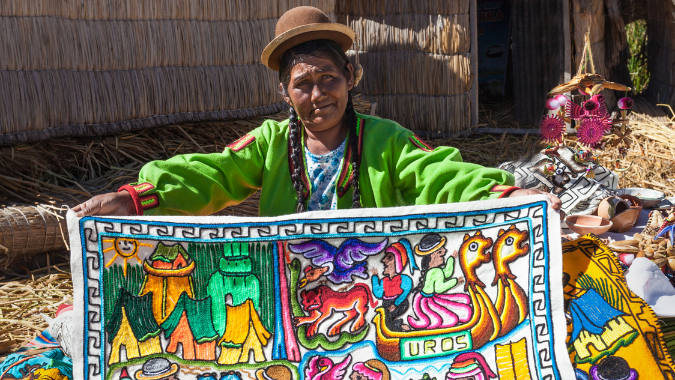 A local artisan weaving on Taquile Island, famous for its textiles listed as UNESCO Intangible Cultural Heritage. / source
Frequently Asked Questions (FAQ)
What activities can you do at Lake Titicaca?
Boat trips, kayaking, fishing, hiking, cultural visits and homestays.
How many days does it take to visit Lake Titicaca?
Recommended: 2 days. Ideal: 3 days with an overnight stay on the island of Amantaní or Taquile.
What is the best time to visit?
From May to October (dry season): sunny days and little wind.
Which islands should you visit on Lake Titicaca?
Uros, Taquile, Amantaní (Peru) and the Island of the Sun (Bolivia).
How to visit the islands of Lake Titicaca?
With an organized excursion departing from Puno. Daily departures.
What is the price of a tour to Lake Titicaca?
From USD 25 per person for a one-day excursion. Two-day packages from USD 60.
Book your tour to Lake Titicaca
At Daytours4u , we offer various activities and excursions to Lake Titicaca in partnership with local communities. You can choose a day tour or an overnight stay on Amantaní Island .
Discover our options and book your excursion from Puno today. Enjoy an authentic, safe experience that makes a positive local impact.
Published by Has Chacon on 04/06/2026


