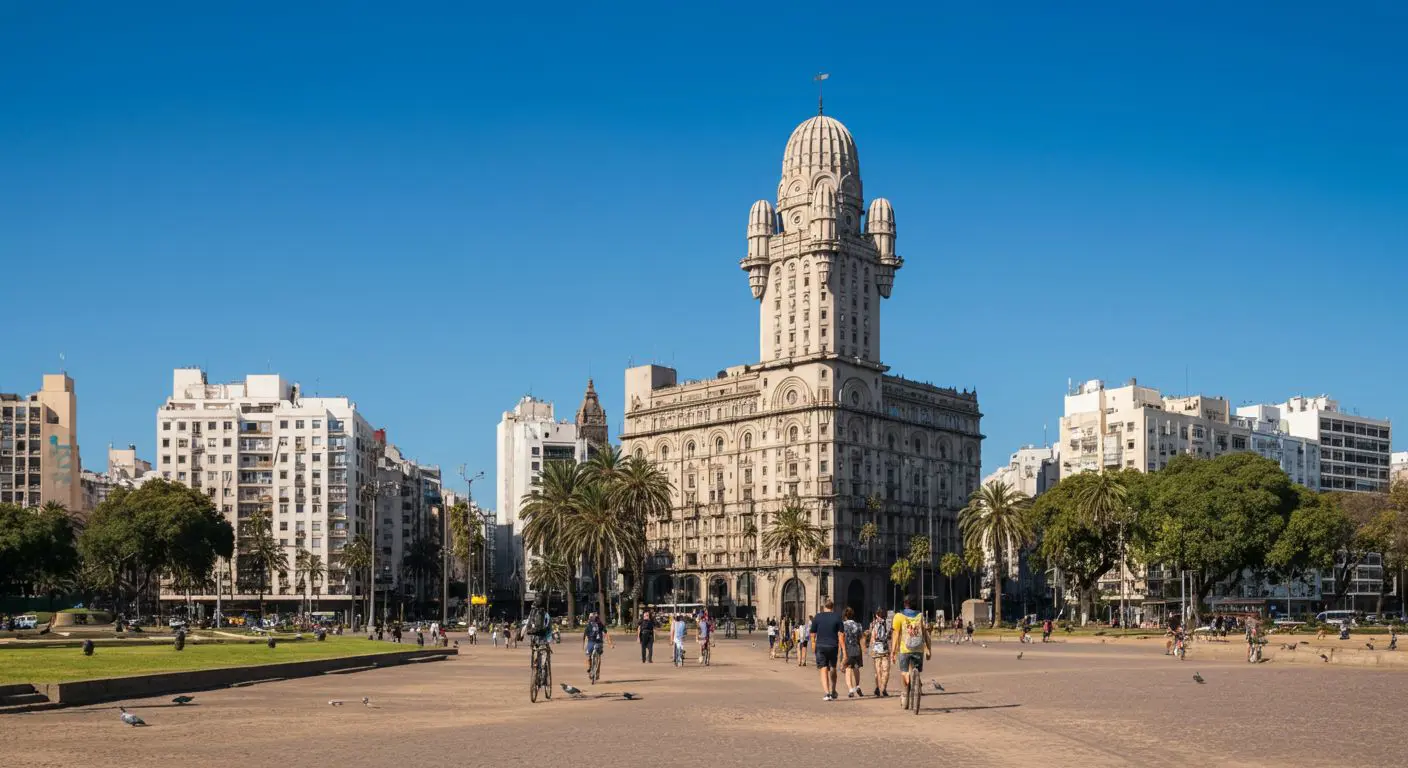
How much do you know about Montevideo, the capital city of Uruguay? If it's not already on your South American travel itinerary, then you need to read our Montevideo guide for beginners to find out why you should visit Uruguay's most important city.
Montevideo is often compared to its neighbor across the Río de la Plata: Buenos Aires. However, Montevideo stands out on its own as an interesting and eclectic city . It is also the heart of Uruguay, a country that, despite its small size, has made a global impact thanks to its progressive policies, including the legalization of abortion, same-sex marriage, and the medicinal use of marijuana a few years ago.
Take our word for it, Montevideo is a city worth visiting .
[caption id="attachment_475" align="aligncenter" width="610"]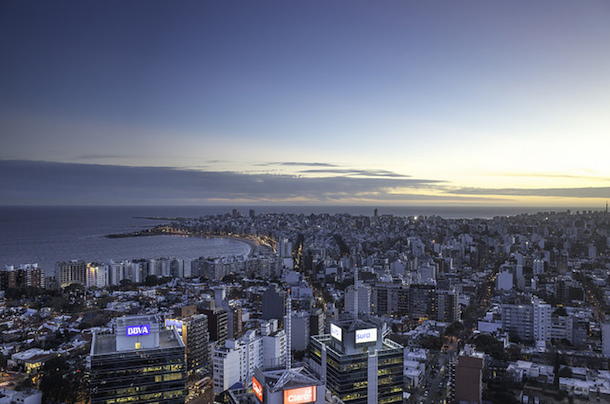 The Montevideo coastline seen from a skyscraper. / Source [/caption]
Comparing the capitals of the Río de la Plata
Montevideo is located across the Río de la Plata from Buenos Aires , and is sometimes referred to as the "little sister" of the Argentine capital. But this label doesn't do Montevideo justice.
An old—but friendly—rivalry exists between these two cities on the Río de la Plata. No one can deny that Argentine and Uruguayan cultures are very similar, and perhaps the reason this friendly rivalry prevails between the two countries is due to the passion both nations share for their national identity.
Both Argentinians and Uruguayans passionately defend what their countries produce, each claiming to have better beef, dulce de leche, and yerba mate than their neighbor across the river. Football is another source of rivalry, as is, surprisingly, tango. Many people don't know that while Buenos Aires is synonymous with tango, Montevideo currently plays an equally important role in the history of tango. The icon of Argentinian tango, Carlos Gardel, also has some ties to Uruguay, having once declared that he was born in Uruguay (and not in France, as is commonly believed). Despite these similarities, if you travel from Buenos Aires to Montevideo , don't expect the Uruguayan capital to be like Buenos Aires. There are many differences, and Montevideo has a unique charm that sets it apart from its neighbor.
Montevideo is much smaller and quieter. The people are known for their bohemian and relaxed lifestyle, giving the city a friendly vibe. There are many other things Montevideo has that Buenos Aires doesn't, making it tempting to cross the river and visit Uruguay.
These are some of Montevideo's main attractions :
[caption id="attachment_476" align="aligncenter" width="610"]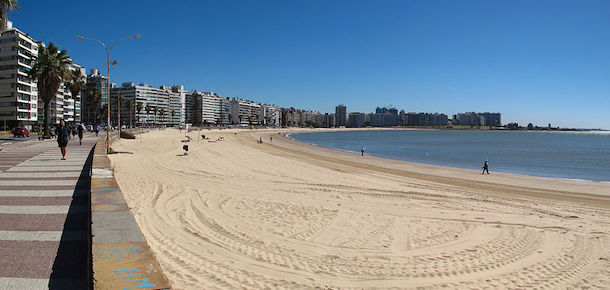 Montevideo has many beautiful beaches to visit. / Source [/caption]
Beaches
One of Montevideo's greatest assets is its coastal location. Situated on the coast where the Río de la Plata meets the Atlantic Ocean, Montevideo boasts not only beautiful beaches but also a much warmer climate than Buenos Aires, located further south.
Montevideo is famous for its Rambla – a grand avenue that stretches 22 kilometers along the coast. Some of the best beaches to visit along this avenue are:
- Pocitos: This beach, adjacent to the exclusive Pocitos neighborhood, is one of the city's most popular beaches. You'll always find people playing volleyball;
- Ramírez: In front of the Parque Rodó amusement park;
- Diving: Being one of the best known, Diving is a place frequented by surfers.
- Malvin: Quiet and calm, this bay is ideal for windsurfing.
Seafood
Another advantage of coastal cities is the seafood. Montevideo has plenty of places to enjoy fresh seafood. Along Montevideo's Rambla, you can find a variety of restaurants specializing in delicious fish and shellfish. Some notable restaurants in the city include Francis Carrasco , Es Mercat , and La Fonda del Puertito.
[caption id="attachment_477" align="aligncenter" width="610"]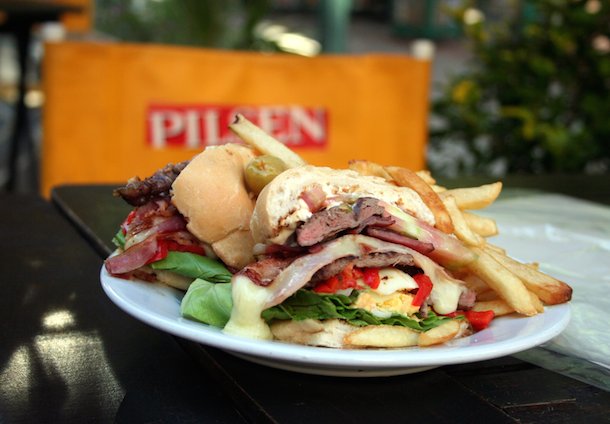 The Chivito is the crown jewel of Uruguayan cuisine. / Source [/caption]
Chivito
Continuing with the topic of gastronomy, a must-do when you're in Montevideo is to try the Chivito, which has become a national dish for Uruguayans. A paradise for meat lovers, these hearty steak sandwiches are filled with churrasco steak, ham, bacon, lettuce and tomato, melted mozzarella cheese, and a fried egg.
[caption id="attachment_478" align="aligncenter" width="610"]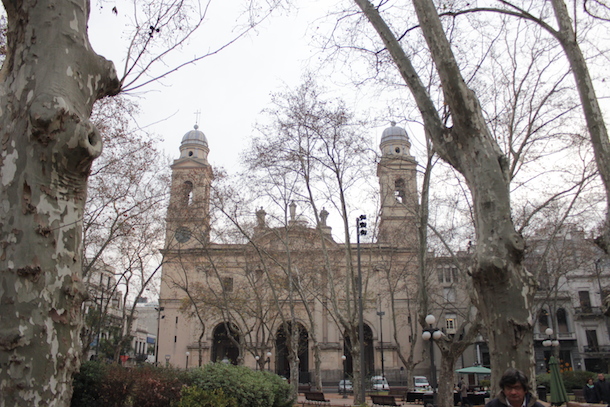 Montevideo's Old City is surrounded by beautiful examples of historic architecture. / Credits: Daytours4u[/caption]
Old Town
One of Montevideo's greatest attractions, the Old City (Ciudad Vieja) offers a glimpse into Uruguay's colonial past. This historic district is characterized by its colonial buildings with classic architecture, its cafes, museums, public squares, and the Solís Theatre—one of Montevideo's most iconic landmarks. It's a fantastic place to explore and get a feel for the city. You can explore the Old City and beyond with an expert guide by booking a Montevideo City Tour .
[caption id="attachment_479" align="aligncenter" width="610"]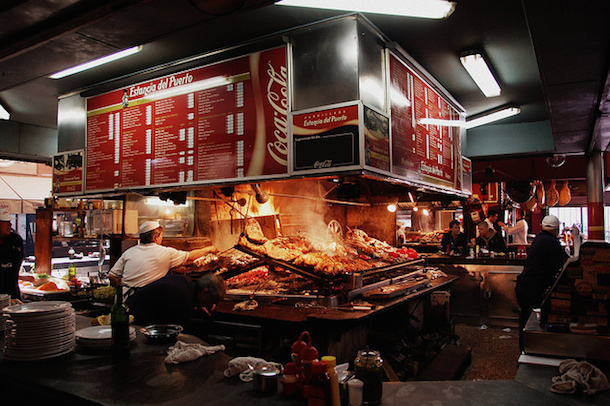 At the Mercado del Puerto you can find some of the best food in the city. / Source [/caption]
Port Market
Next to the Old City, by the city's old port, lies the Mercado del Puerto (Port Market). Built in 1868 as a fruit, vegetable, and meat market , it's now one of Montevideo's must-see spots. This building, which retains the style of a large warehouse, boasts a wide array of restaurants where you can find some of the best traditional Uruguayan dishes , including the best steaks in the city. Stop here to try a hearty portion of meat, just like Anthony Bourdain did. While locals come to Mercado del Puerto to eat, you can take the opportunity to shop for leather goods and handicrafts.
Uruguay's capital city should definitely be on your South American itinerary. It's easy to include this destination in your visit to Argentina or Brazil and offers plenty to see and do. Come and explore more with Daytours4u.com
Written by Nicole Eberhard
Published by Has Chacon on 03/06/2026


