1 - Old City/Center
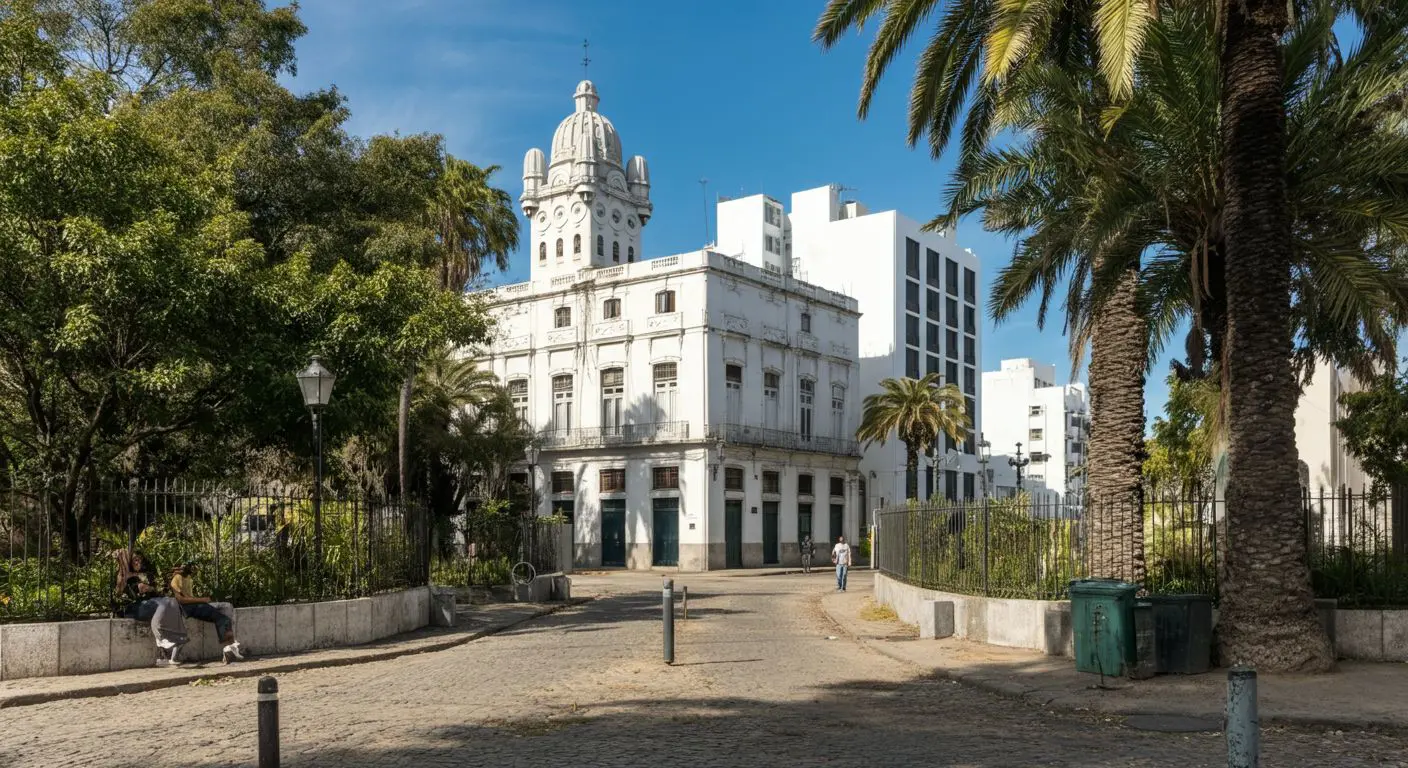
[caption id="attachment_2480" align="aligncenter" width="800"] Photo: Enrique Pérez[/caption] A good place to start your tour is Plaza Independencia , in the center of which you'll see the monument to Artigas—our national hero—and around it the Executive Branch building—the seat of the presidency—the Palacio Salvo —a former hotel and now an apartment building with curious architecture—the five-star Radisson Victoria Plaza Hotel, and diagonally across, the Teatro Solís , one of Montevideo's oldest theaters. The latter offers guided tours, but in this writer's opinion, the best way to experience it is by enjoying a play, opera, or concert inside. Passing through the Citadel Gate —one of the few remaining vestiges of when our city was walled—you'll enter the Old City, or Historic Quarter. Continuing along the Sarandí pedestrian street, lined with shops, bars, and restaurants, you can reach the Río de la Plata and mingle with the fishermen on the Sarandí breakwater, passing by squares like Plaza Matriz —where our Cathedral is located—and Plaza Zabala . Given the high concentration of offices in the area, the ideal time for this stroll is around midday, Monday through Friday. If you arrive around midday, you'll find several quality lunch options just steps away, but you can also stop at the Mercado del Puerto (Port Market ), a building over 100 years old that combines upscale restaurants with simpler, more affordable grills—though prices aren't its main draw, as it's a tourist attraction located across from the port, where both Argentine tourists arrive on the Buquebus ferry and international cruise ship passengers come in. Besides enjoying grilled food or empanadas, here you can sample two of our local delicacies: Tannat wine and Medio y Medio, a sweet Uruguayan drink made with white and sparkling wine. Returning to Plaza Independencia, in the opposite direction from the Old City, you'll find Avenida 18 de Julio, the main thoroughfare of the Centro neighborhood. On this avenue stands the Montevideo City Hall, a brick building with a rooftop viewpoint open to both Uruguayans and tourists, offering panoramic views of the city. (See hours below.) Although the avenue boasts several plazas, the biggest attraction isn't at ground level but several meters higher, in the domes of the buildings. At the corner of Río Negro Street, for example, you'll see a very unique one, adorned with a sculpture of the titan Atlas. For decades, the London Paris department store was located there, an icon of the city before shopping centers opened in other neighborhoods. [caption id="attachment_2508" align="alignleft" width="900"]
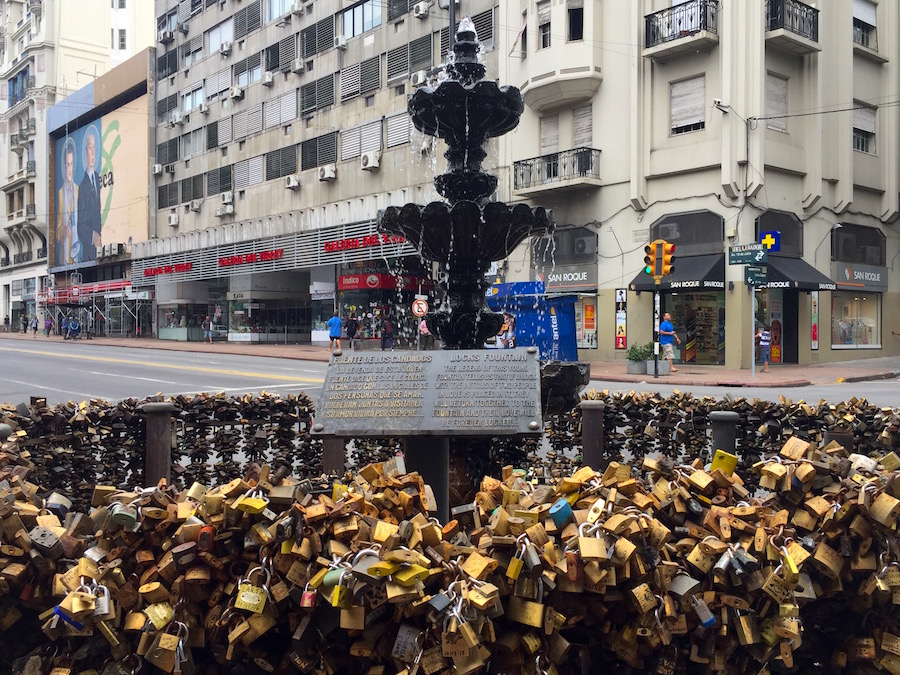 Photo: Uruguay4u [/caption] Another attraction on 18 de Julio Avenue is a padlock fountain at Bar Facal, located on the corner of Yi Street, which was installed by the owners of the neighboring bar. Several couples spontaneously made a bet there to seal their love, inspired by the romantic novels by Italian author Federico Moccia, "Tre metri sopra il celo" and "Ho voglia di te," which were later adapted into films. Incidentally, Facal is one of the places where you can try our "chivito"—a typical Uruguayan steak sandwich—see tango shows, and take photos with its statue of Gardel.
Book your traditional Uruguayan lunch at Bar Facal here
Also worth noting is the architecture of the Law School, located further east between Eduardo Acevedo and Tristán Narvaja streets. A popular flea market, frequented by locals and tourists alike, takes place in this area on Sundays, offering all sorts of odds and ends. Avenida 18 de Julio ends at the Obelisk, and just a few blocks away you'll find the Tres Cruces Bus Terminal, from where you can catch buses to Punta del Este , Colonia , and other parts of the country. A recent addition nearby is Sinergia Design (Eduardo Víctor Haedo 2240), a space where local designers have their offices and also sell their creations. How about taking home a designer piece as a souvenir?Book your day trip to Punta del Este or Colonia from Montevideo here
2 - Aguada/Prado 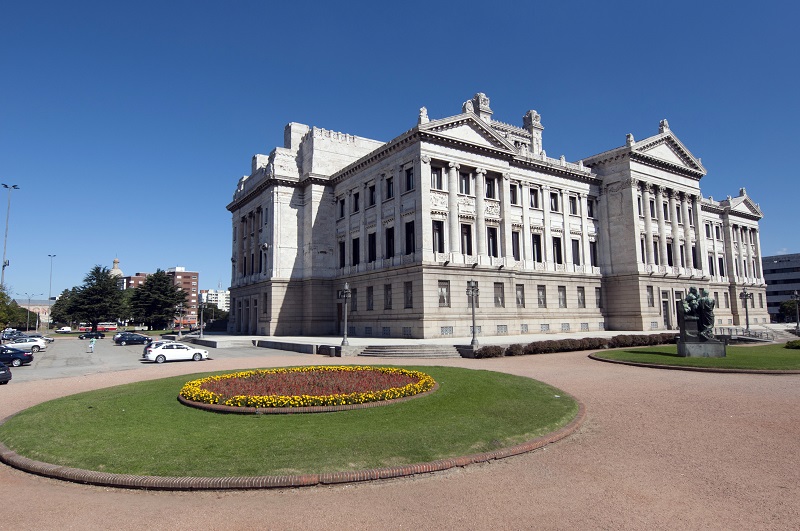
From Plaza Fabini, popularly known as "Del Entrevero" and located at the intersection of 18 de Julio and Avenida del Libertador, you can take the latter to reach the Legislative Palace , which houses the offices of the country's senators and representatives. Inside, the "Hall of Lost Steps" stands out, an interesting space with stained glass windows and a vaulted ceiling. The decoration features various colored Argentine marbles and mosaics, as well as sculptures and bas-reliefs by the artists Edumndo Partti, José Belloni, and Juan Buffa. Guided tours are available (see schedule below). A few blocks away is the Communications Tower complex, modern mirrored glass buildings that house the Antel telephone company. The tallest building reaches 160 meters and offers a tourist observation deck and the murals that the Torres García workshop created to adorn the walls of Saint Bois Hospital, which were restored in recent years. Both buildings can be visited on guided tours (see schedule below). In La Aguada, the name given to this area of the city, you'll also find the recently renovated Mercado Agrícola (Agricultural Market ), a historic building recently repurposed where you can buy not only fruits and vegetables, but also restaurants and specialty shops. Perfect for a rainy day! Further northwest from the city center lies the Prado neighborhood, the country's former aristocratic district, home to the presidential residence. Presidents used to live here, until José "Pepe" Mujica chose to reside on his own country estate during his term. It's worth exploring the neighborhood to experience the elegant Montevideo of the early 20th century, with its avenues lined with old mansions and country estates. While a few decades later the national aristocracy moved to Carrasco and today even to gated communities on the outskirts like La Tahona, many of the families who founded the city still live in Prado. One of the neighborhood's attractions is the Botanical Garden , an enclosed park filled with trees, flowers, and plants of all kinds. Another highlight is the Rose Garden, a promenade dedicated to our poet Juana de Ibarbourou. It features four pergolas crowned by eight Art Nouveau domes and a central fountain. Designed by the French landscape architect Charles Racine in 1912, it boasts some 300 varieties of old and modern roses. It's ideal to visit in spring, when the flowers are at their peak. Also in El Prado is one of the city's most beautiful churches, the Church of Las Carmelitas (Irigoitía Street, between Hermanos Ruiz and 19 de Abril Avenue), a Gothic-style Catholic church dating from 1929. And if you'd like to complete your visit with some national art, be sure to visit the Juan Manuel Blanes Museum of Fine Arts (Millán Avenue 4015). This Palladian villa offers permanent exhibitions of works by our visual artists Juan Manuel Blanes (1830-1901) and Pedro Figari (1861-1938), as well as other traveling exhibitions. Behind it lies the Japanese Garden of Montevideo, a small but picturesque space designed by a Japanese landscape architect. Also located in this neighborhood is the grounds of La Rural del Prado , a venue where every autumn and spring expos are held, combining stands from different countries—with all kinds of products originating from them—and displays of livestock and agricultural machinery. In addition, festivals, parades, concerts, and other cultural activities are organized. Check if your visit to the city coincides with the weeks that La Rural del Prado is open, and if so, don't miss it. 3 - Batlle Park/Rodó Park 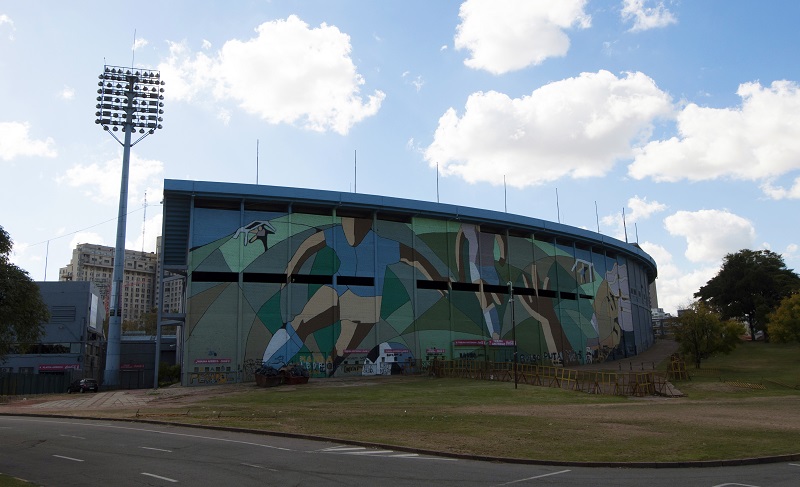
The green lungs of the city center, the first is a must-see for football fans, as it's home to the Centenario Stadium . Did you know that it hosted the first FIFA World Cup in 1930? And that we won it? And that we won the World Cup again in 1950, but at Brazil's Maracanã Stadium? For us Uruguayans, who are quite nostalgic (our biggest nighttime celebration is called "Noche de la Nostalgia" and takes place on August 24th), Maracanã remains a vivid memory, even after so many decades. The stadium houses a Football Museum , and football enthusiasts can also pre-book a football tour that includes tickets, transfers, and a guide. (See below).Book your football experience in Montevideo here
The stadium is located in the Parque Batlle garden neighborhood, which also houses the Velodrome, the Athletics Track, the Shooting Club, and the Hospital de Clínicas, where many medical students complete their clinical rotations—a presence easily recognizable by its size and architecture. Another neighborhood with ample green spaces is Parque Rodó, which has the added benefit of being situated next to the waterfront promenade (rambla) and offers a small amusement park and an amphitheater, the Teatro de Verano (Summer Theater), where Carnival shows are held in February, and concerts by bands and artists take place throughout the year. The neighborhood hosts a street market on Sundays selling clothing, fruit, vegetables, and other goods. In December, an annual book and crafts fair is added to the festivities. Furthermore, here's another point of interest for art lovers: the National Museum of Visual Arts (Julio Herrera y Reissig Street, corner of Tomás Giribaldi), which boasts one of the largest collections of Uruguayan art, featuring artists such as Rafael Barradas, Joaquín Torres García, José Cúneo, Carlos Federico Sáez, Pedro Figari, and Juan Manuel Blanes, among others. Parque Rodó is also a current hub of Montevideo's nightlife, both in the area near the amusement park and along the border with the neighboring Cordón district.Read here the complete guide to bars and nightclubs in Montevideo .
Don't miss the second part of this Montevideo by Neighborhoods Guide
By: Carina Fossati, travel journalist and author of the blog Hills to Heels
Published by Has Chacon on 03/06/2026


