In the first part of this Montevideo guide , we described the best attractions and places to visit in the Old City, Aguada, and Parque Batlle (also known as Parque Rodó). Follow this local author's recommendations and discover more about Pocitos, Carrasco, and other trendy neighborhoods to create a unique and fun itinerary for your trip to Montevideo.
4 - Pocitos/Punta Carretas
[caption id="attachment_2489" align="aligncenter" width="800"] Photo: Leonardo Correa[/caption] This area has the highest population density and, consequently, the highest price per square meter, especially in the blocks closest to the beach. On weekends, the neighborhood's social life seems to revolve around its waterfront promenade, from young people gathering to drink mate—a tea-like infusion typical of the region—to families strolling with their babies in strollers, and athletes who choose this space for running or cycling. Because it's one of the safest and most vibrant areas at night—the Old City and the city center are bustling during the day but empty out at dusk—it's the recommended area to stay, and it also boasts interesting restaurants and bars to end the day.
Read here the guide to restaurants in Montevideo
While strolling along the coast, it's worth stopping at Plaza Gomensoro , a picturesque square with a gazebo overlooking the sea. A few blocks away, pay attention to Pittamiglio Castle (Rambla Gandhi 633), a building that almost goes unnoticed among the surrounding buildings, despite having a ship's prow and the Winged Victory of Samothrace as its facade. It was the residence of the wealthy architect Humberto Pittamiglio (1887-1966), who is said to have been an alchemist. A guided tour is worthwhile to discover its labyrinthine rooms, doors and staircases that lead nowhere, and alchemical symbols everywhere. Another way to experience it is by attending a play inside. These neighborhoods are also home to the city's two largest shopping malls: Montevideo Shopping and Punta Carretas Shopping . The second, located at Ellauri 350 and inaugurated in 1994, was formerly a prison, famous for some of its escapes—which inspired films—and for having housed political prisoners before and during the last Uruguayan dictatorship (1973-1985). Montevideo Shopping, for its part, holds the title of being the city's first mall (it opened in 1985) and is located on Luis Alberto de Herrera Avenue, where the World Trade Center office complex, restaurants, bars, and even Lotus, Montevideo's most exclusive nightclub, are also found. Furthermore, a short walk from Montevideo Shopping to the coast leads to the MONTEVIDEO sign, a popular spot for tourists to take photos, as it offers a striking view of Pocitos Beach. 5 - Malvín/Punta Gorda/Carrasco 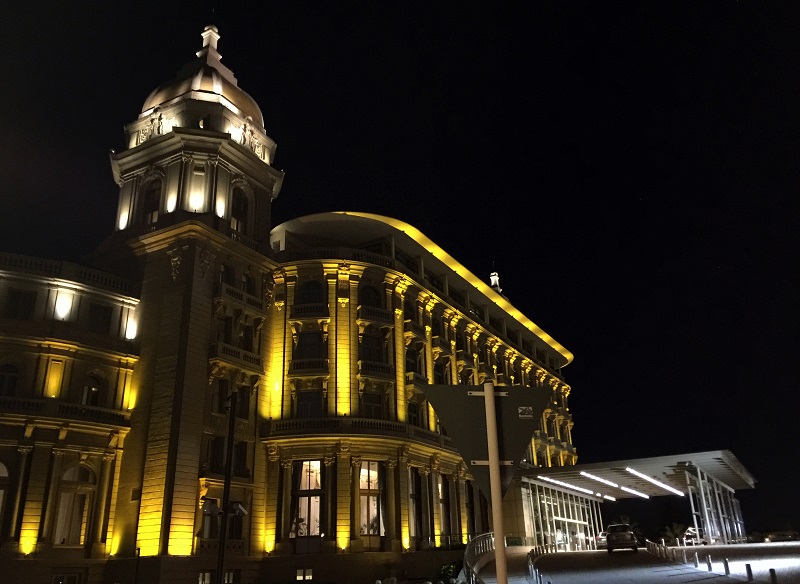
A large residential area of the city—except for the Malvín waterfront, which today has acquired a profile similar to Pocitos due to its buildings—it's not a place where travelers are usually sent, but it has its charms: there's a reason why many of the country's wealthy choose to live here. How about renting a bicycle to explore it? On the Malvín waterfront near Rimac Street, you'll find Villa Yeruá, the former property of the Argentine horse trainer Francisco Maschio, who hosted Carlos Gardel on several occasions. This year (2017), it reopened as the Turf and Tango Museum, thanks to the Uruguayan Association of Racehorse Owners (see hours below), and a statue of Carlos Gardel was placed at the entrance, where visitors can take a photo. Continuing east along the Rambla, you'll come to the beautiful Plaza de la Armada , known locally as Plaza Virgilio, a popular meeting place for locals and an ideal spot for panoramic views of Montevideo's coastline. Further east along the Rambla, you'll find the Hotel Casino Carrasco , a colossal French-style building inaugurated in 1921 and managed by the French chain Sofitel since 2013. Staying here isn't for everyone, but anyone can enter its lobby to appreciate the architecture and decor, view one of the art exhibits, and perhaps try their luck (in moderation) at the casino. Upon exiting, you'll encounter the neighborhood's main commercial thoroughfare, Avenida Arocena, and parallel to it, a picturesque street lined with old houses now converted into shops: Avenida Rostand. Perhaps you'll be lucky enough to visit during "Paseo Rostand," an event held several times a year featuring food trucks and musical performances on its sidewalks.Useful information about Montevideo and attraction opening hours
When to go. The shoulder seasons (March and April – September to December) are the best times of year to visit the city. In summer, the city is quite hot, but it's also a good option if you want to combine your visit with a couple of days at the beach resorts to the east. During January, you'll find the city quite empty, so many shops and restaurants will be closed, as it's the locals' favorite month for their vacations. February is the perfect month to enjoy the various carnival shows. Transportation. By bus, you can use the 121 to travel from the Old City/Center to Pocitos and Punta Carretas, and the 104 covers this route but also goes to Malvín, Punta Gorda, and Carrasco. You can pay in cash on the spot, but for longer stays, the magnetic transport card is recommended as it offers discounts. If this is going to be your means of transportation, the "How to Get There" app will help you find out which bus to take based on your origin and destination. Other transportation apps available in the city include Easy, Uber, and Cabify . The Discover Montevideo Tourist Bus stops at most of the city's points of interest—except Malvín, Punta Gorda, and Carrasco—and users purchase a hop-on, hop-off pass for one day (637 pesos, a little over US$20) or two days (980 pesos, a little over US$30). It runs from 9:30 a.m. to 6:30 p.m. on weekends and from 10:00 a.m. to 5:45 p.m. on weekdays. Book online here: Montevideo Tourist Bus. Walking tours are available in the Old City. Guided tours don't require prior reservation and have no fixed price—travelers tip at the end of the tour. Guides are available in Spanish, Portuguese, and English. They depart from Plaza Independencia every morning. For more specialized tours, book online here: tours and experiences in the city . Mercado del Puerto (Port Market). Located at Piedras 237, corner of Pérez Castellano, it has 14 restaurants and also includes various craft stalls. Inside, you can only eat at lunchtime (the most recommended option), but the grills outside are also open in the evening. Solís Theatre. Located on Buenos Aires Street, it offers guided tours Tuesdays and Thursdays at 4:00 PM; Wednesdays, Fridays, and Sundays at 11:00 AM, 12:00 PM, and 4:00 PM; and Saturdays at 11:00 AM, 12:00 PM, 1:00 PM, and 4:00 PM. The cost is 90 pesos (except Wednesdays, when they are free). Guides are available in English, Portuguese, and French. We recommend experiencing the theatre's interior while attending a performance: check the schedule at www.teatrosolis.org.uy . Panoramic Viewpoint. Located at 18 de Julio and Ejido, the Montevideo City Hall's viewpoint is open to the public seven days a week, from 10:00 AM to 4:00 PM. It's free and uses a glass elevator with an exterior view. Legislative Palace. Entering through the General Flores Avenue entrance, guided tours are available Monday through Friday at 10:30 a.m. and 3:00 p.m. in Spanish, English, and Portuguese. The cost for foreign tourists is $3. Communications Tower Complex. Located at Paraguay 2097, corner of Guatemala, it offers free guided tours with access to its observation deck on Mondays, Wednesdays, and Fridays at 3:30 p.m., 4:00 p.m., 4:30 p.m., and 5:00 p.m., and on Tuesdays and Thursdays at 10:30 a.m., 11:00 a.m., 11:30 a.m., and 12:00 p.m. No reservation is necessary; simply arrive a few minutes beforehand at the reception desk of the Joaquín Torres García Building. Juan Manuel Blanes Museum of Fine Arts. Located at Millán 1415, corner of Pierre Fossey, it is open Tuesday through Sunday from 12:00 p.m. to 5:45 p.m. Admission is free. Botanical Garden. With its entrance at 19 de Abril Avenue 1181, corner of Valdense Street, it is open seven days a week, from 7:30 a.m. to 5:30 p.m. Free admission. Centenario Stadium and Football Museum. Located on the grounds of Batlle Park (Ricardoni Avenue, no number), it is only accessible during sporting events or artistic performances. Check to see if your visit coincides with one! The Football Museum is located within the stadium (open Monday to Friday, from 10:00 a.m. to 5:00 p.m., admission fee applies), but football fans can also book football tours that include stadium admission and transportation. National Museum of Visual Arts. Located in Rodó Park (Julio Herrera y Reissig Street, corner of Tomás Giribaldi Street), it is open Tuesday to Sunday, from 2:00 p.m. to 7:00 p.m. Free admission. Pittamiglio Castle Cultural Center and Museum. Along the Punta Carretas waterfront, almost at the corner of 21 de Setiembre, this curiously shaped mansion (it has a ship's prow with the Winged Victory of Samothrace on its exterior) is open to the public for guided tours at 5:00 PM, Tuesday through Sunday. Plays for children and adults are also performed there, most designed to encourage visitors to walk through the building as the scenes change. Check what's playing on the website www.castillopittamiglio.org . Villa Yeruá, located on the corner of Rambla de Malvín and Rimac, the Tango and Turf Museum is open to the public Tuesday through Saturday, from 12:00 PM to 5:00 PM. *Read the first part of this Montevideo by Neighborhoods Guide here.Book experiences in Montevideo online .
By: Carina Fossati, travel journalist and author of the blog Hills to Heels
Published by Has Chacon on 03/06/2026


