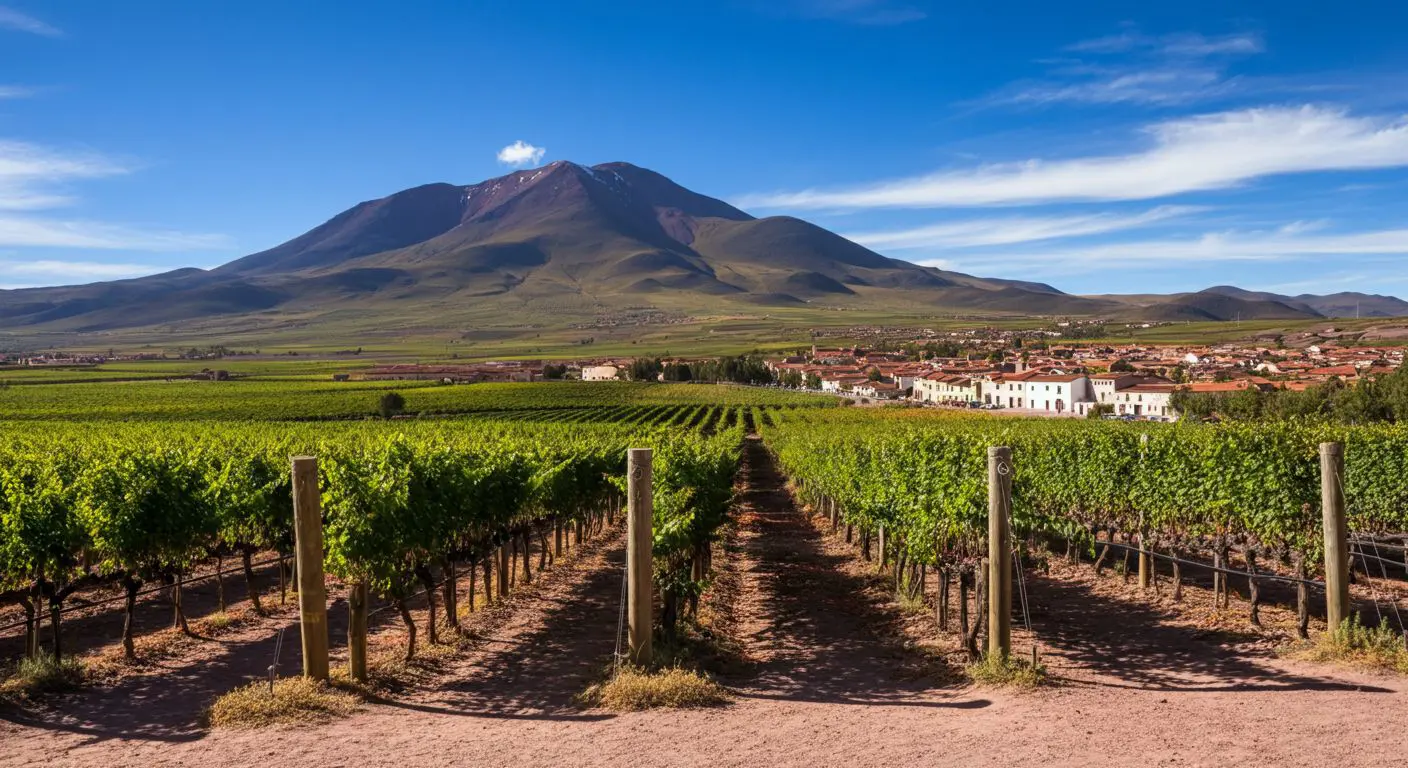
What to do in Salta in 3 days: an itinerary combining mountains, wine, and Andean culture
Between its red hills, high-altitude wineries , and villages where time seems to stand still, Salta combines history, landscapes, and traditions. In three days, you can discover its must-sees, savor its cuisine, and experience the very soul of northern Argentina.
Here is a complete 3-day itinerary to explore Salta, combining culture, nature and authentic experiences.
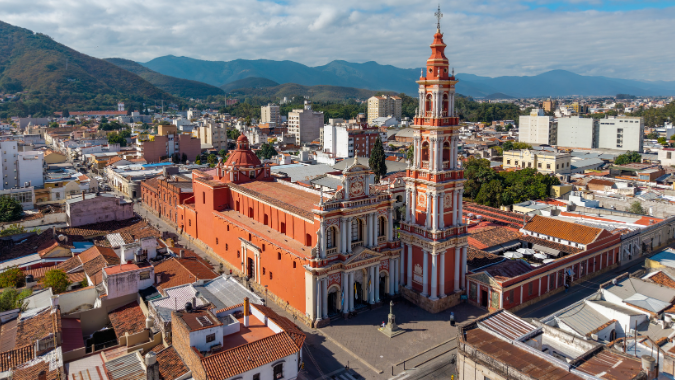 The Cathedral Basilica illuminates the heart of Salta at sunset. A stroll through Plaza 9 de Julio encapsulates the colonial elegance and peaceful atmosphere of “Salta la Linda”.
Day 1 – Salta, the capital: history, flavors and folk music
An ideal starting point for exploring northern Argentina, Salta is a city where colonial history, Andean culture, and modern life coexist in perfect harmony. Its cobblestone streets, wooden balconies, and shaded squares invite leisurely strolls.
Morning – Historical tour and viewpoints over the valley
The best way to start the visit is to take a walking tour of the historic center . Everything is located a few streets from Plaza 9 de Julio , the true heart of the city.
Suggested route:
- Plaza 9 de Julio: surrounded by colonial galleries, it's the most photogenic spot in the city center. Sitting on a bench in the shade of orange trees and watching the locals wearing their wide-brimmed hats is part of Salta's charm.
- Salta Cathedral Basilica: its pink and gold facade shines in the morning light. Inside lie the remains of General Güemes, a local hero of Argentine independence.
- Historic Cabildo: Just a few meters away, this white building with arcades was once the seat of the colonial government. Today it houses the Historical Museum of the North , displaying pre-Hispanic and Republican artifacts.
- High Mountain Archaeology Museum (MAAM): one of the most impressive museums in the country. It houses the famous Children of Llullaillaco , three Inca mummies discovered at an altitude of over 6,000 meters.
- Rua Caseros: heading east, you pass old houses and craft shops. Along the way, you'll see the Church of San Francisco , a deep red and gold, as well as the Convent of San Bernardo , one of the oldest buildings in the city.
Photo tip: from Plazoleta IV Siglos , at the corner of Caseros and Buenos Aires streets, you can enjoy a superb panoramic view of the colonial towers framed by the mountains.
Cerro San Bernardo viewpoint
To admire Salta in all its grandeur, take the Cerro San Bernardo cable car , which departs from San Martín Park, just a ten-minute walk from the city center. From the summit, the view reveals the valley in all its geometric detail: the grid-patterned city surrounded by verdant mountains.
At the summit, trails and panoramic viewpoints offer magnificent vistas. Small stalls selling handcrafted ceramics and Andean textiles from the region's villages can also be found there.
Lunch – Local Flavors at the San Miguel Market
As you descend from the hill, the air fills with the aromas of golden empanadas and steaming humitas . It's the perfect time to visit the San Miguel Market , an iconic part of Salta life.
Among the stalls of fruit, spices and colorful fabrics, local cooks serve typical dishes on earthenware plates:
- Salteña empanadas cooked in an earthen oven.
- Locro , a thick stew made with corn and chorizo.
- Tamales wrapped in corn husks and steamed.
Where to taste the best empanadas in Salta:
- Doña Salta: facing the main square, colonial atmosphere and traditional recipes.
- La Criollita: more relaxed atmosphere, with a large oven in view of the customers.
- El Patio de la Empanada (Portezuelo district): off the tourist circuit, but beloved by locals.
Afternoon – San Lorenzo, the green lung of the city
Just fifteen minutes from the centre, the village of San Lorenzo offers a soothing contrast. A true oasis of subtropical forest, it charms with its fern-lined paths and the murmur of the river.
You can go on guided hikes , horseback riding or visit the Quebrada de San Lorenzo Nature Reserve , home to toucans and hummingbirds.
For a gourmet break, stop by Café del Tiempo or the terrace of the Selina Hotel Salta : the perfect place to admire the golden sunset over the mountains.
Evening – Peñas and folklore accompanied by guitars
When night falls, Salta comes alive to the rhythm of guitars, drums, and laughter. The folkloric peñas, taverns where traditional music and local cuisine blend, are an integral part of the city's identity.
- La Casona del Molino: large shared tables, impromptu musicians and a 100% authentic atmosphere.
- La Vieja Estación: more structured, with live entertainment and regional dishes.
- Peña Balderrama: a true cultural symbol, sung about in many Argentine zambas.
A glass of Torrontés wine and an impromptu zamba are enough to understand why this city is nicknamed “Salta la Linda” .
👉 Book your Salta city tour here
Day 2 – From Salta to Cafayate: wine route and Quebrada de las Conchas
The second day invites you to leave the city and venture into the Calchaquí Valleys , a region where desert hues blend with the green of the vineyards. The drive to Cafayate , along National Route 68 , is one of the most spectacular journeys in northern Argentina, offering three and a half hours of breathtaking Andean landscapes.
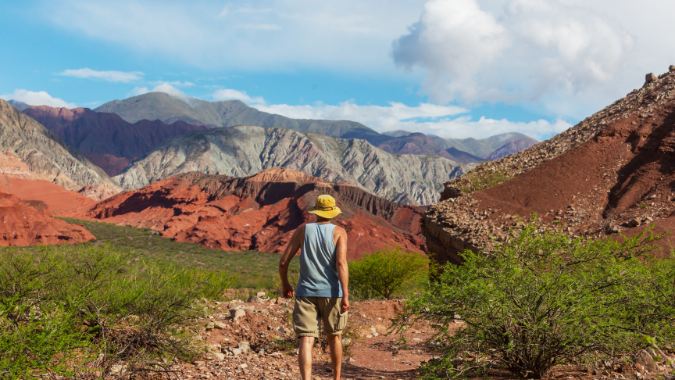 Red rocks and eternal wind: the Quebrada de las Conchas displays some of the most impressive geological formations in northern Argentina, with stops like the Amphitheater and the Devil's Throat.
Quebrada de las Conchas, the red heart of the valley
As you leave Salta, the landscape changes dramatically. The fertile fields of the Lerma Valley give way to bare mountains and intensely red, almost otherworldly rock formations. This is the Quebrada de las Conchas : a succession of gorges, canyons, and cliffs sculpted by wind and erosion over centuries.
Must-see stops:
- Devil's Gorge: a deep fissure between two vertical walls of red rock. Inside, the wind produces a mysterious, almost ancestral echo.
- The Amphitheater: a natural cavity with perfect acoustics, where local musicians often play zambas and Andean melodies.
- The Castles and The Windows: rock formations that resemble natural fortresses. The contrasts between the blue of the sky and the red of the stones are a photographer's dream.
- Tres Cruces viewpoint: a panoramic viewpoint from which the valley opens onto a patchwork of ochre and gold tones.
Travel tip: To fully enjoy the journey without the hassle of driving, book the Cafayate Tour with wine tasting offered by Daytours4u. Transportation, a local guide, and photo stops are included throughout the Quebrada.
In Cafayate – The soul of high-altitude wine
Upon arriving in Cafayate , the air becomes drier and fragrant with ripe grapes. This small village, surrounded by mountains and vineyards, is the center of Argentine high-altitude wine , cultivated between 1,600 and 2,000 meters above sea level.
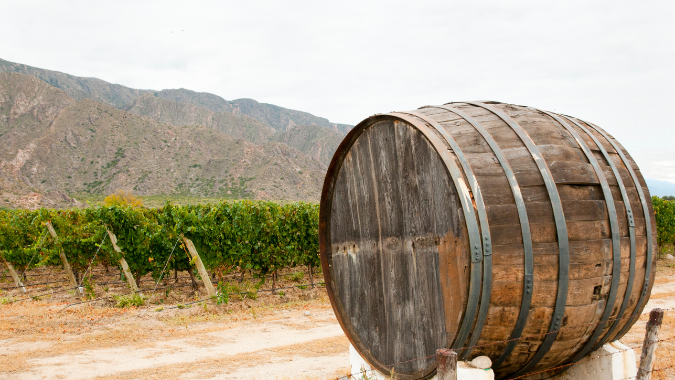 Between high-altitude vineyards and golden mountains, Cafayate produces the famous Torrontés wine, an emblem of northern Argentina and a symbol of the Salta Wine Route.
Things to do in Cafayate:
- Visit the bodegas: from the oldest like Bodega El Esteco (colonial architecture and lavender gardens) to the most modern like Piattelli Vineyards , featuring a panoramic restaurant with mountain views.
- Sample Torrontés: an iconic white grape variety from the north, with floral aromas and a fresh taste. Many wineries offer guided tastings accompanied by goat cheeses and dried fruits.
- Explore the historic center: the main square is surrounded by craft galleries, centuries-old churches, and relaxing cafes.
- Visit the Vine and Wine Museum: a sensory and interactive experience explaining how altitude and dry climate give rise to unique wines.
👉 Book your Cafayate day trip here
Lunch among the vineyards and a northern siesta
In Cafayate, lunch is a true ritual. The restaurants combine local produce with splendid views:
- Bodega Nanni: a pioneer in organic wine, offers a food and wine pairing menu in a courtyard shaded by vines.
- Piattelli Restaurant: refined regional cuisine and spectacular views of the valley.
- El Terruño or La Casa de las Empanadas: simpler but authentic options, ideal for tasting quinoa empanadas, tamales or roast kid in a clay oven.
Suggestion: after the meal, don't miss Heladería Miranda for artisanal ice cream with Torrontés wine or walnut cayote — a must-try specialty of Cafayate.
👉 Book your High Altitude Wine Tour in Cafayate here
Day 3 – Cuesta del Obispo and Cachi: high-altitude landscapes and giant cacti
The last day in Salta is a true experience above the clouds. The road to Cachi , a small colonial gem hidden in the Calchaquí Valleys , blends the adventure of the Andean ascent with the serenity of a village frozen in time.
Scenic route – Cuesta del Obispo and Los Cardones National Park
From the city of Salta, you take Provincial Route 33 , which first crosses the greenery of the Lerma Valley before plunging into the mountains. As the road climbs, the curves multiply and mist clings to the peaks: this is the Cuesta del Obispo , one of the most spectacular sections in the region.
At the Piedra del Molino viewpoint , perched at 3,400 meters above sea level, the air becomes fresher and clearer. The view encompasses the entire valley, stretching out like a golden carpet, with the mountains silhouetted against a deep blue sky. An essential stop to contemplate the immensity of the Andes and savor the silence of the altiplano.
A few kilometers further on lies Los Cardones National Park , a high-altitude desert populated by thousands of centuries-old cacti—some reaching over six meters in height. The road crosses the straight plain of Tin Tin , an ancient Inca trail that remains perfectly preserved.
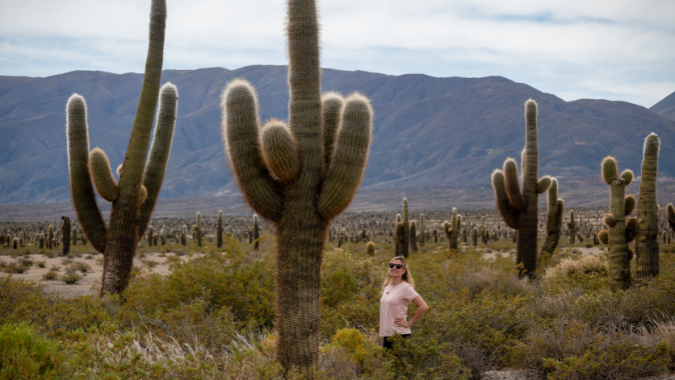 Thousands of centuries-old cacti stand under the Andean sun in Los Cardones National Park, an iconic image of the Altiplano de Salta.
In Cachi – Colonial charm and mountain gentleness
Upon arriving in Cachi , the atmosphere changes. The cobbled streets lined with white adobe houses and wooden doors lead naturally to Plaza 9 de Julio , the peaceful heart of the village.
Here you can discover the Church of San José , built in the 18th century with a roof made of cactus wood ( cardón ), as well as the Pío Pablo Díaz Archaeological Museum , which exhibits pieces tracing the pre-Hispanic history of the valleys.
From the square, the view of the Nevado de Cachi , whose peaks exceed 6,000 meters, dominates the horizon.
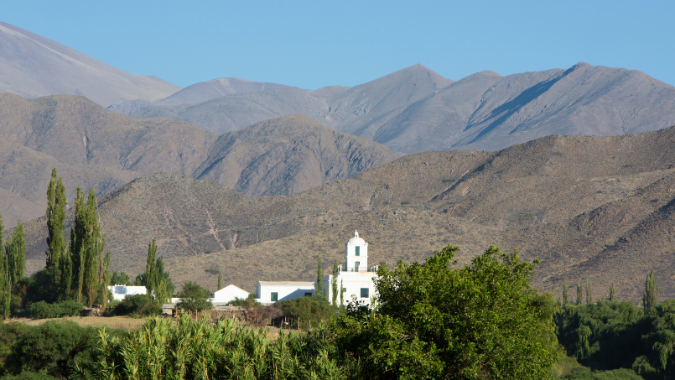 Cobblestone streets, white houses and the Nevado de Cachi in the background: this village retains all the colonial charm and tranquility of northern Argentina.
Where to eat in Cachi:
- La Merced del Alto: elegant restaurant with mountain views and refined regional cuisine (ideal for lunch).
- Oliver Wine Bar: perfect for enjoying a glass of local wine accompanied by a platter of artisanal cheeses.
- Viracocha Café or Nevado Bar: good options for a coffee or a snack on the terrace facing the square.
👉 Book your Cachi day trip here
Practical tips for making the most of Salta
- The best time to go is from March to May or from September to November, when the climate is mild and the skies are clear.
- Altitude: Cachi and Cafayate are located above 2,000 meters; drink plenty of water and eat light.
- Typical dishes: Salteña empanadas, tamales, locro (traditional stew) and Torrontés wine.
- Recommended souvenirs: woven ponchos, ceramics, local spices and cactus wood items.
- Transportation: renting a car or opting for organized excursions is the best way to optimize your time.
Three days to fall in love with northern Argentina
Salta is much more than a destination: it's an immersion into the soul of northwest Argentina. In just three days, you can discover its history, savor its flavors, and be captivated by landscapes worthy of paintings.
From colonial alleyways to the vineyards of the valley, every corner invites you to return.
Discover the best excursions in Salta with Daytours4u and enjoy authentic experiences with passionate local guides.
Published by Has Chacon on 04/06/2026


