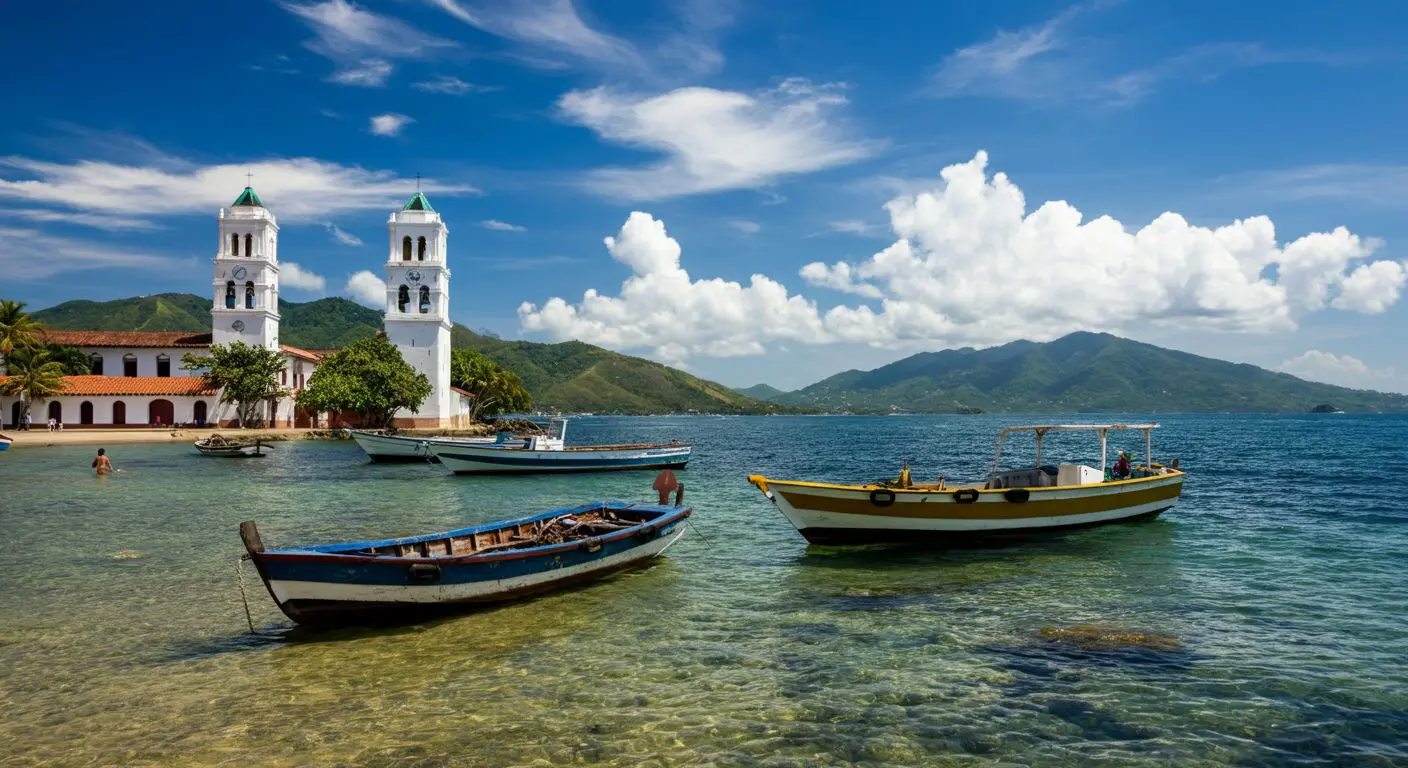
Choosing between San Andrés and Santa Marta is not a question of landscapes, but of available time and the level of logistics you are willing to assume.
With 3 or 4 days, San Andrés allows you to turn your arrival day into hours of actual beach time. Distances are short and getting around is simple.
With 5 to 7 days, Santa Marta offers a more diverse experience of sea, mountains and natural parks , but requires coordination of access, schedules and transfers.
The right decision depends on how much time you have and what kind of trip you want to experience from day one.
The first day: immediate beach day or transfer day?
Saint Andrew
Gustavo Rojas Pinilla Airport is located within the city limits. There are no highways or intercity bus services.
During the shoulder season, the transfer to a hotel in the Spratt Bight area takes between 5 and 15 minutes. Some hotels are even within walking distance.
That means a flight that lands at 2:00 PM can become snorkeling before 4:00 PM.
Important: The tourist card (OCCRE) costs around 120,000–140,000 COP and must be paid before boarding your flight. Without this document, you cannot officially enter the island.
Santa Marta
Simón Bolívar Airport is about 16 km from the city center. During peak hours, the journey can take over 40 minutes.
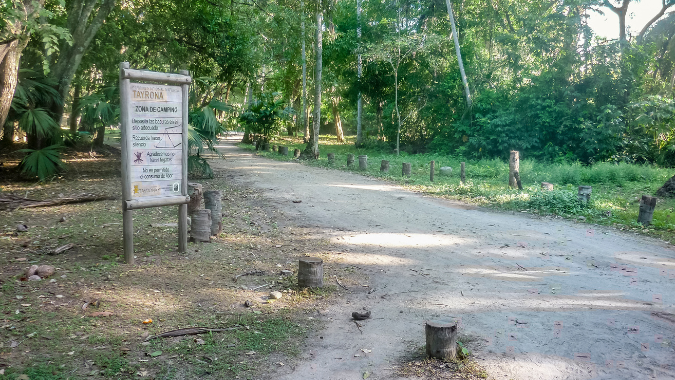
If the plan is to sleep inside Tayrona Park , you should consider:
- Check-in time (generally until 4:00 PM, may vary)
- Registration required
- Purchase of daily insurance
- Quota limit
A flight arriving after 3:00 PM almost always forces you to sleep in Santa Marta city or in the Rodadero area.
In practical terms, the first day is rarely a beach day or any other tour day.
You can see our selection of tours in San Andrés available for your dates here.
Access to the most sought-after beaches
San Andrés: nearby keys, regulated operation
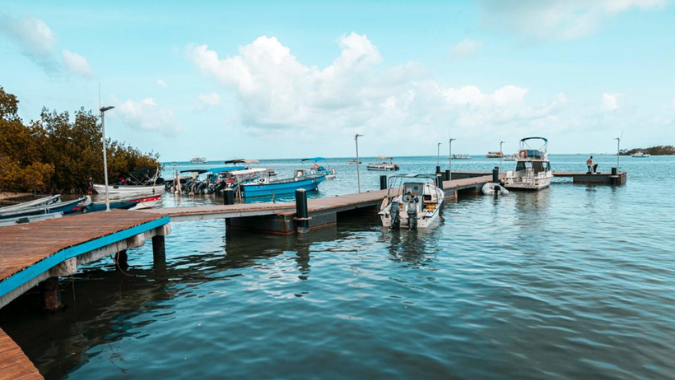
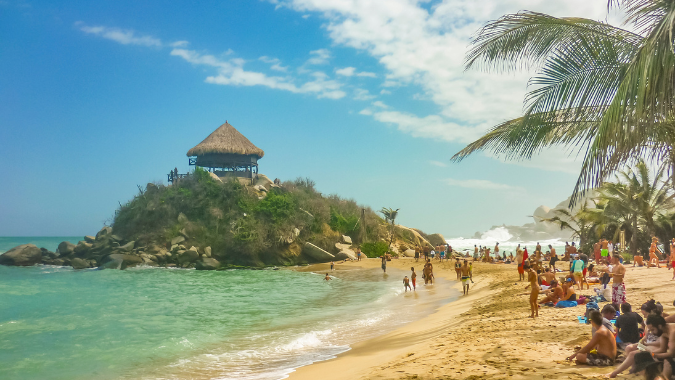
Excursions to Johnny Cay , Aquarium , and Haynes Cay depart from the main pier, right in the center of town. The boat ride is short, usually between 10 and 15 minutes. In terms of distance, everything is close.
Departures are usually concentrated between 8:30 and 10:00 in the morning, and the return is around 3:00 or 4:00 PM. It is not a continuous service throughout the day; it operates in fairly defined blocks.
There are two factors that make all the difference. The first is the weather. If the wind is strong or the sea conditions are adverse, the Port Authority can suspend departures. In that case, there is no possibility of negotiation or a "special departure." There is simply no sailing.
The second factor is availability. During peak season, daily boat trips to the keys fill up early. Arriving at the dock without a reservation doesn't guarantee a spot, even if the weather is perfect. And if your trip revolves around that specific key, being turned away completely changes your plans.
In San Andrés , distances are short. But the operation is regulated and has clear schedules. Organizing in advance avoids last-minute complications.
Santa Marta: Tayrona and geographical dispersion
Tayrona Park has three main entrances: El Zaino, which is the most used; Calabazo, with a more demanding entrance; and Palangana, which has restrictions depending on the season.
From El Zaino to Cabo San Juan, the hike takes between 1.5 and 2 hours along an uneven trail. It's not an extreme route, but it does require good footwear, hydration, and a willingness to hike in wet weather.
The boat alternative from Taganga reduces the walk, but the journey takes about 45 minutes and can be bumpy if the sea is rough.
In addition, the park closes completely three times a year for environmental restoration. The dates vary slightly each year, so it's advisable to check them before booking flights.
Internal mobility and autonomy
Saint Andrew
In San Andrés, the most common way to get around is by golf cart or scooter . It's not just a tourist activity; it's the most practical way to explore the island.
The complete loop is about 30 km and can be done in half a day at a leisurely pace, stopping at beaches like San Luis or West View . There are no great distances or complicated routes.
That gives you freedom. If the weather changes or a beach gets too crowded, changing your plans is easy. Everything is just a few minutes away.
However, during peak season, the carts sell out. Booking them in advance avoids relying on last-minute availability.
Check the transfer and activity options in San Andrés before confirming your flight.
Santa Marta
In Santa Marta, the dynamics are different. Distances are greater and points of interest are spread out.
Tayrona , Minca , Taganga , and the historic center are not adjacent to each other. Each excursion involves a transfer, typically between 30 and 60 minutes.
It's not complicated, but it does require organization. You can't improvise as much here as you would on a small island. Every activity requires time and transportation.
Explore tours and activities in Santa Marta tailored to your time and budget.
Which destination is usually more expensive: San Andrés or Santa Marta?
In practice, visiting San Andrés tends to be more expensive than spending three days in Santa Marta , especially when you take into account the typical costs of flights , accommodation , and main activities.
San Andrés: island with higher costs
San Andrés is an island and that influences everything:
- Domestic flights are usually more expensive than flights to Santa Marta , because there is no land access and the number of routes is lower.
- Accommodation, food, and many services on the island are more expensive than on the mainland. San Andrés is typically up to 50% more expensive than mainland Colombian destinations for lodging and food.
- The mandatory tourist card is becoming increasingly expensive (around COP $153,000 (approx. USD $38) in 2026).
If you add up flights, accommodation for two nights and basic activities, the total cost for three days in San Andrés is usually above the continental average.
Santa Marta: more affordable options
Santa Marta usually offers a wider range of prices:
- There are hotels and hostels from more budget-friendly ranges, especially in areas like El Rodadero or the historic center .
- The cost of living is usually cheaper compared to other coastal cities in Colombia .
- If your focus is on local beaches and visits to Tayrona Park , the costs are manageable without additional general admission taxes.
On 3-day trips for an average person :
- San Andrés is usually more expensive. The combination of flights, tourist cards, and island costs significantly increases the base budget.
Santa Marta is usually more affordable. There are more options to adjust your budget to suit your travel style.
Is it a good idea to combine both?
On a trip of less than 8 days, normally not.
To get from San Andrés to Santa Marta, you almost always have to connect in Bogotá . This means an additional flight, waiting time, and a new check-in.
In practice, you lose half a day or a whole day commuting. It's more efficient to choose one and make the most of it than to try to cover both in a rush.
So, Saint Andrew or Saint Martha?
San Andrés fits best if:
- You only have a few days and you want to make the most of them from minute one.
- You're looking for immediate access to the sea without long transfers.
- Are you traveling with small children or do you prefer comfort?
- You don't want to spend time coordinating income and transportation.
Santa Marta works better if:
- You have more time to move around at your own pace.
- Are you interested in combining beach , jungle and mountains ?
- You don't mind walks or getting up early.
- You're looking for a more varied and adventurous experience.
Before confirming, check Tayrona National Park 's closing dates and availability in San Andrés . Adjusting your itinerary to the destination's operational schedule makes all the difference.
You can explore our selection of tours and activities in San Andrés and tours in Santa Marta to see what options are available on your dates.
If you prefer advice, contact us to plan your trip according to your time and budget.
If you're also considering Cartagena, check out our full comparison here.
Written by: Carolina Ferere
Published by Has Chacon on 03/06/2026


