Blacks and Whites!
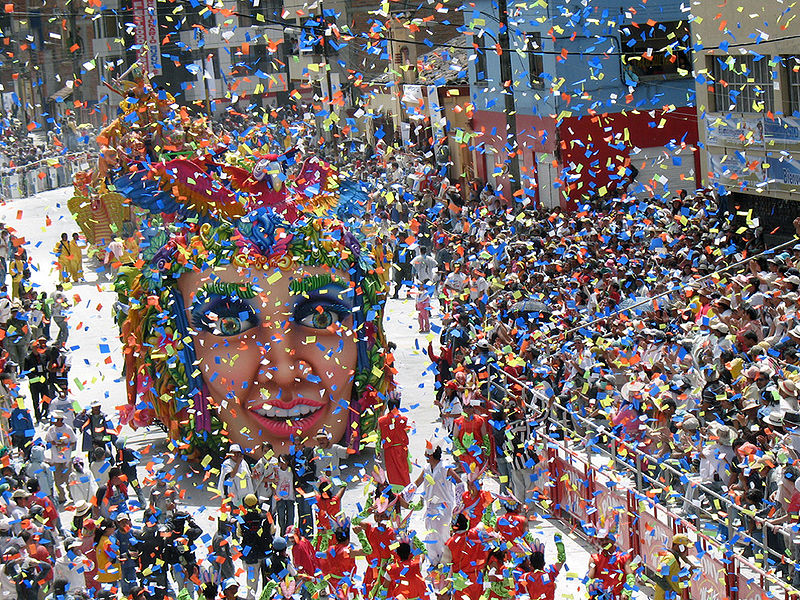 Black and White Carnival parade in Pasto, southern Colombia / Source
The most anticipated event of the year in southern Colombia is the Carnival of Blacks and Whites, celebrated from January 2nd to 7th . The festival was declared an Intangible Cultural Heritage of Humanity in 2009, and to give you an idea of the scale of the event, its "opening cry" takes place on December 7th in the city of San Juan de Pasto, capital of Nariño, during the Night of the Little Candles. From then on, various celebrations are held as part of the Pre-Carnival. On January 2nd, the Carnival officially begins with the Parade of the Colonies , where residents of Pasto , from other municipalities, parade to showcase their culinary traditions, legends, myths, and music. The following day, January 3rd, is Children's Carnival Day , where children take center stage and dress in the traditional attire of the Day of the Whites . The festivities continue, and on January 5th and 6th, Blacks' Day and Whites' Day are celebrated, respectively. The first honors the enslaved people and symbolizes the day they were allowed to walk freely through the city. On this day, participants paint themselves black or wear masks and shout, "Long live the Blacks!" The following day, on Whites' Day, tourists and locals paint themselves white and shout, "Long live the Whites!" All of this is accompanied by traditional Colombian songs. Don't miss it!
Carnival of Old Cali
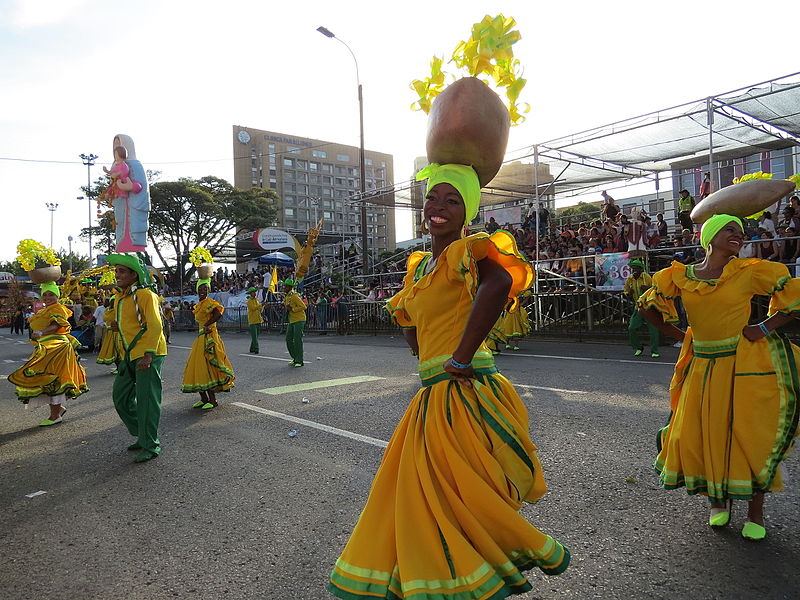 The Cali Viejo Carnival pays tribute to the city's historical figures / Source
Santiago de Cali—or simply Cali—hosts an incredible Carnival Parade year after year, representing urban history through characters who have left their mark on the city. Floats, stilt walkers , salsa dancers, costumed children , queens, and silleteros (people from the countryside who cultivate flowers and make decorations with them) come together to celebrate the Day of the Holy Innocents , December 28th, with a unique event from the traditional Cali Viejo Carnival. During the parade, participants pay homage to local heroes , including Cali legends and myths, with various performances of traditional dances and music. Participating in this celebration will help you better understand the essence of the city. Our suggestion: arrive early because the event starts at 2:00 pm, but to get a good spot, it's recommended to arrive even earlier. Book your tours and activities in Cali.
Carnival of Forgiveness and Reconciliation
 The Carnival of Forgiveness and Reconciliation was declared a National Cultural Heritage / Source
On the Monday and Tuesday before Ash Wednesday, the Carnival of Forgiveness and Reconciliation takes place in the Sibundoy Valley in Putumayo . Declared a National Cultural Heritage site in 2012, this carnival is a sacred celebration also known as 'The Great Day,' where the Inga and Kamentsá indigenous groups celebrate the end of the year, peace and harmony in human relationships, and agriculture. While both the Inga and Kamentsá hold their own individual celebrations, the two tribes engage in a process of forgiveness and reconciliation during Carnival, with all their loved ones, through the clestrinye , which signifies celebration, dance, and joy. On Carnival Monday, the Kamentsá host the parade, performing beautifully in their traditional attire and with the presence of the Matachín, a man who wears a red mask and invites everyone to celebrate the day with him. The following day, it's the turn of the Ingos who, like the Kamentsá, parade in their traditional dress to the church and the main square, singing and dancing. Along this route through the Sibundoy Valley, featuring dances from different provinces and ethnic groups, you can purchase various souvenirs such as native wind instruments, beads , textiles, masks , necklaces, and many other items. This event is a blend of the sacred, religious, and secular, ideal for enthusiasts of local culture.
Carnival of Riosucio Caldas or Carnival of the Devil
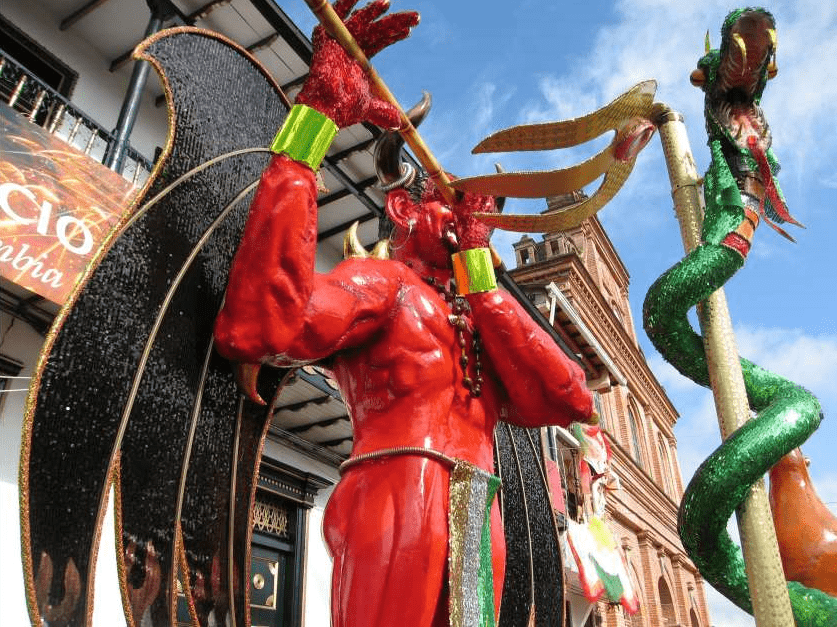 The Riosucio Caldas Carnival attracts tourists from all over the world / Source
Like the others mentioned, the Carnival of Riosucio, Caldas, is also an Intangible Cultural Heritage of Colombia . It is one of the most traditional and colorful carnivals in the country, attracting tourists from all over the world. In the past, Riosucio was made up of two rival communities : Nuestra Señora de la Montaña and Real de Minas de Quiebralomo, each with its own plaza and church. Until the priests, José Ramón Bueno and José Bonifacio Bonafont, tired of this constant competition, told the townspeople that they were one and the same, and if anyone disobeyed this divine order, the Devil himself would come to punish them. This unity is celebrated during Carnival with great joy and humor. In 1915, the figure of the devil was adopted as the image of the festival, from then on every January 2nd the 'Joyful Awakening of the Carnival' takes place until January 7th, where the 'Burial of the Pumpkin, the Burning of His Majesty the Devil and the End of the Party' are held.
Barranquilla Carnival
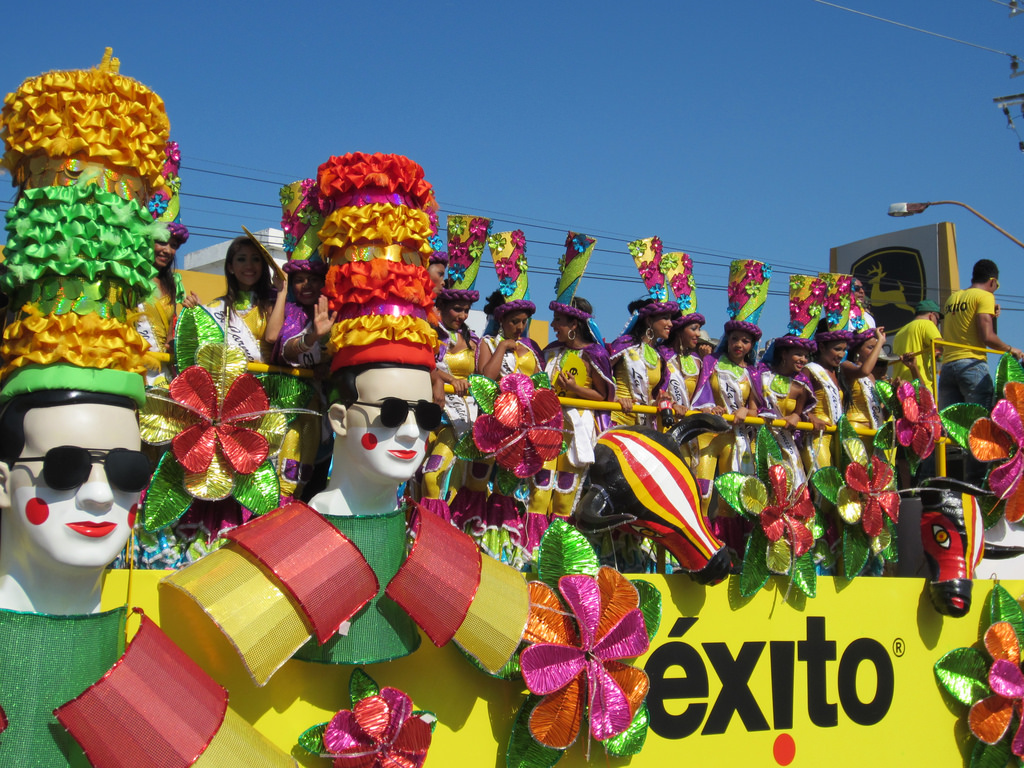 The floats of the Barranquilla Carnival fill the city with life and color / Source
The most important folkloric and cultural festival in Colombia is undoubtedly the Barranquilla Carnival. To give you an idea of its scale, more than one million people, both locals and tourists, participate in it every year. Its origins are Spanish, and it is currently celebrated similarly to the street celebrations of Cartagena de Indias, like a grand festival of slaves where everyone comes out to celebrate with their handcrafted instruments and traditional costumes, always dancing and singing. The Barranquilla Carnival is an event that encompasses all the cultural and folkloric diversity of the Colombian Caribbean Coast, as well as local music and dance. It is the city's most representative and important event and attracts thousands of visitors from all over. During these days, you can see the traditional costumes of the Barranquilla Carnival, such as the Marimonda (characteristic of the region), the Garabato, the Congo, and the Monocuco . These costumes are a source of laughter and a touch of fear for the city, as the masks resemble native animals or exotic species, Africans, giant dolls, superheroes, mythological beings that transcend the boundaries of sexuality and death, and countless other popular inventions. The most popular masks are the bull, the tiger, and the bear. Always satirical and referencing current events, the costumes are a source of collective joy and cause quite a stir each year. The event is now enormous and well-organized. Numerous parties are held, such as the Comparsa Festival , the Dance and Cumbia Festival, the Children's Carnival Parade , and the Coronation of the Carnival Queen. There is so much to do in Barranquilla that we suggest making the most of all the activities the city offers. Book your Barranquilla Carnival Package online. Colombia is a multifaceted country, with beaches, mountains, historic cities, and many more attractions. Come and experience unforgettable moments in this beautiful South American country!
By: Thalles Santos
Published by Has Chacon on 03/06/2026


