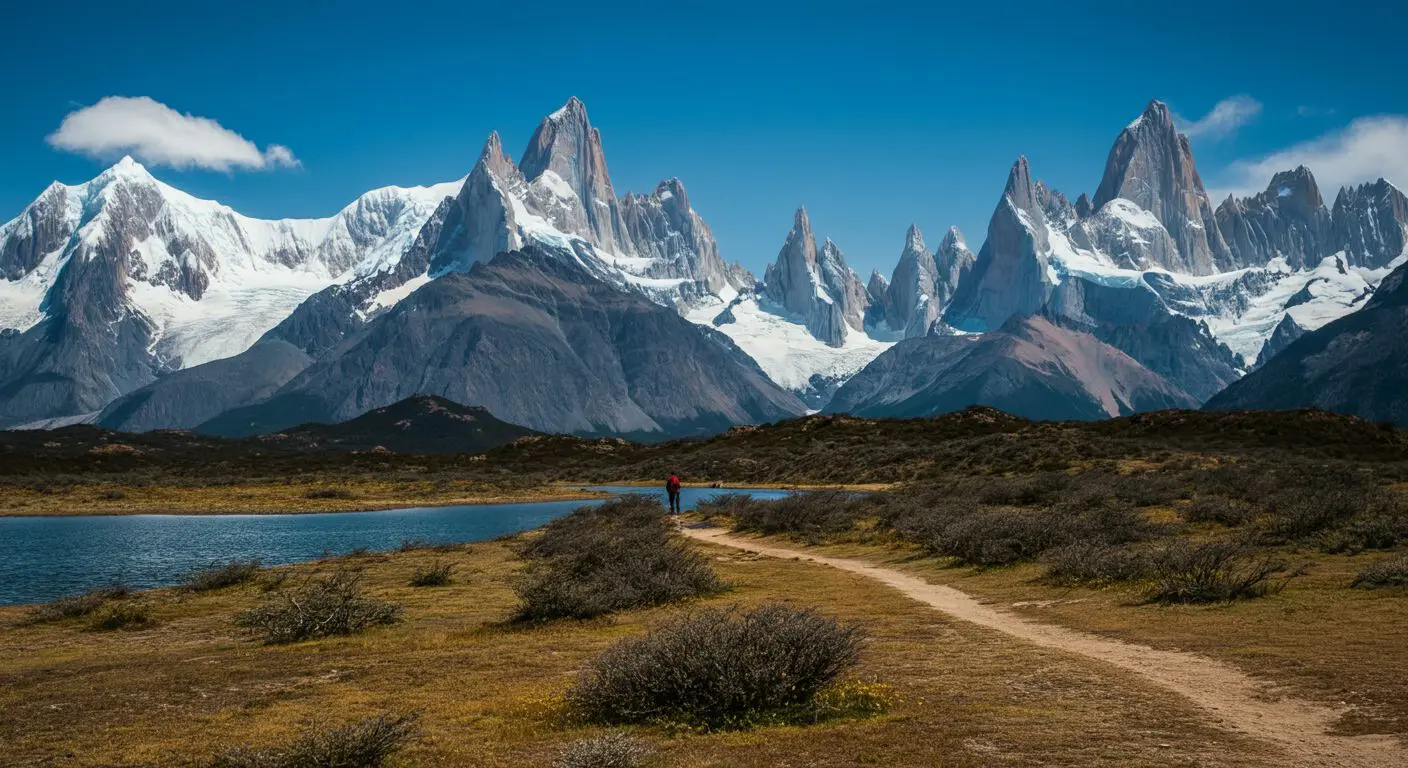
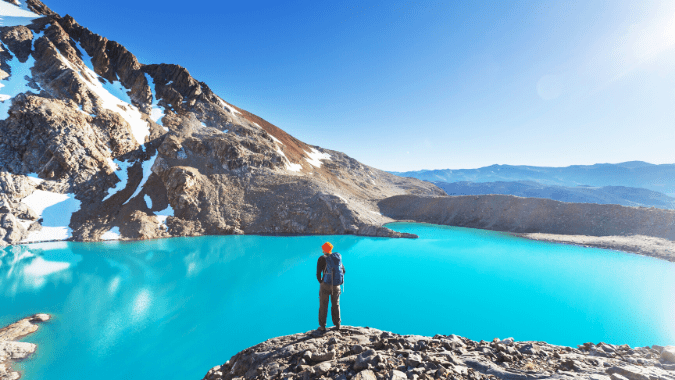
The beauty of hidden places deep in Patagonia surprises even seasoned travelers / Photo: Kamchatka, canva pro
The Carretera Austral is one of the most spectacular and iconic roads in the world. A 1,200-kilometer journey that crosses Chilean Patagonia from Puerto Montt to Villa O'Higgins , at the southern tip of Chile. Also known as "Route 7," this magnificent route offers a glimpse of dense forests, turquoise lagoons, rushing rivers, and national parks that protect endemic and endangered plant and animal species.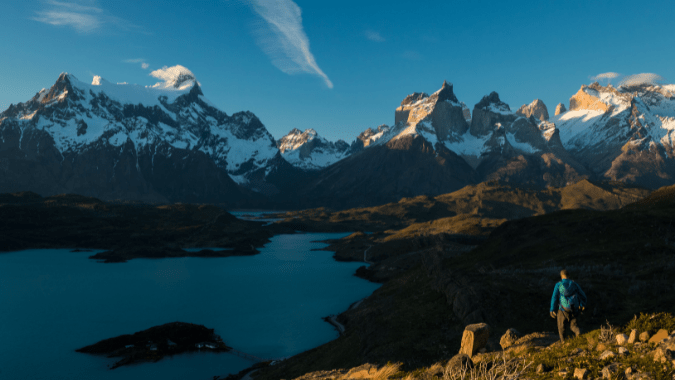
Chilean Patagonia is a dreamlike setting, found only in countries like Norway, Canada, New Zealand, and Chile, due to the cold climate in these areas / Photo: stockstudioX, canva pro
The duration of your journey along the Carretera Austral varies depending on the number of places you visit and the time you spend at each. Some people take three weeks to travel just one section of the Carretera, while others complete it in 10 days, visiting only the essential sights. The time it takes will depend on the places you want to see, so we recommend planning your trip in advance. Note: The Carretera Austral is long, some destinations are difficult to access, and transportation is infrequent.The hidden villages of the Carretera Austral
You've probably wondered: but who lives there? Even though it may seem crazy, hidden deep in the vegetation of Patagonia , we find some villages that will leave you speechless.Puyuhuapi
Did you know this village feels more like a hamlet? It's certainly one of the few villages along the Carretera Austral. Peaceful and quiet, it's surrounded by walking trails where you can admire the verdant landscape dotted with small houses along the Puyuhuapi Fjord. From here, you can explore Queulat National Park and its famous Hanging Glacier, as well as the Enchanted Forest (for those who enjoy hiking). Other attractions include thermal spas where you can relax and unwind while enjoying views of the lush Patagonian landscape. Tip: We encourage you to experience the Carretera Austral from a different perspective: its people, its homes, its traditions, and its delicious cuisine.Futaleufú
The Futaleufú River is the star of this area. It's one of the top three rivers in the world for kayaking and rafting, making it a favorite for adventure sports. Within the Futaleufú National Reserve , you can enjoy cycling, hiking, and wildlife viewing, including the huemul. A place not to be missed!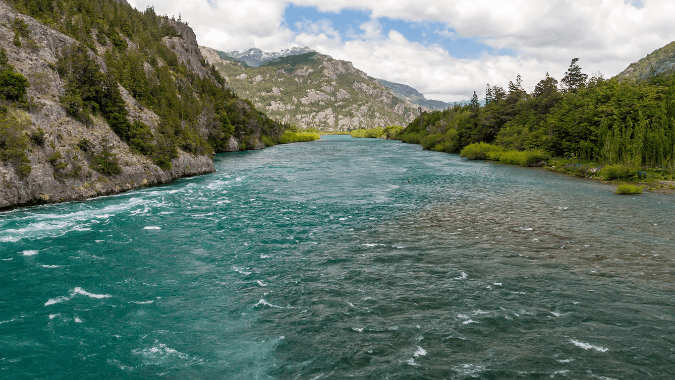
The Futaleufú River is one of the top three in the world for kayaking and rafting / Photo: Marcelo Plaza, canva pro
Villa O'Higgins
Villa O'Higgins is located practically on the border with Argentina. This village marks the southernmost point of the Carretera Austral. One of its main tourist attractions is the Patagónico Sur ice field , the fourth largest ice mass in the world! Tip: Although it's one of the most remote villages in Aysén Patagonia, Villa O'Higgins offers all kinds of tourist activities, such as boat trips, sport fishing, horseback riding, and hiking in the various natural areas.Punucapa
Although it's possible to arrive by land, the best experience is by boat. Before entering the village, you'll see the Carlos Anwandter Nature Sanctuary, and if you're lucky, you might even spot swans and other birds. Shortly after disembarking, you'll find the shisha factory, and further along, a church built primarily for women. The village has a fascinating history with its women, and it's also a perfect place to relax in nature.Puerto Gaviota
This village is mainly connected by a large footbridge and is a very charming place where you'll find a wide variety of landscapes including mountains, forests, and the sea. It's a true step back in time, with many old houses in excellent condition. The locals are very friendly and eager for new residents to arrive and feel at home.Monte Verde
This is a place you certainly won't find in tourist guides, as there isn't enough infrastructure to accommodate visitors. In fact, its discoverer claims that very few people over the age of 40 have been aware of it. Monte Verde is located about 30 kilometers southwest of Puerto Montt. It's said to be the oldest archaeological site in the Americas, as it's where objects believed to be over 14 million years old have been found. It was discovered by the American archaeologist and anthropologist Tom Dillehay and a group of Chilean scientists from the Austral University in 1977. They unearthed hunting tools, architectural elements, animal bones, fire pits, and even a human footprint.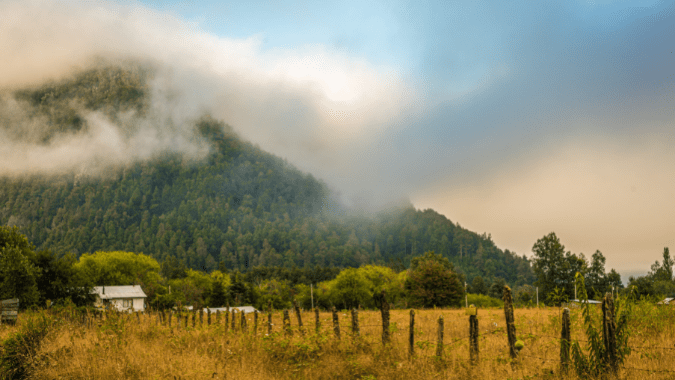
Monte Verde is a hidden historical treasure of the Lake District / Photo: Samsaphotos, canva pro.
What should I take with me?
To travel on the Carretera Austral, you absolutely must bring comfortable clothing that protects against wind and rain, as the weather can change rapidly (even in summer), and very comfortable shoes suitable for hiking trails. Also pack a hat, gloves, moisturizer (as your skin will dry out quickly), and a windbreaker. Looking to immerse yourself in nature? Then forget your phone. There's reception in some places, but not in others… There's no cell phone coverage between villages, and even within the villages themselves, it varies. Take it in stride, especially when heading south, and consider it the perfect opportunity to disconnect from social media for a while. Tip: Buy a SIM card in advance from Entel; they have the best coverage on the Carretera Austral.Don't forget your travel insurance for the Carretera Austral
If you are about to travel on this magnificent route and you are a foreigner, it is very important to have travel insurance:- The Carretera Austral presents certain dangers: it is not paved and in some areas, accidents are frequent.
- Some of the major attractions of the route involve risks: mountain hiking, visiting a glacier, kayaking, among others.
- The small villages along the Carretera Austral lack hospitals. In some, there isn't even a doctor. There is a primary care center, but doctors and specialists come only once a month, or on certain days. Sometimes there is only a nurse.
- The distances are very long. If something serious happens to you, and you need to be transferred or evacuated, it's best to be covered.
By: Nathaly Bosch , a social communicator by profession and a curious traveler. Spanish writer for Daytours4u. / Translation: Roxane Thomassin-Dupas , translation intern for Daytours4u.
Published by Has Chacon on 04/06/2026


