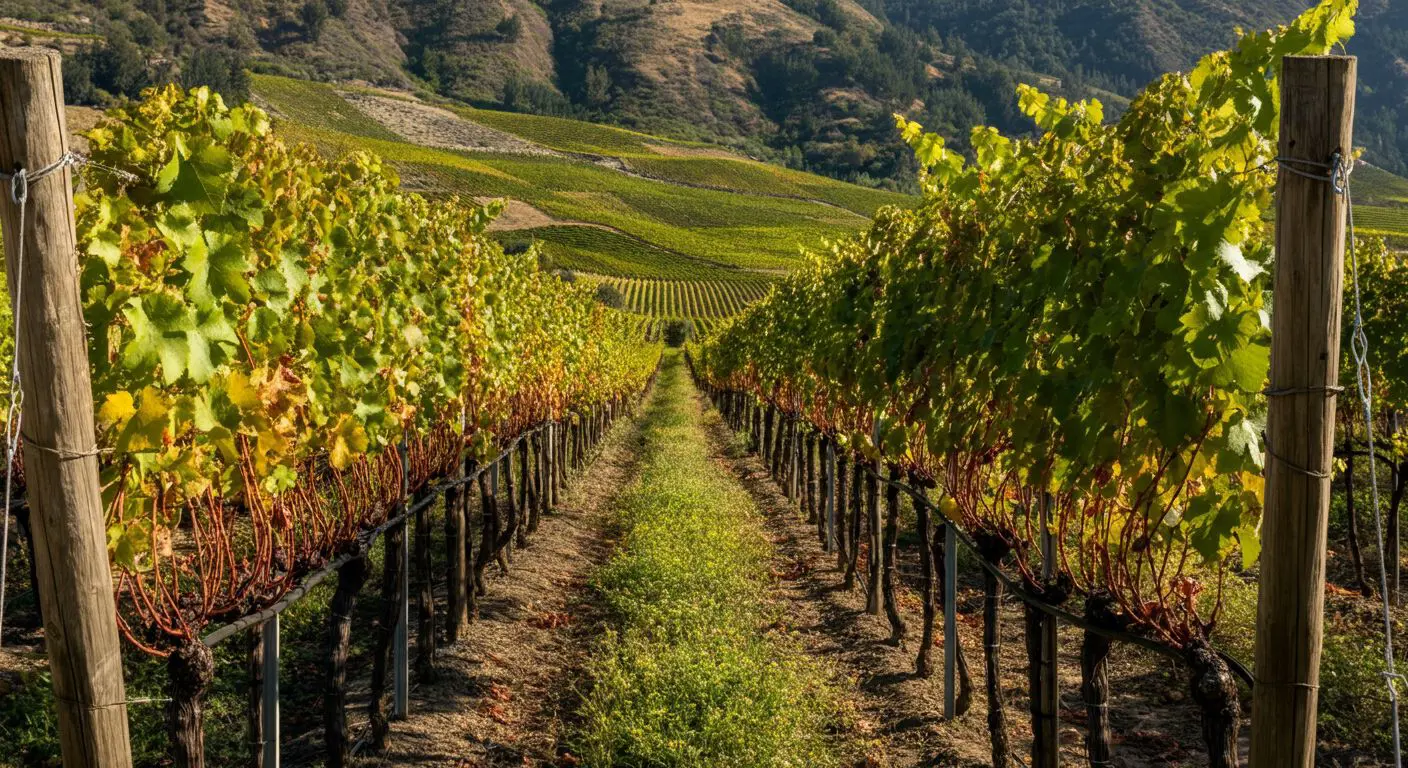
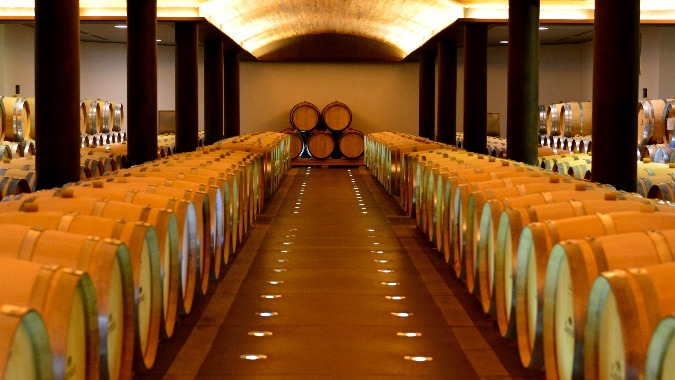
According to the International Organisation of Vine and Wine, Chile is the second largest wine-producing country in the world, after Argentina / Photo: Brian Gray
However, wine is not merely a product to be savored; it is also a gateway to the traditional world of Chilean vineyards. These are the wine routes , which have connected various vineyards in certain valleys over the past decade, aiming to show tourists the production process of the nectar that Dionysus drinks, and everything surrounding winemaking. For those unfamiliar, most Chilean vineyards are located in valleys relatively close to the country's capital . Based on this simple fact, one might imagine that the villages surrounding the vineyards both north and south of Santiago share a cultural identity with those living in the metropolis. But the opposite is true, as the central valleys are generally at the heart of traditional Chilean culture, where the roots of Criollo customs are very strong. These valleys are home to the so-called “ huaso chileno ” (Chilean peasant), a slang term used to describe mestizos who live in the countryside and whose identity is built upon a blend of Spanish and Indigenous heritage. Furthermore, the huaso is skilled in all rural tasks; they know how to ride a horse, use terms related to cattle herding, and understand the cycles of planting and harvesting. Following this logic, many agree that the most traditional area by far is the Colchagua Valley , located in Chile's 6th region, just 160 kilometers south of Santiago. If you're looking for an experience that combines beautiful rural landscapes, winemaking, and Criollo customs, you can't miss these fertile valleys nestled among mountains. Tip: Book a guided Colchagua Valley Wine Route tour online from Santiago and discover its renowned vineyards.
The Colchagua Valley is the most traditional area of the Chilean Wine Route / Photo: Brian Gray
When to go?
You can visit the vineyards of the central valleys at any time of year. However, we recommend going in early spring or late summer and early autumn, that is, between March and April. Autumn is an excellent time to visit because the fields and hills are green and vibrant, the temperatures are pleasant, the fruit trees are in full bloom, and the grapes on the vines begin to ripen at a rapid pace. It is, in short, a truly breathtaking sight. Furthermore, if you prefer to go in autumn, you can experience the magic of the traditional grape harvest festival , which celebrates the gathering and picking of the grapes that will be used to produce this precious elixir.How do I access it?
Most of the vineyards in the Colchagua Valley offer tours, so it's possible to go on your own. In this case, we recommend renting a car, since the vineyards are generally located outside of towns and villages, and not all intercity buses will take you near the main entrances. To give you an idea, tours at each vineyard cost around USD 32, and usually include guided tours of the vineyards, the owner's houses, and the underground wine cellars, where tastings of one or more wines are offered. These tours run continuously from 9:00 AM to 5:00 PM. If you decide to go around lunchtime, you might prefer to book tours that include a buffet , as there are also elegant restaurants at the vineyards that are open to the public and serve typical local cuisine. These restaurants are upscale, characterized by their beautiful architecture, ambiance, and the prestigious awards they have received from national food critics. The tour and buffet cost between USD 77 and 150, depending on the restaurant, the winery, and the day of the week. Tip: If you don't plan to rent a car and have a few days in the valley, you can book the Colchagua Wine Route guided tour , which includes transportation from your hotel to the Colchagua Valley and a visit to three local wineries with a tasting. Another excellent option we recommend is the famous Tren Sabores del Valle (Flavors of the Valley Train), a restored train pulled by a coal-fired locomotive that departs from Santiago's central station and travels directly to San Fernando (the capital of Colchagua province), passing through the region's vineyards. Next, the same operator has buses that transport passengers to the vineyards of the Colchagua Vineyard Association, where there will be a guided tour, a wine tasting, and then the return to Santiago on board the same train, where you can enjoy live music, a cafeteria, more wine tastings, and other services designed especially for tourists.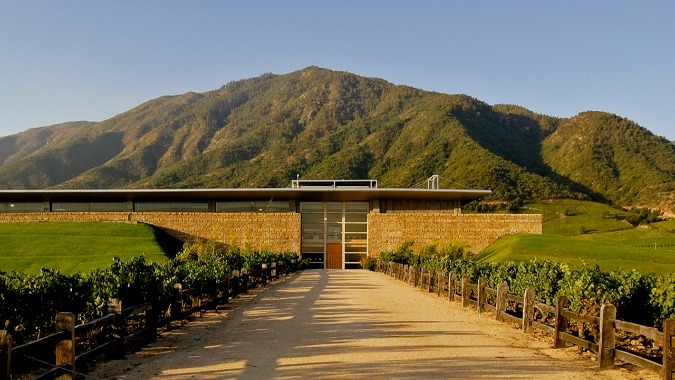
Among the many vineyards, you'll also find chic restaurants open to the public serving typical cuisine / Photo: Daytours4u
The lost grape variety of France
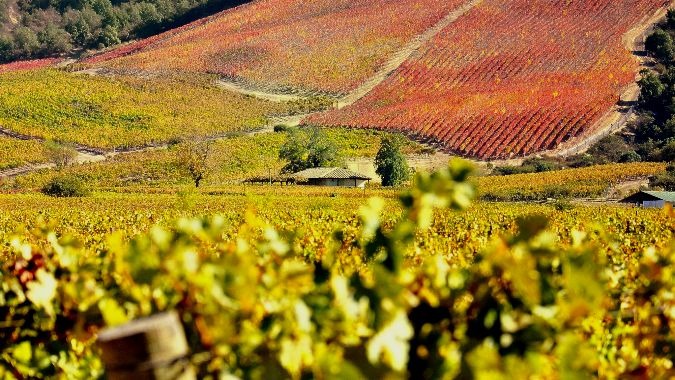
What can tourists do in this valley? The most obvious thing is (of course) related to wine, and this is something that collectors, oenologists, and amateur wine tasters alike will enjoy. One of the things that winemakers value most is probably everything related to the famous Carménère grape variety , which is produced in remarkable quantities in this part of the world and is used to make a wine with a distinctly Chilean character . The Carménère grape is one of the oldest in Europe and is currently recognized as one of the six original grape varieties of the Bordeaux region in France, along with Cabernet Sauvignon, Merlot, Malbec, and Petit Verdot. However, this grape variety, which takes its name from the carmine hue of its autumn leaves, has not been cultivated in France since 1897 due to a plague that affected all the vineyards of Europe and particularly devastated this variety, to the point that it was believed to be lost forever. That is, until it was discovered that this variety was being cultivated in Chile, a country where the climate favors the growth of Merlot vines, and also the Carménère cuttings that were inadvertently imported and mixed with Merlot cuttings at the end of the 19th century. But no one in Chile knew that it was a grape variety lost in France. In fact, it was believed to be a variant of Merlot and that it had perhaps been blended with two grape varieties to create this same wine. In 1994, a French oenologist who was visiting the country confirmed that it was a different grape variety, the legendary Carménère of Bordeaux .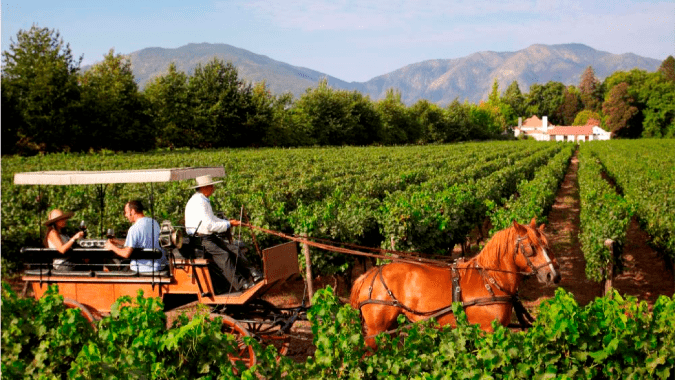
On your Chilean wine route, you can enjoy the famous Carménère grapevine, one of the oldest in Europe / Photo: Daytours4u
Tip : In the wineries of these vineyards, a variety of luxury wines at accessible prices are available, some of which aren't even sold in supermarkets or liquor stores, as they go directly into export containers or, in some cases, exclusive wine shops. That's why we recommend you don't miss the opportunity to bring back a good bottle from this wine route, as you're sure to find one at an unbeatable price, incomparable to the market prices charged in wine shops and supermarkets worldwide.By : Brian Gray , Chilean anthropologist and muralist specializing in visual urban culture.
Published by Has Chacon on 04/06/2026


