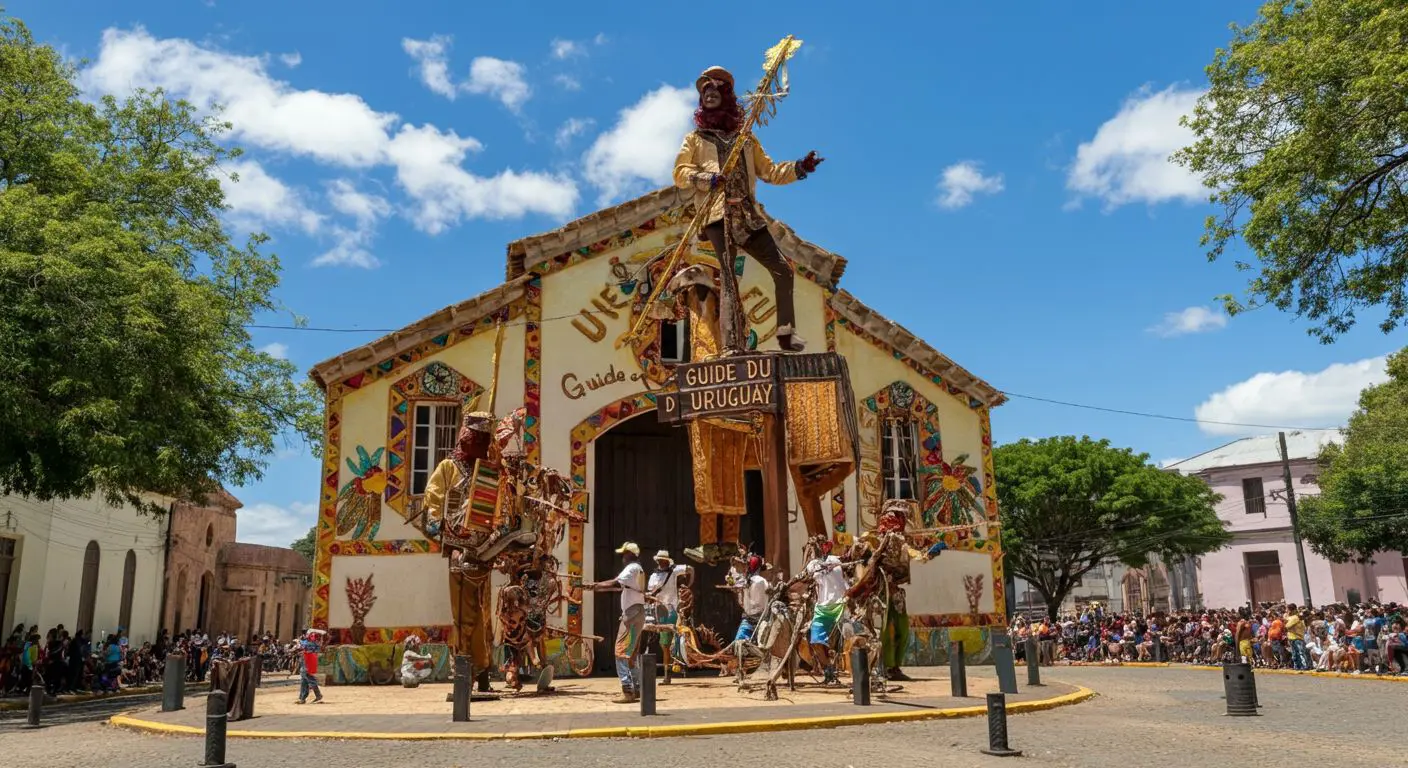
Uruguay's Carnival is renowned as the largest in the world . It lasts for over 40 days throughout the country, from the opening parade to the final competition. This is arguably one of the best times of year to visit, as the popular festival coincides with summer , ideal for enjoying the Atlantic Ocean beaches. The rest of the year, the water temperature is too cold for swimming.
[caption id="attachment_4440" align="aligncenter" width="675"]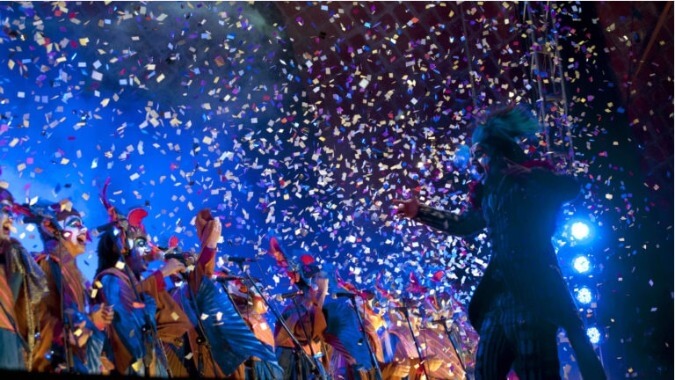 The Uruguayan Carnival is renowned for being the largest in the world / Photo: Gentileza del Museo del Carnaval[/caption]
However, a common mistake is to think of it as a single festival. In reality, you can experience Carnival in many different ways . Cities bordering Brazil, for example, combine samba with local rhythms. In Montevideo, premium candombe and murgas predominate. For young people looking for a wild time, their favorite spots will likely be the beaches of the Rocha department, especially La Pedrera. This place is like a local version of the Full Moon Party , where every year the main street is filled with groups of friends in costume, eager to have a good time.
The date of Uruguay's Carnival is international and changes every year. It is determined after the dates of Passover and Holy Week have been set. To calculate the start date of Carnival, simply subtract 40 days from Easter Sunday. In Uruguay, there are two public holidays each week for this celebration: Monday and Tuesday. However, many people still plan their vacations around these dates (Uruguayan law grants 20 days of paid vacation to all employees) in order to have the entire week off.
CELEBRATIONS IN THE CAPITAL
In Montevideo , three types of celebrations are distinguished :
- The inaugural Carnival parade takes place on Avenida 18 de Julio. It unfolds in the southern districts and in Palermo.
- The “Llamadas” parade, which takes place in the southern and Palermo districts.
- The “Tablados” shows, open-air stages scattered throughout the city.
The inaugural Carnival parade opens the season with a mix of parades , murga groups, comedians, humorists , and other artists related to the theme. In addition, this year's elected representatives parade as Carnival figures, llamadas (calls) , and samba schools. Until 2017, this area was reserved for the "queens" of the three categories, but nowadays, both women and men can be elected as representatives.
[caption id="attachment_4437" align="aligncenter" width="675"]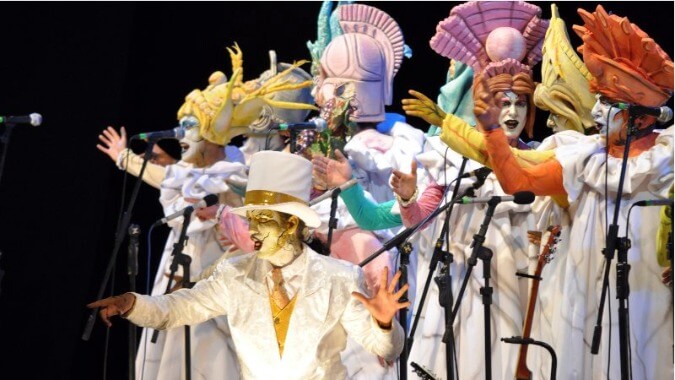 Example of Uruguay Carnival show / Photo: Gentileza del Museo del Carnaval[/caption]
The Llamadas parade has been held since 1956. For two days, it offers a spectacle of forty troupes in the South Quarter and in Palermo , specifically on Carlos Gardel and Isla de Flores streets. Among the most awarded are Yambo Kenya – the champion of the official competition in 2017 – Cuareim 1080 – the winner in 2016 – Tronar de Tambores, La Gozadera, and Generación Lubola. The name "Llamadas" refers to the colonial era and an impromptu gathering, where some members of the troupe would summon others using the rhythmic language of the tambourine.
The "corsos" district of Montevideo includes other Carnival parades to consider: 18 are presented each year, spread throughout the city, offering travelers the perfect excuse to discover a district away from the tourist circuit and join this authentic part.
Tablados are not parades, but open-air stages . Usually found in most neighborhoods, the programming varies nightly, as they consist of groups of artists divided into five categories: Black and Lubolo troupes, street musicians, comedians, parodists, and revues. For this reason, it's important to check the daily schedule if you've decided to see a particular one. The best and most comprehensive tablado is the Summer Theatre , located in the Rodo Park neighborhood. The jury for the official Carnival group competition punctuates the various performances there and chooses the winner each year.
Among the most popular and award-winning are Don Timoteo, the murga of Chinese footballer Recoba, whose Carnival roster includes artists like Edu "Pitufo" Lombardo, Marcel Keroglián, and Paul "Pinocchio" Rutin. Also featured is La Gran Muñeca (The Big Doll), winner of the 2016 murga category. Other notable performers include the Ducks Cabreros, famous for their choral singing, and Cayó la Cabra, who has received awards for his lyrics in several editions. Among the parodists, Zíngaros is generally a favorite, while comedians Cyranos, SA, and Chobis are nominated for their shows.
[caption id="attachment_4438" align="aligncenter" width="675"]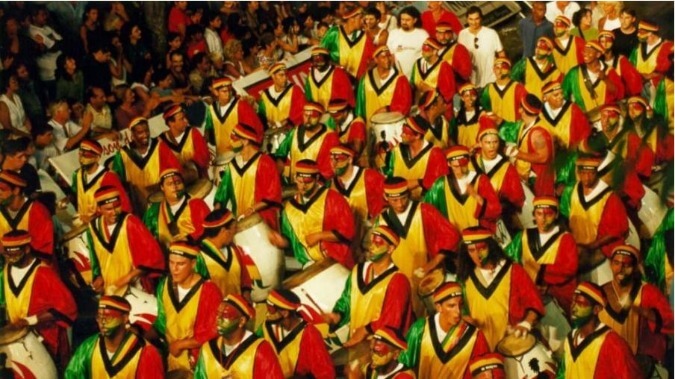 The colorful troupes will thrill you during the Uruguay Carnival / Source [/caption]
RHYTHMS OF THE BORDERS
The departments of Artigas, Rivera and Cerro Largo border Brazil, and the strong influence of their large neighbor offers mixtures of samba, axé and other Brazilian rhythms in celebrations.
The Carnival in Melo, the capital of Cerro Largo, is perhaps the most upscale, given that renowned Uruguayan and Argentinian stars are regularly invited. Meanwhile, the city of Artigas (capital of the department of the same name) is inspired by the Carnival of Rio de Janeiro. It is probably the most professional, with rehearsals by four samba schools every February: Barrio Rampla, Emperadores de la Zona Sur, Empire Ayuí, and Scholars. Each school brings together around a thousand performers, so the procession along Avenida Lecuerder (the city's main avenue) – where the parade takes place and where most of the shops are also located – can last an hour just for the performers from a single school.
For its part, the Rivera Carnival strongly emphasizes its intercultural aspect, blending candombe and murga, which come from the south with samba, and from the north with axé. Furthermore, for the past ten years, the main avenue of the parade has been Sarandi, featuring an electric trio: a giant truck that combines sound, light, and movement, in addition to dancers and singers accompanied by psychedelic lighting. The parades always conclude with a performance on a public stage, located at the end of the street, opposite the main square.
[caption id="attachment_4439" align="aligncenter" width="675"]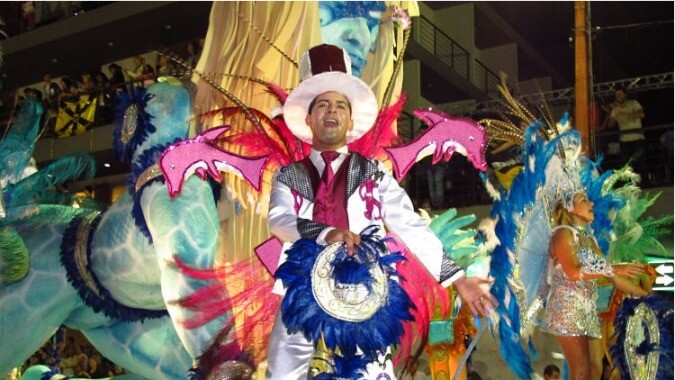 The Artigas Carnival is heavily influenced by its Brazilian neighbor / Photo: Carina Fossati[/caption]
PARTY ON THE COAST
This event is self-generated by the popularity of past editions and social media . It is very popular with young people who want to party until dawn and who wouldn't be very interested in parades. However, these groups of friends can dress up themselves for their nights out.
Its reputation is such that a few years ago, the mayor of the region stated in a radio interview that he didn't want more people to come, as La Pedrera – a small spa in Rocha – was overcrowded. In previous years, the authorities increased security, cleaning of public restrooms, and other details to ensure the smooth running of the festivities.
THINGS TO TAKE INTO ACCOUNT
In Uruguay in 2018 , Carnival days (holidays for employees) were Saturday, February 10, Sunday, February 11, Monday, February 12, and Tuesday, February 13, the days on which it was celebrated in most departments. However , the opening Carnival parade , on Avenida 18 de Julio, took place on Thursday, January 25 ; the Llamadas parade took place on Thursday, February 8, and Friday, February 9; and the final ceremony of the official Carnival competition was held on Thursday, March 15.
If you wish to enjoy the border carnivals , it is essential to book accommodation in advance . In February, hotels and other accommodations are in very high demand. On the Atlantic coast, the hotel industry fills up quickly, and prices are likely to increase.
- Apart from the Carnival of La Pedrera, festivals and parades held in public squares are generally enclosed. An entrance ticket, the cost of which varies, is then required. Tablados and the Summer Theatre also have prices that vary depending on the day and time.
- In recent years, street music groups and other musical styles have emerged in the country. As a result, some provincial governments have arranged for artists from the capital to tour other regions. Today, it's possible to see these Carnival performances even outside of Montevideo.
For the past 10 years, the city has had its own Carnival Museum (Rambla 25 de Agosto de 1825, Ciudad Vieja, phone +598 2915 0807, open from 11:00 am to 5:00 pm), showcasing costume samples, sets, props, and historical equipment. Furthermore, this museum is located next to the Mercado del Puerto , a repurposed old building where several stalls offer their spaces as a meeting place for travelers. This spot is perfect for locals and visitors alike who would like to try Uruguayan beef , accompanied by the typical local drink.
…
Don't miss the various events of the Uruguay Carnival . If you're looking for other activities to do during this event, or at any time of year, contact us through Uruguay4u . You'll find the best excursions in Montevideo, Punta del Este, Colonia, and more.
By : Carina Fossati, journalist and author of the blog Hills to Heels / Translation : Just Douvreleur
Published by Has Chacon on 04/06/2026


