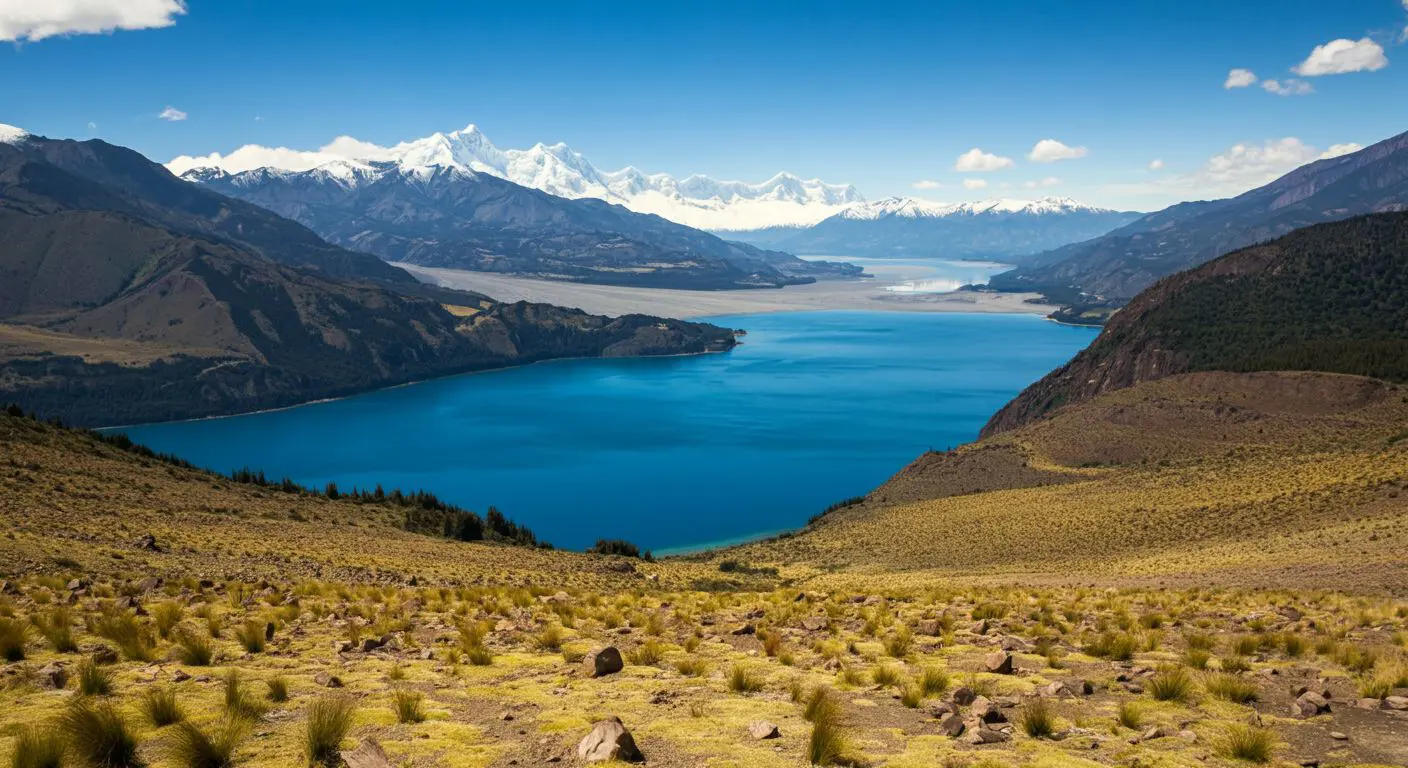
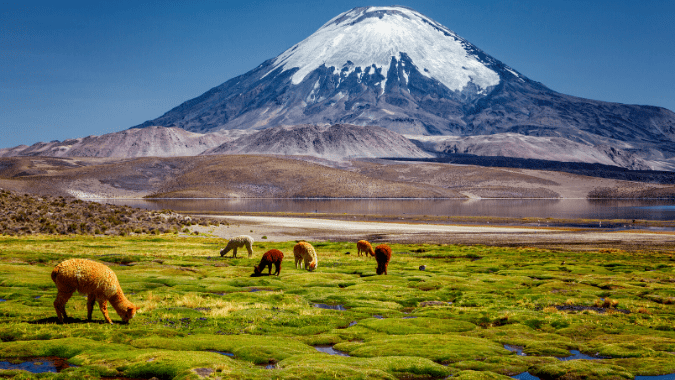
The Seven Lakes Route is a circuit of towns and villages distinguished by their natural beauty. / Photo: Daytours4u
How do I get to the Seven Lakes Route?
You can take a direct bus to Villarrica from the southern terminal or travel by car along Route 5 to Freire and then turn left onto Route 199. You can also take a direct flight to Temuco and then a local bus to any of the towns along the Seven Lakes Route. Transfer service in Temuco: If you want to cross from Argentina into Chile by car , you can arrive from San Martín de los Andes by following Route 48 to the Hua Hum border crossing . You will then arrive at the village of Pirihueico, where the car will need to be transported by ferry to Puerto Fuy, on the north shore of Lake Pirihueico.Villarrica
If we had to recommend a central hub for the Seven Lakes Route, it would be Villarrica. It's a charming, well-maintained town. Moreover, it boasts the widest variety of products and services of any town (perhaps with the exception of Pucón ), making it a prime destination. Just to name a few examples, there's delicious ice cream, tea rooms, and shops selling regional and organic products, as well as adventure tourism offerings that include nighttime expeditions to the Villarrica Volcano , hiking, walks that end at hidden waterfalls, mountain biking , and more. Tip: Most of the streets along the lake, including those right on the waterfront, have welcoming and affordable hostels and guesthouses. Some even offer breakfast.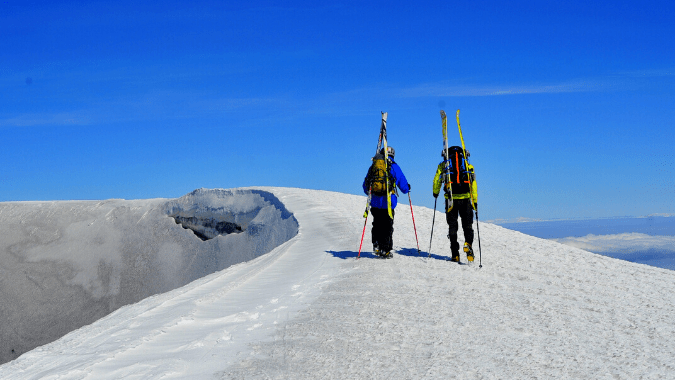
In Villarrica you can go on an expedition to the volcano and experience a superb adventure during your vacation / Daytours4u
Pucón
Pucón is another favorite destination on the Seven Lakes Route, especially among young people. The town is located oppositeVillarrica , on the shores of the lake of the same name and right at the foot of the volcano. Tourists who decide to go in winter will be awestruck by the spectacle of this snow-covered giant. Visiting Pucón in winter means snowboarding and skiing, as the Pucón ski resort is just twenty minutes from the town. If you prefer to come in summer, you'll also be very close to Huerquehue National Park , an important reserve for local flora and fauna. It's just a few minutes from the Río Trancura, an ideal spot for kayaking . And let's not forget the other entertainment options in town, such as craft beer bars and nightclubs where you can dance until dawn. Tip : Accommodation and food in Pucón are more expensive than in other towns in the region, which is also why the destination is considered more upscale. A chalet can cost around USD 100 (€83) per night. If you are traveling as a couple, we recommend booking a hotel room, as there are deals for 3 nights starting at USD 280 (€232) with breakfast included.Coñaripe
Coñaripe is a somewhat rustic village, not at all equipped to meet the needs of demanding tourists. Yet, it possesses a great charm that makes it an unmissable destination for anyone traveling the Seven Lakes Route. Discover its superb beach on the shores of Lake Calafquen and swim in its waters. It's an experience difficult to describe, as just a few kilometers from the shore rise enormous green mountains that seem to embrace the lake. Their reflection in the water gives bathers the impression that they are suspended at a great altitude. It's a truly moving experience. If, after bidding farewell to the lake, you wish to continue towards Pucón, we recommend stopping along the way to visit the famous Geometric Baths . This complex of pools, carved into the rock of a gorge and surrounded by forests, is located twenty minutes northwest of Coñaripe. Enjoy the more than 80 thermal springs that naturally emerge at 80 degrees. If you want to relax and disconnect from everything, this is the perfect place.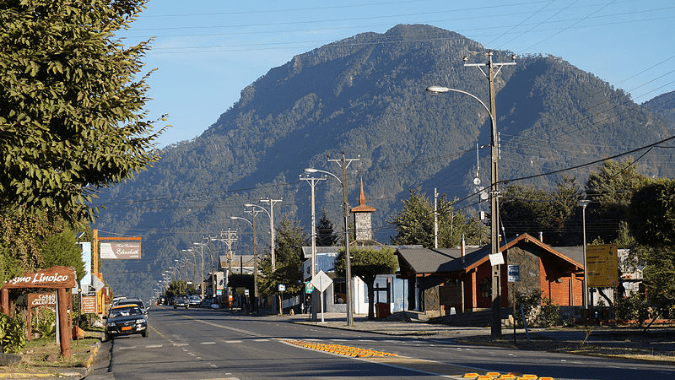
Coñaripe and its surroundings, a somewhat rustic village that tourists fall in love with / Source
Lican Ray
Lican Ray is a small village of 2,500 inhabitants located on the northern shore of Lake Calafquen , whose economy relies primarily on tourism. It is notable mainly for its large beach and the quality of its waters in the summer. There are also traditional festivals where tourists can buy all kinds of regional products, mainly jams, fabrics, traditional spirits, wooden crafts, and natural ointments made from local plants, among other things. Lican Ray also has a Mapuche National Park open to the public and managed by the indigenous community itself. Here, interested tourists can learn a great deal about the culture of this native people, taste typical food, and take guided tours.Caburgua
Lake Caburgua is a top destination for vacationers in the area, drawn by the spectacular scenery and crystal-clear waters perfect for swimming and water sports. Tip : There are few places to eat near the lake. If you're coming from Pucón or Villarrica, we recommend bringing your own food to avoid any hassle. If you're driving, it's best to arrive early as all the (private) parking spaces fill up quickly.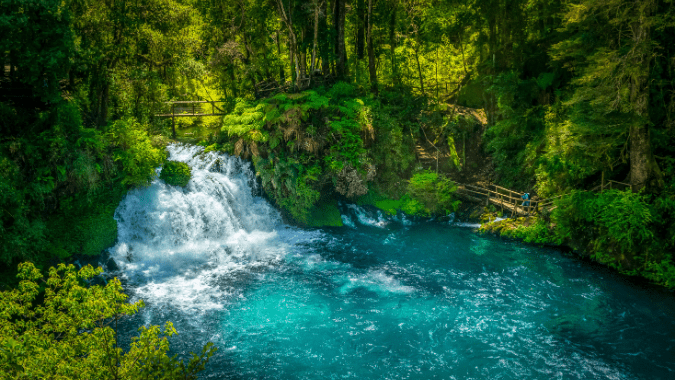
Lake Carburgua attracts locals and tourists alike thanks to its crystal-clear waters / Photo: Daytours4u
Panguipulli
Panguipulli, like Villarrica, is an ideal place to settle down because from there you can visit several nearby towns and, as a city, it offers all kinds of services. The city is located on the shores of Lake Panguipulli . If we had to recommend something to do here, we would undoubtedly suggest visiting the Casona Cultural de Panguipulli, a restored Swiss-style building that was once a Capuchin monastery and is now part of the architectural heritage of this region in the foothills of the Andes Mountains. It's a perfect place to have a coffee or tea, enjoy delicious southern Chilean pastries , see exhibitions or plays, or simply sit back and read a book.Neltume
Neltume is a small village with simple houses and very few shops. Why do we recommend it here? It's for the incomparable beauty of the Río Fuy , which flows parallel to the village on its southern side and is well worth seeing, as its waters are among the purest in the region. Moreover, in this area, the water is calm and suitable for swimming, even if it is very cold due to the proximity of the mountains. Further along, towards Huilo Huilo , these same waters create spectacular waterfalls that are worth admiring from a safe distance. Further north, within the same municipality, adventurous tourists will find the Río Neltume, a small stream only one kilometer long, ideal for kayaking or fly fishing.Huilo Huilo
Huilo Huilo is an internationally renowned biological reserve and a benchmark for sustainable tourism in Chile . It boasts an extensive network of well-marked and interconnected trails that allow tourists to immerse themselves in nature and admire geographical and architectural wonders. The waterfalls are particularly striking for their beauty and power. There are also countless features unique to the evergreen forests and the Valdivian forest that can be explored from every angle with a guide. Activities such as observing local flora, birdwatching, adventure sports, and excursions to the summit of the Mocho Choshuenco volcano are perfect examples.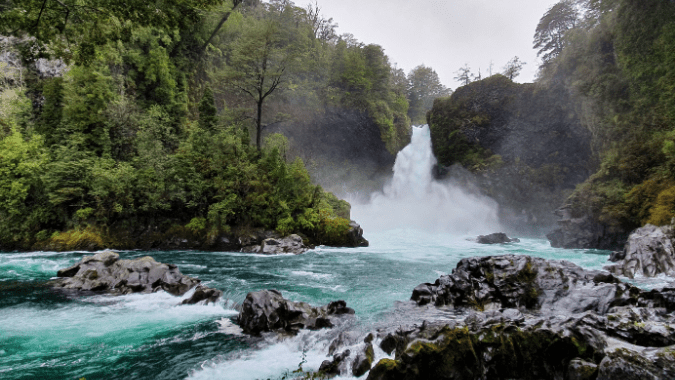
At Huilo Huilo, you'll notice the powerful waterfalls and its superb "Valdivian forest" / Photo: Daytours4u
In terms of architectural appeal, Huilo Huilo is known for its good taste and intelligent design, offering accommodations ranging from tent camping and shared cabins for backpackers to private chalets and guesthouses . There's something for every taste and budget. The guesthouses deserve special mention as they are true works of art that blend seamlessly into the natural landscape , as seen in the renowned Montaña Mágica Lodge. As if that weren't enough, in the heart of the reserve, just off the road, lies the Petermann Artisan Brewery , where one of the region's finest beers is produced thanks to the extraordinary purity of the glacial waters used in its brewing. Travel tip : This reserve is quite large, so you'll need at least three days to explore all the trails and take a few excursions. The Seven Lakes Route is a must-see destination on your trip to South America. Contact our team of experts and book all your excursions with Daytours4u.Written by: Brian Gray, Chilean anthropologist and muralist specializing in urban visual culture.
Published by Has Chacon on 04/06/2026


