
Traveling to the driest desert in the world is a unique experience. It requires planning to avoid problems with the altitude, the demanding weather, and local logistics. Learn here what you need to know before traveling to the Atacama and get your questions answered before you pack.
Trip Summary:
Village altitude: 2,400 meters above sea level (masl). Excursions reach 4,200 masl.
Currency and payments: Chilean Pesos (CLP). It is mandatory to carry cash; the connection in the desert is unreliable and local communities do not accept cards.
Park entrance fees: These are not included in the tours. They must be paid separately (some online before the trip and others at the ticket office).
Climate: Desert with extreme temperature fluctuations (from -10°C to 25°C in the same day).
Connection: Weak or no mobile signal outside the urban area of San Pedro.
1. Where is San Pedro de Atacama located: Location, climate and accommodation
Where is San Pedro de Atacama located?
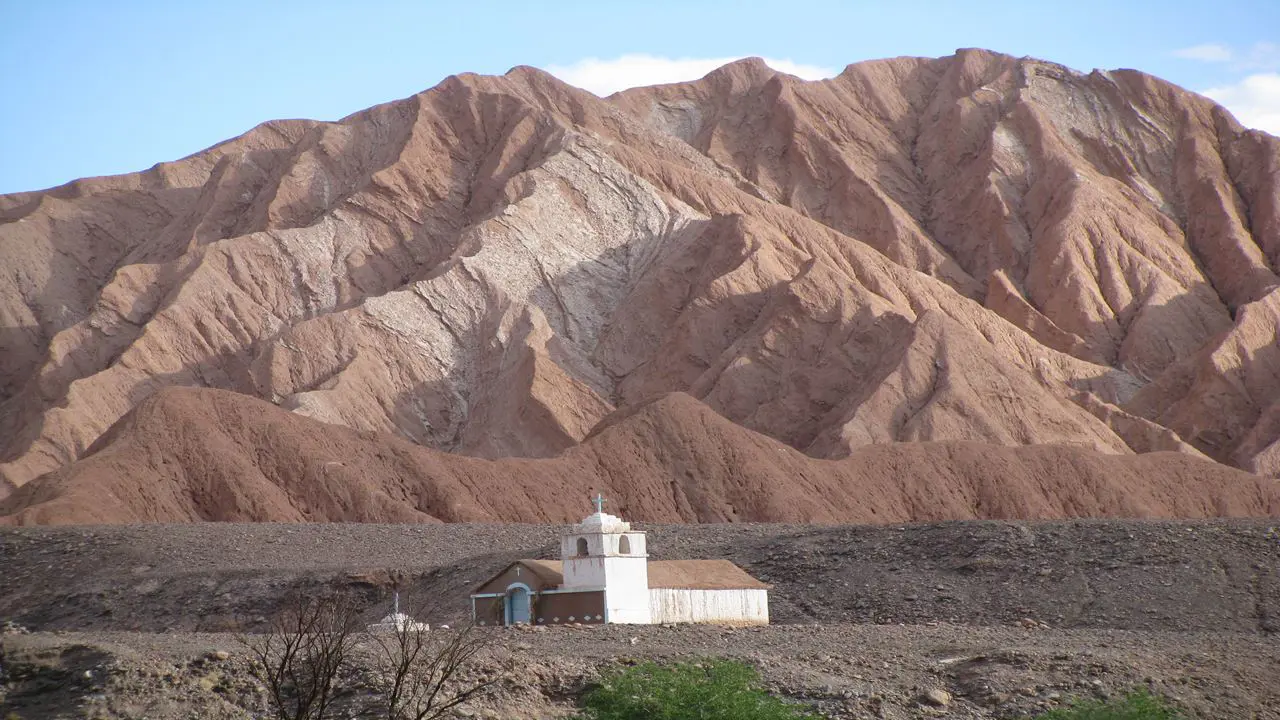
San Pedro de Atacama is an oasis located in the Antofagasta Region of northern Chile , situated at an altitude of approximately 2,400 meters above sea level. Its main attraction is the Atacama Desert, surrounded by volcanoes over 5,000 meters high, salt flats inhabited by flamingos, hypersaline lagoons, and fields of active geysers.
What is the weather like in San Pedro de Atacama?
The climate is marginal desert , characterized by extreme temperature fluctuations.
During the day: The sun is bright and the weather averages between 20°C and 25°C .
During the night: The thermometer can drop to 0°C or even below zero in winter (June to August).
Beware of the Andean Winter: Between January and March, isolated rain showers can occur in the highlands, cutting off hiking trails. The rest of the year is extremely dry.
What is the best time to travel to San Pedro de Atacama?
The best time to visit the Atacama Desert is during the spring months (September to November) and autumn months (March to May) . During these months, daytime temperatures are pleasant, and nights are not as cold as in winter. The risk of road closures due to the Andean winter (January and February rains) is completely avoided.
How to get to San Pedro de Atacama and transfers
The easiest way to get there is to fly from Santiago, Chile to Calama Airport (CJC). The nearest major city is located 100 km away.
Calama - San Pedro de Atacama Transfer. Upon landing, the ideal option is to take a shared transfer that will take you directly to your hotel in about an hour and a half. It is recommended to book this Calama - Atacama transfer online to lock in fares and secure your spot.
Nearby cities: Calama is the closest commercial and healthcare center. It's not a tourist city, so you'll likely pass through on your way to the San Pedro oasis.
Where to stay in San Pedro de Atacama
The town is small and easily walkable. It's recommended to look for a hotel near Caracoles Street (the main pedestrian street), where most of the restaurants, pharmacies, and tourist agencies are located. Options range from budget backpacker hostels to sustainable boutique hotels with local adobe architecture.
Keep in mind that most of the streets in downtown San Pedro de Atacama are dirt, sand, or stone . If you're traveling with large wheeled suitcases, you'll find them difficult to maneuver. Backpacks or carry-on bags are ideal for this destination.
Can I pay with a credit card in San Pedro de Atacama?
In the town center, most restaurants, tour agencies, and hotels accept credit and debit cards. However, it is mandatory to carry cash (Chilean pesos) to pay entrance fees to rural indigenous communities, to purchase handicrafts in the highland villages, and as a backup in case of payment system failures due to power outages or internet disruptions.
2. Natural Parks in Atacama and how to visit them
Most tourist attractions in Atacama are managed by local indigenous communities (Lickanantay) and not by the Chilean state. This changes the rules for entry and visits.
Park Entrances in the Atacama Desert
Tickets are not combined into a single pass and, for the most part, must be purchased in advance from the official websites of each community. Tour agencies typically do not include the entrance fee in the tour price .
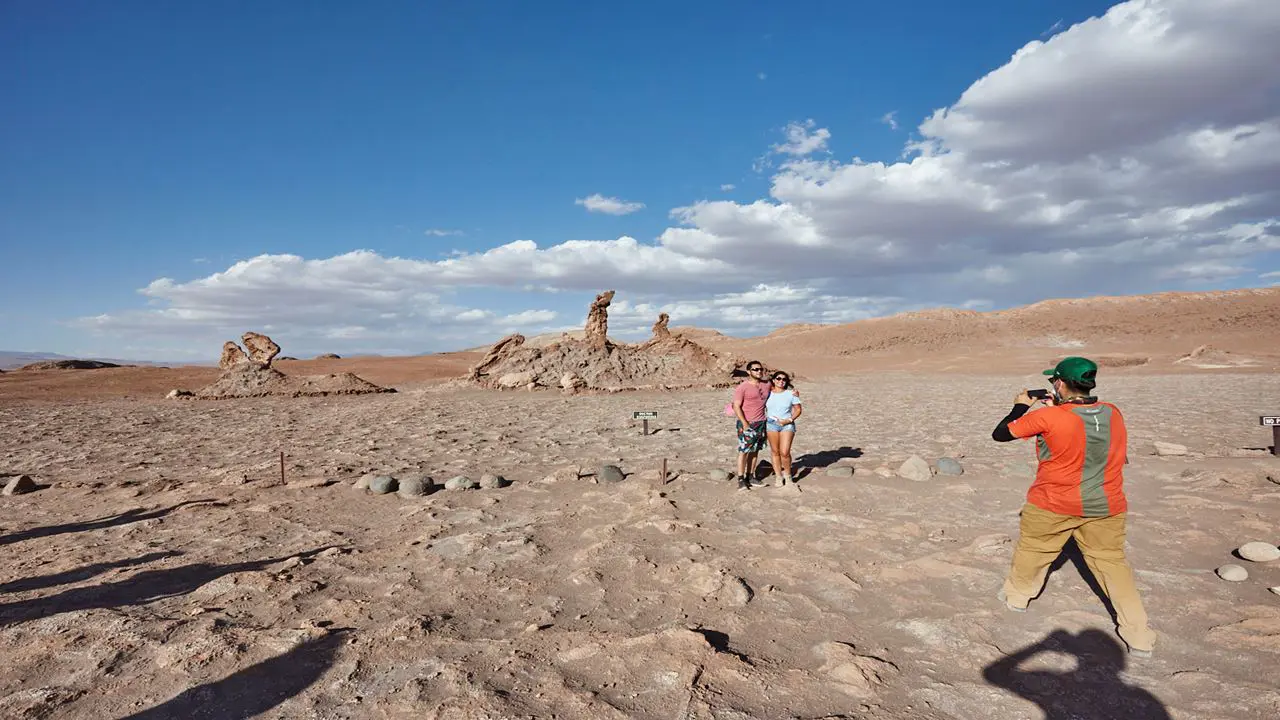
Valley of the Moon: Online Only valledelaluna.com
Tatio Geysers: Online / Cash depending on the season
High Plateau Lagoons and Red Rocks: Online Only socairechile.cl
Laguna Cejar: Online Only lagunacejar.com
Baltinache Lagoons: In-person payment with credit/debit card
Purchase tickets at least 3 weeks in advance , especially those for the Valley of the Moon and the Altiplano Lagoons.
How to avoid altitude sickness and recommended excursions
To avoid altitude sickness , it's essential to order your excursions from lowest to highest altitude. Don't go to the Tatio Geysers on your first day if you don't want to suffer from migraines or severe nausea.
Day 1 (Acclimatization): Take the Moon Valley and Salt Mountain Range tour. In the evening, take the Astronomical Tour in San Pedro de Atacama (Atacama has one of the clearest skies on the planet).
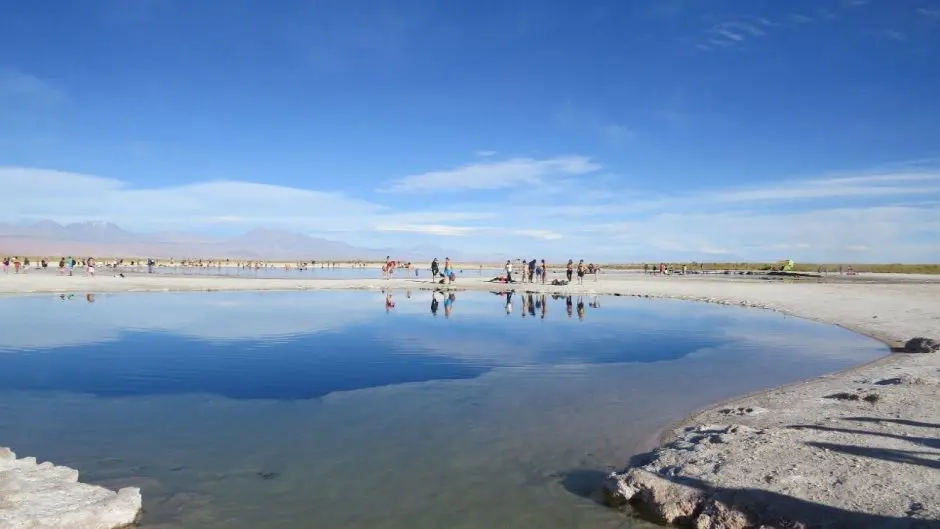
Day 2 (Medium Altitude): Tour to Laguna Cejar or Hidden Lagoons of Baltinache , where you can float effortlessly due to the high concentration of salt.
Days 3 and 4 (High Mountain): Red Rocks and Altiplano Lagoons (4,200 m above sea level) and the unmissable sunrise at the Tatio Geysers .
What age or health restrictions are in place for excursions?
High-altitude tours like those to the Tatio Geysers and the Altiplano Lagoons have health and safety restrictions. Children under 6 years old and pregnant women are not permitted. People with severe hypertension or chronic heart problems are also prohibited due to the effects of low oxygen levels at that altitude.
In which parks in Atacama is swimming allowed?
Touching the water or entering the Valley of the Moon, the Altiplano Lagoons, and Piedras Rojas is prohibited to protect their fragile mineral ecosystems. The only places designated for swimming are Laguna Cejar, one of the Hidden Lagoons of Baltinache , and the thermal pools of Termas de Puritama .
Public transport, rental car or tour?
Traveling on organized tours in the Atacama Desert is the safest option. If you decide to rent a car, make sure it's a 4x4. Keep in mind that outside of town there is no internet signal or GPS , so getting lost on the high plateau roads can be dangerous. Public transportation to the parks is almost nonexistent.
3. What to pack for the Atacama Desert: Packing list
The secret to a good trip in Atacama is to pack a good suitcase.
Layered travel clothing: You'll need breathable short-sleeved t-shirts for midday. A fleece or mid-layer sweater. A proper windproof jacket/parka for the early mornings in El Tatio, where the temperature drops below -5°C.
Footwear: Hiking boots or closed shoes with good grip. Avoid sandals on excursions due to the sharp salt flats and hot rocks. Don't forget water shoes for the lagoons and hot springs!
Swimsuit and towel: For the Puritama Hot Springs and Cejar Lagoon. Extra tip: Rinse off the salt with fresh water before drying off to avoid ruining your towel.
Extreme sun protection: Wide-brimmed hat, sunglasses with UV protection, and sunscreen. Radiation here is among the highest in the world due to the altitude and lack of cloud cover.
Travel Documents and Insurance: Although Chile is a safe country, activities take place in remote areas and at high altitudes. Travel insurance with coverage for adventure sports and high-altitude rescue is essential.
4. What to eat in Atacama: Flavors of the Desert
The food in San Pedro de Atacama is a unique fusion of traditional Chilean Creole cuisine and ancestral ingredients. Eating here is part of the cultural adventure. When visiting the restaurants on Caracoles Street, be sure to try dishes that include these endemic ingredients:
Rica-Rica: This aromatic desert plant has a very intense citrus and minty flavor. You'll find it in infusions to combat altitude sickness, in pisco sour (the famous Rica-Rica Sour ), and in artisanal ice cream in town.
Chañar and Algarrobo: Fruits from local trees used to make sweet syrups, desserts, and ice cream. They have a toasted flavor similar to caramel or coffee.
Llama meat: An extremely lean, tender, and low-cholesterol protein option. It is commonly served on skewers (anticuchos), in stews, or in casseroles in highland towns like Machuca.
Atacama Quinoa: Grown locally on water terraces, it is the basis of salads, side dishes and local risottos (quinottos).
Do you have any questions about your trip to Atacama?
If you're planning your trip to the Atacama Desert and want to know more about transfers, hotels, or excursions, contact us! We'd love to help you plan your next adventure in Chile.
By: Hasbleidy Julieth Chacón - Web Content Creator for Daytours4u.com
Published by Daytours4u.com on 18/08/2026


