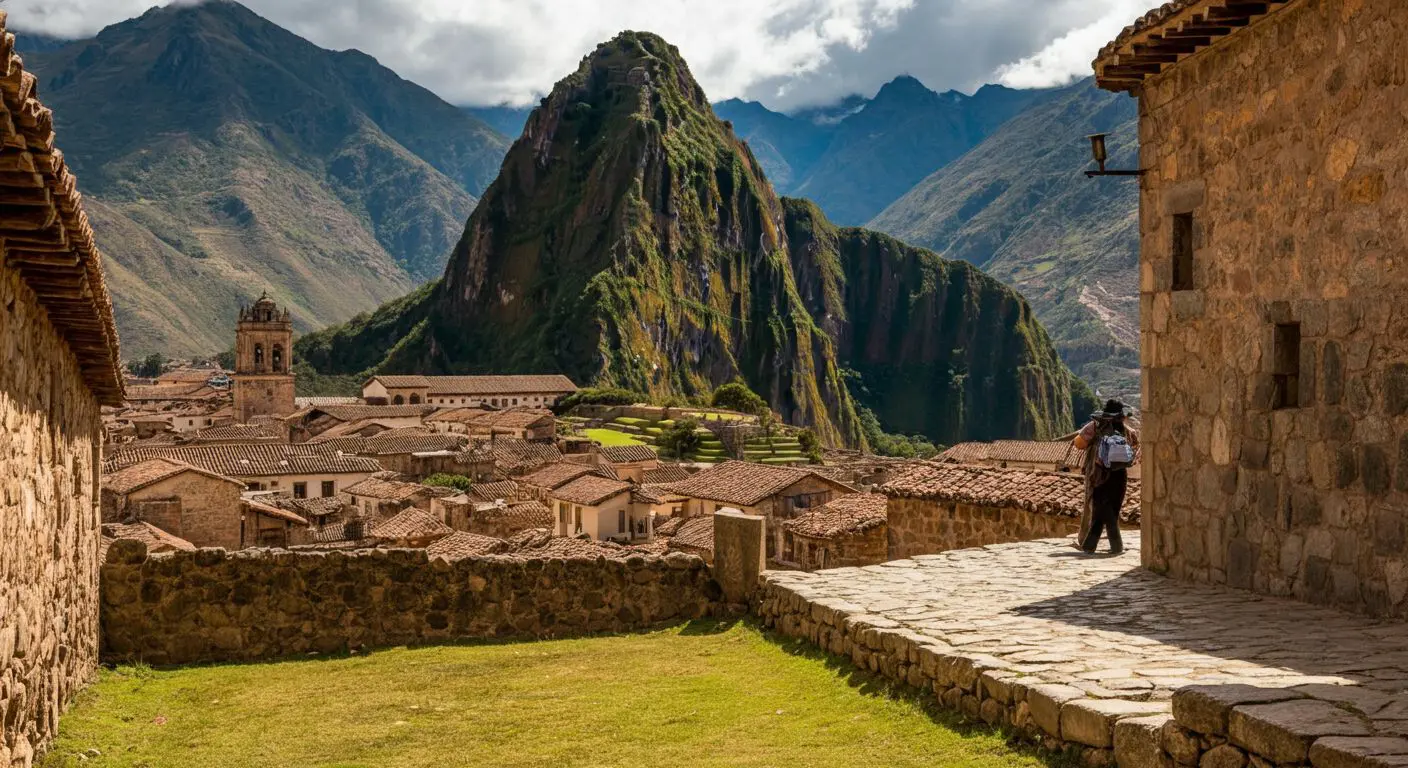
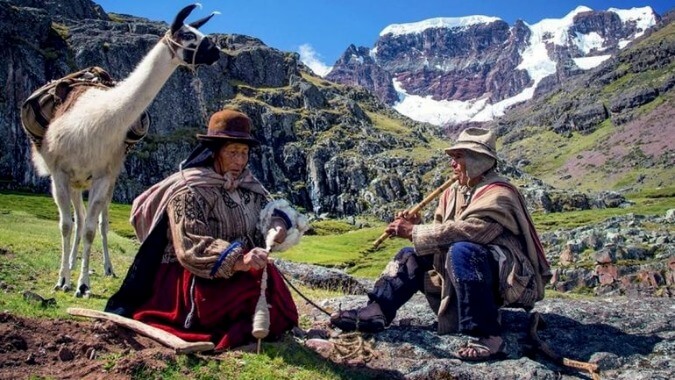
Peruvian identity is full of nuances and constant migrations / Photo: Source
It is estimated that the number of Amerindians (ethnic groups from the Andean region, as well as the jungle) comprises 68 ethnic groups. Of these, 7 remain in complete isolation from modern civilization. They are divided into 16 ethnolinguistic family groups. The main ones are the Quechua , the Aymara , and the Arawak . Thus, we can discover that a given ethnic group inhabits both the Andean and Amazonian regions. Here we detail the most representative groups and those that have had the greatest impact on what we know today as Peruvian culture.1- Andean
The Andean ethnic groups trace their origins back to the Caral Culture (approximately 3000 to 1800 BC). Over the decades, important cultures emerged, culminating in the Quechua or Inca civilization in Cuzco , whose zenith was reached during the Inca civilization. The latter annexed various Andean cities, thus forming the Inca Empire, which encompassed territories of what is now Colombia , Ecuador , Peru , Bolivia , and Chile . Among their ancestral customs and traditions are the various festivities celebrated throughout the year, many with a strong Spanish colonial influence, especially in religion and gastronomy. There are also rituals, a variety of crafts and textiles, typical regional dances , and characteristic foods from each place.Festivals and Celebrations
The Festival of the Virgin of Candelaria , in the city of Puno , Department of Puno, begins on February 2nd and lasts 16 days in a display of respect and revelry. Masses and processions are accompanied by parades, traditional dance competitions, and much joy. It is a festival where Spanish influence can be clearly seen in the devotion to a non-Andean religious image. However, the central motif of this magnificent celebration is related to the pre-Hispanic agricultural cycles of planting and harvesting, also known as the cult of Pachamama or Mother Earth. In November 2014, it was declared by UNESCO as an Intangible Cultural Heritage of Humanity . Visit Puno at this time and you will see why it is known as the Folkloric Capital of Peru and the Americas. Inti Raymi, "The Festival of the Sun," is a quintessential Andean celebration on the occasion of the worship of the Sun as a supreme being in the Inca Empire. It represents the Andean New Year and coincides with the winter solstice. The Sacsayhuamán festival takes place every June 24th at the ruins of Sacsayhuamán in Cusco , with a ritual after which the celebration moves to the Main Plaza where the ceremony ends and the festivities begin. Carnivals are celebrated in various parts of Peru during the month of February. These are celebrations in which the entire population participates, with dances, fairs, and plenty of food and drink. The central act is the yunza, cortamonte, or tumba monte. Villagers dance around a tree, previously filled with gifts, while wielding axes to retrieve the gifts. It is a ritual practiced throughout Peru, although predominantly in the Andean regions, mainly in the regions of Cajamarca, Ayacucho, Puno, San Martin, Tacna, and Apurimac. The offering to the Earth is the main ritual in Andean culture. It is celebrated throughout the month of August across the coastal and Andean region, but especially in Lambayeque, Puno, Cusco, and Huaraz in Ancash. Ancestral rituals are performed, accompanied by dances and offerings to Pachamama or Mother Earth.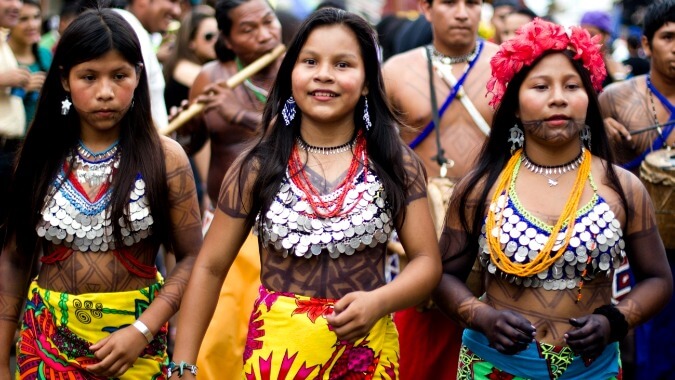
Peru is the country with the greatest diversity of ethnic groups, languages, and language families in the Americas / Photo: Source
Gastronomy
We could talk a lot about Peruvian gastronomy, and even if we were to make a very limited selection from just one region, the material would be very extensive. The basis of Andean cuisine includes products such as a wide variety of potatoes , tubers, and roots like yuca (called cassava in other countries). Corn in its different forms, herbs, and meat from local animals such as guinea pigs , llamas, alpacas, and capybaras are also staples. These are some of the basic ingredients of Andean food, whose preparations were altered with the arrival of the Spanish during the colonial period. For example, the meat of the region's animals was replaced by pork and beef . Although today alpacas and other native animals are still consumed in places like Puno or Cusco. To preserve the meat, they would dry it in the sun with plenty of salt, and the preparations were mostly done with hot stones placed underground. One of their most representative dishes is the exquisite Pachamanca. I can't describe anything more accurately than "touching the heaven of delights," if such a thing exists, when I tasted my first pachamanca as a very young child at a traditional festival held on the outskirts of Lima. Yes, because although it's a purely Andean food, over the centuries it has spread throughout the country. Another classic of Andean cuisine that you can't miss is Papa a la Huancaína; Patasca, a soup made from mote, a type of enormous, meaty corn; other exquisite soups of traditional Andean cuisine are Chochoca, Kapchi, and Sopa Verde . Stews like Guiso de Cerdo, Puka Picante, Cuy Chactao, or Chactado. Tasty and healthy appetizers like Choclo con queso and Mote con chicharrón . And the breads, don't forget to try them. The water rolls, Santiagos, and Wawas. They are truly elaborate and delicious preparations that your palate will never forget. Travel Tip: Come spend a full day at Lake Titicaca with our Day Tour to Taquile and Uros Islands from Puno , visiting islands that offer a glimpse into the lake's history and culture. Book now!2- Jungle
The ethnic groups inhabiting the Amazon are very numerous. Each has a small number of inhabitants, with a different language, customs, and worldview . We can describe most of them, but this majority is in voluntary isolation, which is why they maintain their culture intact. There is another number of Amazonian peoples, mostly from the Quechua and Ashaninka ethnic groups, who, through contact with civilization , have merged their customs to a greater or lesser degree. In general, these are the peoples whose traditions and habitat we usually encounter on our tourist trips. They live in the Amazonian areas of Peru, Brazil, Ecuador, Colombia, and Bolivia. In Peru, we find these peoples in Madre de Dios, Ucayali, Cusco, San Martín, and Loreto . The areas corresponding to the Lowland Forest, also called Omagua " Region of freshwater fish ," are Iquitos in Loreto, Pucallpa in Ucayali, Puerto Maldonado in Madre de Dios, San Martín, and Huanuco. Also Junin and parts of Cuzco and Puno. The areas corresponding to the High Forest or Rupa Rupa " It's hot " or " Burning ", are Bagüa in Amazonas, Jaén in Cajamarca, Oxapampa in Pasco, Satipo in Junín and Huallaga in San Martín, are some of them.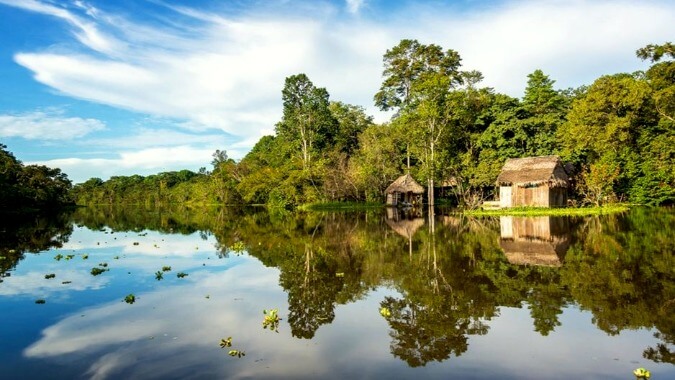
The jungle is the area with the greatest amount of biodiversity on the planet. Within its territories you will find unique flora and fauna preserved through the many Nature Reserves that you can visit on your trip through the Peruvian Amazon / Photo: Source
Festivals and Celebrations
The Feast of San Juan Bautista is the most important traditional festival in the entire Peruvian Amazon, originating in the Department of Loreto. Its day is June 24th and it's a celebration primarily associated with water as an essential element of life, bringing good luck, happiness, and good health throughout the year. The Festival of the Virgin Assunta of Chachapoyas , in the district of the same name, Chachapoyas, in the Department of Amazonas , also known as " Mama Asunta ," has been venerated since the mid-19th century. The festival begins at dawn on August 1st with a parade for schoolchildren, a craft fair, masses, and the subsequent procession of the Virgin, extending for six days with conferences, various cultural and folkloric competitions, and tastings of the region's traditional cuisine. The traditional jungle dances are typically war dances or related to local rituals, mostly shamanic.Gastronomy
The typical Amazonian dishes I recommend you try are Tacacho de Cecina , Juane, Patarashca, Inchicapi, Ceviche de Paiche, Timbuche, and among the more exotic and striking dishes, Suri or Grilled Lizard. The gastronomy of this region is very different from the rest of the country, so prepare yourself for an exotic culinary adventure of flavors and textures. Travel tip: Discover the Sacred Valley in Cusco and visit two of the most curious places on the continent that date back to the Inca civilization: the Maras salt mines and the circular terraces of Moray . Book now!3- Spanish / Creole
Originally, the term *criollo* was used to refer to the direct descendants of Spaniards or other European ethnic groups born on the American continent . Similarly, the same term refers to the children of Africans born in American territory. Basically, the difference was in being the direct descendant of a foreigner born in America. Over time, the meaning has been modified and has acquired some variations in different countries of the Americas . In Peru, the word *criollo* varies, even losing its social or ethnic meaning. Thus, the term is used as a qualifying adjective generally associated with the coastal region due to its mixed customs of Andean, Spanish, African, and Asian origin.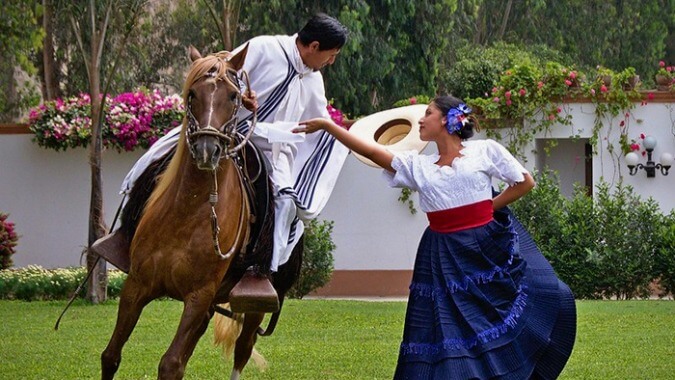
Within the Creole tradition, we have included the fusion of dances, music, food, and customs from each foreign people (Spanish, African, Asian) / Photo: Source
Festivals and Celebrations
Almost all existing festivities with Spanish influence come from the colonial era . The great mix makes it very difficult to differentiate them culturally. However, they are basically divided into religious and civic festivals . Lima's Anniversary is celebrated every January 18th, the day it was founded in 1535 by the conquistador Francisco Pizarro . In the days leading up to it, various cultural activities take place. On the main day, there are parades showcasing different traditional dances, such as the elegant Marinera, the cheerful Tondero, and other dances from the different cultures that are now part of Peruvian culture. The Plaza de Armas is filled with color and music with an event that has been held on this date for several years, called Serenata por Lima, where the best of its repertoire is displayed by various musical groups, both traditional and modern music and dance. The gastronomic offerings are unparalleled. If you are in Lima at this time, don't miss this fabulous celebration. The religious festivities are numerous. Among the best known is Holy Week , a movable feast, purely Catholic, which begins on Palm Sunday . This is the week of the first full moon after the autumn equinox (in the southern hemisphere), ending on the following Sunday, called Easter Sunday. As Peru is a country with strong roots in the Catholic religion, this feast is celebrated in different departments of the country, each adding its own distinct cultural characteristics. Regarding civic holidays, the most widespread are the so-called National Holidays , whose main days are from July 28th to 30th, but from the beginning of the month all the houses and buildings in the city begin to display the colors of the flag on their terraces and balconies. Their origin comes from the Declaration of Independence of July 28, 1821, by General José de San Martín . All of these are holidays where various commemorative acts are carried out. On July 29th, the Grand Military Parade is held in honor of all the Armed Forces of the Republic of Peru, and on July 30th, the Thanksgiving Ceremony for Peru takes place, which is a Christian religious celebration. Día de la Canción Criolla (Day of the Creole Song), celebrated every October 31st since 1944, is a festival that celebrates Creole culture. The cultural and musical result of this cross-pollination shapes what is now a fundamental part of Peruvian history. The classic food of the capital , characteristic music such as the famous waltzes—a whole set of traditions that come from the colonial era. The activities are related to the food and traditional music of the Peruvian Creole, which are generally celebrated in the well-known "Peñas Criollas" (Creole Music Houses).Gastronomy
The typical dishes of the Peruvian coast are considered "criolla food," such as delicious ceviche, lomo saltado, or chicken rice. The variety of dishes is extremely wide, and this section alone would not be enough to name them all. The places where you can enjoy their culinary delights are the capital, Lima, and, to a greater or lesser extent, along the coast, both north and south. Travel tip: Book the Magic Water Circuit Tour with dinner , an impressive nighttime show at the largest fountain complex in South America, a favorite attraction for young and old alike!4- Afro-Peruvian
This term is used to identify the descendants of the different African ethnic groups that arrived in Peru since colonial times . The majority of their population is found in the south-central part of the coast, particularly in Lima, Callao and Chincha, Ica, Cañete and Nazca, as well as on the northern coast, between the Departments ranging from Tumbes to Áncash .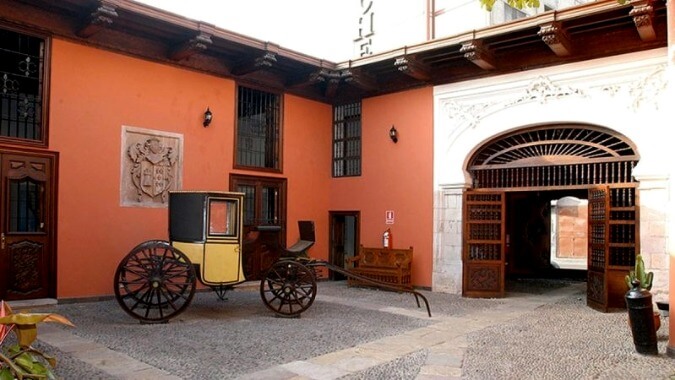
At the Afro-Peruvian National Museum in Lima you will learn a lot about their customs and history, linked in their origins to slavery / Photo: Source
Festivals and Celebrations
The Lord of Miracles , also known as the Lord of Pachacamilla (his place of origin on the outskirts of Lima), Lord of Tremors, or Black Christ . This celebration is one of the most important held in Lima, in many of its cities throughout Peru, and in about 70 other cities around the world where there is a strong presence of Peruvian citizens. This celebration is associated with Afro-Peruvian culture because it was an Angolan slave who painted this image on an adobe wall, and it survived intact the strong earthquakes of 1665 that devastated Lima and El Callao, which was considered a miracle. The procession has been held since 1687, after the second strong earthquake. Its central days are October 18, 19, and 28, days on which processions and masses are held in large numbers. The Feast of the Virgin of Carmen, one of its main festivities, is celebrated from December 24th to 28th, with the central day being the 27th, when the patron saint of this area of Chincha is venerated. It's a large-scale festival that includes activities such as typical gastronomy, dances, competitions, and the masses and processions corresponding to this festivity.Gastronomy
The creators of typical and delicious dishes like Anticuchos or sweets like Picarones, Frejol colado, or the incomparable Turrón de Doña Pepa , are a clear example of their valuable contribution to Peruvian culture. The result of this fusion of cultures is characterized by its joy, dances, and unparalleled food. Travel tip: Discover the natural wonders that the Colca Canyon has to offer with the Colca Canyon tour from Arequipa and fall in love with the impressive flight of the giant Andean Condor. Book Now!5- Asian
The arrival of Asian immigrants on the Peruvian coast in the mid-19th century is related, among other reasons, to the Taiping Rebellion in China and the subsequent Opium War between China and England. However, there are references to the arrival of Asians, Chinese, Japanese, and Indians, dating back two centuries earlier. This is recorded in the 1613 census in the " Padrão de Indios, China e Japão e Indias de Portugal em serviço dos espanhols nesta Cidade dos Reis" (Lima). The recorded history of the descendants of Asians in Peru is extremely valuable. They settled mainly in the coastal area, predominantly in Lima, once freed from their contracts for various works on farms owned by the Spanish.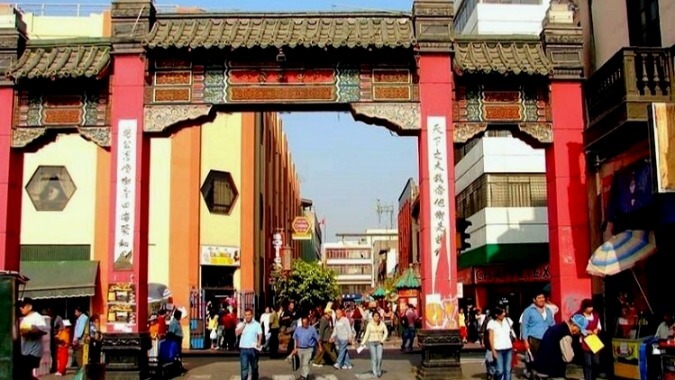
One of the most important Chinatowns in South America is located in Lima / Photo: Source
Festivals and Celebrations
Regarding the festivities of the different Asian cultures that came to Peru (Chinese, Japanese, Indian), they have been merged in such a way that it is often not consciously associated that any of these celebrations have Asian origins. However, we can enjoy their traditional festive and colorful celebrations predominantly in Chinatown , located in the Historic Center of Lima . On the other hand, gastronomic mixing and fusion have spread deeply throughout the country.Gastronomy
The resulting flavors from this fusion, which is an important part of Peruvian culture today, offer unique experiences that you can't miss. Here I can recommend exclusive restaurants that fuse Chinese and Peruvian food, called Chifas . Delight in the classic Arroz Chaufa, Noodle Saltado, and sweet and sour sauces. Other dishes you can't miss are Chicken or Pork with Tamarind or Kam Lu Wantán . And among the soups are Sopa Fuchifú and Sopa Womín. One of the best known, and I assure you it's delicious, is Sopa Wantán. There is a wealth of material to share about the ethnic groups and their impressive array of customs, festivities, and history. This is a glimpse that will serve as a guide when traveling throughout Peru. Our intention is that you make the most of all the wonders this country offers, inviting you to experience it with all your senses on Daytours4u .By: Jessica Mollá , Peruvian-Argentine journalist and audiovisual communicator. Spanish-language writer for Daytours4u.
Published by Hernan Garriga Zimmermann on 03/06/2026


