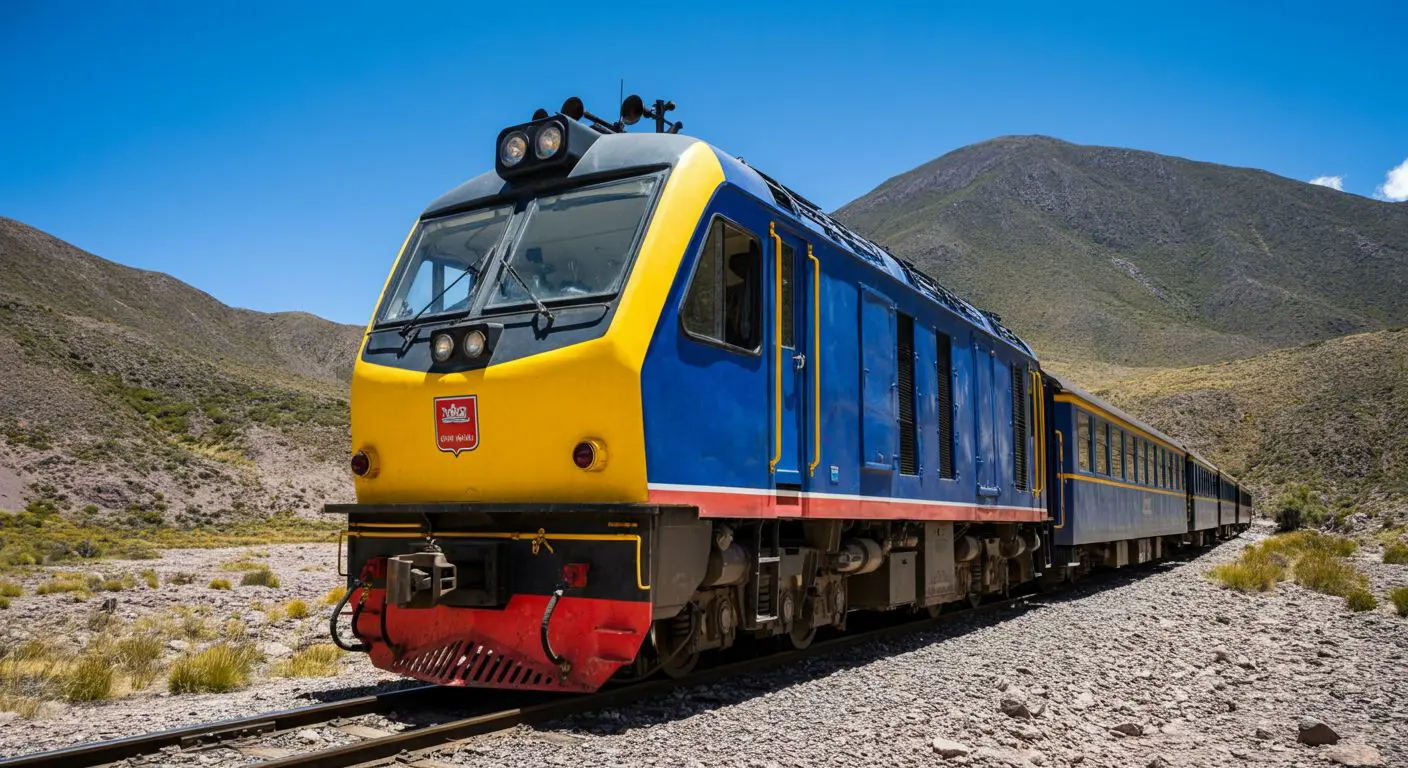
If you're planning a trip to northern Argentina, the Train to the Clouds in Salta is one of those experiences everyone hears about, but not everyone knows the details of. Many travelers want to know if the train is still running, what the route is like, how high it climbs, and whether it's really worth including in an itinerary focused on landscapes and local culture.
The important thing to know is that the Train to the Clouds isn't just a train ride. It's a full-day excursion that combines bus and train journeys. During the trip, you'll visit some of the highest railway lines in the world.
This guide gathers all the necessary information for 2026 : how to book the Train to the Clouds , timetables , prices , and details about the experience. You'll also find recommendations to help you decide if it fits well with your trip.
What is the Train to the Clouds?
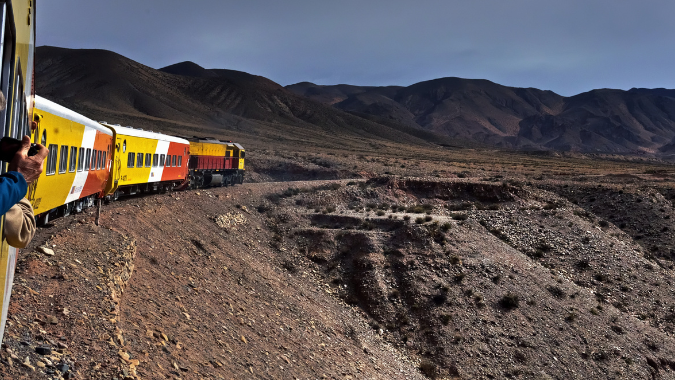
The Train to the Clouds is a high-altitude railway journey that begins in the province of Salta , in northwestern Argentina. Its name literally means “Train to the Clouds,” and it makes sense: at its highest point, the train reaches approximately 4,220 meters above sea level.
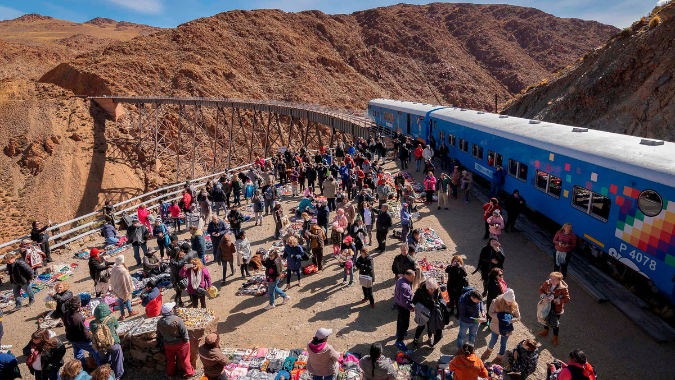
Most travelers choose it for the scenery, the silence of the mountain range, and the opportunity to cross the iconic La Polvorilla Viaduct .
Where is the Train to the Clouds located?
The route crosses the Andes following part of the old route of the C14 branch line , near the border with Chile.
If you look up a "Train to the Clouds map," you'll see that the train passes through small mountain villages, canyons, salt flats, and open valleys. The most anticipated stretch is always the final one, where the train crosses the viaduct suspended above the Andean landscape.
How does the experience work?
Something many travelers don't know is that the Train to the Clouds no longer runs the entire route from the city of Salta . Currently, the excursion combines a bus trip with a train journey . This format allows you to enjoy the most scenic parts of the route and makes the day smoother and safer at high altitude.
The day begins early in Salta. From the city, you take a bus that crosses the Quebrada del Toro , a narrow valley with cactus fields, ancient agricultural terraces, and small Andean communities.
The bus makes several brief stops for taking photographs, walking a short distance, and learning about the area. This stage of the journey allows for a first glimpse of the landscape and helps the body gradually acclimatize to the altitude.
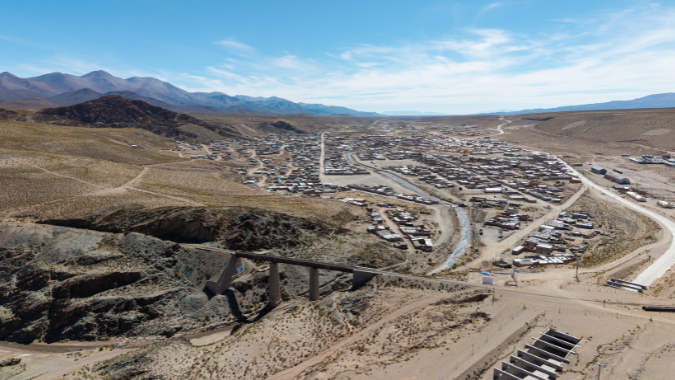
Next, you arrive at San Antonio de los Cobres , a quiet mining town located at about 3,700 meters. The railway section begins there. Many travelers wonder , "How much of the original route is still in operation?"
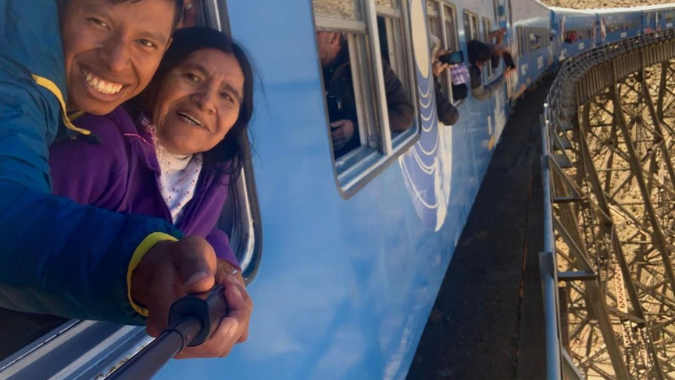
The current section of the train showcases the best part of the journey: the ascent from San Antonio de los Cobres to the La Polvorilla Viaduct , an engineering marvel that appears in virtually every photograph of the Train to the Clouds. The train slows down as it crosses the viaduct so passengers can enjoy the view and photograph the famous curve suspended above the mountain.
How long does the entire tour last?
The total duration of the excursion is between 10 and 12 hours , depending on the season and the pace of the day. It includes:
- the bus trip from Salta to San Antonio de los Cobres
- the scenic stops in the Quebrada del Toro
- the train journey
- the weather at the La Polvorilla Viaduct
- the return to the city of Salta
It's a long day, but the combination of landscapes, altitude, and crossing the viaduct makes the experience unique for most travelers.
How high does the Train to the Clouds go?
This is one of the most frequently asked questions:
The maximum height of the route is 4,220 meters , reached at the La Polvorilla Viaduct.
If you are sensitive to altitude, it is advisable to move slowly, hydrate well and avoid heavy meals before the trip.
Is the Train to the Clouds still running?
Yes. The tour continues to operate with regular departures throughout 2026 .
Schedules may vary depending on the season, so it's always advisable to check the updated dates before organizing your itinerary.
How much does it cost?
The price of the Train to the Clouds varies slightly each season, but is usually in the range of USD 150–200 . The ticket includes the bus + train combination, guided stops along the way, and crossing the La Polvorilla Viaduct.
It's more expensive than a conventional train because it's a specialized tourist experience, with limited departures and high-altitude logistics. Furthermore, the route focuses on the most scenic sections of the Andes.
If you plan to travel during peak season — such as holidays or winter — it's best to book in advance, as places tend to sell out.
How do I buy tickets?
Tickets for the Train to the Clouds can be purchased on the official website or through authorized tour operators . These operators typically offer the complete service, including transportation from Salta, a tour guide throughout the day, and all the organized logistics.
Many travelers prefer to do it through an agency, as it makes it easier to get to the starting point and ensures that the entire trip is coordinated.
Since the train doesn't run every day and spaces are limited, it's best to book several weeks in advance , especially between June and August. If you're looking for a simpler option, you can book the experience with reliable operators like Daytours4u , which includes transfers, bus and train tickets, and all the stops on the itinerary.
Is the Train to the Clouds worth it?
Yes, and for reasons that go beyond the photographs.
The Train to the Clouds provides access to an area of the Andes that would be difficult to visit otherwise. The landscape is constantly changing: red canyons, open valleys, and small high-altitude villages that showcase life in the mountain range.
The final stretch, as the train climbs towards the plateau near the La Polvorilla Viaduct, is the most memorable moment. Watching the train curve over the bridge, surrounded only by mountains and silence, is what makes this excursion so special.
Furthermore, it's one of the few places in the world where you can experience altitude without having to hike for long periods. The train's leisurely pace and the sheer scale of the surroundings create a feeling that's hard to find in other destinations.
La Polvorilla Viaduct: the most anticipated moment
The La Polvorilla Viaduct is, for most travelers, the highlight of the journey. It's not 4,200 meters long—that's the altitude—but it is located more than 4,200 meters above sea level, stretching across a wide Andean plateau.
As you approach, you can see the full curve of the viaduct suspended above the valley. It's the classic image of the Train to the Clouds, present in practically every photograph of the trip.
The train crosses the viaduct slowly so you can enjoy the view from both sides and take pictures at your leisure.
Even so, the real impact comes when you look out the window and see how everything, even the train's structure itself, seems small compared to the vastness of the landscape. It's one of those moments when the name "Train to the Clouds" truly makes sense.
What to expect on board?
Once you board the train, everything becomes more relaxed. It's a journey designed to allow you to enjoy the scenery at a leisurely pace. This is how you experience it:
- Large panoramic windows
- Each seat offers clear views of the mountain range, without needing to choose "the best side".
- Slow and steady movement
- The train moves at a gentle pace, ideal for appreciating the surroundings and taking photos at your leisure.
- Relaxed atmosphere inside
- Hot drinks, simple snacks, and space to move around inside the carriage are provided.
- Height assistance if needed
- The staff is trained for high-altitude travel and has oxygen available for those who require it.
- Brief explanations from the guides
- It is not a tour with constant commentary; only key stories are shared to understand the route, the local communities, and the engineering of the viaduct.
- A journey focused on the landscape
- It's not a luxury train or a fast journey. It's a leisurely crossing of the Andes designed to allow you to appreciate every stretch.
Thinking of traveling to Salta?
If you'd like to compare dates, see updated prices, or explore more activities in Salta, you can check out all the available options on Argentina4u . It's an easy way to plan your trip and find the tours that best suit your itinerary.
Published by Has Chacon on 03/06/2026


