What to eat in Peru: a complete guide to the most representative dishes
Peruvian food is unique. It's a gateway to a universe of flavors, traditions, and aromas that awaken the senses. South America is renowned for its diverse and creative gastronomy , and within it, Peruvian cuisine shines with its own unique light. Every typical Peruvian dish has a story to tell: ancestral roots, techniques passed down through generations, and a culinary identity so powerful that it now captivates palates worldwide.
During my time traveling through Peru and spending time with a Peruvian community in Lima, I was fortunate enough to sample many of the most authentic flavors. Therefore, if it's your first time in Peru or your first encounter with Peruvian cuisine , this guide will help you discover what to eat in Peru , from classic dishes to lesser-known gems, for an unforgettable culinary experience.
The 10 typical Peruvian dishes you can't miss
1. Ceviche: the elixir of the sea
It's the flagship dish of Peruvian cuisine. Prepared with fresh white fish "cooked" in lime juice, aji limo peppers, red onion, and cilantro. It's served with corn on the cob and sweet potato. It's a symbol of traditional Peruvian cuisine and the most sought-after dish by tourists.
2. Lomo Saltado: the embrace of two cultures
An icon of chifa, Peruvian-Chinese cuisine. Strips of meat stir-fried in a wok with onion, tomato, and yellow chili pepper, served with French fries and rice. It represents the cultural fusion that characterizes the best Peruvian dishes.
3. Aji de Gallina: the warmth of a homemade dish
Cream of yellow chili pepper soup with soaked bread, cheese, milk, and shredded chicken. It's served with rice, egg, and olives. It's one of the most comforting dishes in Peruvian Creole cuisine.
4. Causa Limeña: a jewel of the coast
Mashed yellow potatoes seasoned with chili pepper and lemon, filled with tuna, chicken, or seafood. Garnished with avocado and egg. Its patriotic origins make it part of the country's culinary heritage.
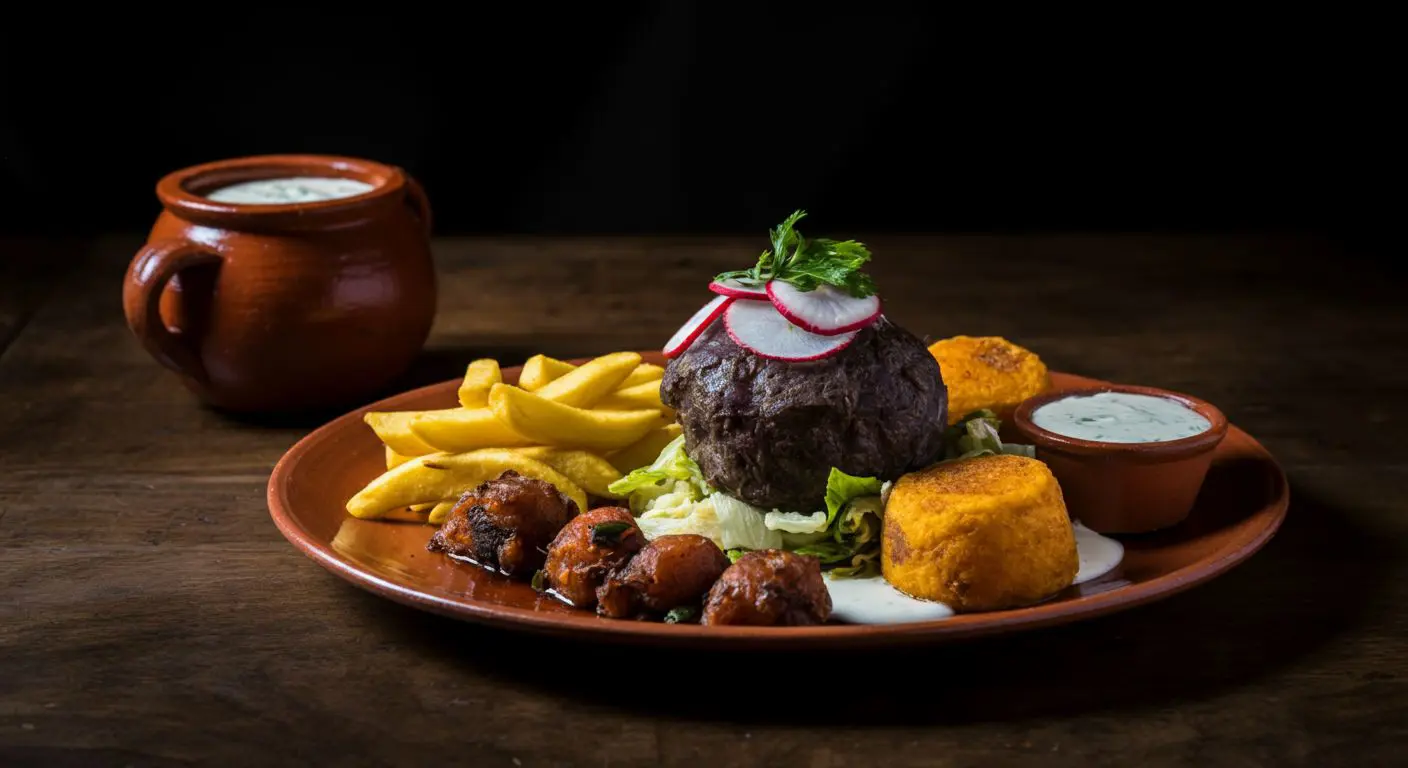
5. Anticuchos: the taste of the street
Skewers of beef heart marinated in aji panca pepper, grilled. Served with golden potatoes. They are a symbol of Peruvian street food and Lima's nightlife.
6. Stuffed Rocoto Pepper: the spicy dish that wins people over
From Arequipa, this stuffed chili pepper filled with ground beef, onions, and raisins, topped with melted cheese, challenges even the most adventurous palates. A dish that blends sweetness, spiciness, and intense flavor.
7. Chicken and Rice: the taste of tradition
Green rice with cilantro and beer, cooked with pieces of chicken. It is one of the most common and easy Peruvian meals in Peruvian homes.
8. Pachamanca: the ancestral food of the Andes
Pre-Hispanic underground cooking with hot stones. Meats, potatoes, corn, and herbs are slowly cooked using a ceremonial technique. It represents ancestral Peruvian gastronomy .
9. Cuy Chactado: an ancient flavor
Fried until crispy, guinea pig is a traditional Andean dish with ritual and cultural significance. Surprising, intense, and very typical.
10. Tiger's Milk: the Peruvian energizer
Ceviche juice served as a shot. Spicy, acidic, refreshing, and considered a natural aphrodisiac. A must-try at any ceviche restaurant.
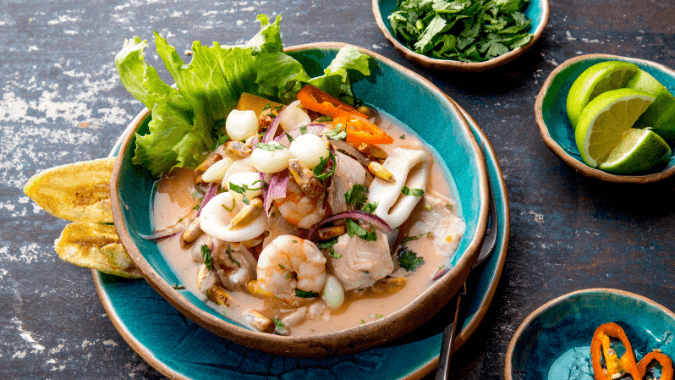 Classic Peruvian ceviche served with corn, sweet potato , and leche de tigre: the most emblematic flavor of Peruvian cuisine.
Hidden flavors of Peru: surprising dishes beyond ceviche
Peruvian cuisine goes far beyond the classics. Each region boasts traditional recipes that don't always make it onto tourist lists, but which form part of the country's culinary soul. Here are some dishes worth discovering if you want to deepen your gastronomic experience in Peru:
Papa a la Huancaína
A cold appetizer originating from the central highlands. It's prepared with boiled yellow potatoes covered in a creamy sauce made with yellow chili pepper, fresh cheese, milk, and saltine crackers . It's served on lettuce leaves with a hard-boiled egg. Simple yet irresistible, it's a must-have at any family gathering.
Juane
Typical of the Peruvian jungle, especially the San Martín region, this dish is a type of tamale made with rice and chicken , seasoned with turmeric and other spices, wrapped in bijao leaves , and steamed. It is traditionally eaten during the Feast of Saint John, but can also be found in local markets.
Cau Cau
A classic Lima-style stew made with tripe , yellow potatoes, and turmeric , seasoned with garlic and mint. While its main ingredient might be a challenge for some, its flavor is mild, comforting, and steeped in Creole history.
Shambar
Typical of northern Peru, especially Trujillo, this is a thick and very nutritious soup made with legumes, wheat, smoked ham, meats, and chili peppers . It is served on Mondays and is considered a symbol of northern home cooking.
Tacacho with Cecina
An Amazonian dish that combines roasted and mashed green plantains (tacacho) with cecina , a type of salted and dried pork. It is served with chorizo and cocona chili sauce. It is one of the most potent flavors of the jungle.
Olluquito with Charqui
One of Peru's oldest stews, prepared with olluco , an Andean tuber, and charqui , dried llama or alpaca meat. It's a typical dish from the highlands that connects directly to the country's pre-Hispanic roots.
The taste of the street: the best of street food in Peru (and especially in Lima)
Trying Peruvian street food is like stepping into the country's everyday life. In plazas, markets, and street corners of cities like Lima, Arequipa, and Cusco, street vendors offer affordable, authentic, and historically rich delicacies. Here are some of the most popular, with a special focus on the Peruvian capital:
Picarones
A traditional dessert that combines sweet potato and pumpkin in a fried dough ring, served hot and drizzled with chancaca syrup (derived from sugarcane or fig) . They are a must-see at fairs and on the streets of Lima in the late afternoon.
Salchipapa
A classic Peruvian fast food dish. It consists of French fries cut into sticks, accompanied by slices of fried sausage, mayonnaise, ketchup, mustard, and sometimes special sauces. Cheap, tasty, and very popular among young people.
Emollient
A hot drink made with roasted barley, flaxseed, horsetail, and other medicinal herbs . It's sold from street carts, especially in the mornings. It's comforting and considered good for digestion and energy.
Peruvian tamale
Served wrapped in banana leaves, tamales are a common street food for breakfast , especially on weekends. They can be made with pork or chicken, and often include peanuts, chili peppers, and black olives. They are frequently accompanied by bread and coffee.
Bread with pork rinds
A typical Lima sandwich made with French bread, fried pork slices, sweet potato, and salsa criolla (onion and chili pepper). It's one of the gems of Lima's street breakfast scene, especially on Sundays.
Purple corn pudding and rice pudding
They're sold together in a single cup, half and half. The mazamorra is made with purple corn, dried fruit, and spices , while the rice pudding provides the creamy element. A classic street dessert, especially popular in the evenings.
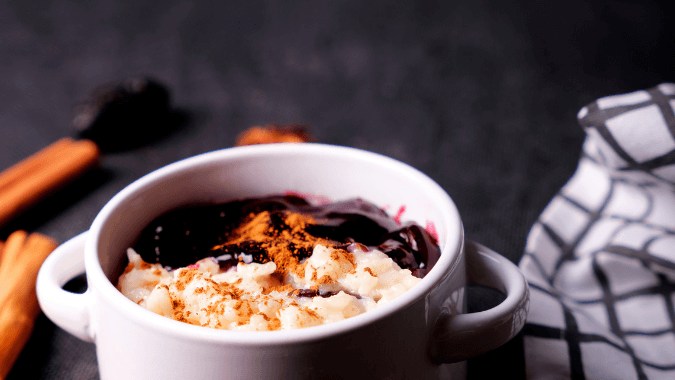 Purple corn pudding and rice pudding served together in the same glass: a sweet, aromatic , and traditional combination of Peruvian evenings.
Why is Peruvian food so important?
Peruvian food is not just delicious: it's a living expression of identity, history, and geographical diversity. Since pre-Hispanic times, Peru has been a melting pot of ingredients and cultures, and its cuisine reflects this like few others in the world. Each dish is the result of a millennia-old fusion of products from the coast, the highlands, and the rainforest , later enriched by African, European, Asian, and Amazonian influences.
Beyond its flavor, Peruvian cuisine plays a social role: it brings together families, communities, and generations , and celebrates the country's cultural heritage. Today, Peruvian cuisine transcends borders. In cities like Buenos Aires, New York, Madrid, and Tokyo, Peruvian restaurants are multiplying, bringing flavors like ceviche, ají de gallina, and causa limeña to diners around the world.
It's no coincidence that Peru has been chosen for years as the best culinary destination in the world . Its cuisine not only nourishes: it tells stories, builds bridges, and leaves a lasting impression.
Key ingredients of Peruvian food
Potatoes, yellow chili peppers, corn, quinoa, fresh fish, guinea pig, chicken, cilantro, lemon, and Andean spices : these are not just ingredients, they are the pillars of an ancient culture. Peru is home to more than 3,000 varieties of potatoes , dozens of types of corn, and unique biodiversity thanks to its geography encompassing coast, highlands, and rainforest.
These native products were complemented by the influences of Chinese, Japanese, African, and European immigrants, who brought with them new techniques, flavors, and cooking methods. This gave rise to dishes like lomo saltado (inspired by the Chinese wok), chifa (Peruvian-Chinese fusion), and Nikkei cuisine (Peruvian-Japanese), which are now fundamental parts of contemporary Peruvian cuisine .
The result is a diverse, colorful and deeply rooted gastronomy, where every bite is a mixture of history, geography and creativity.
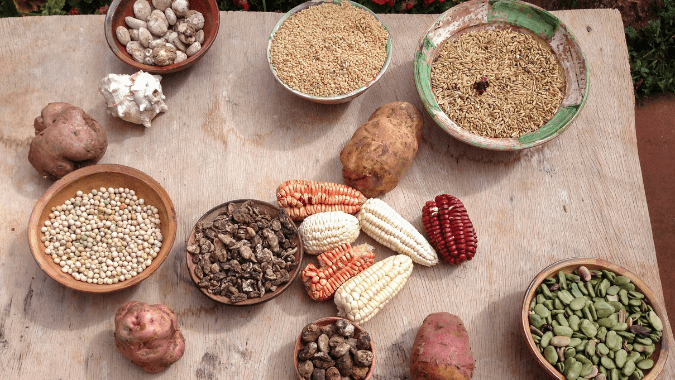 Purple corn, yellow potatoes, yellow chili peppers , and quinoa: native ingredients that form the basis of the diversity and richness of Peruvian cuisine.
The influence of Peruvian cuisine in the world
Over the past two decades, Peruvian cuisine has conquered the world, not only for its flavor but also for its capacity for innovation without losing its roots. Chefs like Gastón Acurio , a pioneer in bringing Creole cuisine to fine dining restaurants, and Mitsuharu Tsumura (Maido), a leading figure in Nikkei fusion—a blend of Peruvian and Japanese cuisine—have been key to this global recognition.
Today, Peruvian cuisine is enjoyed abroad in major cities like London, New York, Paris, Buenos Aires, and São Paulo. The boom in Peruvian chifa (a fusion of Peruvian and Chinese cuisine), the sophistication of ceviche in gourmet restaurants, and the prominence of ají amarillo on international menus are proof of its growing influence.
This phenomenon is not only culinary, but also cultural. Peru has successfully positioned its cuisine as a way to tell its story, attract tourism, and generate national pride. It is no coincidence that it has been named the "World's Leading Culinary Destination" multiple times by the World Travel Awards.
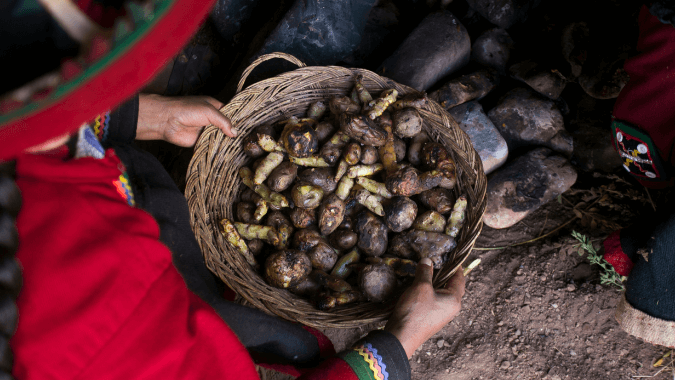 Pachamanca, a traditional Andean dish cooked underground with hot stones , is an ancestral culinary ritual.
The taste of a country: an experience that transcends the plate
Peruvian food is much more than a selection of typical dishes. It's a daily celebration of the history, diversity, and ingenuity of its people. Each recipe embodies centuries of oral tradition, cultural fusion, and a love for local ingredients .
Traveling to Peru and experiencing its cuisine is more than just a culinary adventure: it's a way to understand its identity, its geography, and its people. From the street markets of Lima to the family kitchens in the Andes, every bite tells a story .
If you are planning your trip to Peru or want to discover these flavors in an authentic way, at Daytours4u you will find carefully selected gastronomic experiences so that you can taste the best of typical Peruvian cuisine , guided by those who cook it every day with passion.
Because, as the Peruvians say:
“In Peru, you don’t eat to live… you live to eat.”
Published by Has Chacon on 03/06/2026


